


Camphor Wood Campaign Chest
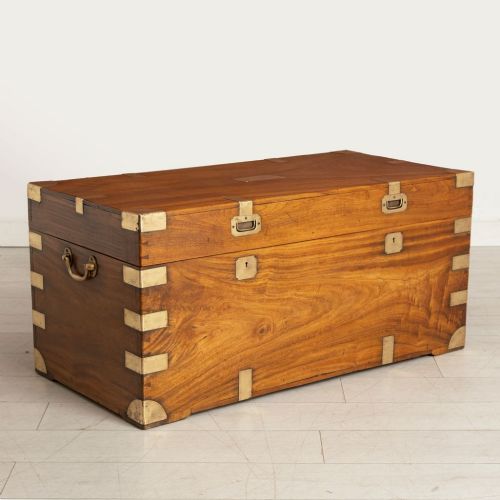
A camphor wood campaign chest offers robust travel storage built for officers on the move, combining aromatic timber with protective metal hardware.
Camphor Wood Campaign Chest
A camphor wood campaign chest is a portable trunk or set of drawers constructed for military life, colonial travel, and maritime trade during the eighteenth and nineteenth centuries.
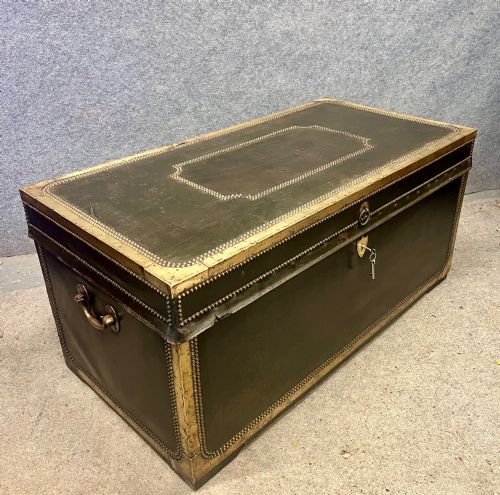
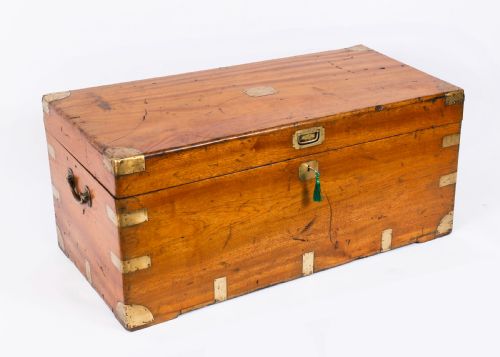
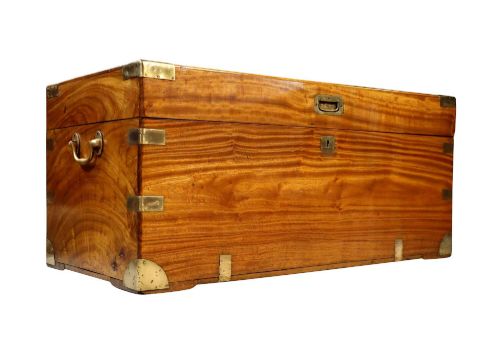
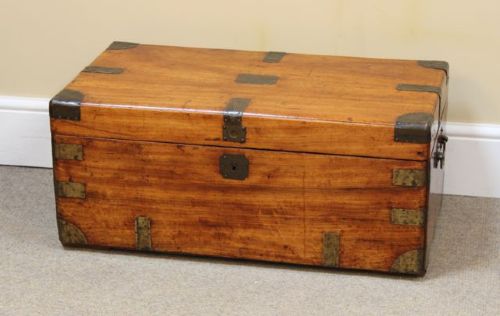
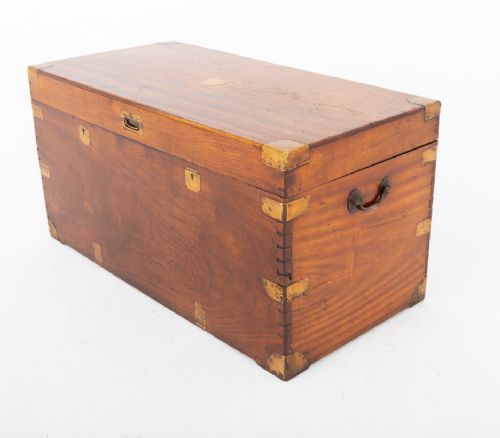
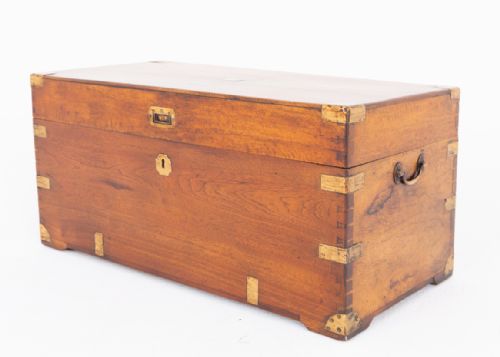
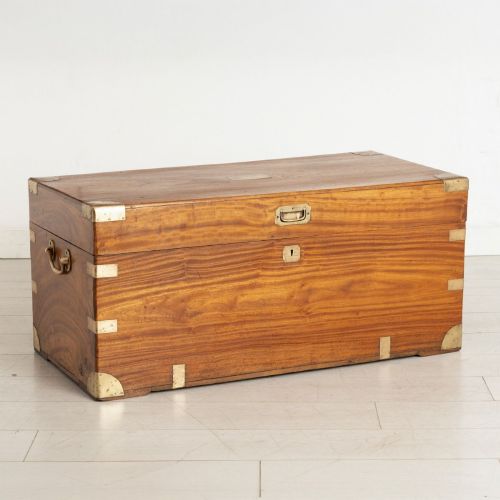
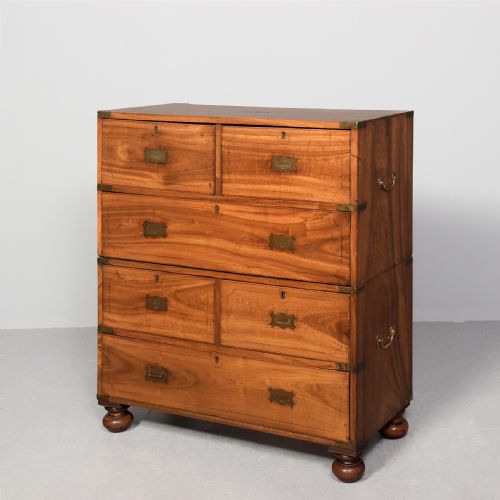
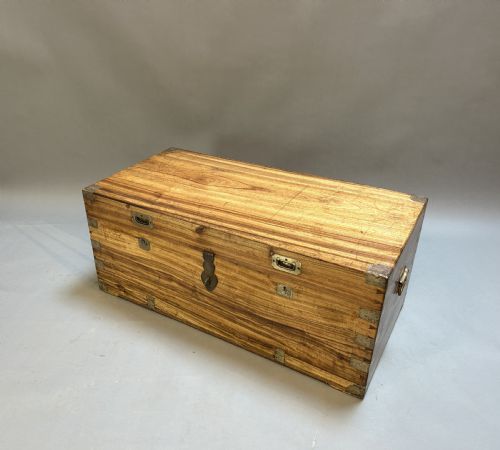
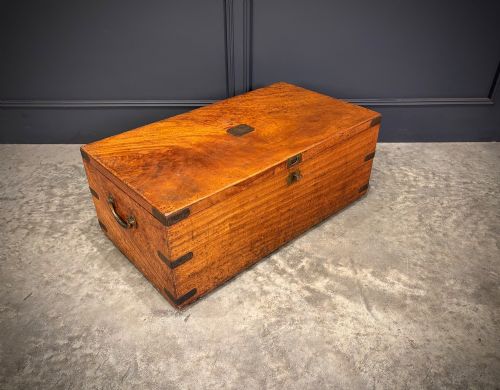
The version most commonly met on this page is the Victorian two-part chest of drawers or lift-lid trunk, reinforced with brass corners and fitted with recessed carrying handles.
Originating in periods such as the Georgian, Regency, and Victorian eras, these pieces frequently reflect China Trade and Anglo-Chinese manufacture.
How they were made
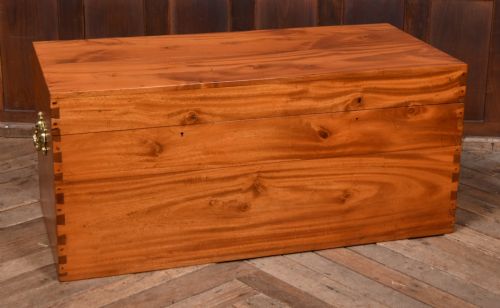
Makers constructed these chests primarily using solid camphor wood or camphorwood, selected for its insect-repellent properties and durability against tropical humidity.
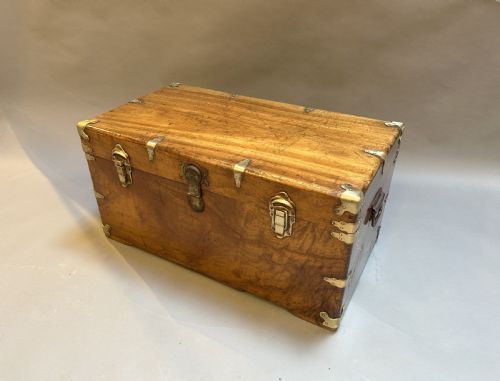
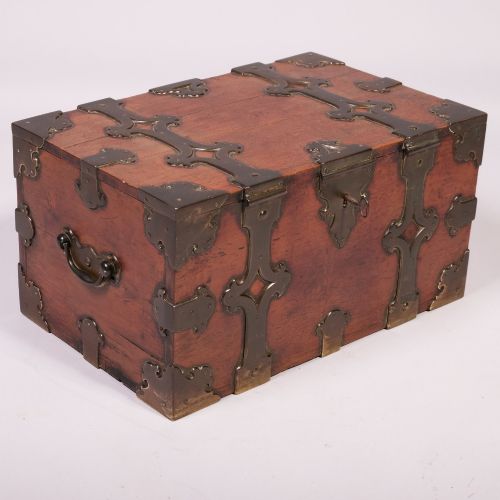
Joinery incorporated two-part modular stacking systems to ease transport on campaigns, secured with heavy brass bindings, straps, and protective corner plates.
Details such as iron fittings, leather trims, rope handles, and ebony accents appear alongside original hardware and specialised locking mechanisms.
Listings span the eighteenth through the early twentieth centuries, featuring Victorian, Georgian, and Regency periods.
What varies in quality
The grade of timber and the density of the grain set examples apart, with solid camphor wood commanding greater attention than secondary woods.
Hardware execution dictates overall standard, distinguishing simple flush brackets from elaborate brass mounts, reinforced strapping, and specialised locks.
Internal configuration also divides standard trunks from sophisticated pieces featuring fitted interior compartments or drop-front secretaire drawers.
The Camphor Wood Campaign Chest Glossary
- Campaign chest
- A modular set of drawers or trunk built in sections for easy transport during military operations or colonial travel.
- Secretaire chest
- A drawer configured with a drop-front writing surface and internal pigeonholes or small compartments.
- China Trade
- Goods manufactured in China during the nineteenth century specifically for export to Western markets.
- Brass bound
- Furniture strengthened along the edges and corners with brass strips and corner brackets to withstand transit.
- Two-part
- Construction split horizontally into upper and lower modular sections that stack together for movement.
Camphor Wood Campaign Chest: Frequently Asked Questions
Why use camphor wood?
Camphor wood naturally emits a strong aromatic scent that deters insects, moths, and silverfish from damaging stored garments and uniforms during long voyages.
This protective quality made the timber an ideal choice for officers and merchants transporting textiles across tropical climates.
What is a two-part chest?
A two-part chest is built as two separate modular sections that stack on top of each other, held together by side brackets or pins.
This clever construction allowed heavy sets of drawers to be divided into manageable loads for pack animals and ships.
How were they transported?
These chests were fitted with robust recessed carrying handles on the sides so ropes or leather straps could secure them during transit.
Officers travelled with them on military campaigns, sea voyages, and colonial postings where sturdy luggage was essential.
What is a secretaire chest?
A secretaire chest includes a dedicated drawer that pulls out and folds down to create a writing desk surface.
Inside, small drawers and compartments provided working space for correspondence and documents while on the move.