





Campaign Style Mahogany Chest
A campaign style mahogany chest is built to travel, bringing brass hardware and solid timber into domestic rooms.
Campaign Style Mahogany Chest
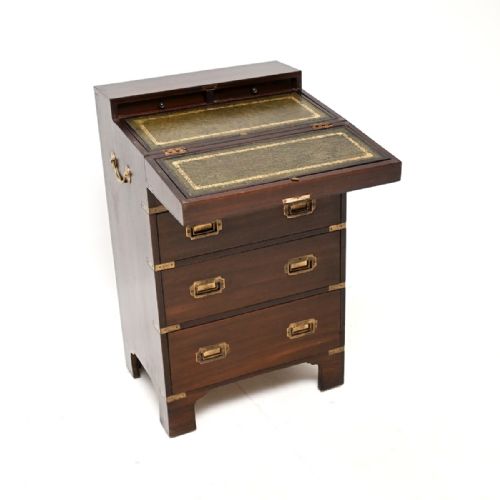
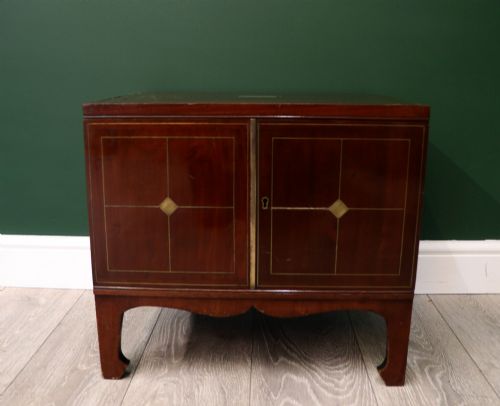
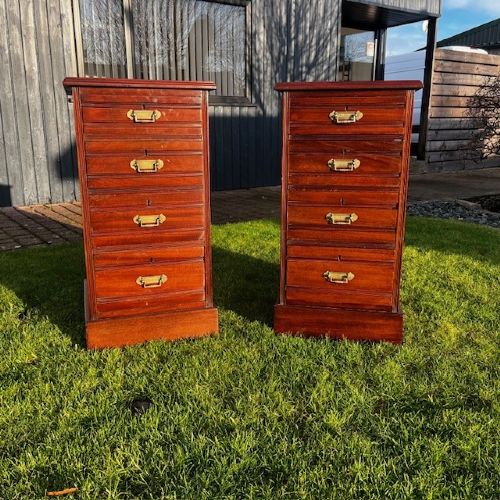
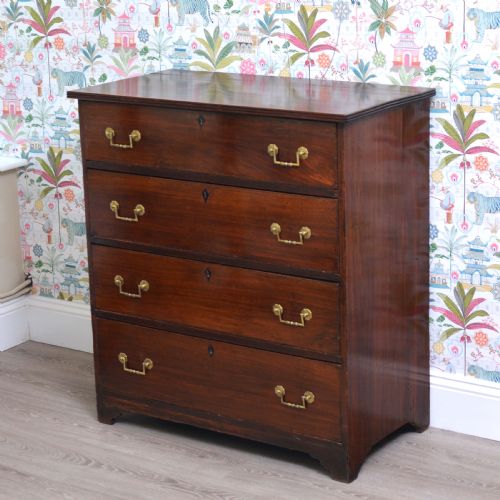
A campaign style mahogany chest provides modular storage designed for officers on the move, separating into distinct sections for transit. You will frequently find two-part chests of drawers, alongside smaller bedside chests and specialised cabinets originating from the nineteenth and early twentieth centuries.
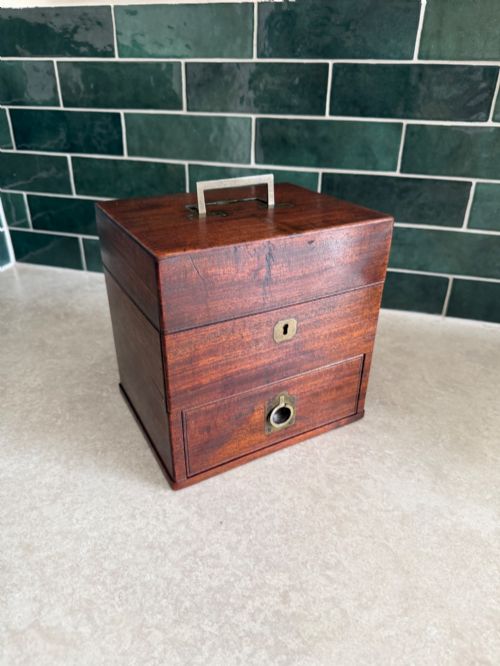
The form prioritises structural resilience and practicality over elaborate carving, relying on flush handles and reinforced corners. Pieces range from large military blanket chests down to compact writing boxes and apothecary storage.
Victorian examples dominate the selection, though pieces stretch from the eighteenth century into Edwardian and later decades. These items bring functional colonial and military history directly into modern bedrooms and studies.
Materials and construction
Construction relies heavily on dense timbers such as mahogany, padauk, teak and walnut, selected to withstand harsh climates and frequent transit. Timber boards are frequently bound with brass corners and straps to protect edges from heavy impact.
Hardware is traditionally recessed into the wood to prevent snagging during transport, using flush brass pull handles and inset drawer pulls. Iron fittings also appear on utility trunks, while specific boxes incorporate leather linings and brass inlay.
Some gentleman's chests include specialised compartments originally designated for Scottish sporrans and spare socks.
Assessing quality
Quality rests in the precision of the joinery and the integrity of the modular divisions where sections lock together. Superior examples maintain tight, flush brass fittings that sit perfectly level with the surrounding timber surface.
The choice of timber grain and the depth of the patination distinguish finer pieces from utilitarian counterparts. Original brasswork and clean internal drawer construction indicate a higher standard of workshop production.
The Campaign Style Mahogany Chest Glossary
- Campaign chest
- A modular chest of drawers built in two or more stackable sections with recessed handles for military transport.
- Brass bound
- Furniture edged or reinforced with brass straps and corners to protect against heavy knocks during transit.
- Padauk
- A dense, durable tropical hardwood with a reddish brown tone utilised in colonial furniture production.
- Recessed handle
- A pull handle set into a shallow cavity in the wood so it does not protrude beyond the surface.
- Two-part chest
- A piece of case furniture split horizontally into upper and lower carcases for easier loading and carriage.
Campaign Style Mahogany Chest: Frequently Asked Questions
How do I spot a true campaign chest?
Look for modular construction featuring separate stackable sections and carrying handles mounted to the sides. These elements were engineered specifically for military transport.
Check for flush brass hardware and corner brackets that protect the timber from knocks on the march.
Where were these chests used?
British officers and colonial administrators utilised these modular pieces during campaigns across the empire. The sectional design allowed tents and quarters to be packed quickly.
Today, the compact proportions and flat sides make them well suited for practical storage in residential bedrooms.
Are bedside chests period originals?
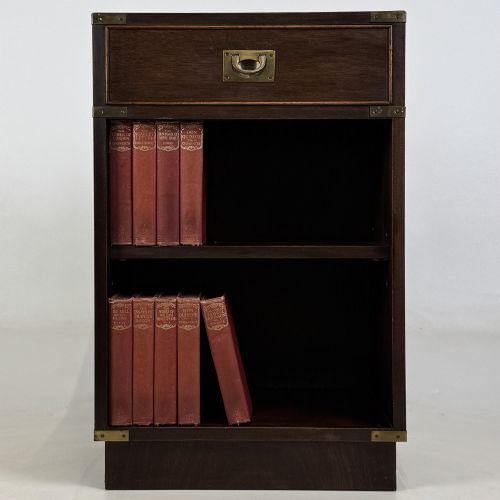
Many bedside chests date from the Victorian era and later, often adapted from larger forms or made as smaller companion pieces. They retain the characteristic brass corners and flush pulls of military furniture.
Examine the timber shrinkage and brass patination to understand the age of the piece.
How do I care for mahogany campaign furniture?
Maintain the timber with traditional beeswax to nourish the wood and preserve the natural sheen of the grain. Avoid placing pieces near direct heat sources to prevent the wood from splitting.
Polish the brass fittings gently with a soft cloth to retain their character without stripping the aged finish.