

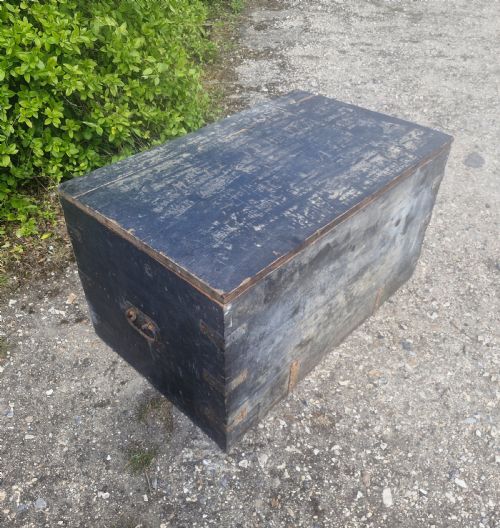


Campaign Style Box
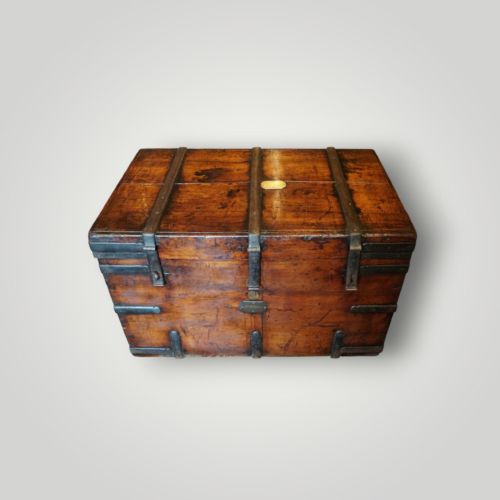
These campaign style box pieces are portable travelling chests and writing desks built for officers on the move, offering robust timber construction and secure brass mounts.
Campaign Style Box
When you search for a campaign style box, you encounter portable chests, writing slopes, and travelling cases designed for mobility. These objects originate primarily from the nineteenth century, encompassing Georgian, Victorian, and later periods of British and colonial service.
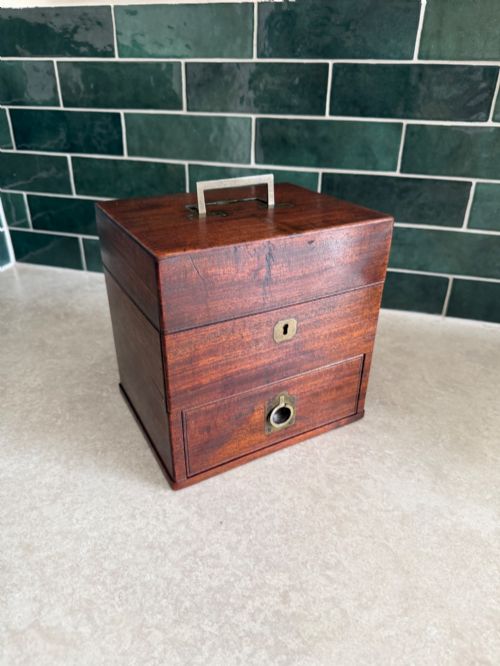
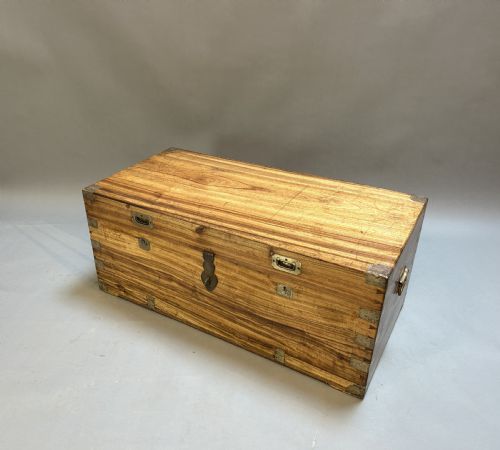
The items on this page range from large storage trunks and blanket chests down to compact apothecary boxes, cigar humidors, and jewellery cases. Many examples utilise dense hardwoods like teak, mahogany, and camphor wood, frequently reinforced with brass corners and binding.
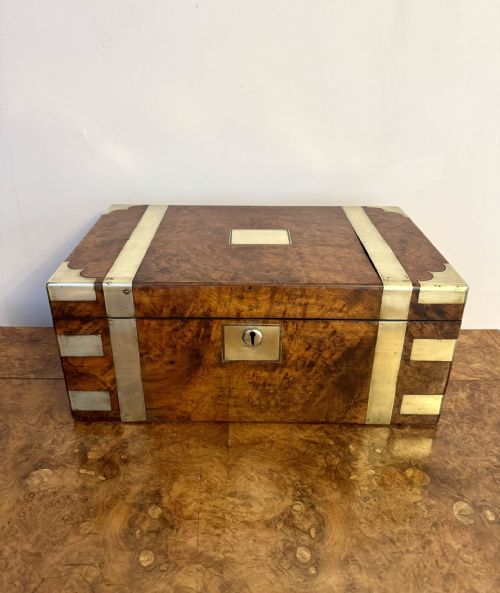
Writing boxes and slopes dominate the smaller formats, often incorporating secret drawers and folding surfaces. Larger variants serve as storage chests or travelling trunks, designed to withstand arduous journeys while maintaining an orderly interior.
How they were made
Cabinet makers utilised durable timbers such as teak, mahogany, camphor wood, walnut, and oak to withstand the rigours of military travel. Camphor wood offered a natural insect-resistant property, making it ideal for storage chests destined for tropical climates.
Structural integrity relied heavily on brass binding, inset flush handles, and reinforced corner brackets to prevent splitting during transit. These metal fixtures absorbed impact while keeping the exterior profiles smooth and stackable.
Internal compartments often featured clever mechanisms, including secret drawers, folding vanity mirrors, and partitioned writing slopes. Fine veneers like burr walnut and pollard oak added decorative refinement to the surfaces of gentleman's desks and jewellery boxes.
Many camphor wood trunks still retain a faint, unmistakable medicinal aroma after two centuries.
What varies in quality
Quality depends upon the selection of timber and the precision of the brass hardware integration. Superior pieces feature heavier gauge brass mounts neatly flush-fitted into the wood rather than simply surface-mounted.
The complexity and execution of internal fittings separate standard trunks from exceptional writing boxes. Elaborate secret compartments, fine dovetail joinery, and well-preserved leather writing surfaces indicate higher standards of original craftsmanship.
Fisher
The Campaign Style Box Glossary
- Campaign style
- A design ethos focused on portability, featuring modular construction, protective metal corners, and recessed handles. These pieces break down or fold for easy transport by wagon or ship.
- Writing slope
- A portable slant-topped desk with an internal compartment for stationery and inkwells. When opened, the sloping lid provides a flat writing surface.
- Flush mount
- A metal handle, corner bracket, or escutcheon set level with the surrounding wood surface. This prevents snagging during transit.
- Secret drawer
- A concealed compartment hidden behind removable panels or triggered by secret release catches. They safeguard valuables and confidential documents.
- Dovetail
- An interlocking joint formed by interlocking wedge-shaped fingers. This method provides exceptional tensile strength for drawer and box corners.
Campaign Style Box: Frequently Asked Questions
What is a campaign style box?
A campaign style box is a portable chest or desk designed for officers and travellers on the move. They utilise sturdy timbers and protective brass hardware to endure long journeys.
These pieces range from massive storage trunks to compact jewellery cases and writing slopes. Their modular construction prioritised strength, security, and space efficiency.
How were campaign boxes used?
Officers utilised these boxes to transport uniforms, documents, and personal valuables during military campaigns. Writing slopes provided a mobile desk surface for correspondence in the field.
Smaller variants functioned as apothecary boxes, cigar humidors, or dressing cases. Their internal compartments kept items organised despite rough transport conditions.
How do you date a campaign box?
Dating relies on timber choices, construction methods, and hardware styles across the Georgian and Victorian eras. Earlier pieces often feature simpler brass mounts, while mid-nineteenth-century examples frequently incorporate complex secret drawers and flush handles.
Maker signatures, stamps, and specific colonial timbers like camphor wood or teak also help narrow down the period. Inspecting the dovetails and interior linings reveals manufacturing shifts over time.
Are campaign boxes waterproof?
Most campaign boxes were built to resist moisture and tropical humidity through tight joinery and dense timbers. However, they were not designed to be fully submerged underwater.
Materials like teak and camphor wood naturally resisted warping and insect damage in damp climates. Brass bound edges further protected the vulnerable end-grain from absorbing moisture.