


Campaign Lap Desk
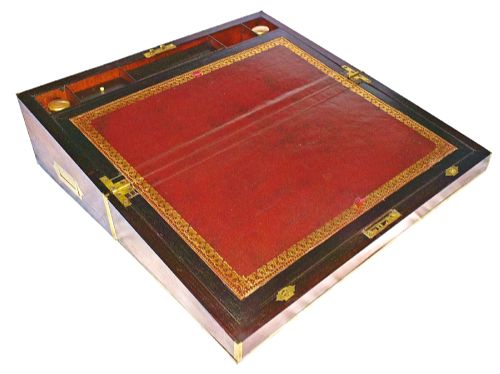
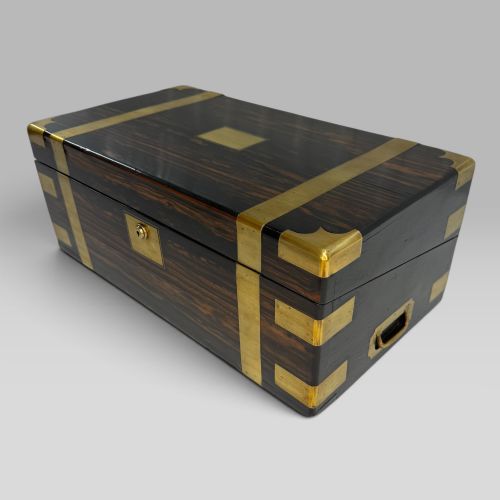
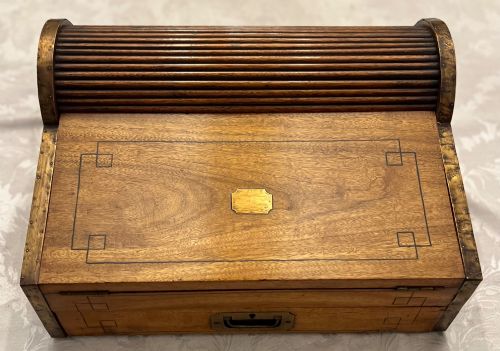
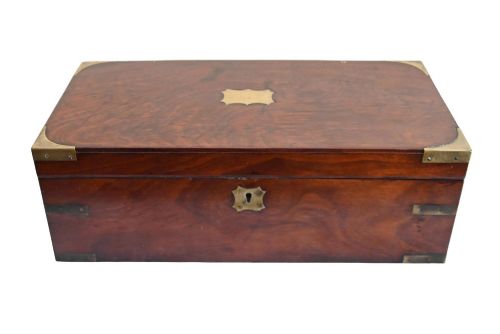
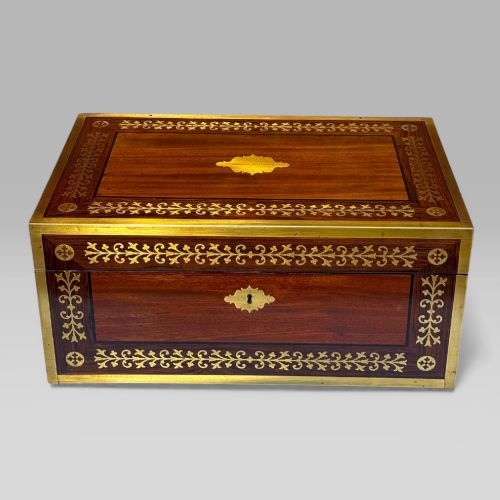
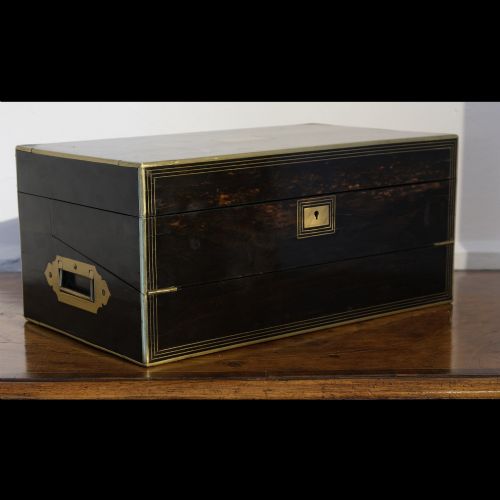
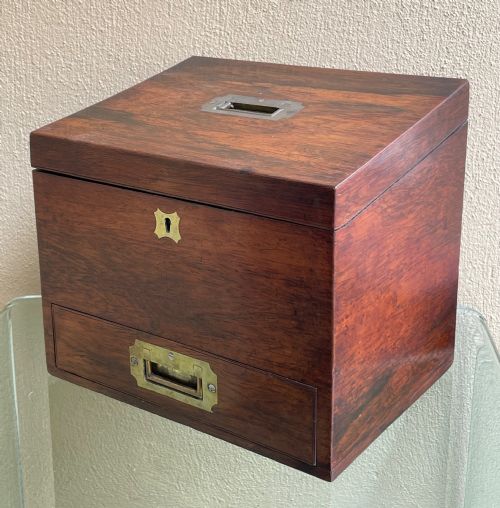
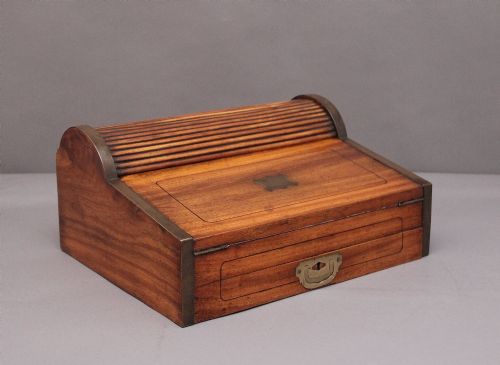
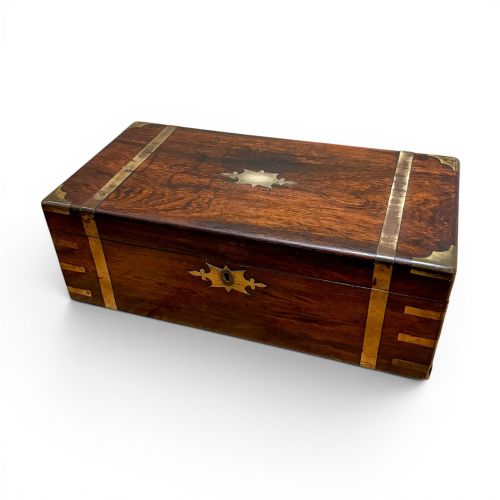
A campaign lap desk is a portable writing box designed for travel, offering timber construction and brass fittings that appeal to collectors of military antiques.
Campaign Lap Desk
The selection spans simpler Georgian and Regency iterations up to elaborate mid-nineteenth-century variants equipped with secret drawers and candle sconces. These objects served officers and travellers who needed an organised portable office on military campaigns or distant postings.
Makers utilised resilient timbers such as mahogany, rosewood, walnut, and camphor wood to withstand the rigours of transit. Formats range from standard writing slopes to complex correspondence boxes and metamorphic pieces designed for multifaceted utility.
Materials and construction
Makers constructed these pieces using dense hardwoods including mahogany, rosewood, walnut, and exotic woods like coromandel and camphor wood, reinforced to endure long journeys. Solid timber carcasses were panelled and jointed carefully to prevent warping in shifting climates.
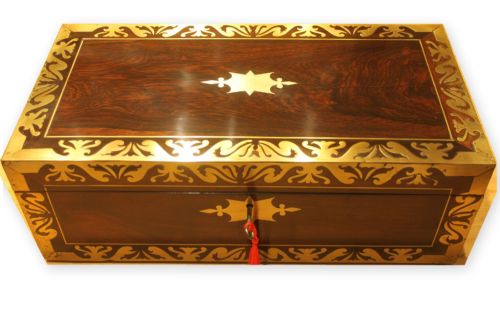
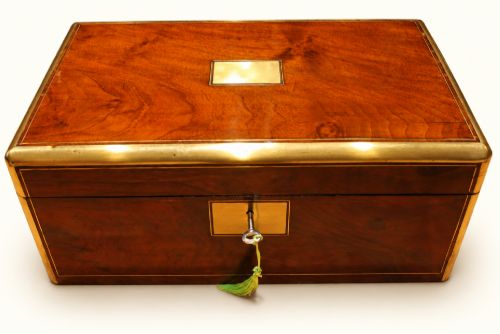
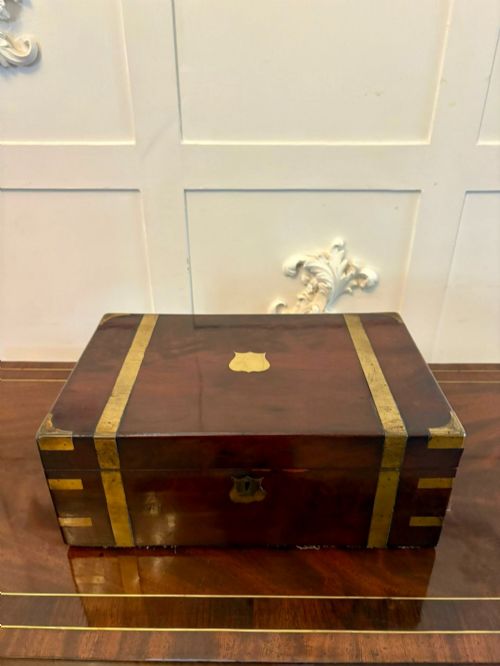
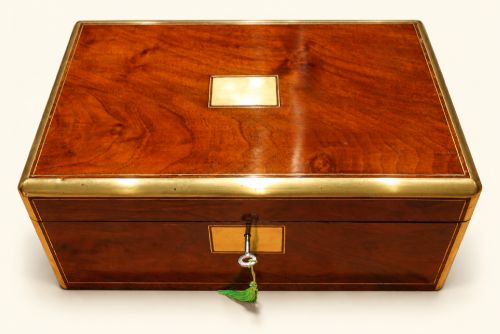
Robust brass binding, corner mounts, and inlays protected the vulnerable edges of the box and added structural rigidity during transport. Flush-fitting brass drop handles and secure locks ensured the contents remained protected while on the move.
Campaign Lap Desk Retail Price Guide 2026
Typical asking prices for campaign lap desk among the pieces listed under this phrase on Sellingantiques today, from the lower quarter to the upper quarter. They describe what is for sale here now, not the wider market.
Listings feature camphor wood, pollard oak, and coromandel alongside traditional mahogany and rosewood across the Victorian and Regency eras.
Assessing craftsmanship
Quality reveals itself in the precision of the brass inlay, the thickness of the timber, and the complexity of the interior fittings such as secret drawers and stationery slots. Finer specimens display meticulous mitring, high-grade cabinet timbers like burr walnut or amboyna, and original working locks.
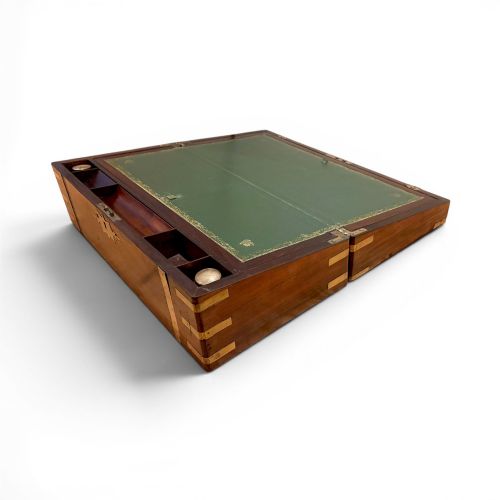
Simpler boxes rely on plain mahogany with basic brass corners, whereas superior examples incorporate fitted leather writing surfaces, specialised stationery compartments, and robust brass hardware that sits completely flush with the wood surface.
Austin
The Campaign Lap Desk Glossary
- Campaign lap desk
- A portable writing box fitted with folding writing slopes and compartments, engineered for officers and travellers.
- Writing slope
- The hinged internal board that folds down to create an angled surface for penning letters.
- Secret drawers
- Concealed compartments hidden behind false panels or accessed via hidden spring mechanisms within the box interior.
- Bramah lock
- A high-security cylindrical lock patented by Joseph Bramah, commonly found on superior nineteenth-century boxes.
- Brass bound
- Reinforcement of box edges and corners with fitted brass strips to protect against impact during transit.
Campaign Lap Desk: Frequently Asked Questions
How were campaign lap desks used?
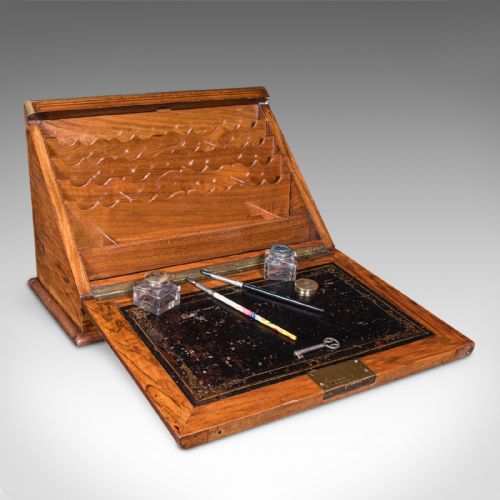
Officers and travellers placed these portable boxes on tables or laps to write correspondence while away from permanent offices. The folding lid opened to reveal sloping surfaces for paper alongside compartments for inkwells and quills.
Interior spaces held stationery, sealing wax, and personal documents securely during transit. Many included hidden compartments to protect valuables and currency from discovery.
What woods were used for campaign desks?
Cabinetmakers selected durable hardwoods such as mahogany, rosewood, walnut, and camphor wood to resist splitting and warping in varied climates. Exotic veneers like burr walnut, coromandel, and amboyna appeared on high-status pieces.
Softer or local timbers were rarely used because the intended travel lifestyle demanded robust structural integrity. Brass banding further protected the vulnerable corners of these dense wooden boxes.
How do I spot secret drawers?
Secret compartments usually hide behind false partitions, stationery dividers, or sliding panels inside the main well of the box. Gently lifting internal trays or pressing hidden wooden pins often releases the secret spring mechanism.
Cabinetmakers designed these hidden spaces to safeguard currency, letters, and small valuables. Not every box contains them, but they appear frequently in larger Victorian and Georgian examples.
Are original keys common?
Original working keys are uncommon because centuries of travel often resulted in lost hardware. Many surviving boxes retain replacement keys or rely on antique locks that remain functional.
High-grade Bramah locks required specialised keys, making replacements difficult to source if lost. The presence of a working key enhances the usability of the piece for modern collectors.