


Camel Wool Tribal Rug
A camel wool tribal rug brings the raw, tactile heritage of nomadic weavers directly into a modern interior.
Camel Wool Tribal Rug
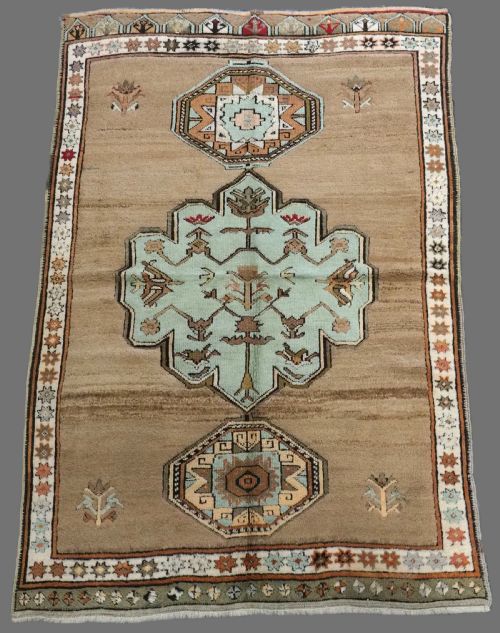
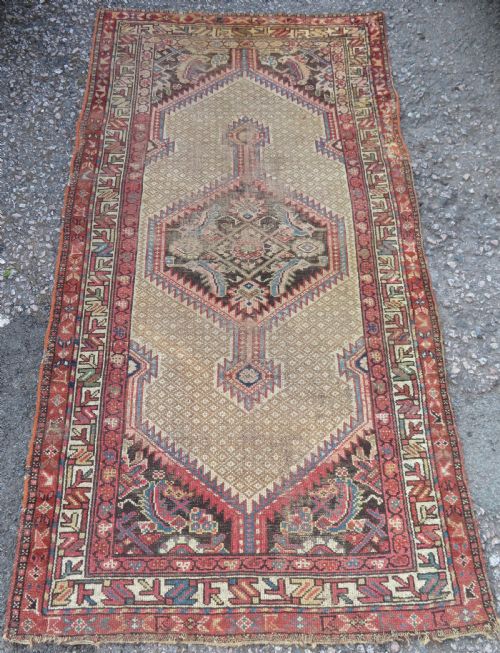
A camel wool tribal rug represents the utilitarian artistry of nomadic and village weavers across Central Asia, Persia, and Anatolia. These pieces encompass various functional objects, including floor rugs, prayer rugs, torbas, chuvals, and asmalyks created for tribal life and transport.
The versions most commonly met on this page span the mid-nineteenth century through the early twentieth century, originating from groups such as the Yomut, Tekke, Ersari, and Baluch tribes. Weavers utilised local materials to produce both large floor coverings and smaller tent bags designed to line nomadic dwellings.
Materials and construction
Weavers relied primarily on hand-spun wool, cotton foundations, and natural camel hair or camel wool to build durable, resilient textiles. Undyed camel hair frequently forms the warm, neutral ground of the field, providing a textured backdrop for denser pile work.
Natural dyes infused the sheep wool and silk highlights with deep tones that mellow gradually over decades of exposure and use. Artisans employed a variety of technical methods, combining pile knotting with flatweave banding, embroidery, and mixed structural techniques on nomad looms.
Listings feature nomadic weavings produced between the mid-nineteenth century and the 1930s by tribes across Central Asia, Persia, and Anatolia.
Distinctions in quality
Quality rests upon the fineness of the knotting, the integrity of the structural weave, and the precision executed in traditional tribal guls. Pieces retaining original backs, tassels, and complete borders display a higher level of preservation and historical completeness.
The depth and variation of the natural dyes, combined with the lustre of the hand-spun wool or camel hair ground, elevate certain examples above standard utilitarian items. Superior execution transforms a functional tent trapping or rug into a masterwork of tribal composition.
The Camel Wool Tribal Rug Glossary
- Asmalyk
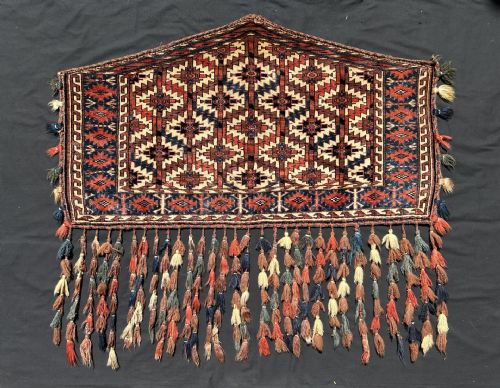
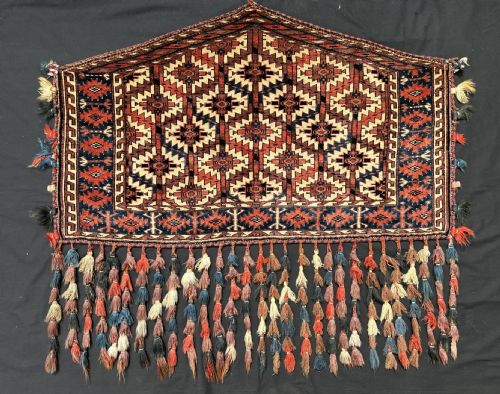
- A pentagonal trapping traditionally mounted on the flanks of a camel during Yomut Turkmen wedding processions.
- Chuval
- A large tent storage bag woven by nomadic tribes to hold household goods and bedding inside a yurt.
- Torba
- A smaller wall-hanging storage bag utilised inside nomadic dwellings for provisions and personal belongings.
- Gul
- A repeating medallion or octagonal primary motif characteristic of Turkmen and Central Asian carpet design.
- Flatweave
- A textile constructed without pile by interlocking warp and weft threads together, creating a smooth surface.
Camel Wool Tribal Rug: Frequently Asked Questions
What is a camel wool tribal rug used for?
Nomadic tribes utilised these textiles primarily for floor coverings, tent insulation, and practical storage containers during seasonal migrations.
Today, collectors place them as floor rugs, narrow runners, or hang them as decorative wall textiles within contemporary interiors.
How do I identify a Baluch rug?
Baluch tribal pieces often feature rich dark wools, camel ground fields, and distinctive prayer designs with tree of life motifs.
They originate from Baluch groups inhabiting regions across Afghanistan, Persia, and Central Asia during the nineteenth and early twentieth centuries.
What is a Turkmen asmalyk?
An asmalyk is a specific trapping created by tribes such as the Yomut for ceremonial camel decoration during weddings.
These pentagonal textiles display complex geometric guls and careful weaving intended to showcase the wealth and skill of the weaver's family.
How should I care for an antique tribal rug?
Protect the natural wool fibres by keeping the piece out of direct sunlight and using a breathable rug underlay underneath.
Vacuum gently without a rotating brush roll and consult a specialist familiar with antique vegetable-dyed textiles for professional cleaning.