

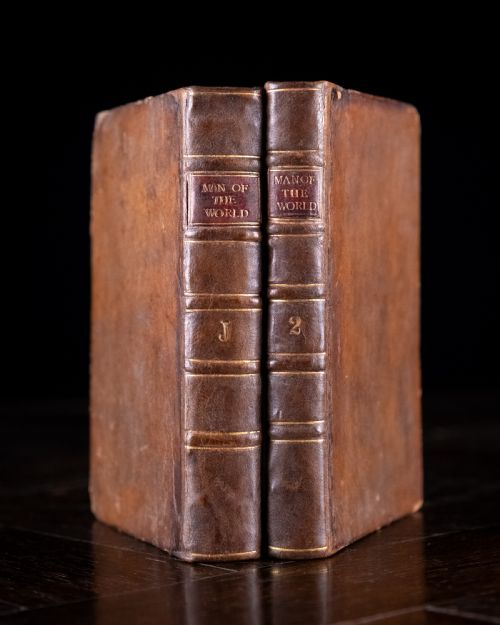


Calfskin Books
Calfskin antique books bring historical literature and polished leather bindings together, offering substantial shelf presence and tangible links to past centuries.
Calfskin Books
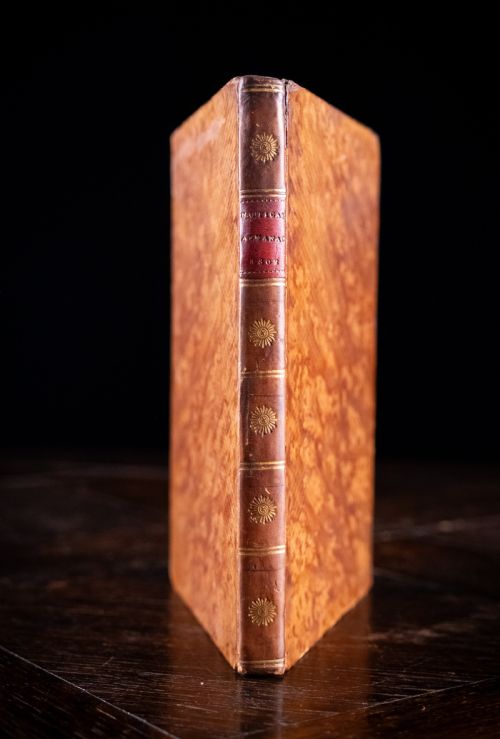
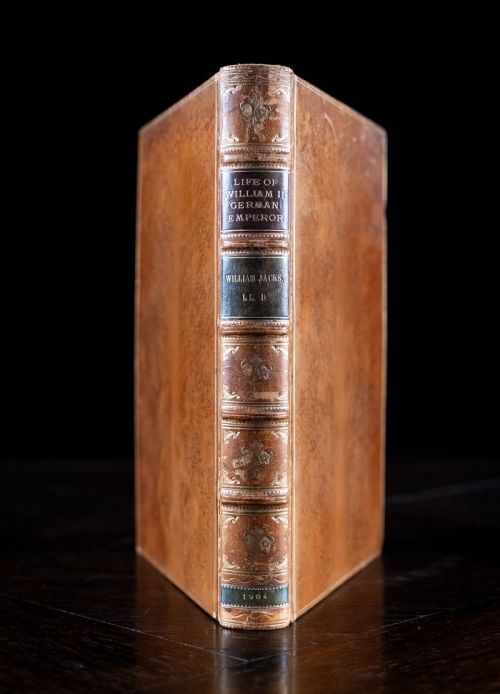
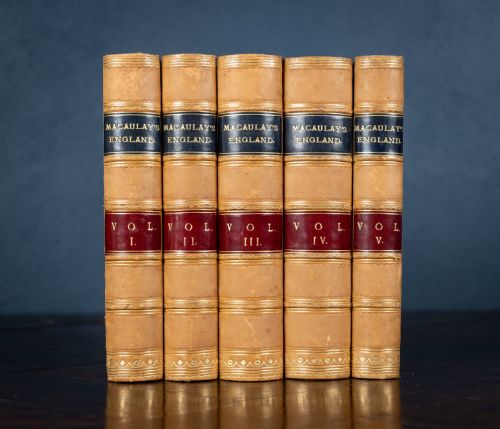
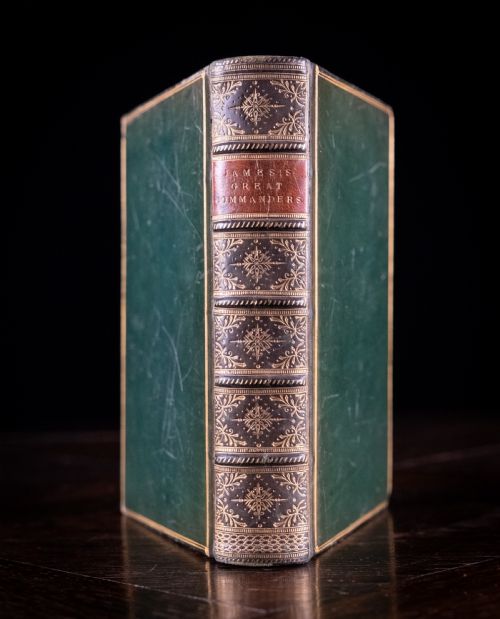
Calfskin antique books encompass multi-volume sets, single leather-bound volumes, and miniature formats dating from the eighteenth century through to the early twentieth century. Buyers seeking calfskin antique books will encounter works spanning Georgian, Regency, Victorian, and Edwardian periods, covering subjects from history and theology to literature and naval almanacs.
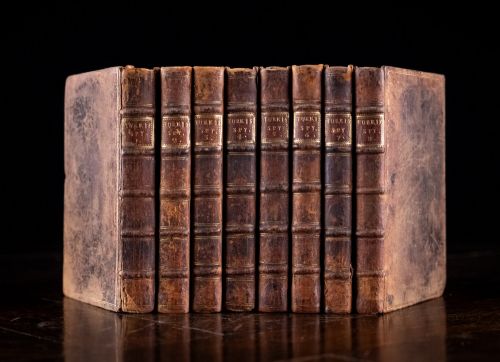
The selections on this page feature substantive publications such as complete multi-volume sets of Shakespeare, historical runs of magazines, and specialised county references. These physical objects represent centuries of printing, binding, and literary production, preserved through paper, leather, and gold leaf.
Construction and Materials
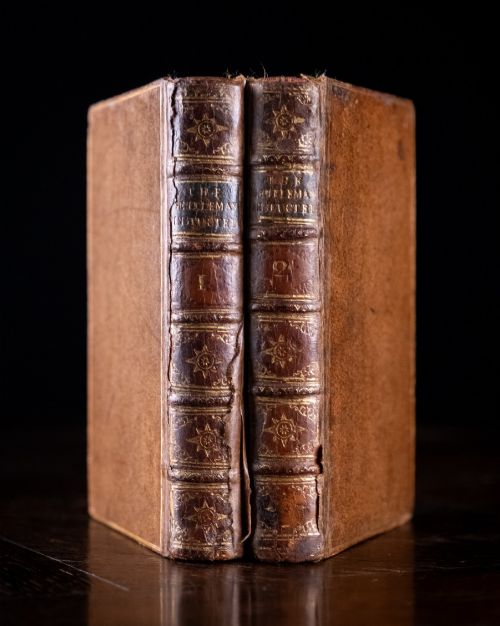
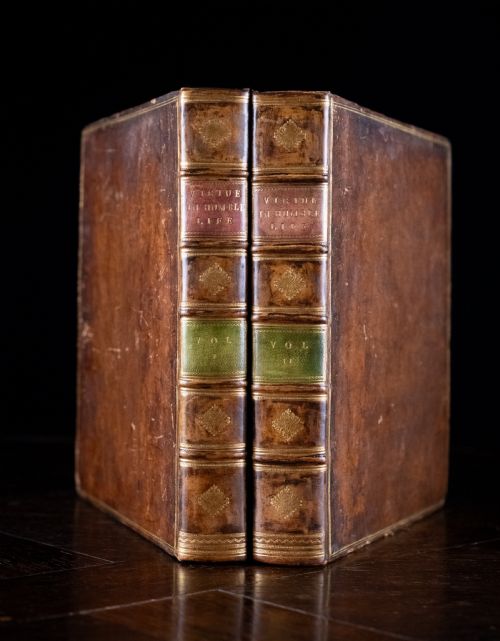
Binders utilised smooth calfskin leather over sturdy cardboard or board foundations, often incorporating marbled paper endpapers to line the inner covers. Text blocks consist of traditional paper stitched securely into bindings that frequently display gold leaf tooling and gilt highlights along the spines and edges.
Production techniques involved hand-setting type, printing on rag paper, and manually tooling leather covers to designate titles, volume numbers, and decorative motifs. Bronze medals and similar inset elements occasionally accompanied specialised historical publications.
Early miniature Bibles required exceptionally steady hands to bind and read, packing the entire Old and New Testaments into pocket-sized calfskin.
Factors of Quality
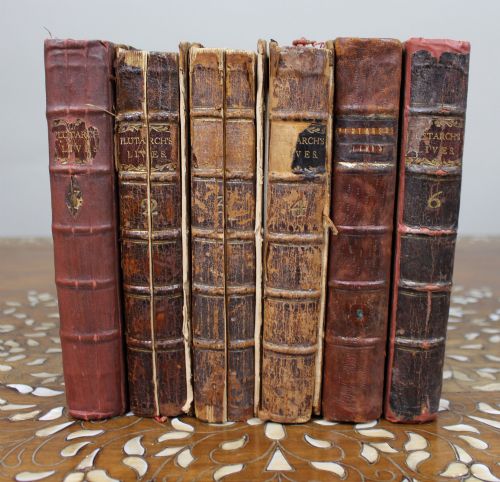
Quality rests in the preservation of the delicate calfskin binding, the crispness of the gold leaf tooling, and the structural integrity of the paper text block. Complete multi-volume sets command attention when uniform in binding and colour across all included books.
The depth of historical provenance and the clarity of eighteenth or nineteenth-century typography further distinguish finer examples from standard reading copies. Well-preserved bindings retain suppleness in the leather and tight sewing along the spines.
J. & R. Tonson·J. Wheble·Jean Dassier
The Calfskin Books Glossary
- Calfskin
- A fine, smooth leather prepared from the hide of a calf, prized for bookbinding due to its supple texture and ability to take fine tooling. It forms the primary protective covering for many eighteenth and nineteenth-century volumes.
- Gilt
- Application of gold leaf or gold powder to the edges of book pages or onto the leather binding. This technique protects the paper margins from dust and adds decorative brilliance.
- Marbled paper
- Paper decorated with a colourful patterned surface resembling marble, created by floating colours on size and transferring them. Binders regularly used this material for endpapers inside the covers.
- Miniature book
- An exceptionally small volume produced for portability or as a novelty, often measuring only a few centimetres in height. Eighteenth-century examples include concise religious texts and histories.
- Book set
- A collection of multiple bound volumes published together as a complete work or series. Examples range from multi-volume historical accounts to collected literary works.
Calfskin Books: Frequently Asked Questions
How should I care for leather bound books?
Keep volumes away from direct sunlight and extreme humidity fluctuations to prevent the calfskin leather from drying out and cracking.
Ensure adequate air circulation around bookshelves and handle the spines gently when removing books from tight rows.
Are multi-volume sets usually complete?
Many surviving sets remain intact across their original publication runs, though buyers should verify the volume count listed for each specific title.
Checking individual volume numbers against publication details ensures the entire historical work is represented.
How can I tell the period of a leather book?
Bindery styles, typography, and paper characteristics often indicate whether a volume originates in the Georgian, Regency, or Victorian era.
Title pages frequently supply exact publication dates, while contemporary inscriptions offer further chronological clues.
What subjects do these antique books cover?
The available volumes span a broad spectrum of historical interests, including English history, naval almanacs, classical literature, and religious texts.
Specialised county references and collected magazines provide deep insight into past centuries of printing and scholarship.