


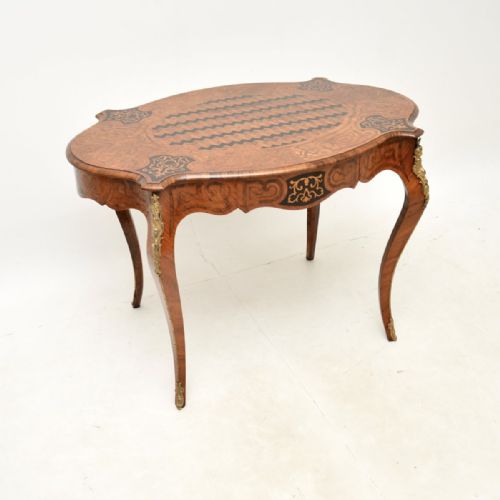
Cabriole Leg Writing Bureau
A cabriole leg writing bureau brings fluid, curved support to domestic writing spaces, uniting practical storage with distinctive period silhouettes.
Cabriole Leg Writing Bureau
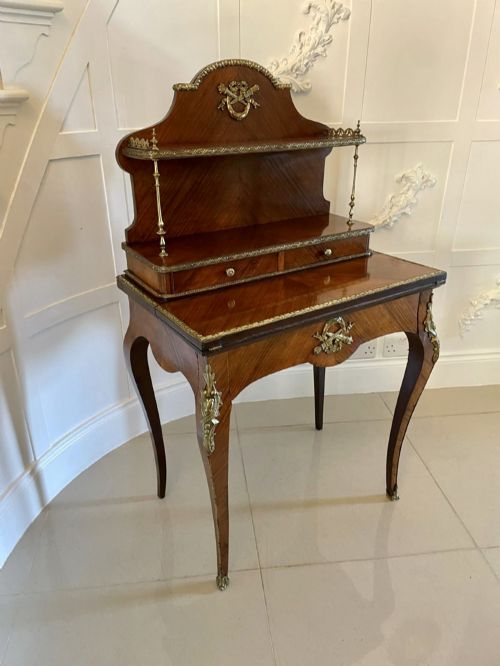
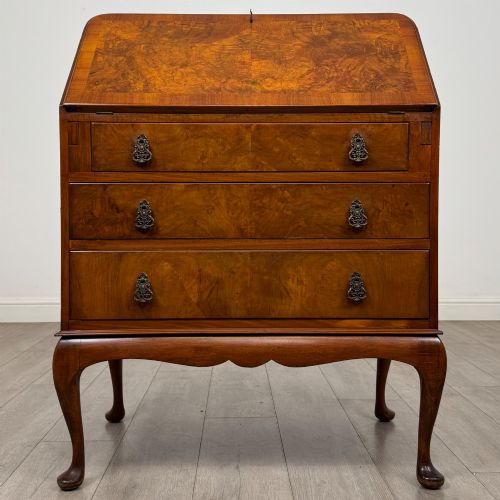
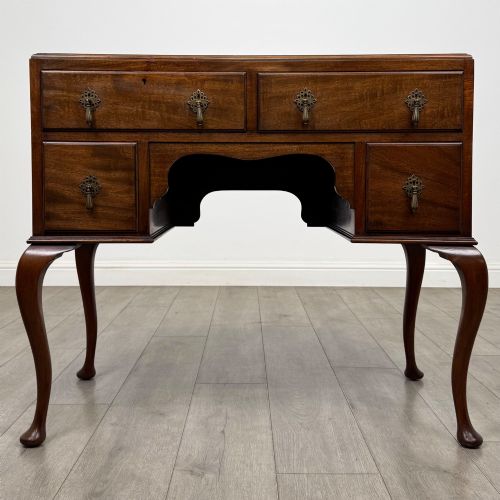
A cabriole leg writing bureau combines a sloping fall-front or writing surface with signature double-curved legs that taper down to pad or scroll feet. These pieces emerge across nineteenth-century Victorian and Edwardian periods, alongside revivalist expressions drawing on French Rococo and Queen Anne vocabularies.
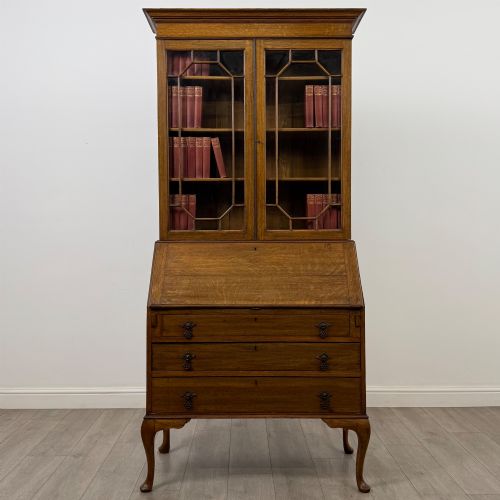
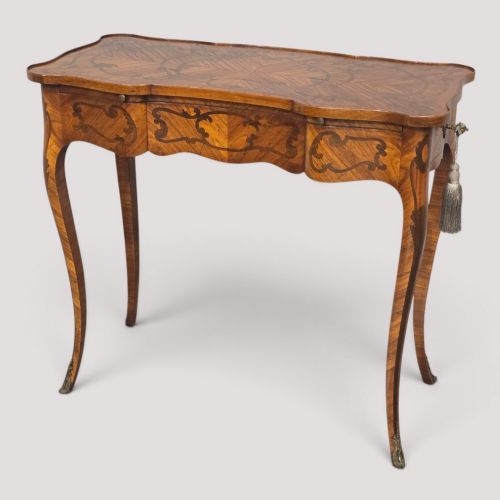
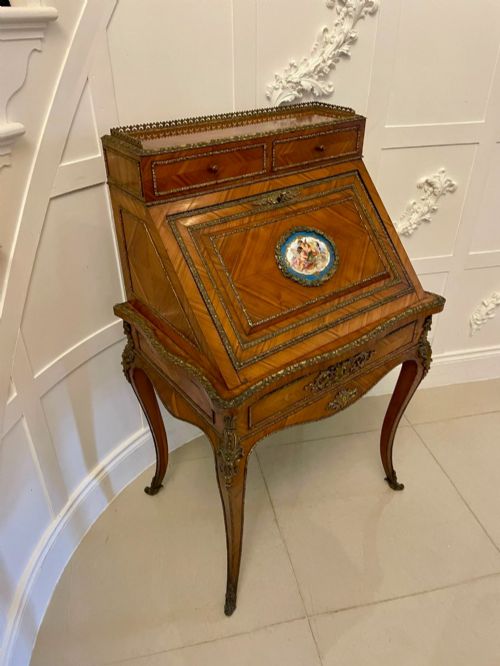
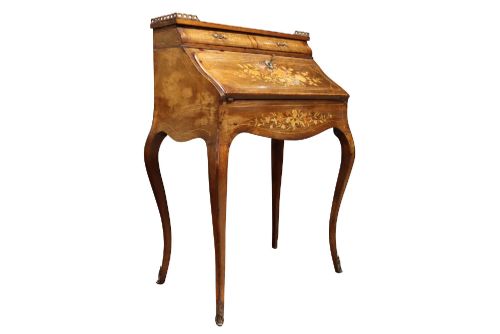
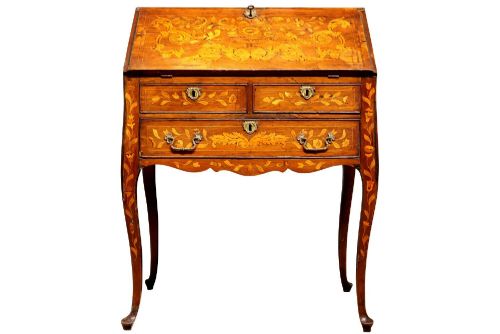
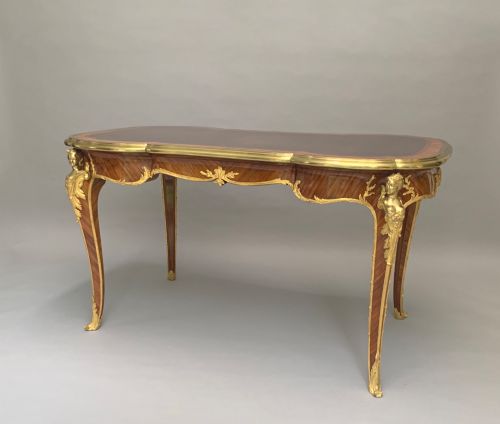
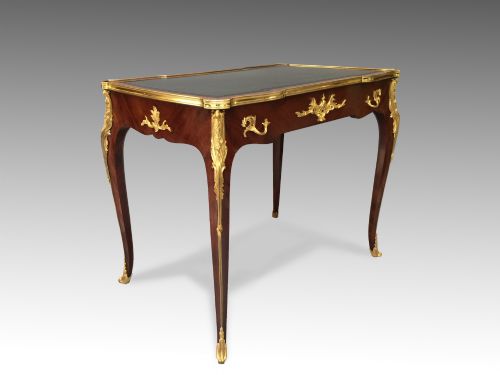
Buyers encounter numerous regional and stylistic variations on this page, ranging from Dutch floral marquetry examples to French Louis XV style desks and English walnut upright bureaux. The most frequently met versions date from the Victorian and Edwardian eras, often utilising figured walnut, mahogany, or kingwood veneers.
Formats vary from compact bureau bookcases and bureau on stand designs to refined writing tables and bureau de dame variants. Each iteration provides dedicated compartments or drawers behind a sloping lid, supported firmly by those characteristic sweeping legs.
Materials and construction
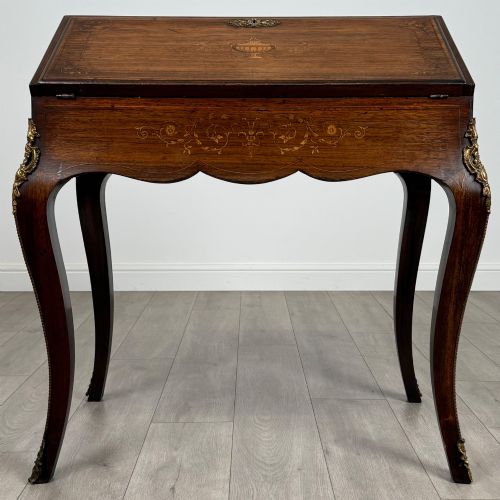
Cabinetmakers constructed these writing bureaux using sturdy primary timbers like oak or mahogany as carcase frames, overlaid with decorative veneers such as burr walnut, kingwood, rosewood, and amboyna. Marquetry and parquetry techniques introduced intricate floral or geometric patterns across the surfaces.
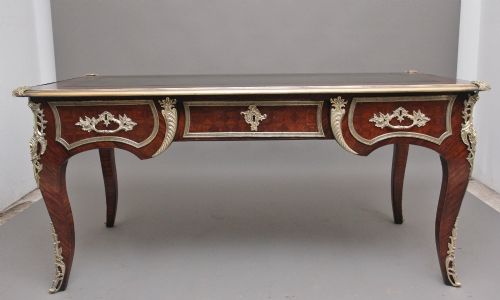
Metal mounts in ormolu and gilt bronze frequently accent the corners, drawer edges, and legs of French-influenced pieces, often paired with inset tooled leather writing surfaces. Brass hardware secures interior compartments, while patinated wood finishes protect the underlying grain.
Listings feature walnut, mahogany, and kingwood timbers alongside brass and ormolu mounts across Victorian, Edwardian, and earlier revival periods.
Assessing quality and execution
Quality rests upon the precision of the veneer matching and the depth of the marquetry inlay across the fall-front and drawer fronts. Superior examples exhibit continuous grain flow and meticulous hand-cut parquetry rather than printed or superficial ornamentation.
The sculptural grace of the leg carving dictates the tier of craftsmanship, separating rigid machine-shaped supports from fluidly hand-carved cabriole profiles. Furthermore, the integration of heavy cast ormolu mounts and the smoothness of internal drawer construction define the workshop standard.
François Linke·Edwards and Roberts·CH Jeanselme and Co·Durand·Wylie and Lochhead Glasgow
The Cabriole Leg Writing Bureau Glossary
- Cabriole leg
- A furniture leg featuring two curves; the upper convex curve arcs outward, while the lower concave curve tapers inward to a foot. This design mimics animal limbs and gained prominence during the Queen Anne and Louis XV periods.
- Bureau
- A desk with a sloping hinged lid that drops down to form a writing surface, concealing pigeonholes and small drawers inside. In British usage, it refers specifically to a writing cabinet rather than a chest of drawers.
- Marquetry
- The art of applying decorative pieces of veneer to a structure to form intricate pictorial designs. Craftsmen use varied wood tints and grains to create floral or geometric motifs.
- Ormolu
- Gilt bronze ornamentation applied to the mounts, handles, and feet of fine antique furniture. The technique involves treating brass or bronze with a mercury and gold amalgam.
- Bonheur-du-jour
- A light ladies' writing desk featuring a small cabinet or set of pigeonholes atop the main writing surface. Originating in France, it typically stands on slender legs.
- Bureau plat
- A flat-topped freestanding writing desk, usually finished on all sides with drawers integrated into the frieze. These desks often feature leather writing inserts and ornamental mounts.
Cabriole Leg Writing Bureau: Frequently Asked Questions
What is a cabriole leg writing bureau?
A cabriole leg writing bureau is a dedicated writing cabinet featuring a slanted fall-front lid and characteristic double-curved legs. These pieces provide enclosed compartment storage while maintaining an elevated, decorative profile.
They serve as functional workspace desks that double as decorative statement furniture in studies or living spaces. The internal compartments store stationery, letters, and small documents securely out of sight.
How do I date a bureau?
Dating relies on examining the secondary timbers used inside the drawers, construction methods, and prevailing stylistic revivals. Victorian and Edwardian pieces frequently utilise machine-sawn elements alongside traditional dovetailing.
Matching the exterior veneer choices, such as burr walnut or kingwood, to documented period preferences helps narrow down the decade of manufacture. Hardware styles and mount designs offer further chronological clues.
How should I care for leather tops?
Leather writing surfaces require regular dusting with a dry, soft cloth to prevent particulate accumulation in the tooling grooves. Avoid placing damp items directly onto the surface to protect the leather from staining.
Occasional treatment with specialised leather balms maintains suppleness and prevents cracking over time. Keep the bureau away from direct sunlight and heat sources to preserve the hide.
Are these desks suitable for laptops?
Many writing bureaux accommodate modern laptops when the fall-front lid is lowered to create a writing platform. It is essential to measure the internal depth and width of the writing space before use.
Care must be taken with older hinges and supports to ensure they are not strained by heavier electronic devices. Closing the lid afterward conceals modern technology entirely within a period cabinet.
What distinguishes Edwardian pieces?
Edwardian versions often reflect lighter proportions and revivalist tendencies inspired by earlier Georgian and French eighteenth-century designs. Cabinetmakers utilised figured walnut and mahogany veneers with understated brass hardware.
Construction during this era benefited from industrial advancements while retaining high standards of hand-finishing. The resulting bureaux combine historical aesthetic references with practical domestic utility.