
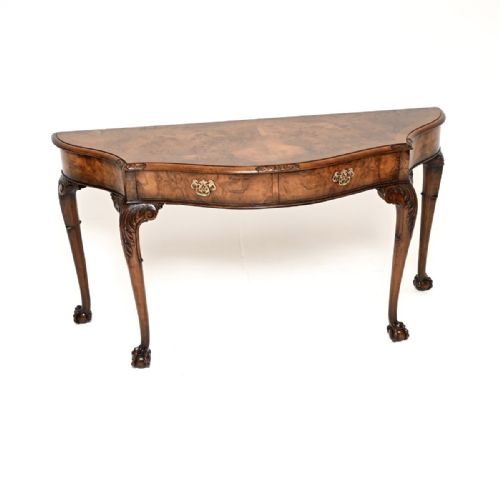
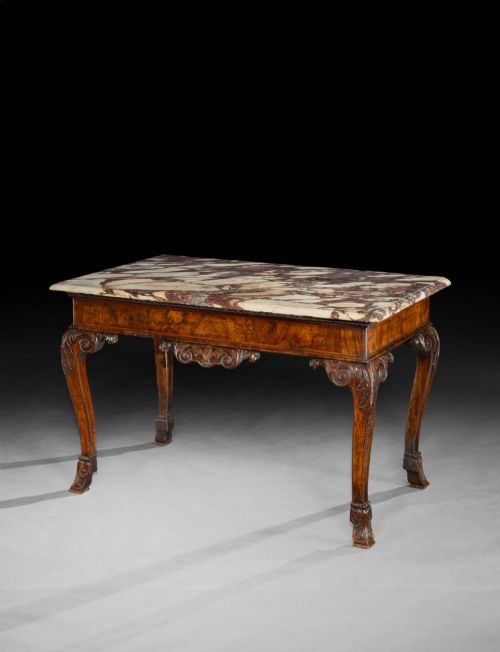
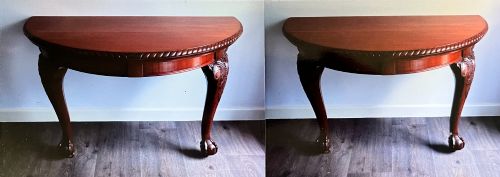
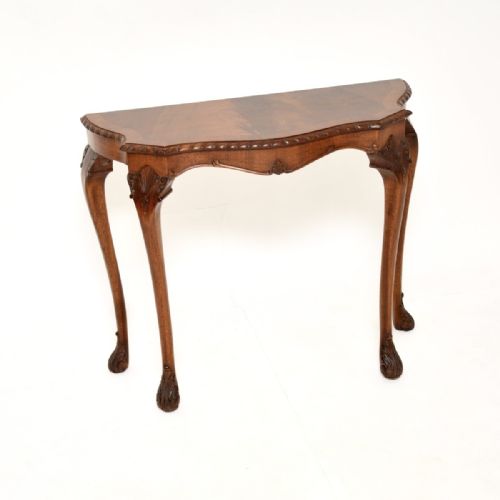




Cabriole Leg Pier Table
These cabriole leg pier table pieces anchor a room against a wall with curved, graceful supports.
Cabriole Leg Pier Table
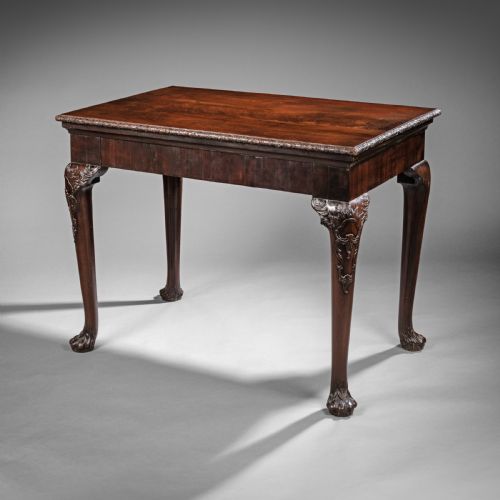
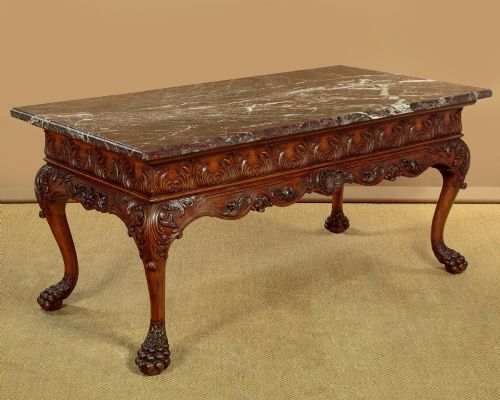
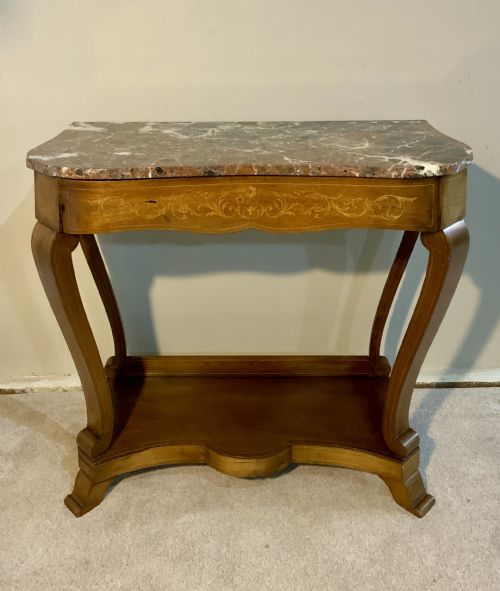
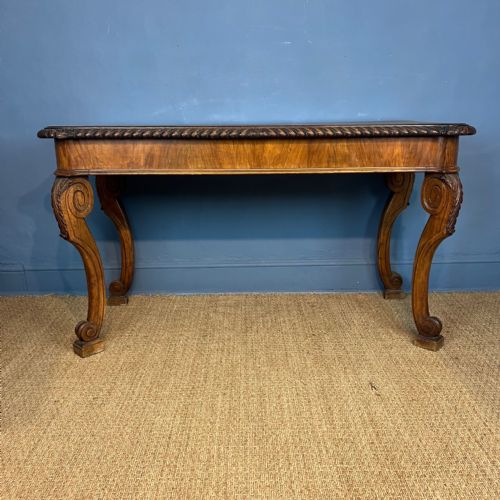
A cabriole leg pier table stands against a wall, frequently bearing a heavy marble slab upon a wooden frame. The examples seen here range from substantial Georgian designs to later revivals from the nineteenth and early twentieth centuries.
Makers shaped these items as console tables, side tables, and occasional tea tables. Walnut and mahogany predominate, while oak, paint, and burr walnut appear alongside imported rosewood.
The prevailing aesthetic leans towards Rococo Revival, Chippendale, and Queen Anne interpretations. French and Italian regional variations join English country house pieces to form the selection.
Materials and construction
Cabinetmakers constructed the structural frames using native hardwoods such as mahogany, walnut, and oak, often selecting figured veneers for visible surfaces. Carved details define the scrolled knees and feet characteristic of the style.
Heavy marble tops, fitted directly to the wooden rails, provide durable, cool surfaces. Paint and gilding finish alternative pieces, sealing the timber beneath decorative layers.
One grand country house table arrived bearing the family coat of arms, ensuring dinner guests knew precisely who owned the soup.
Quality variations
The crispness of the carved ornament on the knees and feet separates standard production from superior examples. Sharp, deep profiling indicates skilled hand-carving rather than mechanical shaping.
Timber selection dictates visual depth, with highly figured walnut and rich mahogany creating superior contrast. The integration of the marble slab to the wooden frame further distinguishes finer workshops.
Epstein and Co·Hicks of Dublin
The Cabriole Leg Pier Table Glossary
- Cabriole leg
- A furniture leg that bends outward in a convex curve at the top and inward in a concave curve below, typically ending in a pad or claw foot. This form derives from animal limbs and appeared extensively in eighteenth-century design.
- Pier table
- A side table designed specifically to stand against a wall between two windows, often placed beneath a mirror. These items prioritised decorative impact over heavy utility.
- Console table
- A table fixed to a wall or supported by front legs, requiring wall attachment for stability. They frequently feature elaborate carved aprons and marble tops.
- Serpentine
- A curved shape consisting of a convex centre flanked by concave ends. This undulating front profile adds visual movement to case furniture and tables.
- Patination
- The surface sheen and colour developed by timber through age, handling, and exposure to light. Collectors value this natural darkening and softening of the grain.
Cabriole Leg Pier Table: Frequently Asked Questions
Where should I place a pier table?
These tables suit hallways, reception rooms, and narrow wall spaces where a deep piece would obstruct movement. Placing them beneath a mirror or large artwork creates a balanced focal point.
Ensure the wall construction supports the weight, particularly if the table carries a heavy marble top. Many historical examples rely on wall fixings for complete stability.
How do I care for a marble top?
Wipe marble surfaces with a damp cloth and mild soap, avoiding acidic cleaners that etch the polished stone. Use coasters to prevent liquid rings from penetrating porous areas.
Apply a neutral stone wax periodically to maintain the sheen. Handle heavy objects carefully to avoid chipping the vulnerable edges.
Are these tables sturdy?
Historical tables often require gentle placement to avoid straining joints weakened by age. Side tables with marble tops carry considerable weight, so checking the frame construction is essential.
Avoid dragging these items across floors. Lift them carefully when repositioning to protect the vulnerable cabriole joints.
How do I distinguish eighteenth-century pieces?
Examine the timber construction, tool marks, and secondary woods used in the frame interior. Eighteenth-century furniture typically displays hand-cut joinery and period-specific fastening methods.
Compare the carving depth and proportions against documented examples from the same era. Later revival pieces often exhibit heavier timber scantlings and machine-derived uniformity.