
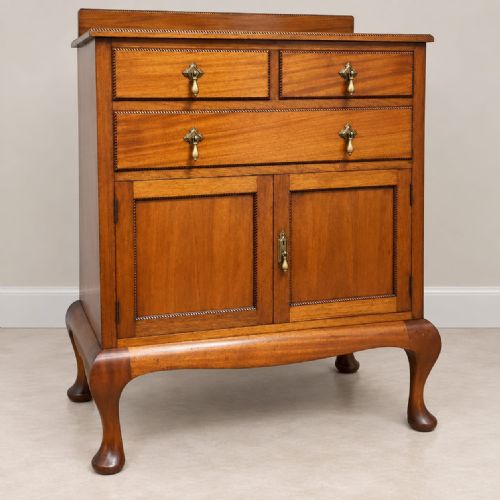
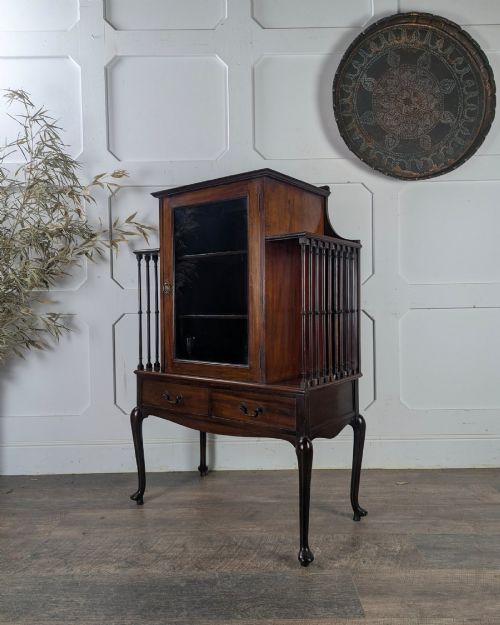
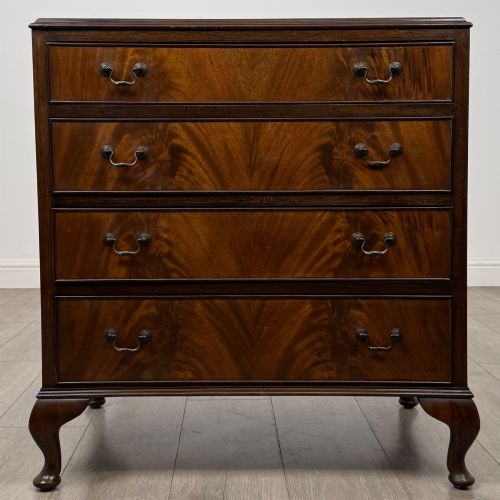
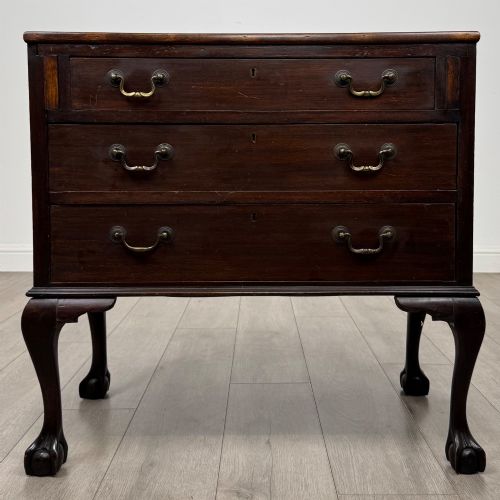

Cabriole Leg Mahogany Chest
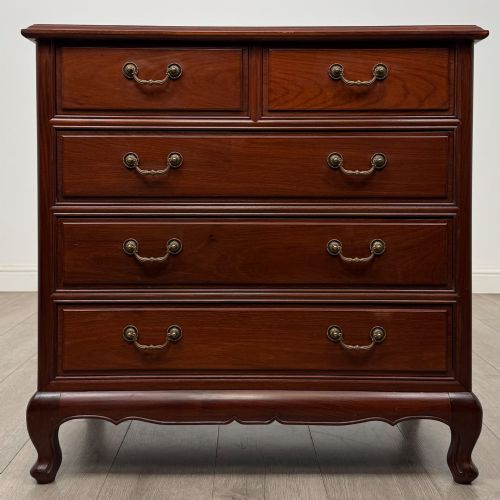
A cabriole leg mahogany chest brings fluid 18th-century curves and rich timber into a room, offering practical storage with distinct sculptural form.
Cabriole Leg Mahogany Chest
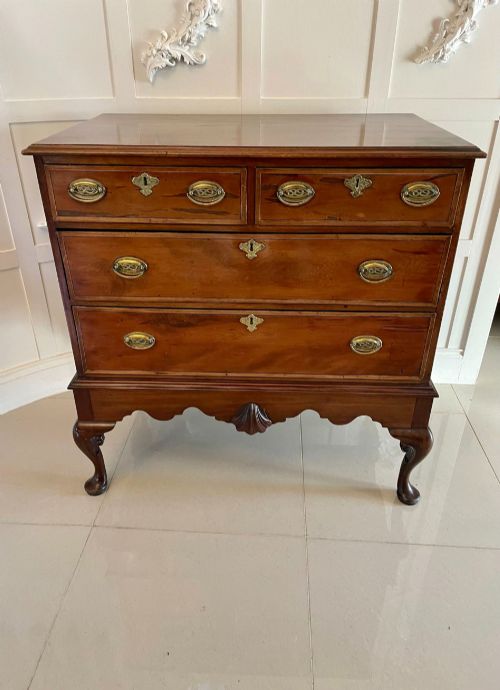
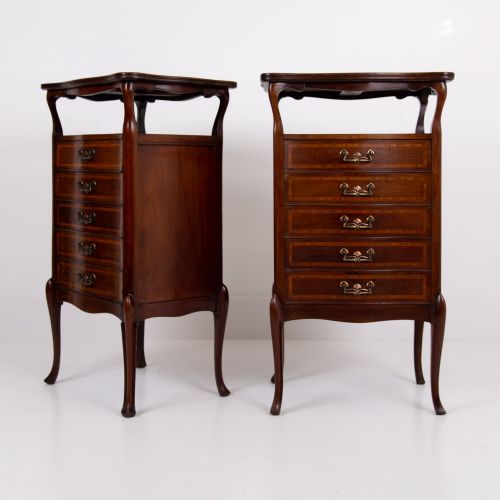
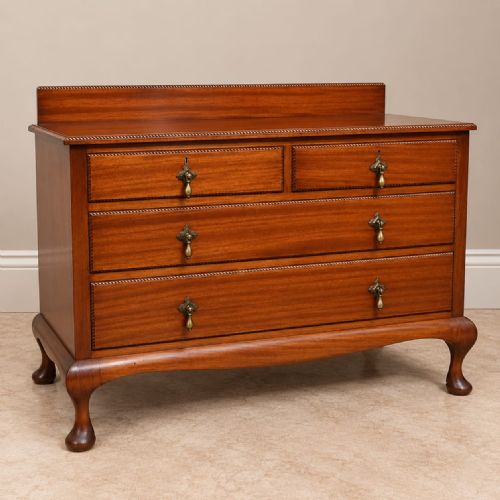
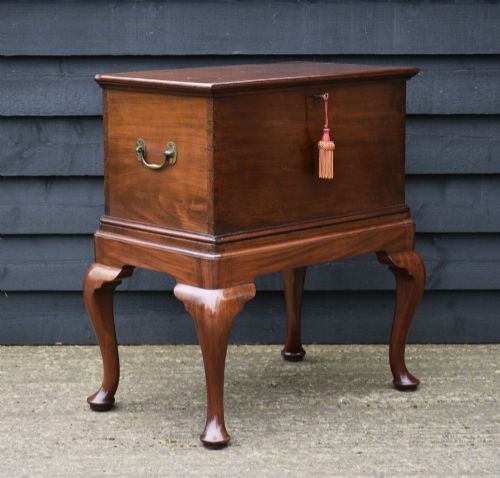
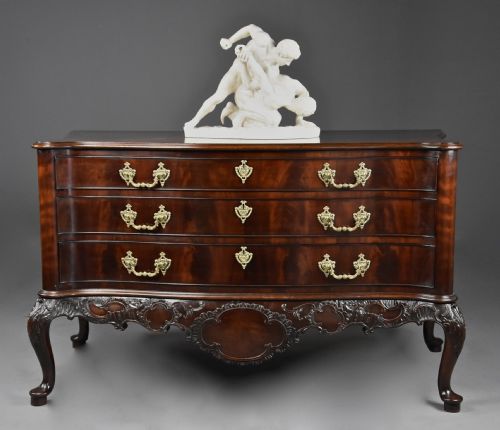
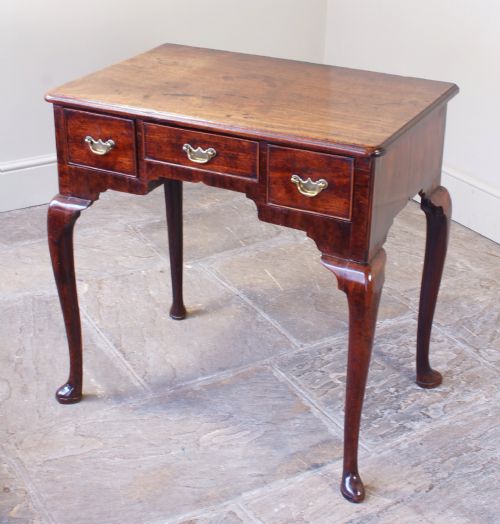
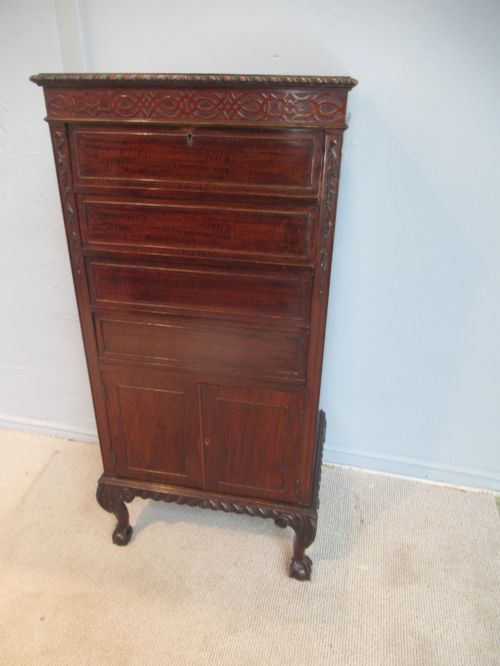
A cabriole leg mahogany chest encompasses a variety of elevated storage forms, ranging from traditional lowboys and chests on stand to refined tallboys and bedside cabinets. Pieces emerge primarily from the Georgian and Edwardian eras, alongside revivals spanning the 18th, 19th, and early 20th centuries.
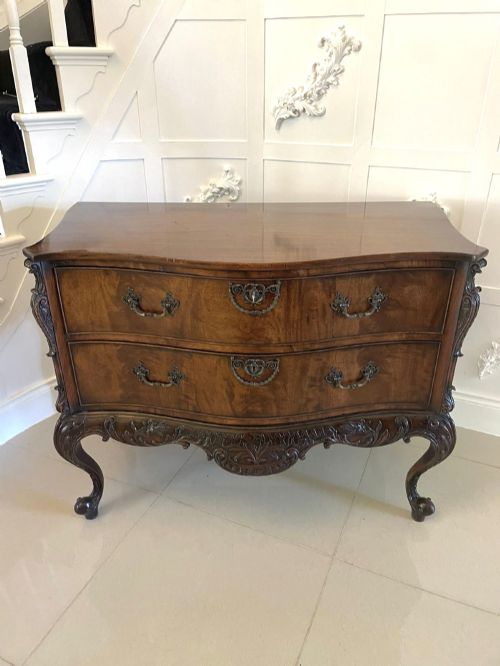
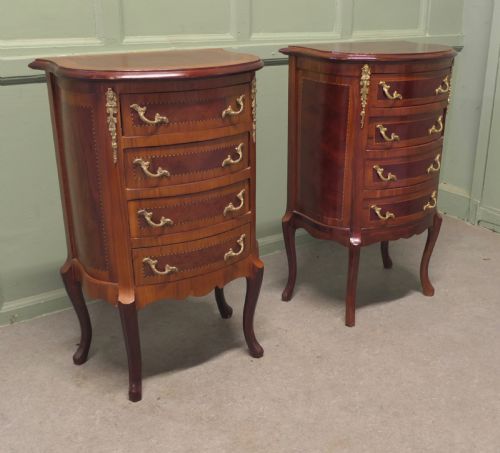
The buyer meets forms featuring serpentine fronts, inlaid satinwood details, and distinct cabriole supports that lift the timber framework clear of the floor. Origin influences the silhouette, with English George II and III designs appearing alongside French Louis XV styles and American Federal interpretations.
Materials and construction
Cabinetmakers utilised solid mahogany and figured mahogany veneers over secondary timbers, shaping the signature sweeping legs directly from the grain. Brass handles, escutcheons, and occasional glass elements complement the polished timber surfaces.
Inlaid details in satinwood and precise line inlay define specific regional and revival pieces. Carved ornamentation appears on highboys and commodes, requiring steady handwork to shape the serpentine contours.
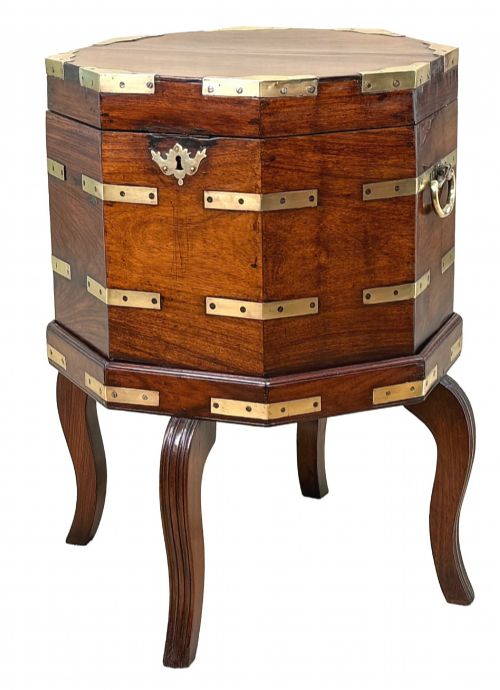
Cutlery chests and wine coolers share floor space with towering tallboys, proving that historic dining required as much furniture engineering as a wardrobe.
Gradations in manufacture
Quality rests in the fluidity of the leg curve and the crispness of any carved detail, distinguishing master cabinet work from later revival output. The selection of figured mahogany grain across drawer fronts dictates visual depth.
Internal construction, drawer dovetailing, and the retention of original brass hardware separate pieces of high integrity from those altered over time. Proportion and balance in the stand or supporting legs govern the overall presence of the chest.
Walker and Hall·Muirhead Moffat and Co·Whytock and Reid
The Cabriole Leg Mahogany Chest Glossary
- Cabriole leg
- A furniture leg featuring a double curve, bulging outward at the knee and tapering inward at the ankle, ending in a pad or claw foot. This form derives from Chinese motifs transmitted through European design.
- Lowboy
- A small kneehole-free dressing table or side table with drawers, typically raised on tall cabriole legs. These pieces date predominantly from the mid 18th century.
- Tallboy
- A tall chest of drawers consisting of one chest stacked upon another, elevating the storage capacity. They frequently incorporate satinwood inlay and fine mahogany veneers.
- Serpentine front
- A furniture front curved with a convex centre flanked by concave ends, creating a wave-like profile. This shaping demands advanced joinery skills.
- Cellarette
- A lockable container used for storing wine bottles, often fitted with internal partitions. Examples appear in mahogany with stands or brass mounts.
Cabriole Leg Mahogany Chest: Frequently Asked Questions
What is a chest on stand?
A chest on stand combines a drawer section elevated on a separate support frame with legs. This configuration lifts the main storage compartment higher off the floor.
Such pieces range from 18th-century Georgian designs to later revival interpretations featuring cabriole supports.
How do lowboys differ from chests?
Lowboys function as smaller, table-height drawer units designed originally for dressing or side use. Standard chests focus strictly on vertical drawer storage.
Both forms utilise mahogany timber and cabriole legs across the listed periods.
Where were bedside cabinets placed?
Bedside cabinets served bedrooms as compact storage for personal items and lighting. They often mirrored larger serpentine chests in miniature proportion.
French and Edwardian makers produced these in pairs alongside single variants.
How do I identify a revival piece?
Revival pieces adopt 18th-century forms like George II or Chippendale styles while dating from the Edwardian era or the early 20th century. Construction methods and interior secondary woods usually signal the later manufacturing date.
These pieces reflect historicism in interior design rather than original Georgian production.