

Mahogany Clothes Storage Chest
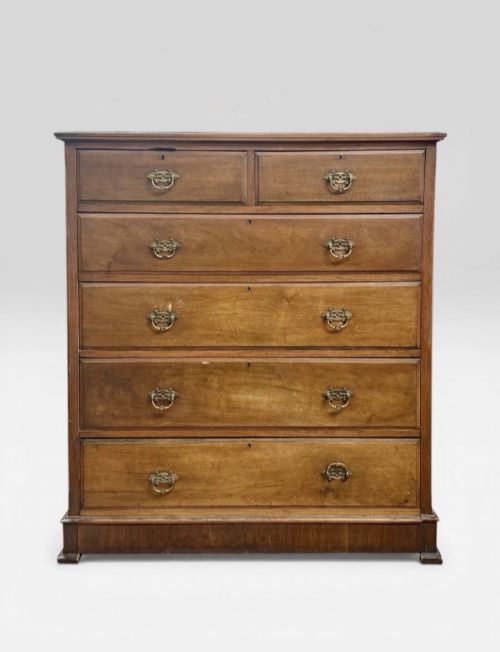
A mahogany clothes storage chest provides traditional storage in solid wood and veneer across Georgian, Regency, and Victorian periods.
Mahogany Clothes Storage Chest
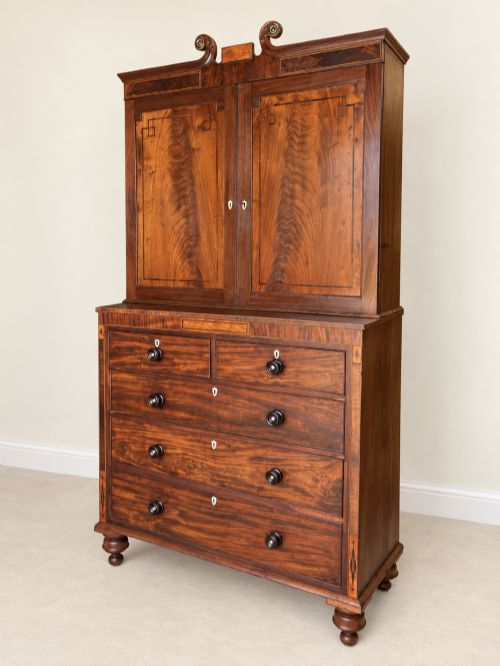
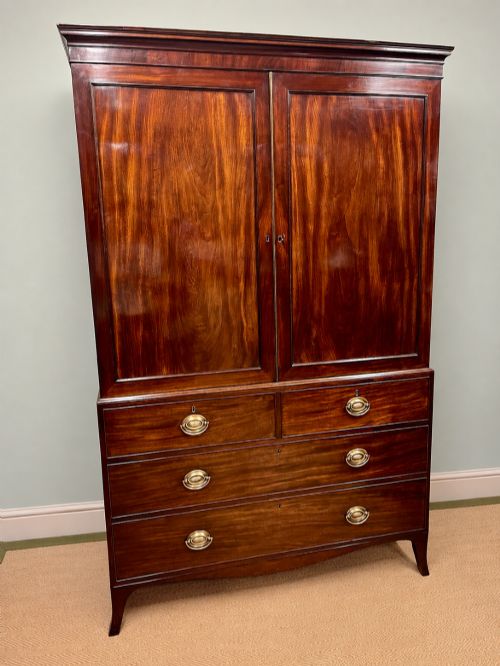
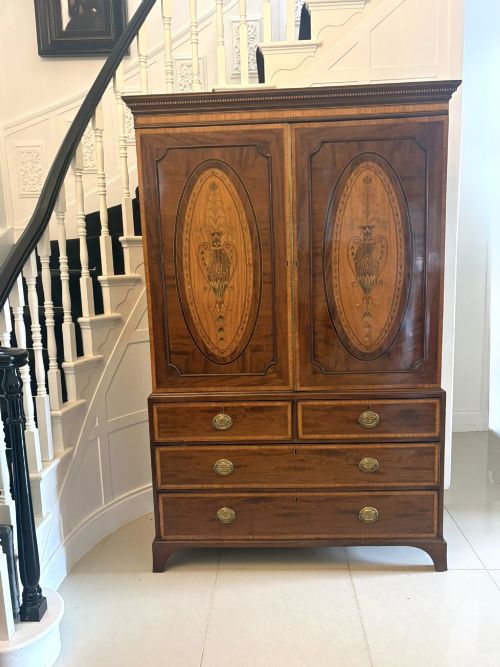
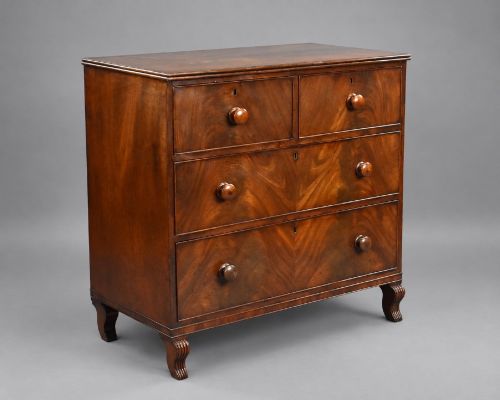
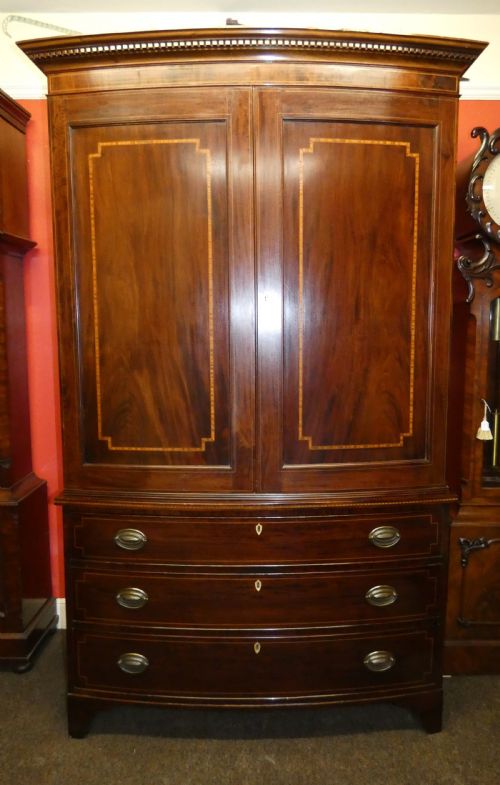
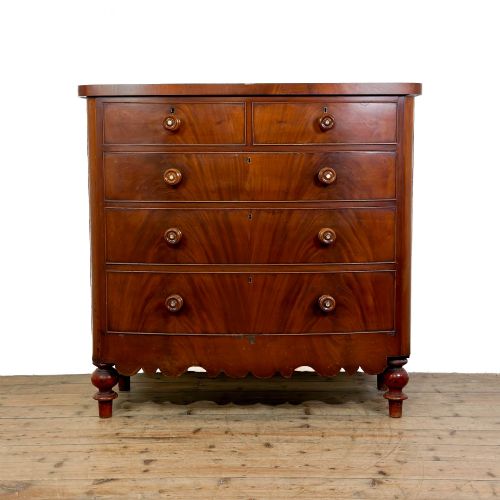
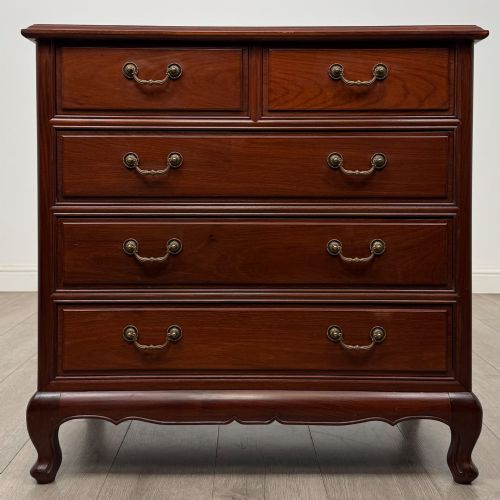
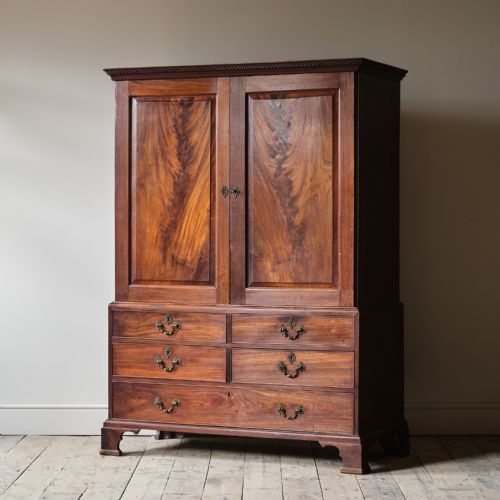
A mahogany clothes storage chest encompasses forms such as linen presses, chests of drawers, cupboards on chests, and wardrobes designed for domestic storage. When searching for a mahogany clothes storage chest, buyers encounter pieces spanning the 18th century, 19th century, Edwardian era, and 1900.
How they were made
Cabinet makers utilised solid mahogany alongside flame mahogany veneer, satinwood, and oak for structural integrity and decorative surface figuring. Brass fittings such as handles and escutcheons complemented the timber grain.
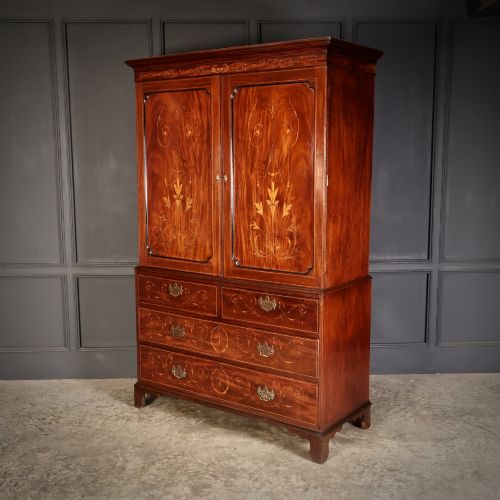
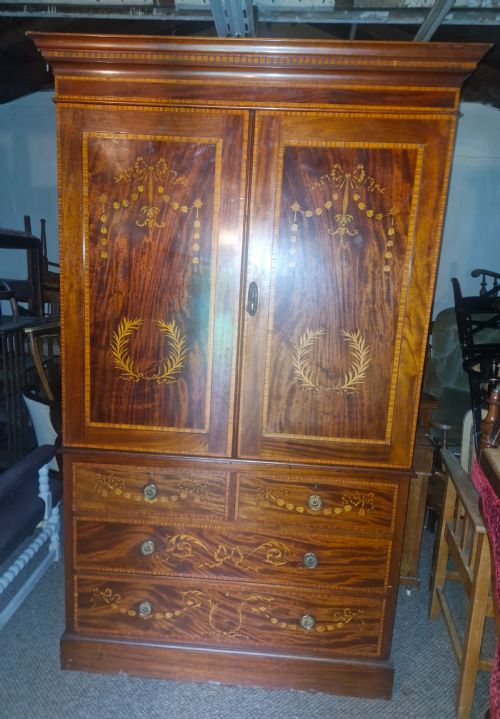
Secondary timbers like pine appear in internal components such as sliding trays and drawer linings. Construction techniques incorporated crossbanding, marquetry inlay, and carved detail on specific period examples.
Listings feature mahogany clothes storage chests spanning the 18th century to the Edwardian period, incorporating oak, pine, and satinwood.
What varies in quality
Quality manifests in the choice of timber figure, such as the depth of flame mahogany veneer, and the precision of satinwood line inlay or marquetry. The crispness of carved wooden details and the integration of brass hardware distinguish different tiers of manufacture.
Druce & Co.
The Mahogany Clothes Storage Chest Glossary
- Linen Press
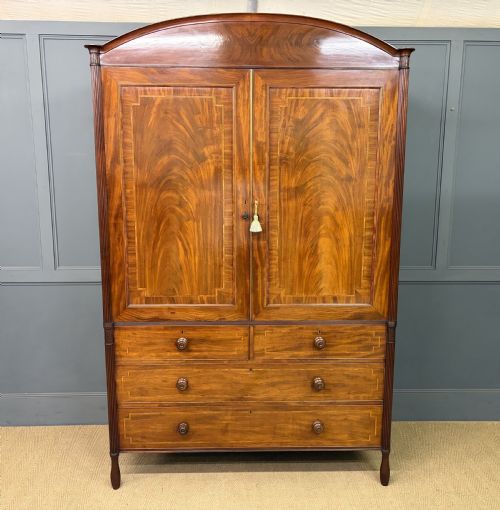
- A tall piece of furniture featuring upper doors enclosing sliding trays or shelves above a base of drawers. This form was traditionally used for storing household linen and garments.
- Flame Mahogany Veneer
- A sliced veneer displaying a distinctive swirling, flame-like grain pattern derived from the branch junctions of the tree. Cabinet makers applied this to drawer fronts and door panels for visual impact.
- Crossbanding
- A decorative border of veneer laid around the perimeter of a panel or drawer front with the wood grain running perpendicular to the central panel. This technique creates a contrasting frame effect.
- Bracket Feet
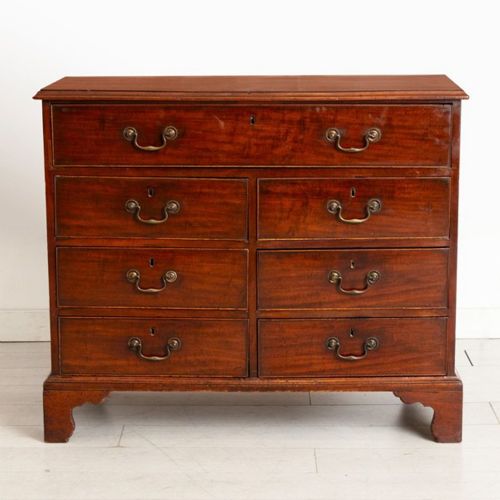
- Support feet shaped like a bracket, often moulding outwards at the corners of Georgian and Regency chests of drawers. They provide a stable base while maintaining a neat profile.
- Sliding Trays
- Internal pull-out shelves housed within the upper cupboard section of a linen press. They allowed folded garments to be stored accessibly before hanging wardrobes became standard.
Mahogany Clothes Storage Chest: Frequently Asked Questions
What is a linen press?
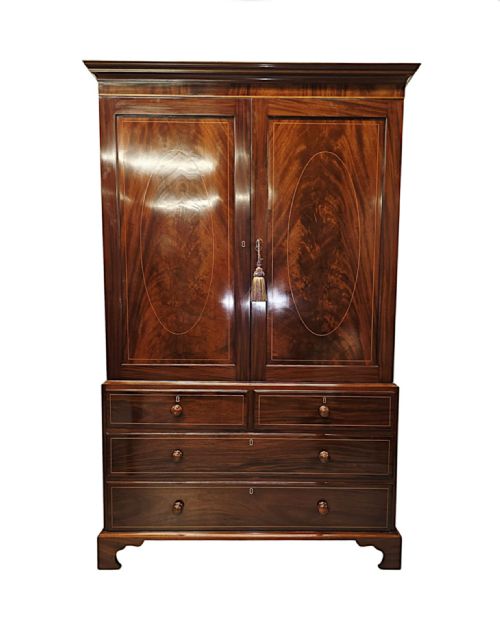
A linen press is a tall storage unit combining upper cupboard doors with a chest of drawers at the base. Inside the upper section, sliding trays hold folded garments and household textiles.
Historically utilised before full-length hanging wardrobes became common, these pieces served as the primary storage furniture for bedroom linens and clothes.
How do I identify a Georgian chest?
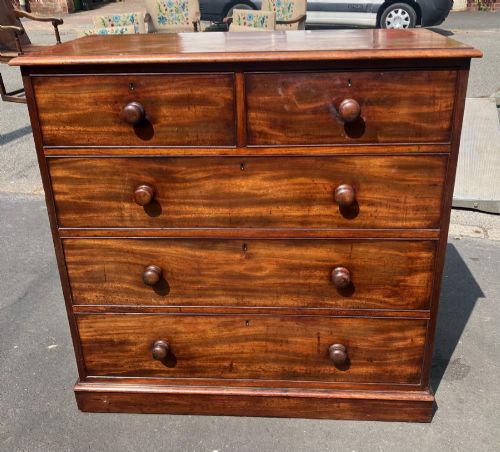
Georgian chests of drawers typically feature solid mahogany construction, bracket feet, and occasionally brass drop handles or swan neck pulls. The proportions remain robust and practical.
Later examples from this period incorporate decorative elements such as satinwood inlay, stringing, and flame mahogany veneers across the drawer fronts.
Where were sliding trays used?
Sliding trays are positioned inside the upper cupboard doors of linen presses and housekeepers' cupboards. They pull out independently to allow easy access to stacked clothing.
These removable trays predate modern wardrobe hanging space and reflect the traditional method of storing folded garments flat.
What is flame mahogany?
Flame mahogany is a highly figured wood veneer created by slicing timber from the fork where a branch meets the main tree trunk. It exhibits a dramatic, undulating flame pattern.
Cabinet makers used this decorative veneer prominently on the drawer fronts and doors of Regency and Georgian furniture to catch the light.