




Cabriole Leg Beds
Cabriole leg beds are graceful sleeping quarters and accompanying bedroom furnishings defined by curving, animal-inspired supports, offering timeless elegance to traditional interiors.
Cabriole Leg Beds
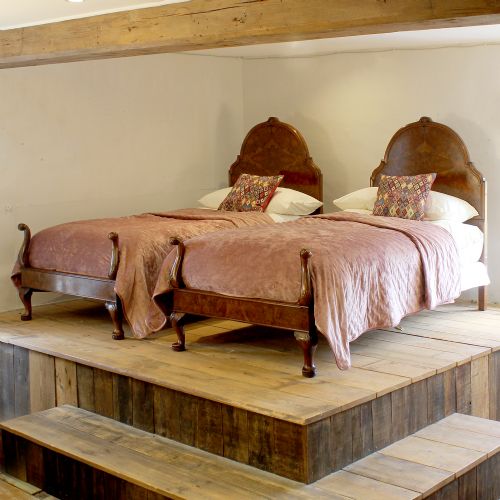
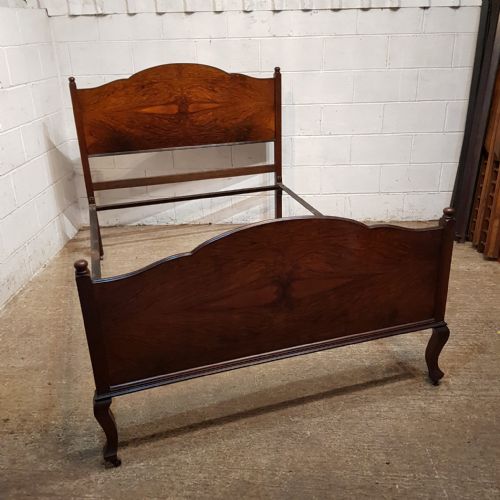
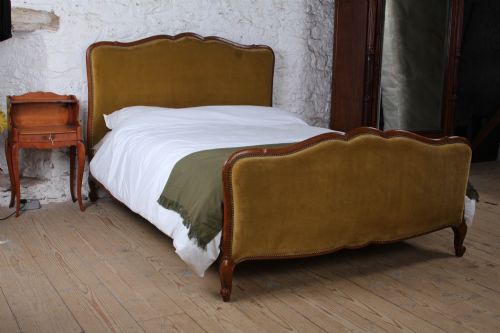
Cabriole leg beds encompass full-scale wooden bed frames alongside the benches, stools, and bedside tables that complete a period bedroom scheme. The selection on this page stretches from the Victorian era through the Edwardian period into the nineteen-twenties and nineteen-thirties, reflecting diverse historical revivals.
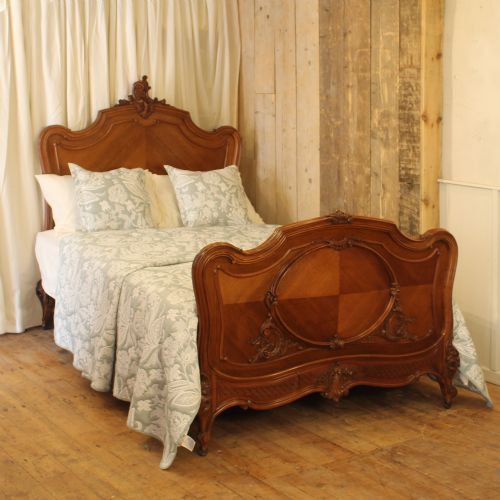
Buyers encounter walnut and mahogany frames frequently, alongside burr walnut, painted wood, and oak variations. Stylistic influences lean heavily towards Queen Anne Revival, French Provincial, Louis XV Revival, and French Rococo aesthetics.
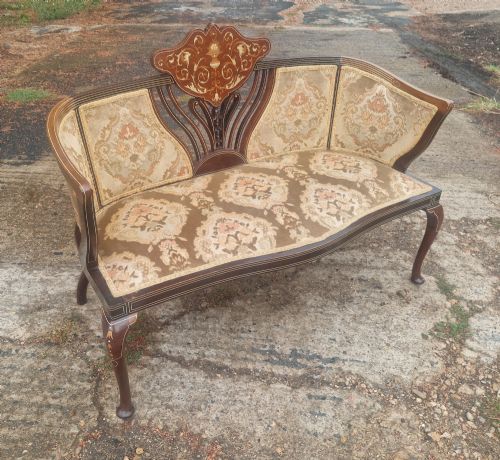
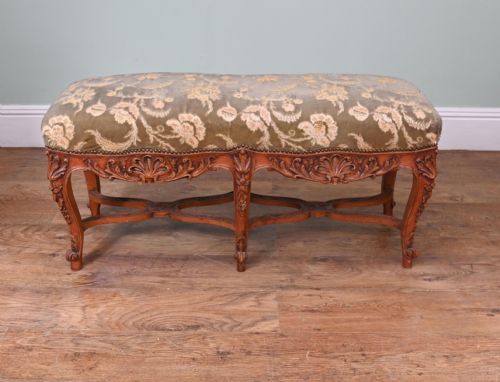
Associated seating pieces such as window seats, long dressing stools, and end-of-bed sofas frequently share the characteristic curving supports. These companion pieces allow collectors to curate a unified bedroom environment spanning the nineteenth and early twentieth centuries.
Materials and construction
Cabinetmakers utilised rich timber veneers including walnut, burr walnut, mahogany, and rosewood over solid wooden frames to achieve depth of grain. Secondary woods provided structural integrity for larger bedstead structures and supporting rails.
Carved wooden details, ball and claw foot motifs, and inlaid marquetry required skilled hand-tooling by period artisans. Upholstered elements relied on traditional textile coverings such as velvet, fabric, and specialised designer prints.
Painted wood finishes appeared on provincial French-influenced frames, offering alternative decorative schemes to polished timber surfaces. Brass fittings and hardware secured joints and added functional metallic contrast to the woodwork.
Listings feature walnut and mahogany as primary timbers, alongside decorative accents in burr walnut, brass, and velvet.
Defining quality in execution
The sophistication of the carved wooden scrollwork on the knee and foot dictates the visual success of the piece. Crisp, deeply articulated carving indicates a higher level of workshop skill than soft or shallow moulding.
Timber selection plays a major role, with figured walnut and richly grained mahogany marking out finer examples. Matching veneers across larger bed headboards and bedside cabinets demonstrate careful material planning by the maker.
The Cabriole Leg Beds Glossary
- Cabriole leg
- A furniture support that curves out in a convex arc at the knee and tapers inward in a concave arc to the foot, imitating animal limbs. This form appeared widely across Queen Anne and Louis XV revival pieces.
- Ball and claw
- A foot motif depicting a bird's talon gripping a ball, carved at the base of a cabriole leg. This detail derives from Chinese motifs adopted by European cabinetmakers.
- Window seat
- A long stool or bench designed to sit beneath a window, often upholstered and matched with bedroom suites. These pieces frequently share the curving leg forms of associated beds.
- Queen Anne style
- A design movement characterised by curved lines, cabriole legs, and understated elegance originating in the early eighteenth century and heavily revived later.
Cabriole Leg Beds: Frequently Asked Questions
What periods do these pieces date from?
The inventory spans the nineteenth century through the Edwardian era up to the nineteen-thirties. Pieces frequently reflect earlier historical revivals rather than original eighteenth-century production.
Buyers will find Victorian, Edwardian, and interwar interpretations alongside specific revival aesthetics like Louis XV and Queen Anne.
Are matching bedside tables available?
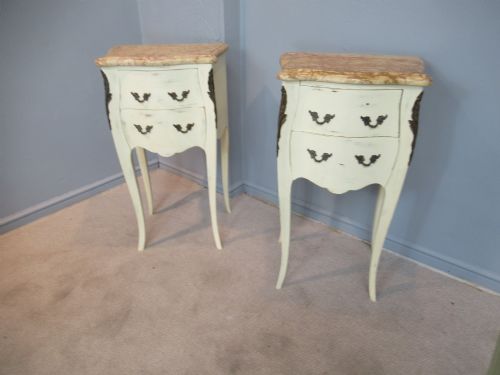
Yes, bedside tables, cupboards, and nightstands frequently accompany the bedframes in matching wood types such as walnut and mahogany. Pairs of bedside cabinets appear regularly alongside larger sleeping furniture.
These auxiliary pieces share the characteristic curved legs and veneer choices of the main bed frames.
What fabrics are used for upholstery?
Upholstered elements on window seats, benches, and bed components utilise velvet, fabric, and period-appropriate textile designs. Some items feature heritage designer prints from houses like Morris and Co.
Re-upholstered examples also appear, blending antique frames with fresh textile coverings suited to contemporary interiors.
How do I identify French style pieces?
French provincial and Rococo revival pieces display softer painted finishes, elaborate carved woodwork, and flowing floral motifs. These designs lean towards Louis XV aesthetics with prominent curving lines.
In contrast, English Queen Anne revival items often showcase polished walnut or mahogany with restrained carving and ball and claw feet.