


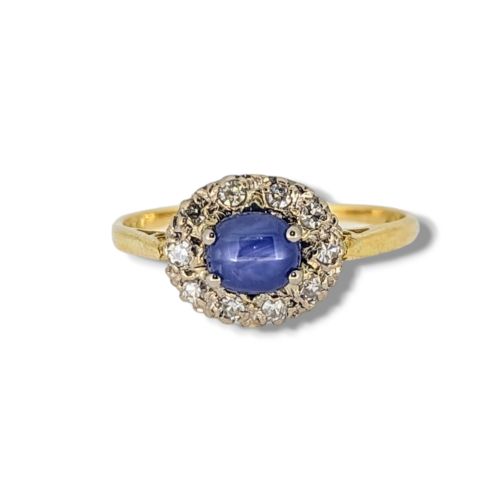


Cabochon Sapphire Diamond Ring
A cabochon sapphire diamond ring combines a smooth, rounded gemstone with glittering diamonds in precious metal, offering a tactile elegance that collectors prize.
Cabochon Sapphire Diamond Ring
A cabochon sapphire diamond ring presents a polished, dome-shaped corundum centre stone framed or accented by diamonds. These jewels appear primarily as dress rings, cluster rings, and trilogy formats across the Edwardian, Art Deco, Retro, and Mid-Century periods.
The most common version encountered here is the cluster ring, where a central cabochon sapphire sits surrounded by diamonds in platinum or white gold. These designs showcase the smooth, curved silhouette characteristic of mid-nineteenth to mid-twentieth-century jewellerry production.
How they were made
Goldsmiths utilised platinum, 18ct white gold, 18ct yellow gold, 14ct white gold, and 9k gold to mount the stones securely. Metal settings often feature intricate claw or bezel work designed to hug the rounded contours of the sapphire.
Diamonds cut as old cuts, rose cuts, eight-cuts, or standard facets provide contrasting brilliance around the polished dome of the sapphire. Gemstones originate from sources such as Ceylon, Burma, and basaltic deposits, shaped without traditional facets to emphasise depth of colour.
Periods represented across the inventory include the Edwardian era, Art Deco, Retro, and Mid-Century movements.
What varies in quality
Quality rests significantly on the optical character and origin of the sapphire itself, where stone transparency, natural unheated status, and even colour saturation dictate desirability. Ceylon stones and Burma stones command particular attention for their depth of hue.
The proportion and integration of the diamond work alongside the choice of metal - such as heavy platinum or solid 18ct gold - define the manufacturing standard. Superior examples balance the substantial dome of the cabochon with crisp, precise diamond cutting and robust setting integrity.
The Cabochon Sapphire Diamond Ring Glossary
- Cabochon
- A gemstone shaped and polished with a smooth, rounded dome rather than faceted surfaces. This traditional technique highlights the inner lustre and natural characteristics of the sapphire.
- Cluster ring
- A ring design featuring a prominent central stone surrounded by a ring of smaller stones, typically diamonds. This arrangement maximises visual impact on the hand.
- Old cut
- A vintage diamond cutting style characterised by a small table, high crown, and open culet, common in antique jewellerry. These stones produce a soft, warm candlelit sparkle.
- Rose cut
- A diamond cut featuring a flat base and a domed top covered in triangular facets resembling an unopened rosebud. It offers a subtle, translucent glow.
- Trilogy ring
- A ring set with three stones side by side, traditionally representing the past, present, and future. In these pieces, a central cabochon sapphire is often flanked by diamonds.
Cabochon Sapphire Diamond Ring: Frequently Asked Questions
What is a cabochon sapphire?
A cabochon sapphire is a corundum gemstone cut with a smooth, rounded top and a flat or slightly curved base rather than geometric facets. This method allows light to glide across the curved surface.
Such cutting is frequently chosen to display special optical effects, such as asterism in star sapphires, or to emphasise deep, saturated natural body colours without traditional facet reflections.
How do I care for my ring?
Caring for an antique or vintage ring requires gentle handling, avoiding harsh ultrasonic cleaners or abrasive chemicals that might harm older settings or untreated stones. Warm soapy water and a soft brush remain safest for routine cleaning.
Because sapphires measure high on the Mohs hardness scale, they resist scratches well, but the softer precious metals and older diamond settings benefit from regular professional checks by a jeweller to ensure claws stay tight.
How are different periods identified?
Periods are identified through a combination of mounting styles, metal choices, and stone-cutting techniques characteristic of specific eras. Edwardian pieces often utilise delicate platinum and lace-like openwork.
Art Deco examples lean towards geometric precision and bold symmetry, while Mid-Century and Retro designs introduce heavier gold weights, clean organic lines, and prominent cluster arrangements.
Can these rings be resized?
Most of these rings can be resized by a skilled bench jeweller, depending on the specific metal type, band thickness, and the security of side stones near the shoulders. Platinum and gold allow for traditional sizing methods.
Care must be taken with rings featuring extensive gallery work or closely set diamonds around the entire band, as altering the shank can sometimes compromise adjacent claw settings.