
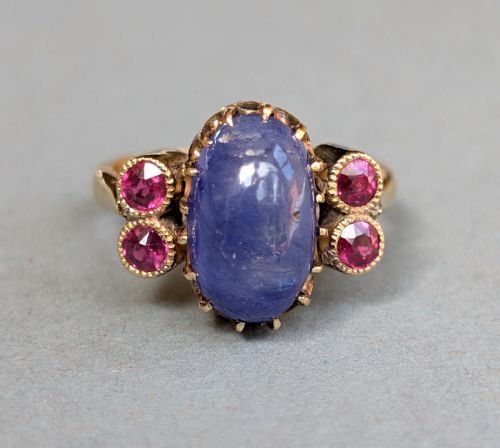


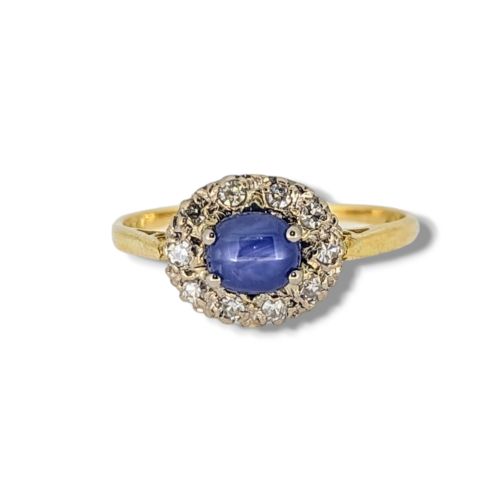


Oval Cabochon Sapphire Ring
An oval cabochon sapphire ring brings together smooth, polished stones and precious settings, offering a distinct alternative to faceted gems.
Oval Cabochon Sapphire Ring
When you search for an oval cabochon sapphire ring, you encounter pieces that span the Edwardian era, the Art Deco period, and the mid-twentieth century. These items showcase smooth, domed stones rather than faceted gems, paired with surrounding diamonds or contrasting metals.
The versions you are most likely to meet on this page include cluster designs featuring central blue stones framed by rose-cut or brilliant-cut diamonds. Settings range from platinum and white gold to traditional yellow gold and 18ct gold configurations.
Makers and designers across the nineteenth century, 1920s, 1930s, and 1950s utilised these materials to create distinctive cocktail and cluster rings. The overall aesthetic balances the deep tone of the polished sapphire with the sparkle of surrounding gems.
Materials and construction
The construction of these pieces relies on precious metals such as platinum, 18ct gold, 14ct gold, and 9ct gold to securely hold the central domed gem. Cluster configurations frequently incorporate diamonds set closely around the primary stone.
Lapidaries shaped the sapphires into smooth, rounded cabochon profiles rather than facets, highlighting the natural depth and sometimes asterism of the material. Metalworkers then utilised claw settings and intricate galleries to mount the stones.
Materials appearing across the current inventory include natural unheated sapphires, star sapphires, opals, rubies, and diamonds.
Quality factors in design and execution
The quality of these rings depends upon the natural characteristics of the sapphire itself, including clarity, colour saturation, and the smoothness of the cabochon polish. Ceylon stones and unheated varieties represent a higher tier of selection.
Execution in the surrounding metalwork and diamond selection also differentiates the pieces. Precise claw work, well-matched diamond accents, and substantial platinum or gold mountings elevate the overall standard of the jewellery.
The Oval Cabochon Sapphire Ring Glossary
- Cabochon
- A gemstone shaped and polished with a smooth, domed surface rather than faceted edges. This cut is often chosen for star sapphires or stones with unique internal inclusions.
- Cluster ring
- A jewellery design featuring a prominent central stone surrounded by a tighter grouping of smaller gems, typically diamonds. This arrangement maximises visual impact on the hand.
- Rose-cut
- An antique diamond cut characterised by a flat base and a domed crown consisting of triangular facets. It creates a subtle, understated shimmer compared to modern brilliant cuts.
- Platinum
- A dense, durable, and naturally white precious metal frequently utilised in Edwardian and Art Deco settings. Its strength allows for delicate claw work that securely holds major stones.
Oval Cabochon Sapphire Ring: Frequently Asked Questions
How do I care for my ring?
Clean your jewellery gently using warm soapy water and a soft brush, avoiding harsh chemical dips that might damage softer stones or antique metals.
Store each piece separately in a lined box to prevent scratches between harder diamonds and softer mountings.
Are these rings suitable for daily wear?
Sapphires possess high natural hardness, making them resilient enough for regular daily use when set securely in robust metals like platinum or 18ct gold.
Antique settings from the Edwardian and Art Deco periods still benefit from periodic inspection by a jeweller to check the claws.
How can I identify the period?
Examine the metal types, setting techniques, and overall design motifs, noting that platinum and delicate millgraining often point towards Edwardian or Art Deco eras.
Hallmarks stamped inside the band provide official assay office stamps and date letters where present.