


1930s Sapphire Dress Ring
A 1930s sapphire dress ring brings geometric clarity and intense colour to the hand, combining precious stones with distinctive period metalwork.
1930s Sapphire Dress Ring
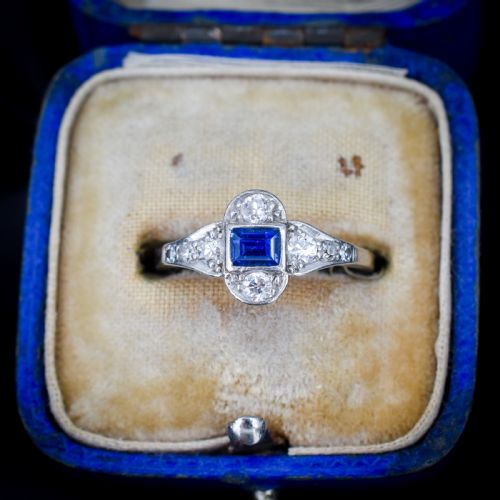
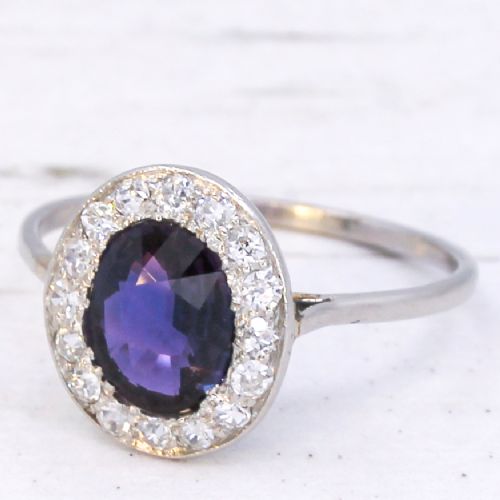
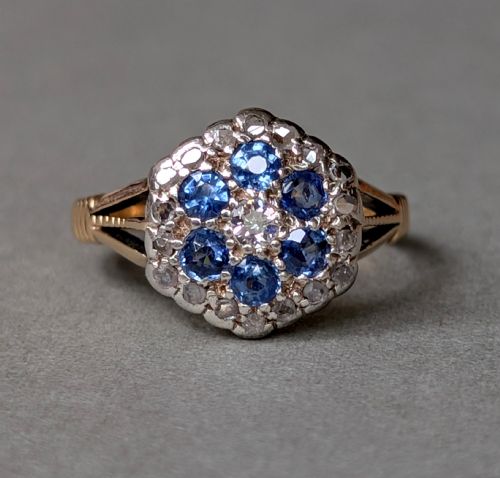
A 1930s sapphire dress ring typically presents as a cluster or cocktail ring defined by the geometric geometry of the Art Deco style. These pieces focus attention on a central sapphire, often flanked or framed by diamonds within an architectural mounting.
The selections encountered here span rings, dress rings and cocktail rings originating predominantly from the 1930 and 1920 periods. Stones range from unheated Burmese and Ceylon origins to yellow, orange and pink varieties, set alongside blue examples.
Moutings take the form of substantial cocktail rings as well as refined cluster designs. The scale of these pieces reflects their original purpose as striking hand ornaments for evening wear and social occasions.
Materials and Construction
Construction relies heavily on platinum and 18ct white gold to provide a crisp, white framework that enhances the brilliance of diamonds and the deep tone of sapphires. Yellow gold and 14ct yellow gold also appear, offering a warmer contrast to the cool blue stones.
Goldsmiths utilised prong and bezel settings to secure both step-cut and cabochon sapphires alongside brilliant or single-cut diamonds. Platinum allowed for delicate millegrain edges and pierced gallery work without sacrificing structural strength.
Materials across these listings combine platinum, 18ct white gold, 18ct yellow gold, 14ct yellow gold and 9ct gold alongside diamonds and sapphires.
Distinctions in Quality
Quality rests significantly on the origin, treatment status and weight of the sapphire itself, with unheated stones from sources such as Ceylon or Burma holding particular distinction. The presence of certification often documents these geographical origins and thermal histories.
The standard of the surrounding diamond work and the complexity of the platinum or gold mounting dictate the overall execution. Pierced galleries, precise stone matching and minimal wear to the original metal settings separate standard examples from superior survivals.
The 1930s Sapphire Dress Ring Glossary
- Art Deco
- A design style characterised by sleek geometric shapes, stylised motifs and a modern aesthetic that dominated jewellery design through the 1920s and 1930s. It prioritised symmetry and clean lines over organic floral forms.
- Cabochon
- A gemstone cut with a smooth, rounded, convex upper surface rather than faceted planes. This style highlights colour and internal characteristics rather than brilliance.
- Cluster ring
- A ring design featuring a central stone surrounded by a border of smaller stones, typically diamonds encircling a sapphire. This arrangement maximises visual impact and perceived scale on the finger.
- Unheated sapphire
- A natural gemstone that has undergone no thermal enhancement to improve its colour or clarity. Such stones are documented via laboratory reports.
- Millegrain
- A decorative jewellery technique involving a line of tiny metal beads along the edges of a setting. It softens the metal profile and adds texture to platinum and gold mountings.
1930s Sapphire Dress Ring: Frequently Asked Questions
How do I care for a 1930s sapphire dress ring?
Wear the ring with care during daily activities, removing it before heavy manual tasks or swimming to protect the delicate platinum or gold settings.
Clean the piece gently using warm soapy water and a soft brush, ensuring periodic professional checks of the stone prongs.
Are these sapphires completely natural?
Many stones are natural, with specific listings noting unheated origins from regions like Burma or Ceylon, while others may include synthetic stones such as orange sapphires.
Consult individual item descriptions and laboratory certificates where available to confirm the specific treatment status and origin of each sapphire.
What is the difference between a dress ring and a cocktail ring?
Dress rings generally offer refined proportions suitable for regular daytime or evening wear, utilising cluster or smaller stone arrangements.
Cocktail rings are larger, bolder statement pieces designed specifically for evening social events, featuring substantial carat weights and prominent mountings.
How can I identify the Art Deco style?
Art Deco pieces display sharp geometric lines, symmetry, and architectural motifs rather than the flowing curves of earlier periods.
Settings often incorporate calibrated stones, stepped shoulders and intricate platinum openwork to create a streamlined profile.