




Platinum Diamond Sapphire Ring
A platinum diamond sapphire ring brings together deep blue stones and brilliant white metal in enduring antique and vintage designs.
Platinum Diamond Sapphire Ring
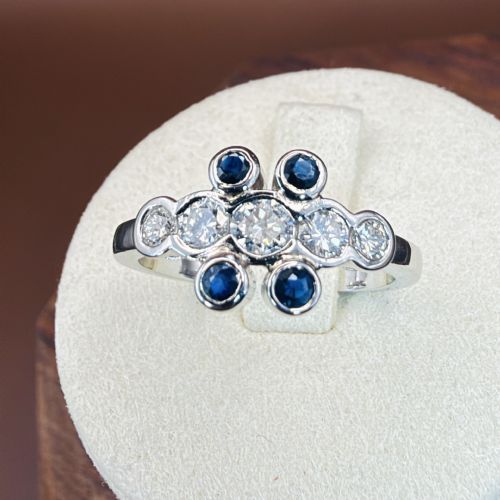
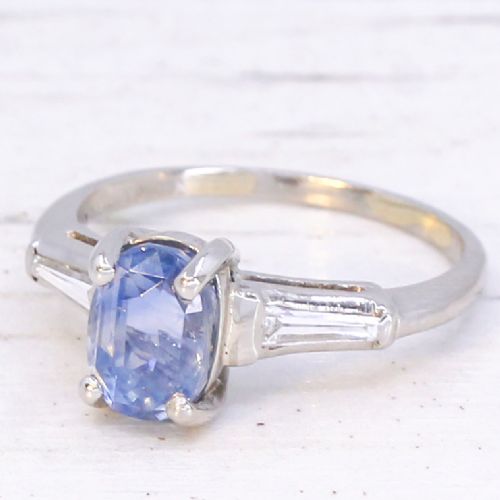
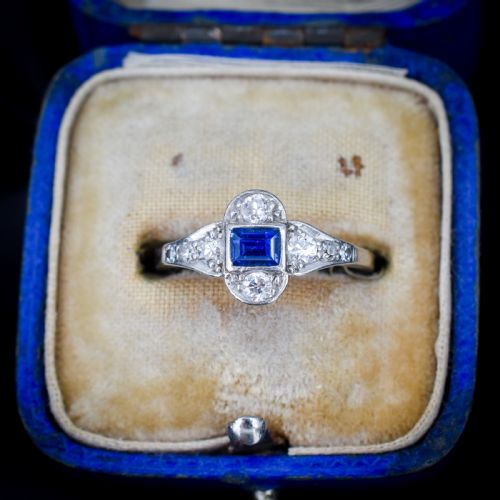
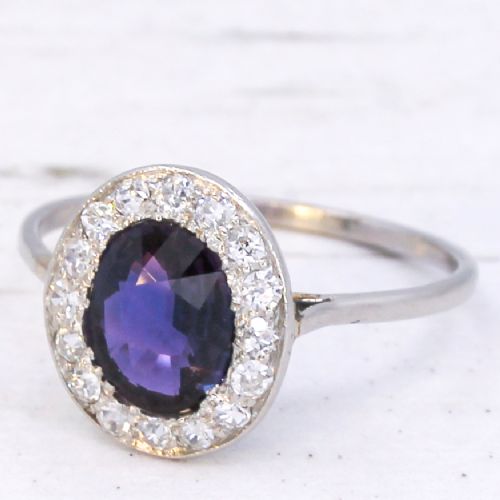
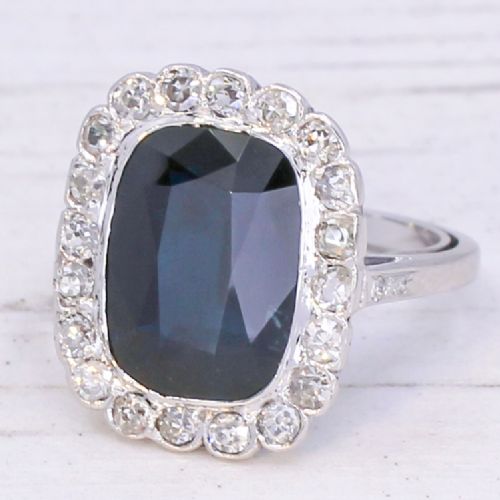
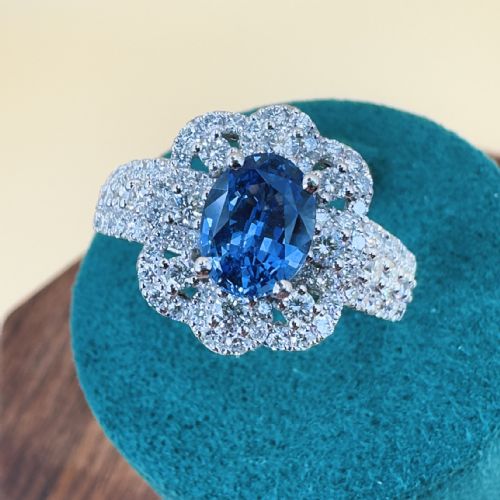
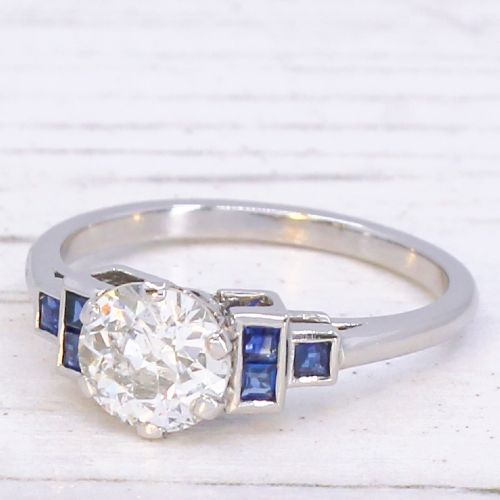
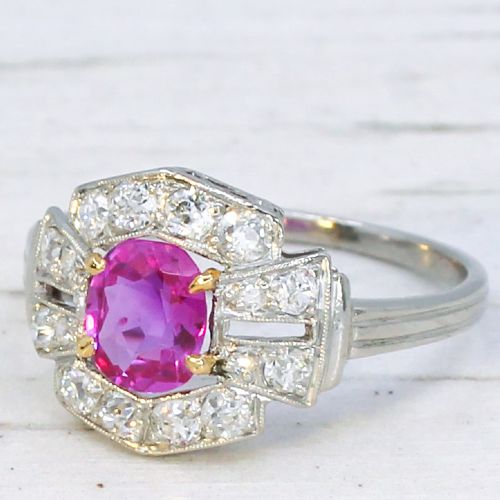
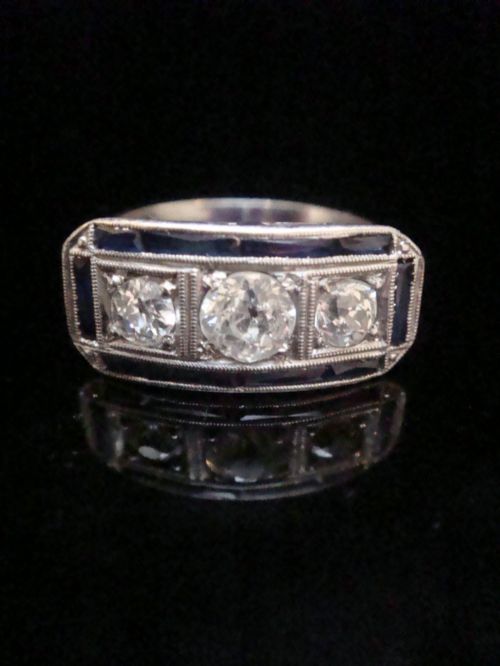
When searching for a platinum diamond sapphire ring, buyers encounter pieces spanning the Edwardian era through the mid-twentieth century, with a strong representation of Art Deco geometry. These take the form of cluster rings, cocktail rings, and dress rings featuring blue, pink, yellow, and star sapphires.
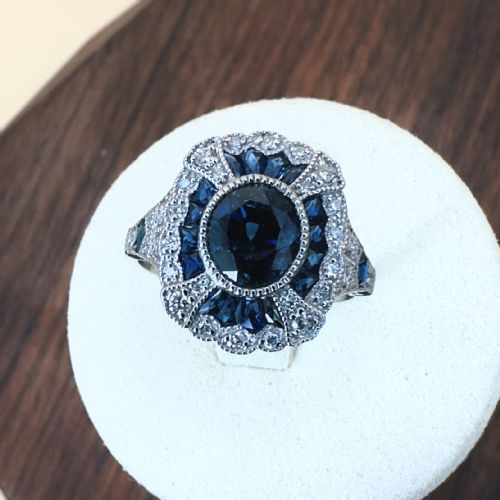
The inventory ranges from delicate Edwardian three-stone arrangements to bold 1950s cocktail pieces set with unheated Ceylon and Burmese stones. Geometric target clusters and navette profiles dominate the earlier decades, while later mid-century examples often favour floral and sweeping cluster silhouettes.
Materials and construction methods
Craftsmen utilised durable platinum settings to secure diamonds and sapphires, frequently combining this bright metal with 18ct white gold, yellow gold, or multi-coloured gold elements. The strength of platinum allowed for ultra-fine millegrain edges and intricate pierced galleries without risking the integrity of the piece.
Gemstones feature characteristic period cuts, including old European cuts, transitional cuts, and precise calibré-cut sapphires shaped to fit channel settings. Stones are often accompanied by evidence of natural origin, such as unheated Kashmir, Burmese, and Ceylon sapphires.
Some Art Deco cocktail rings carry secret French import marks tucked away inside the band like tiny hidden signatures.
Factors that distinguish the finest examples
The highest quality pieces exhibit exceptional gemstone provenance, featuring natural, unheated sapphires with vivid saturation and high clarity alongside clean old-cut diamonds. The precision of the hand-carved platinum metalwork and delicate millegrain detailing further elevates a piece.
Design cohesion and originality of the period mount also dictate value, where symmetrical geometric layouts and intact original French maker marks or signatures denote superior craftsmanship.
Le Vian·Tessier Of London
The Platinum Diamond Sapphire Ring Glossary
- Calibré cut
- Small gemstones cut into precise geometric shapes specifically to fit tightly together in channel or pave settings.
- Millegrain
- A decorative technique featuring a row of tiny raised metal beads along the edges of platinum settings.
- Navette
- A boat-shaped ring design that tapers to sharp points at either end, popular during the Art Deco era.
- Target cluster
- A ring style featuring a central sapphire surrounded by concentric rings of contrasting diamonds and dark stones.
- Transition cut
- A diamond cut used roughly between 1910 and 1930 that bridges old cut styles and modern brilliant cuts.
Platinum Diamond Sapphire Ring: Frequently Asked Questions
How do I identify an Art Deco platinum diamond sapphire ring?
Look for sharp geometric lines, symmetrical target or navette motifs, and fine millegrain borders characteristic of the 1920s and 1930s.
These pieces typically pair heavy platinum top settings with bright white or yellow gold shanks, often utilising calibré-cut sapphires.
Are unheated sapphires common in vintage rings?
Unheated sapphires appear regularly in period pieces from origins such as Burma, Ceylon, and Kashmir, possessing natural colour stability.
Certification from gemological laboratories often accompanies these stones to confirm the absence of thermal enhancement.
Can I wear a vintage sapphire ring every day?
Sapphires score nine on the Mohs hardness scale, making them exceptionally durable for daily wear when set securely in platinum.
Prongs and millegrain edges on antique rings should be checked periodically by a jeweller to ensure stones remain firmly seated.
What is the difference between a cluster and a target ring?
A cluster ring groups diamonds and sapphires in a floral or general clustered arrangement around a central focal stone.
A target ring specifically uses distinct concentric bands of contrasting gemstones to create a bullseye visual effect.