
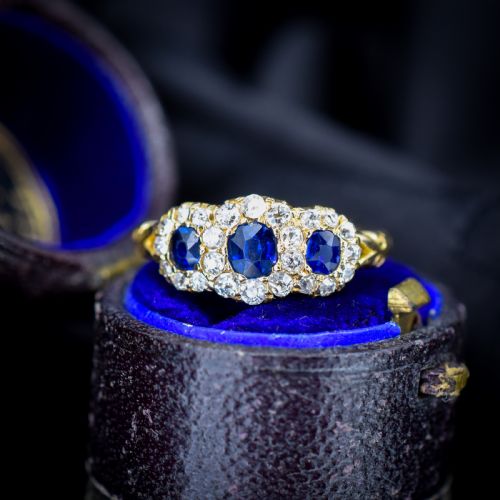
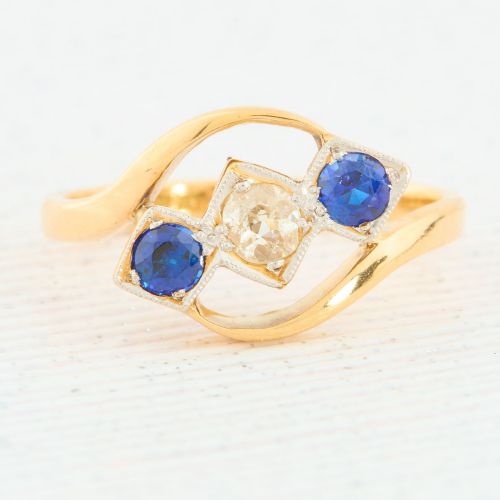


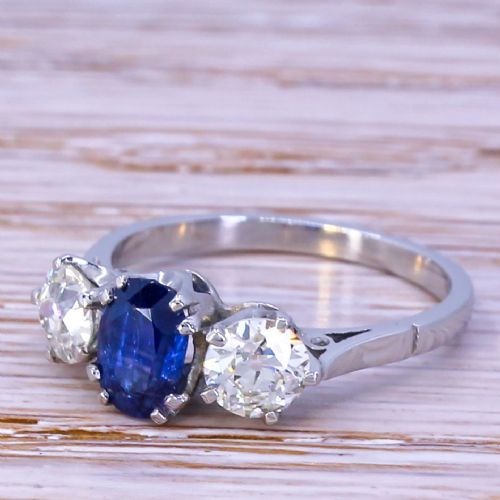
Vintage Sapphire Trilogy Ring
A vintage sapphire trilogy ring brings together three stones of history and character, offering the enduring symmetry of a triple-stone setting.
Vintage Sapphire Trilogy Ring
The most common iterations on this page showcase the crisp geometric lines of Art Deco platinum and gold mounts alongside traditional Victorian cluster and three-stone formats. Surviving pieces draw on centuries of goldsmithing, utilising both yellow gold and white precious metals to frame the central blue or pink sapphires.
How They Were Made
Goldsmiths utilised platinum, 18ct gold, 9ct gold, and silver to construct these multi-stone settings, frequently combining yellow gold bands with white metal settings to enhance the brilliance of the diamonds. Gemstones were secured using traditional claw mounts, rubover settings, and intricate twist designs.
Stones within these rings display period-specific cuts, ranging from transitional and old cut diamonds to baguette cuts alongside unheated Burmese and Ceylon sapphires. Glass paste also appears in Georgian examples as a historical material alternative to natural gemstones.
One persistent Georgian survivor pairs precious sapphires with humble glass paste, proving past owners loved the sparkle long before the stones.
What Varies in Quality
The distinction between tiers rests upon the origin, carat weight, and thermal treatment of the sapphire itself, with natural unheated stones from sources such as Ceylon or Burma commanding greater attention. The presence of certified natural origins and finer proportions elevates the standing of an individual mounting.
Execution of the metalwork also defines the piece, separating standard production from refined Art Deco platinum craftsmanship or intricate Edwardian detailing. The integration of well-matched old cut diamonds alongside the central sapphire contributes significantly to the overall coherence of the design.
The Vintage Sapphire Trilogy Ring Glossary
- Trilogy ring
- A ring set with three stones representing the past, present, and future. This configuration forms the core structural layout across the listed items.
- Art Deco
- A design style spanning the 1920s and 1930s characterised by geometric symmetry and clean lines. Platinum is frequently utilised in these mounts.
- Old cut diamond
- A precursor to the modern brilliant cut, shaped by hand with smaller tables and larger culets. These stones display a softer candlelit sparkle under low light.
- Glass paste
- A dense vitreous compound used historically to imitate gemstones. Georgian makers employed this material in decorative rings.
- Rubover setting
- A technique where a thin collar of metal is pushed over the edge of the stone to secure it. This creates a smooth, snag-free profile.
Vintage Sapphire Trilogy Ring: Frequently Asked Questions
How do I identify an Art Deco ring?
Art Deco rings are defined by geometric precision, symmetrical layouts, and the widespread adoption of platinum as a setting material. Pieces from this era often feature baguette cut diamonds alongside central sapphires.
The metalwork tends to be crisp and architectural rather than organic or floral. This aesthetic dominated jewellery design during the 1920s and 1930s.
Are these sapphires natural?
The inventory includes natural sapphires originating from sources such as Ceylon and Burma, alongside specified unheated stones. Historical pieces also contain gems selected for their specific tone and depth of colour.
Certification notes where available provide precise geological origins and detail whether stones have undergone thermal enhancement. Material descriptions indicate when alternative substances like glass paste are present instead.
How do I care for a vintage ring?
Historic rings require gentle handling to preserve fragile claw settings and softer historical metals like 9ct gold or silver. Professional cleaning helps maintain the security of the stones without subjecting antique mounts to harsh ultrasonic vibrations.
Removing the ring during manual tasks prevents unnecessary wear on older prongs and bands. Regular inspection by a specialist ensures the structural integrity of the claw work remains sound.