
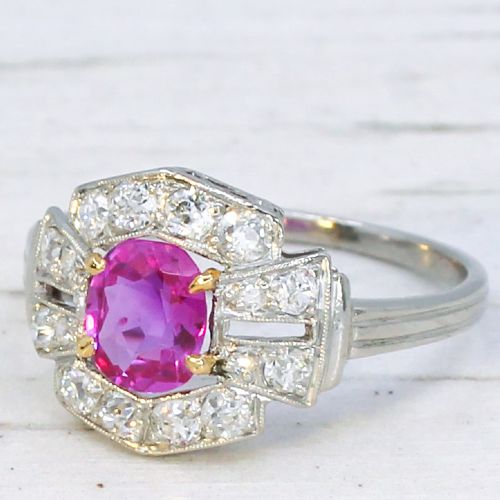


Unheated Sapphire Cluster Ring
An unheated sapphire cluster ring brings together untreated stones and diamond surrounds across Edwardian, Art Deco, and Mid-Century designs.
Unheated Sapphire Cluster Ring
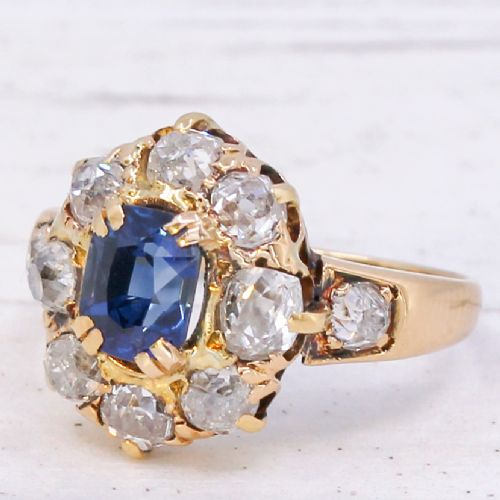
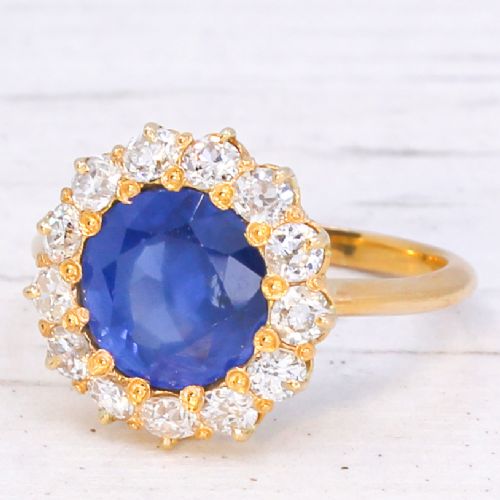
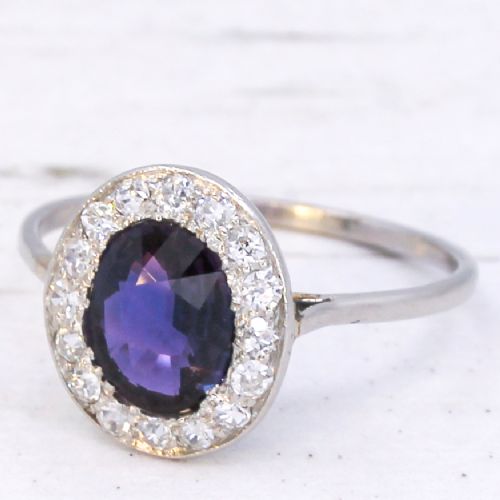
An unheated sapphire cluster ring is a piece of jewellery featuring a central sapphire that has not undergone thermal enhancement, surrounded by diamonds. These rings span periods from 1900 through to the 1960s, appearing in Edwardian, Art Deco, and Mid-Century styles.
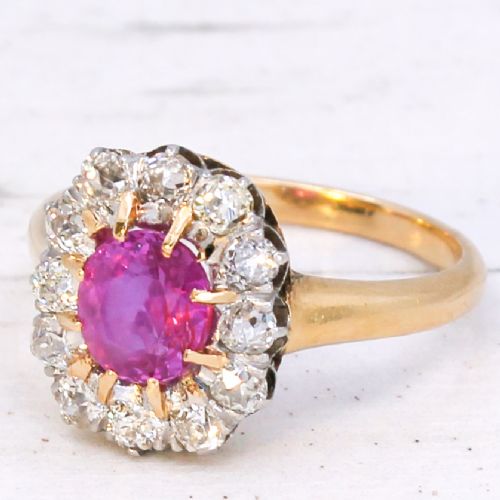
The central stones often originate from Burma or Ceylon, presenting deep blue or pink colour variations. Forms range from traditional single clusters to triple cluster arrangements and cabochon cuts.
How they were made
Makers set these stones in platinum, yellow gold, gold, or silver mountings. The metals support intricate old cut diamond surrounds that frame the central sapphire.
Craftsmen utilised traditional techniques suited to Edwardian and Art Deco aesthetics, securing stones in durable precious metal settings designed to maximise light passage.
A few rings feature pink sapphires from Mogok, offering a striking alternative to the traditional deep blue centring.
What varies in quality
Quality rests in the natural origin and saturation of the unheated stone, alongside the cut and clarity of the surrounding diamonds. Burmese and Ceylon stones with vibrant untreated colour sit at the top of the range.
The finesse of the period metalwork and the harmony between the central cluster and its diamond border further distinguish finer examples from standard production.
The Unheated Sapphire Cluster Ring Glossary
- Unheated sapphire
- A gemstone that has not been subjected to artificial heat treatment to improve its colour or clarity. This natural state is confirmed through gemmological examination.
- Cluster ring
- A ring design featuring a prominent central stone encircled by a border of smaller stones, typically diamonds. This arrangement maximises visual impact on the hand.
- Old cut diamond
- A precursor to the modern brilliant cut diamond, characterised by a smaller table, higher crown, and open culet. These stones were hand-cut during the antique and vintage periods.
- Cabochon
- A gemstone cut with a smooth, rounded, convex upper surface rather than faceted planes. This style highlights the natural lustre and depth of the sapphire.
- Edwardian
- A jewellery period spanning the early 20th century, known for delicate platinum work and garland motifs. Pieces from this era often pair unheated sapphires with intricate diamond lace.
Unheated Sapphire Cluster Ring: Frequently Asked Questions
What makes an unheated sapphire different?
An unheated sapphire has not undergone thermal enhancement to alter its natural colour or clarity. This condition is verified by gemmological testing.
Buyers value these stones for their untouched geological origins and stable internal characteristics.
How do I care for my ring?
Clean your ring gently using warm soapy water and a soft brush to remove everyday debris from the settings. Avoid harsh chemicals and ultrasonic cleaners that might compromise antique metalwork.
Store the piece separately in a lined box to prevent the diamonds from scratching softer metals or other jewellery.
Are these rings suitable for daily wear?
Sapphire and diamond are durable materials well-suited to regular wear when set securely in platinum or gold. Antique settings require periodic inspection by a jeweller to ensure the claws remain tight.
Take the ring off during heavy manual tasks to protect the older mountings from undue strain.
How can I tell the period?
Dating relies on stylistic markers such as Edwardian platinum lace, geometric Art Deco lines, or clean Mid-Century profiles. Hallmarks and construction techniques further confirm the era of manufacture.
Comparing the cut of the diamonds and the overall weight of the mounting provides additional clues to the decade.