





C1860 Staffordshire Pottery
These c1860 staffordshire pottery figures bring Victorian character directly onto the mantelpiece through modelled earthenware and hand-painted detail.
C1860 Staffordshire Pottery
When you search for c1860 staffordshire pottery, you find a range of Victorian decorative figures, spill vases, and pottery groups created during the middle part of the nineteenth century. The selection spans animals, historical personalities, and figural groups produced in the kilns of Staffordshire.
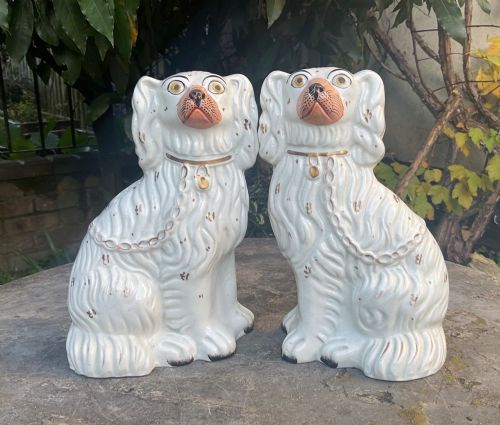
The most common form you will meet on this page is the pair of earthenware dogs, modelled as spaniels, poodles, or greyhounds, often decorated with copper lustre, black patches, or red and white markings. Alongside canine pairs, the listings include spill vases, lions, cats, goats, and figures depicting military and political figures of the era.
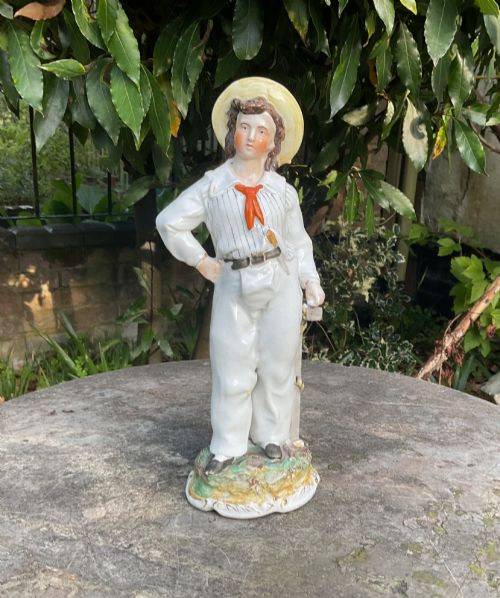
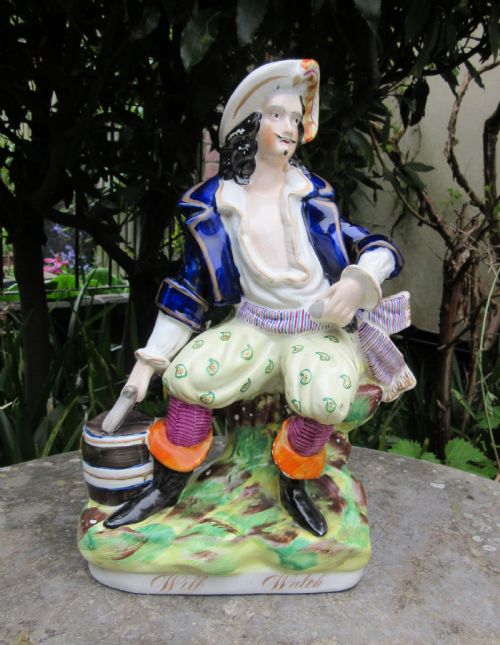
Moulded ceramic animals frequently appear seated on cushions or holding baskets, while figural groups portray musicians, soldiers, and royalty such as Napoleon III and Eugenie. These ornamental objects served as colourful parlour decoration for Victorian homes, designed to catch the eye on mantelpieces and side tables.
How they were made
Potters shaped these figures from earthenware clay using press moulds, joining front and back sections before firing the body in a kiln. Artisans then applied glaze and decorated the pieces by hand using enamel paint and gilt highlights.
C1860 Staffordshire Pottery Retail Price Guide 2026
Typical asking prices for c1860 staffordshire pottery among the pieces listed under this phrase on Sellingantiques today, from the lower quarter to the upper quarter. They describe what is for sale here now, not the wider market.
Listings feature earthenware materials finished with lead glaze, enamel paint, and gilt.
What varies in quality
The presence of secondary elements, such as intricate encrusting on cushions, well-modelled bases, or complex spill vase configurations, separates standard production pieces from grander pairs and larger portrait figures.
Adams
The C1860 Staffordshire Pottery Glossary
- Earthenware
- A porous pottery body fired at lower temperatures, which forms the standard base material for Victorian figures before glazing.
- Spill vase
- A hollow cylindrical holder attached to a figure, designed to hold wooden spills for lighting fires and candles.
- Copper lustre
- A metallic glaze finish producing a reflective, coppery sheen across the surface of the ceramic body.
- Enamel
- Coloured glass paste applied over the glazed surface of the pottery and fired again to fix the decoration.
- Gilt
- A thin layer of gold or gold-coloured paint applied as a surface highlight to details such as collars and chains.
C1860 Staffordshire Pottery: Frequently Asked Questions
What subjects do these figures show?
The pieces depict domestic animals, notably spaniels, poodles, and cats, alongside historical personalities, military figures, and musicians.
Subjects also include political leaders and royal figures of the period, reflecting popular interests of the Victorian era.
How were spill vases used?
Spill vases combined ornamental figures with a practical function, holding slender wooden spills used to transfer flames from a hearth fire to candles and lamps.
They sat upon mantelpieces where both decoration and fire-lighting tools were readily accessible in daily Victorian domestic life.
How do I care for glazed ceramic?
Keep these earthenware figures away from direct sunlight and damp environments to protect the fragile enamel paints and lead glaze finishes.
Dust them gently with a dry, soft cloth rather than using liquid cleaners or abrasive materials that might damage the surface.
Why do dogs often appear in pairs?
Potters created ceramic dogs in facing pairs to sit symmetrically at either end of a Victorian fireplace mantelpiece.
This balanced arrangement matched the formal interior decoration style favoured in nineteenth-century parlours and drawing rooms.