
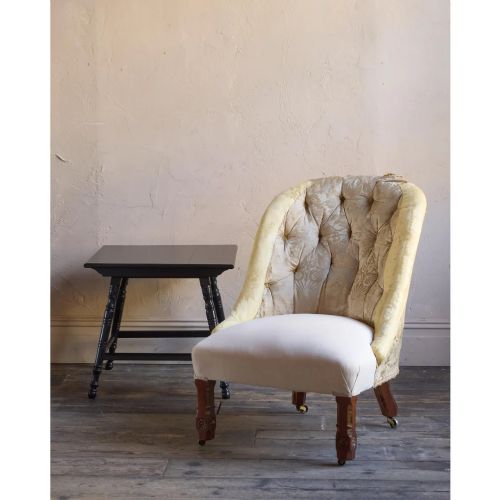
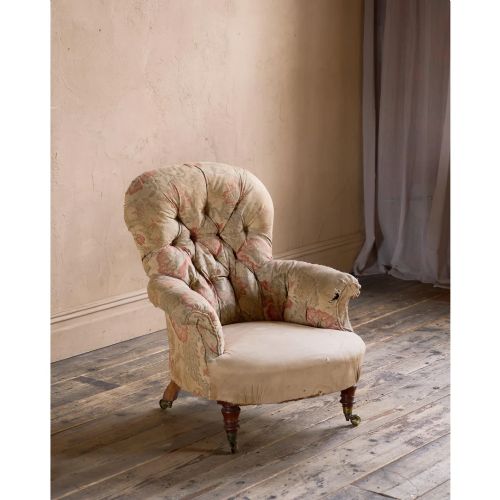
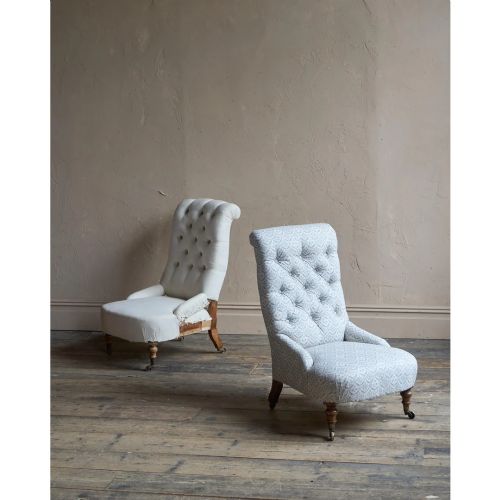
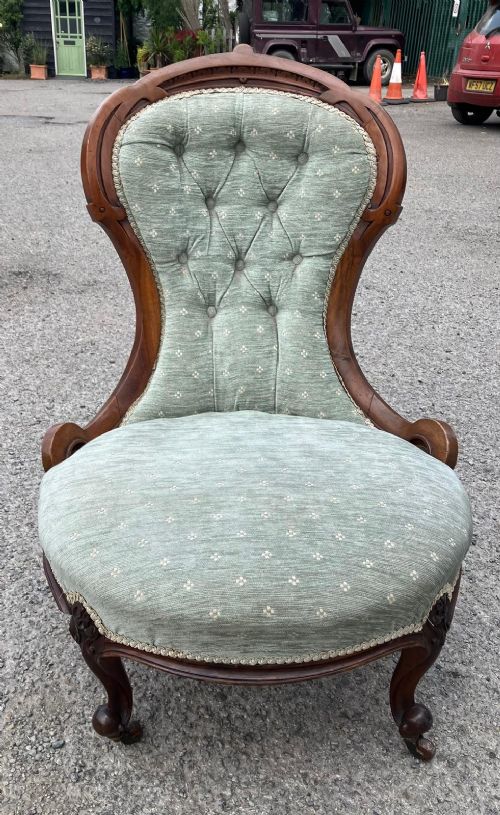
Buttoned Back Bedroom Chair
A buttoned back bedroom chair offers intimate comfort, and you will most often find examples shaped in Victorian and Edwardian timber frames.
Buttoned Back Bedroom Chair
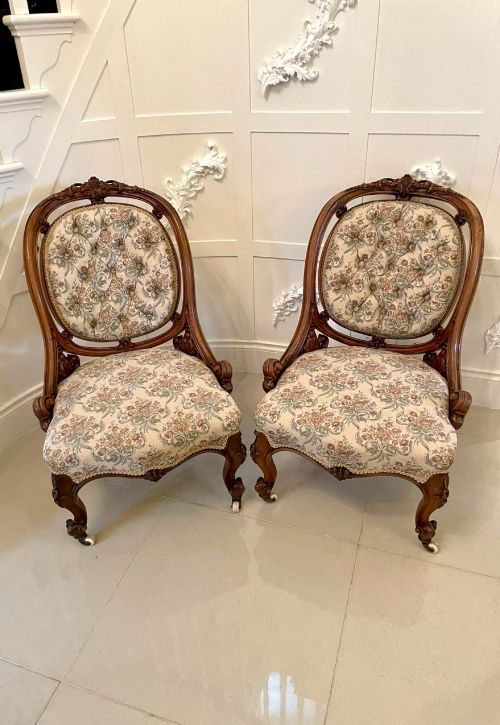
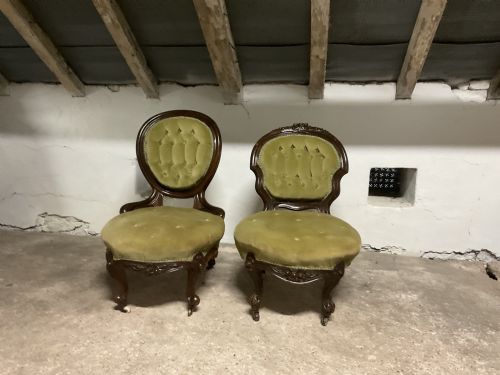
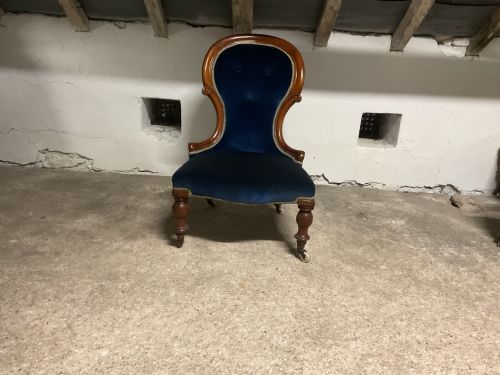
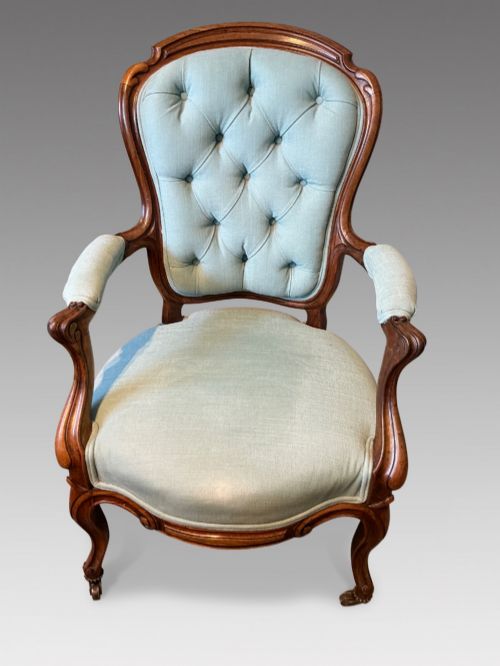
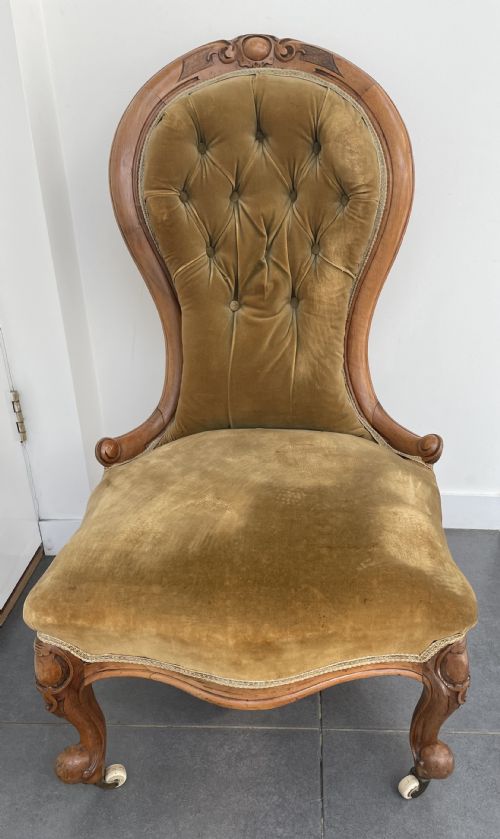
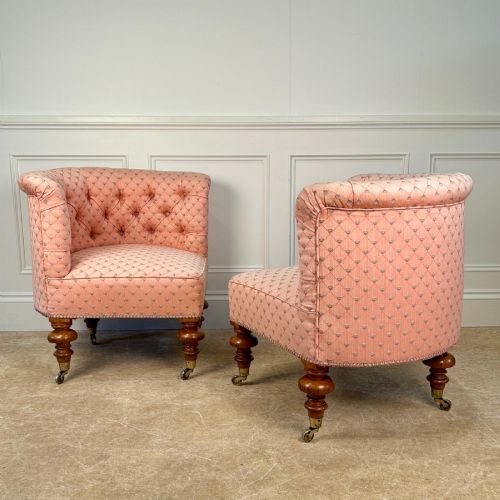
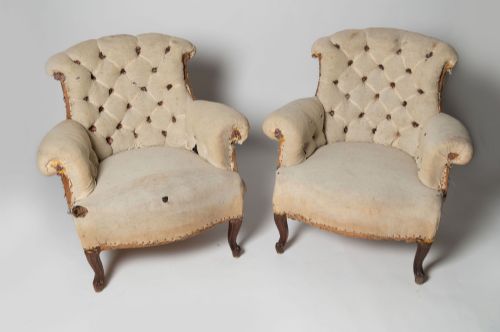
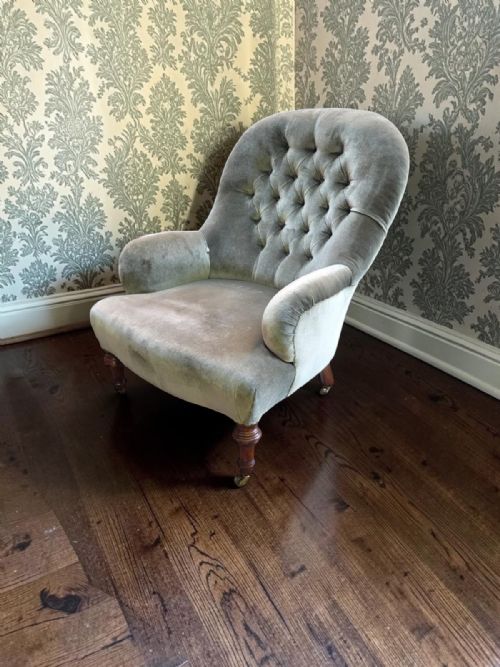
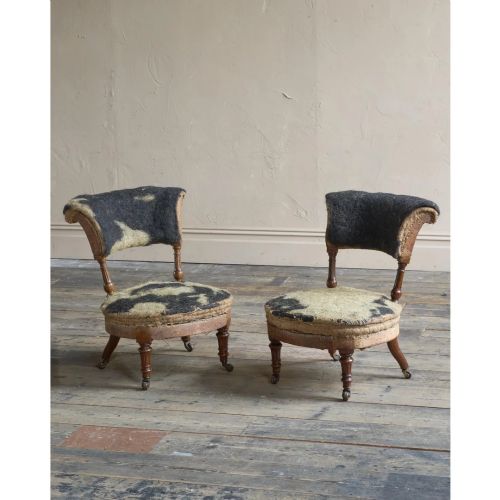
A buttoned back bedroom chair combines deep tufting with domestic convenience, appearing frequently across Victorian and Edwardian periods as nursing chairs, slipper chairs, and low armchairs. These pieces were designed for private chambers, sitting lower to the floor than formal parlour seating to make tasks like tending to children or putting on shoes much easier.
The most common forms you will encounter on this page date from the nineteenth century, built in walnut, mahogany, or oak with characteristic sprung seats and upholstered backs. Makers often kept the proportions modest so these seats could fit into smaller bedroom spaces without overpowering the room.
How they were made
Frames rely on sturdy timbers such as walnut, mahogany, oak, and rosewood, carved or turned into components like barley twist supports. Joinery is traditional, ensuring the lower centre of gravity typical of nursing and slipper chairs remained rigid under daily use.
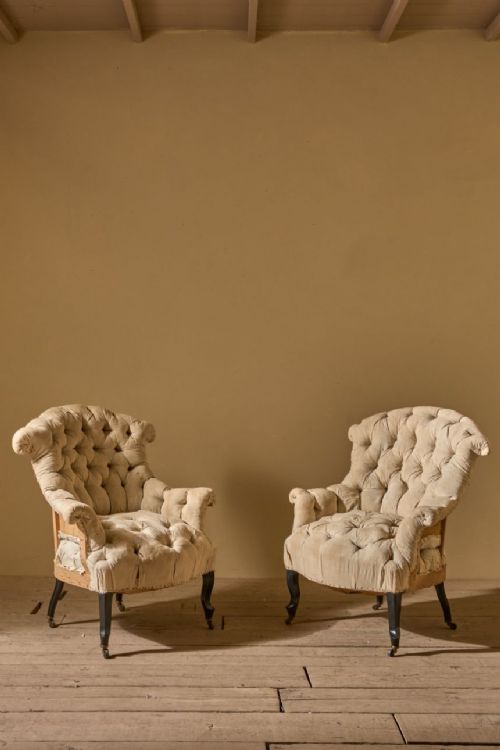
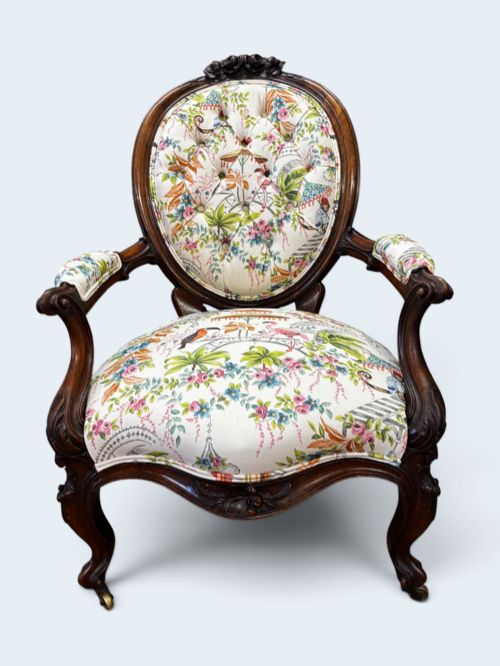
Upholstery techniques dictate the characteristic look, using brass tacks, calico foundations, and top layers of velvet or patterned fabric. Deep buttoning pulls the material tight against internal stuffing, creating the signature dimpled surface that holds its shape over decades.
Listings feature nineteenth-century and Edwardian pieces constructed from walnut, mahogany, oak, and rosewood, upholstered in velvet, calico, and decorative fabrics.
What varies in quality
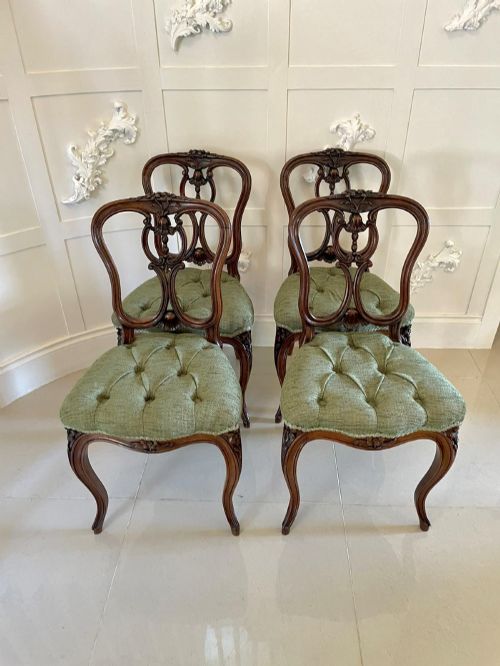
The distinction between ordinary and exceptional pieces lies in the crispness of the timber carving and the sophistication of the frame's proportions. Finer examples exhibit carefully balanced curves and superior joinery that conceal internal bracing while maintaining an elegant silhouette.
Upholstery execution also separates standard items from the best work, particularly in the regularity of the buttoning and the choice of covering materials. Pieces bearing workshop stamps or attributed to notable makers display a higher degree of finish in both the hidden internal webbing and the visible woodwork.
Holland & Sons·Howard and Sons·Gillows
The Buttoned Back Bedroom Chair Glossary
- Nursing chair
- A low-seated chair historically used in bedrooms for feeding infants or personal grooming. These items sit closer to the ground than standard dining or parlour seats.
- Slipper chair
- An upholstered chair with low legs designed for ladies' bedrooms to assist with putting on footwear. They typically feature no arms to accommodate wide Victorian skirts.
- Buttoned back
- An upholstery style where depressions are formed in the padding by pulling thread tightly through the material and securing it to the frame. This technique keeps internal stuffing from shifting.
- Calico
- A plain-woven cotton fabric traditionally used as an inner lining or foundation layer beneath top upholstery. It provides a stable base for the final decorative textile.
- Barley twist
- A type of woodturning that resembles a spiral rope or screw thread. It appears frequently on the legs and supports of mid-Victorian bedroom seating.
Buttoned Back Bedroom Chair: Frequently Asked Questions
What is a buttoned back bedroom chair?
A buttoned back bedroom chair is a low-slung, upholstered seat designed for private chambers during the nineteenth and early twentieth centuries. They served practical domestic purposes while providing comfortable, intimate seating.
These pieces typically feature sprung seats and deeply tufted backrests. Their compact sizes allowed them to fit easily into smaller rooms alongside dressing tables and wardrobes.
Where were these chairs used?
These seats were originally kept in private bedrooms, dressing rooms, and nurseries rather than formal reception rooms. Their low profiles made them ideal for personal tasks like lacing boots or holding infants.
Today, buyers use them in modern bedrooms, studies, and reading nooks where space is limited. Their decorative frames and textured upholstery also suit living room corners.
How do I spot a Victorian chair?
Victorian examples often feature dark hardwoods like walnut or mahogany, frequently paired with buttoned velvet upholstery. Frame shapes range from balloon backs to low slipper designs with turned legs.
Look for traditional construction methods such as hand-tied springs and brass tacks. Many pieces from this era also incorporate subtle decorative elements like barley twist supports.
Are Edwardian chairs different?
Edwardian versions tend to display lighter mahogany frames and slightly more upright proportions than their Victorian predecessors. They retain the upholstered buttoned back while reflecting early twentieth-century design preferences.
These later pieces often maintain the comfortable padding of nineteenth-century models. Their woodwork is generally cleaner and less heavily carved.