





Button Backed Office Chair
These button backed office chair examples combine substance and utility, offering practical workspace seating built from solid mahogany, oak, and walnut.
Button Backed Office Chair
A button backed office chair is a substantial seat designed for study or clerical work, combining firm support with traditional upholstery. When exploring this selection, buyers encounter various forms including desk chairs, revolving models, armchairs, and library tub chairs.
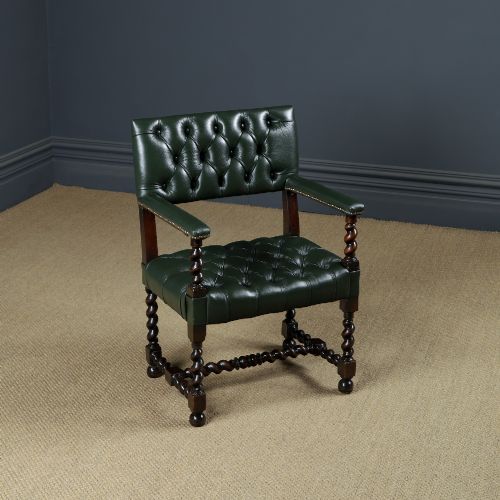
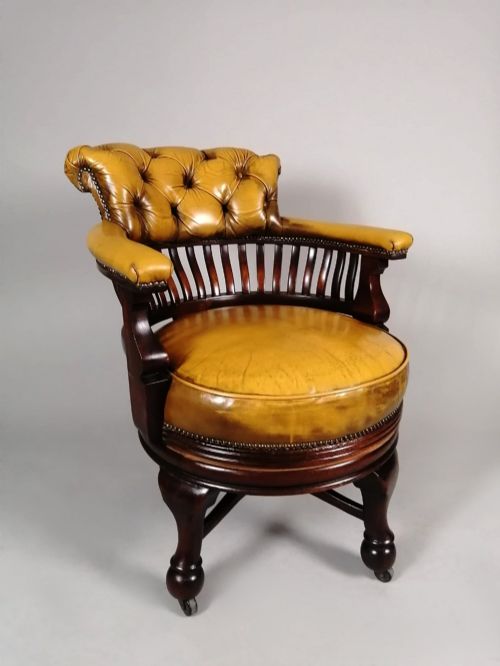
The materials and styles span multiple eras, featuring robust timber frames paired with leather or textile coverings. Pieces range from straightforward Victorian oak examples to earlier seventeenth century English interpretations and nineteenth century swivel designs.
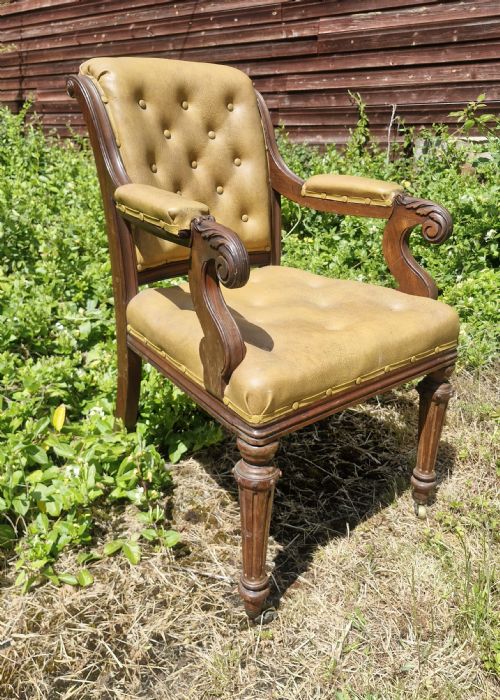
Most entries originate from the nineteenth century, particularly the Victorian period, reflecting the heavy demand for domestic and institutional workspace furniture during that era. These items bridge the gap between decorative antique seating and functional daily use.
Materials and construction
Frames are constructed using durable hardwoods such as mahogany, oak, and walnut, frequently joined with traditional methods to withstand regular movement. Timber components are sometimes carved or polished to reveal the natural grain.
Upholstery relies on leather or textile coverings secured with brass detailing, while swivelling variants incorporate cast iron and metal mechanisms for rotational movement. Oil cloth swab cushions and deep buttoning provide padding and structural tension for the backrests.
Button Backed Office Chair Retail Price Guide 2026
Typical asking prices for button backed office chair among the pieces listed under this phrase on Sellingantiques today, from the lower quarter to the upper quarter. They describe what is for sale here now, not the wider market.
The listings feature pieces spanning the seventeenth century through to the Edwardian era, with a strong concentration of Victorian designs.
Assessing quality and craftsmanship
Quality rests in the integrity of the timber frame and the precision of the joinery, which determine whether a seat remains steady under daily use. Heavier framing and careful carving separate standard commercial seating from finer library and desk chairs.
The execution of the upholstery and the durability of the leather or textile covering dictate the tactile finish of the piece. Integrated mechanisms in revolving chairs must operate smoothly while maintaining the stability of the central column.
The Button Backed Office Chair Glossary
- Button backed
- Upholstery secured with deep indentations held by buttons or tacks, creating a padded and patterned surface. This technique adds structural tension to the leather or textile covering.
- Revolving desk chair
- A workspace seat featuring a central pivot mechanism that allows rotation. These variants often utilise cast iron components concealed within the wooden understructure.
- Captain's chair
- A low-backed armchair designed for mobility and comfort at a desk. These typically feature a rounded upper rail supported by multiple vertical spindles.
- Cromwellian
- A seventeenth century style characterised by austere geometric wooden framing and plain leather upholstery fixed with brass studs. Pieces from this period exhibit utilitarian construction.
Button Backed Office Chair: Frequently Asked Questions
How do I identify a swivel mechanism?
Examine the underside of the seat for a cast iron or metal spider and spindle assembly. These pivot parts allow the upper section to rotate independently from the base.
Older mechanisms often show heavy industrial casting marks and require manual lubrication to maintain movement.
Are these chairs suitable for daily desk work?
Many examples are designed for long periods of sitting at a desk or library table. Solid timber frames and supportive upholstered backrests provide robust ergonomics.
Consider the seat height and revolving capabilities to ensure compatibility with modern computer desks.
What is the difference between oak and mahogany models?
Oak frames tend to appear in earlier seventeenth and nineteenth century pieces, offering a heavy, visible grain and robust structure. Mahogany versions often present a smoother, polished reddish-brown surface associated with formal libraries.
Both timbers provide the necessary strength for supporting office seating.
How do I care for antique leather upholstery?
Maintain the material by applying appropriate leather dressings to prevent the surface from drying out and cracking. Keep the seating away from direct heat sources and strong sunlight.
Regular dusting with a soft cloth preserves the natural finish of both the hide and the wooden frame.