


Button Backed Chaise
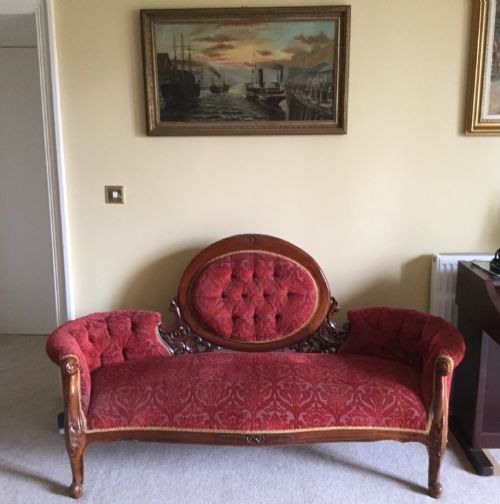
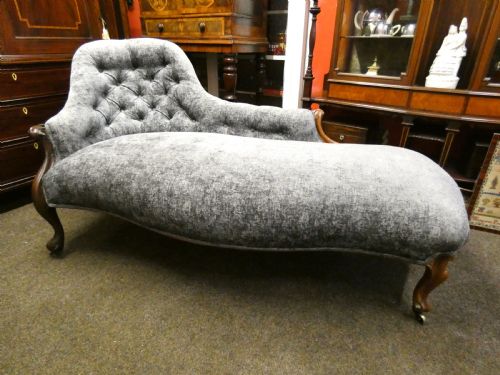
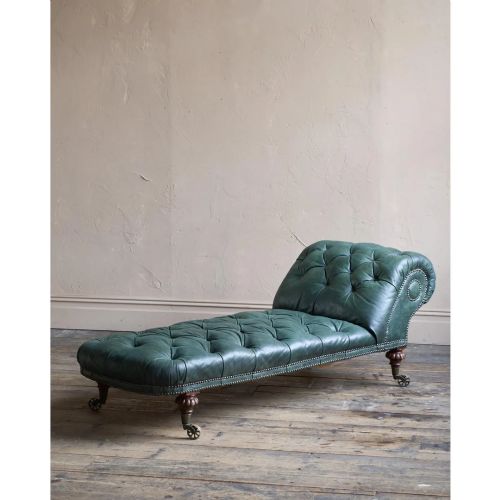
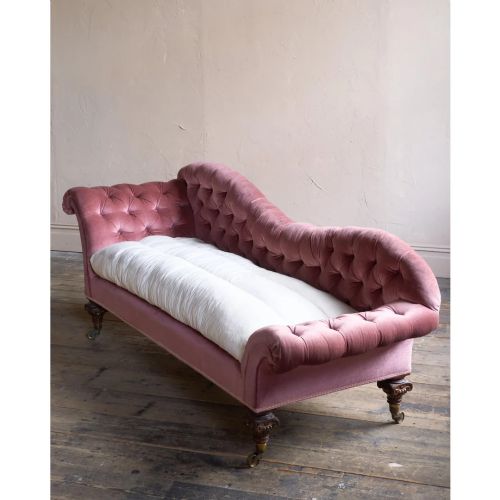
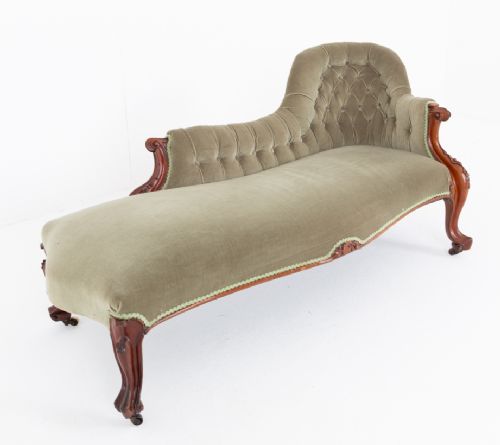
A button backed chaise is an upholstered reclining seat designed for luxurious repose, and collectors choose them for their sculptural elegance and comfort.

Button Backed Chaise
A button backed chaise combines the reclining comfort of a day bed with the formal posture of a sofa, designed for semi-recumbent leisure. When searching for a button backed chaise, buyers encounter primarily Victorian and 19th-century examples shaped by styles ranging from Regency to Louis XVI Revival.
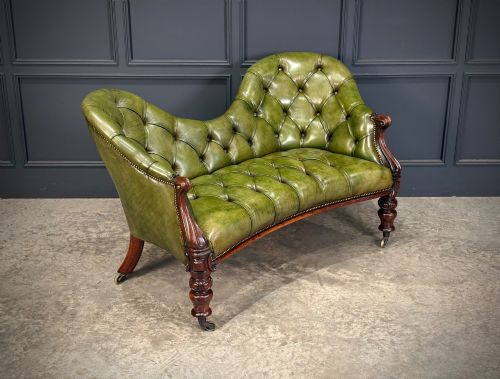
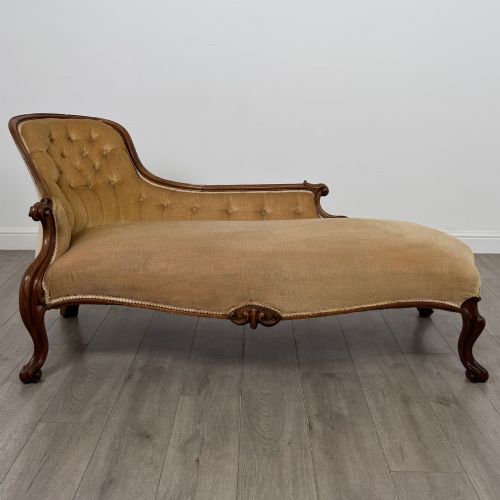
The form appears in various configurations, including double-ended sofas, spoon-back settees, and single-ended daybeds with scroll ends. Rosewood, walnut, and mahogany provide the rigid architectural frames, whilst deep upholstery, velvet, and leather define the padded surfaces.
Materials and construction
Frames are constructed from dense hardwoods such as mahogany, rosewood, and walnut, often shaped with carved details, scroll ends, and columnar or barley twist supports. Ebonised finishes and gilt decoration also appear on specific stylistic examples.
Upholstery relies on traditional sprung bases paired with deep buttoning techniques to secure fabric, velvet, brocade, or leather over internal padding. Brass details occasionally accent the structural framework or castors.
Button Backed Chaise Retail Price Guide 2026
Typical asking prices for button backed chaise among the pieces listed under this phrase on Sellingantiques today, from the lower quarter to the upper quarter. They describe what is for sale here now, not the wider market.
Ebonised miniature examples demonstrate that makers scaled down these large daybeds for specialised display.
Qualities of distinction
The sophistication of the timber carving and the choice of dense hardwood frame set superior examples apart from simpler constructions. Rosewood and walnut frames with intricate spoon backs or ionic column legs represent higher craftsmanship.
The execution of the deep buttoning and the choice of upholstery material, from supple leather to heavy velvet, dictate the refinement of the piece. Proportions that balance the single or double scroll end harmoniously indicate superior design.
Holland & Sons·Miles & Edwards·Howard and Sons
The Button Backed Chaise Glossary
- Chaise longue
- A long reclining chair or daybed designed for reclining with support for the back and head. The term translates from French as long chair.
- Buttoning
- An upholstery technique where buttons are pulled deep into the padding to create a symmetrical diamond pattern. This method secures the internal stuffing and provides firm tension.
- Spoon-back
- A padded chair or sofa back shaped like the bowl of a spoon, curved to fit the human spine. It is a common feature on Victorian seating.
- Double-ended
- A sofa or chaise design featuring raised scroll ends at both sides rather than a single headrest. This symmetrical form allows reclining from either direction.
- Showwood
- Exposed timber framing on an upholstered piece where the polished wood is visible around the edges of the back and arms. Rosewood and walnut are frequently utilised for this purpose.
Button Backed Chaise: Frequently Asked Questions
How do I style a chaise longue in a modern room?
A button backed chaise works effectively as a standalone statement piece in a living room, bedroom, or large hallway. Position it away from the wall to showcase the carved timber frame and scroll ends.
Pair the piece with neutral surroundings to highlight the rich tones of mahogany or rosewood and the texture of the buttoned velvet or leather upholstery.
How can I tell a Victorian chaise from a Regency one?
Regency pieces date from the early 19th century and often exhibit classical influences with restrained mahogany frames and cleaner lines. Victorian examples tend to be more ornate, featuring rosewood or walnut, deep spoon backs, and elaborate carving.
Victorian frames frequently incorporate richer buttoning and heavier showwood timber framing compared to earlier Regency designs.
Were these seats used for sleeping?
These pieces were primarily designed for daytime resting, reading, and semi-recumbent socializing rather than overnight sleeping. The elevated scroll end supports the head whilst the sprung base provides firm support for the body.
Their form accommodated the formal dress of the 19th century, allowing individuals to recline without creasing attire.