
Button Backed Accent Chair
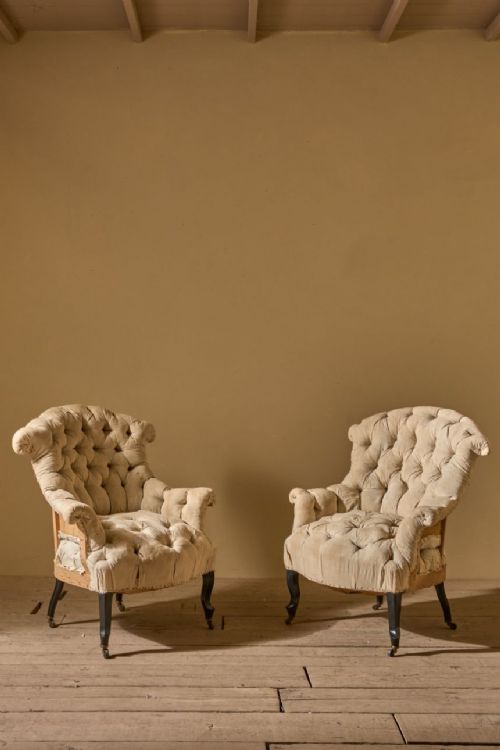
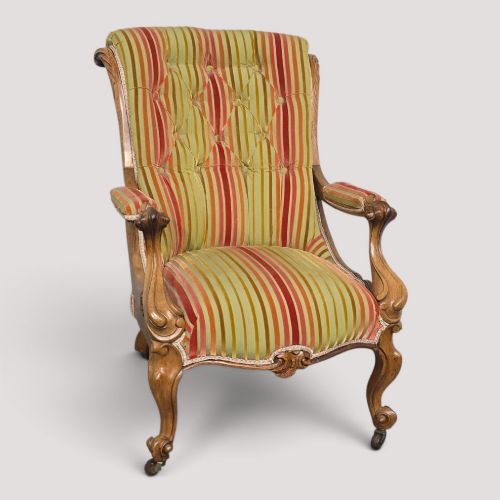
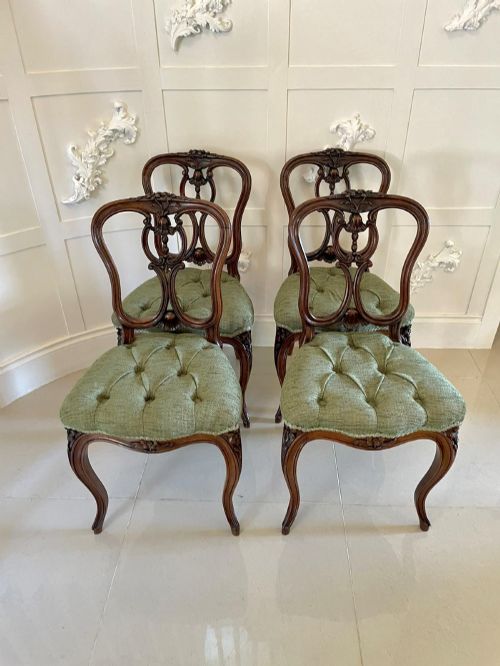
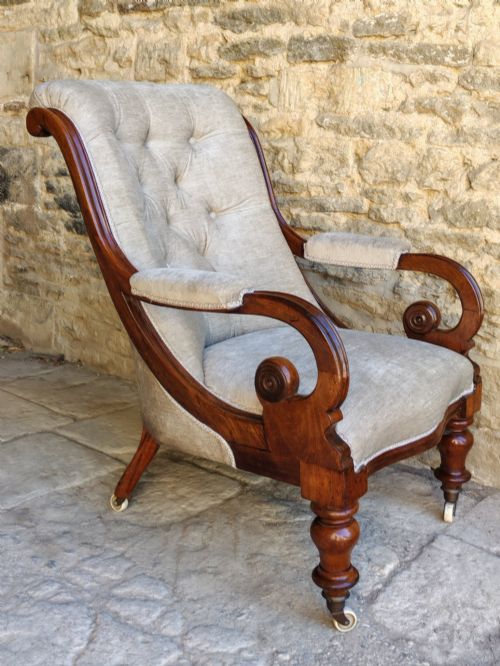
A button backed accent chair brings deep upholstery and distinct period character to a room, offering both comfortable support and strong decorative presence.
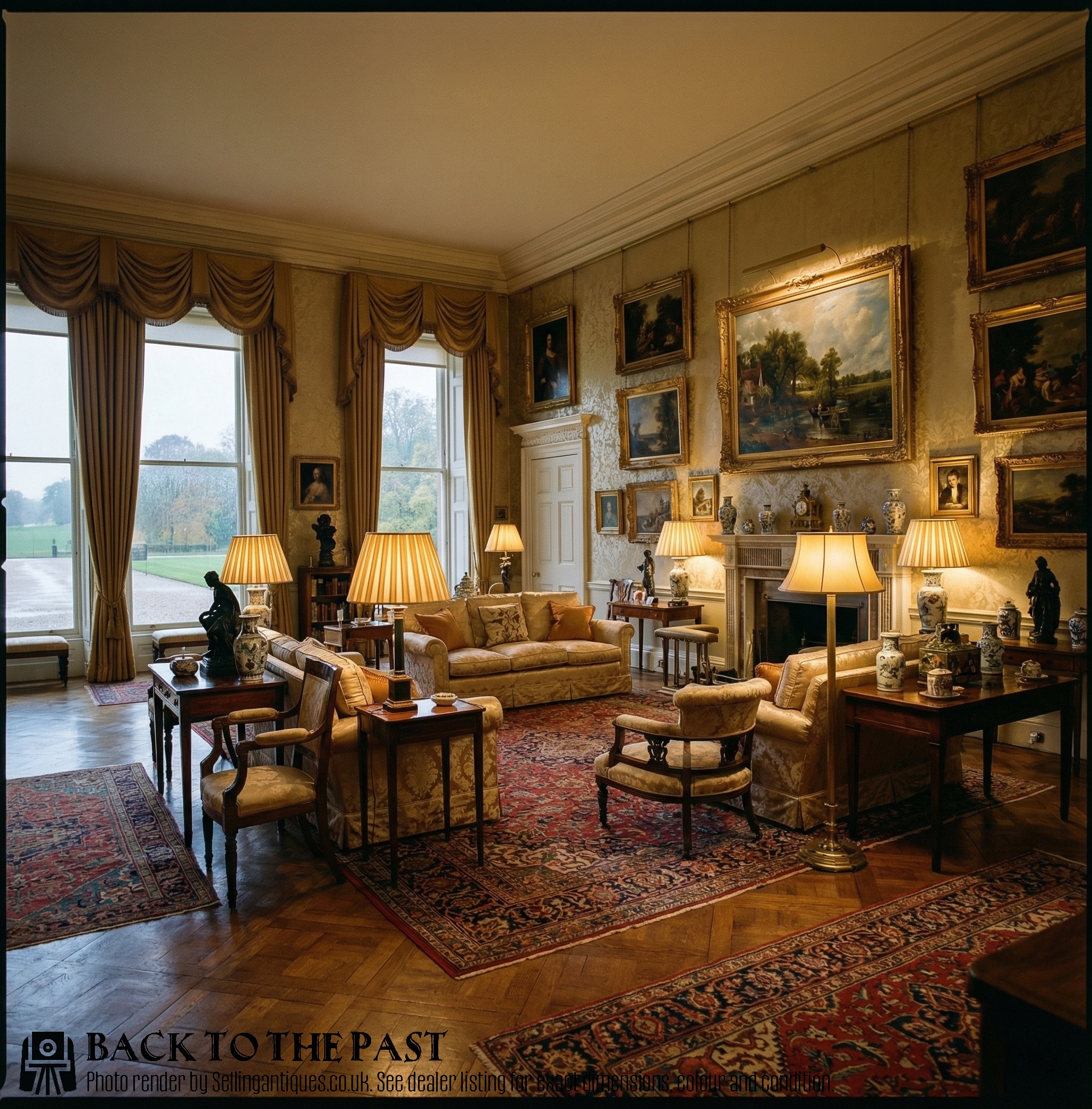
Button Backed Accent Chair
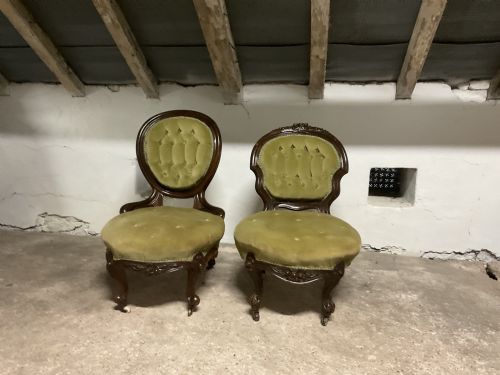
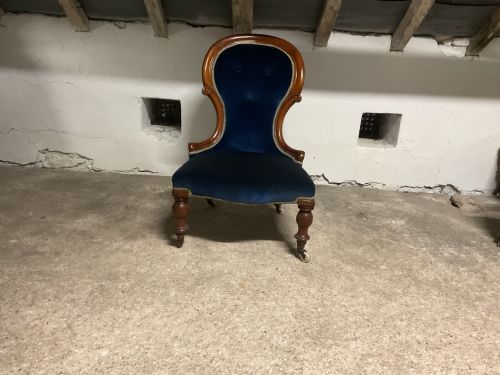
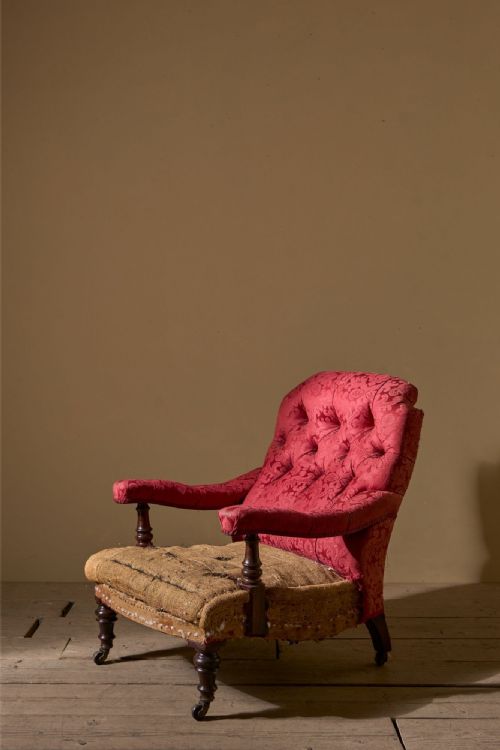
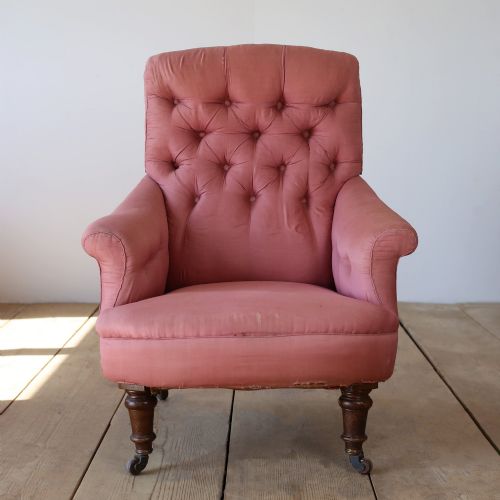
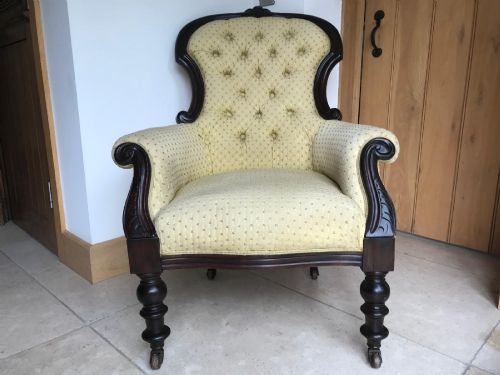
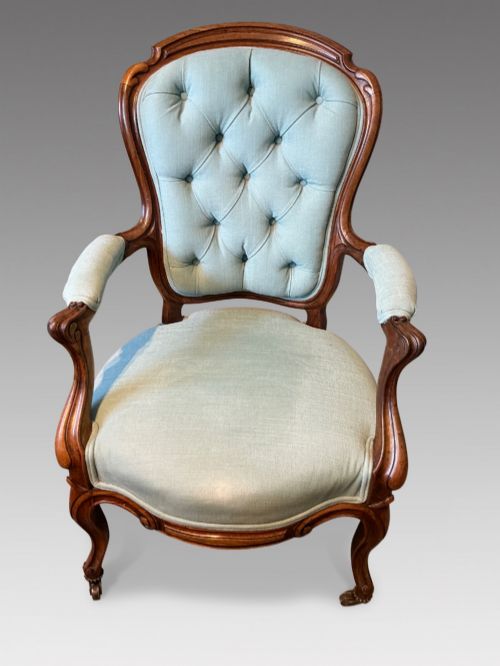
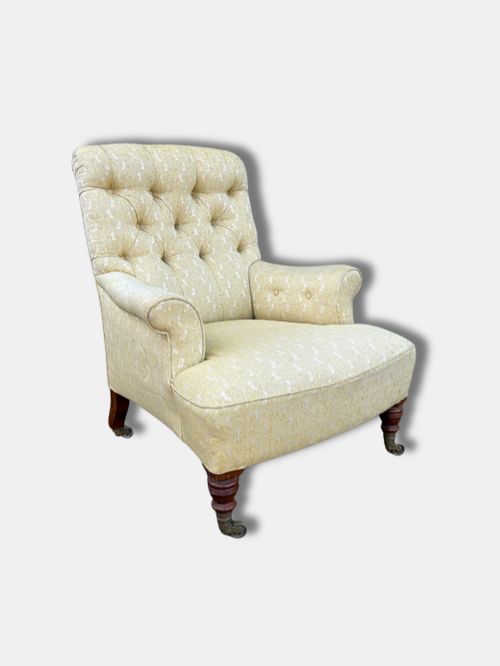
When searching for a button backed accent chair, collectors encounter a diverse group of seating spanning the nineteenth and early twentieth centuries, including Victorian, Edwardian, and Regency examples.
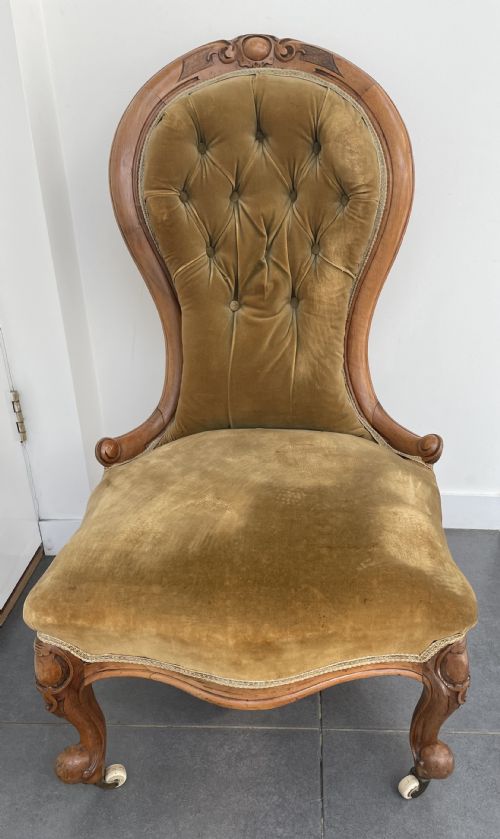
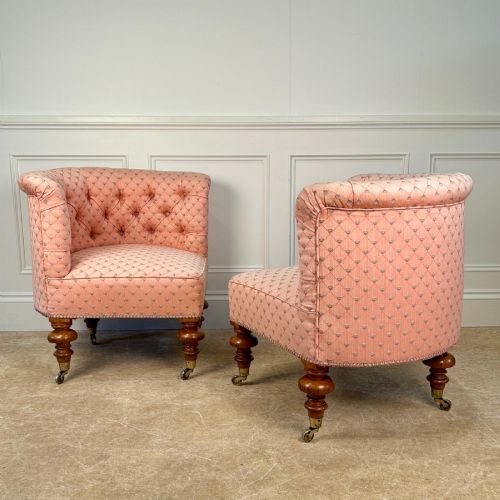
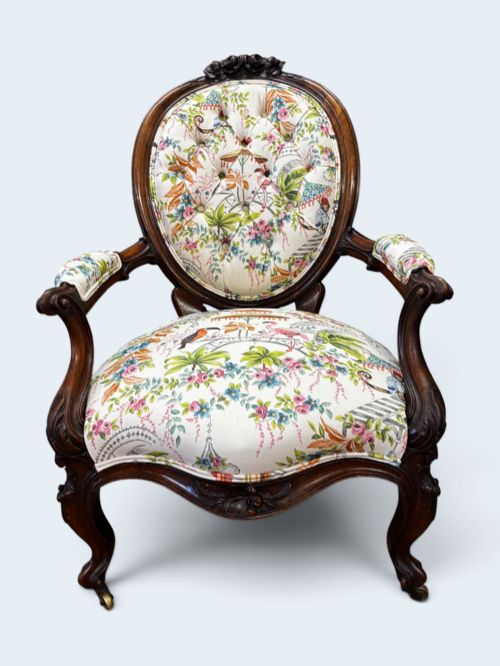
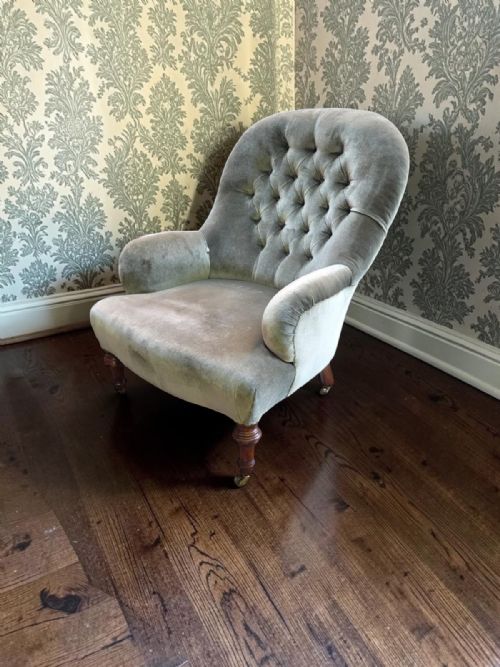
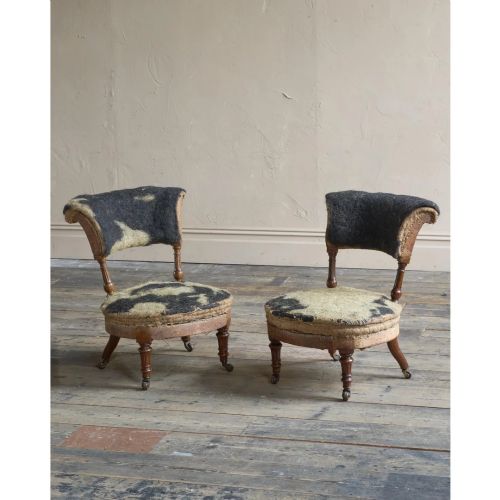
The selections on this page encompass various forms such as nursing chairs, slipper chairs, library armchairs, and occasional chairs.
Mahogany, walnut, and rosewood frames appear frequently alongside textiles like velvet, leather, and fabric, reflecting the rich materials of these periods.
Materials and construction
Frames are constructed from sturdy timbers such as mahogany, walnut, oak, and rosewood, often shaped into graceful curves and supported by brass elements.
Upholstery relies on traditional techniques utilising velvet, leather, and various textiles, secured with characteristic buttoning that creates distinctive deep indentations across the backrest.
Some nineteenth century slipper chairs feature delicate fringes designed to conceal the castors entirely while sweeping across the carpet.
Assessing quality and craftsmanship
The distinction between tiers rests upon the precision of the wood carving, the integrity of the frame construction, and the proportion of the silhouette.
Finely executed buttoning and the choice of primary covering materials, whether fine leather or rich velvet, dictate the overall sophistication of the piece.
Howard and Sons·Mellier and Co·Gillows
The Button Backed Accent Chair Glossary
- Button-backed
- Upholstery style featuring deep indentations secured by fabric or leather covered buttons arranged in a geometric pattern. This technique provides both structural tension to the padding and a decorative texture.
- Nursing chair
- A low-seated armchair designed in the nineteenth century originally for feeding infants. The low profile made these seats comfortable for prolonged periods of sitting near the hearth.
- Slipper chair
- An upholstered chair with short legs designed to sit low to the ground. These pieces typically lack arms and served originally in bedrooms for dressing.
- Bergère
- An enclosed upholstered armchair with wooden framing exposed around the sides and back. The armrests are typically padded for added comfort.
Button Backed Accent Chair: Frequently Asked Questions
How do I identify a Victorian button back chair?
Victorian examples typically feature dark hardwoods such as walnut or mahogany combined with deep buttoned upholstery.
Look for traditional proportions and turned wooden legs that reflect mid to late nineteenth century design trends.
What is the difference between a nursing chair and an occasional chair?
Nursing chairs sit exceptionally low to the floor and were traditionally used in bedrooms for comfort.
Occasional chairs feature standard seating heights and were built to be moved around drawing rooms and parlours as needed.
How should I care for antique leather upholstery?
Antique leather requires gentle cleaning with appropriate conditioners to maintain suppleness and prevent cracking over time.
Keep these chairs away from direct heat sources and strong sunlight to preserve the natural finish of the hide.
Are these chairs suitable for daily use?
Many of these pieces were constructed with robust frames from timbers like oak and walnut that withstand regular sitting.
Checking the internal webbing and padding ensures the seat provides adequate support for everyday living.