





Button Back Leather Seating
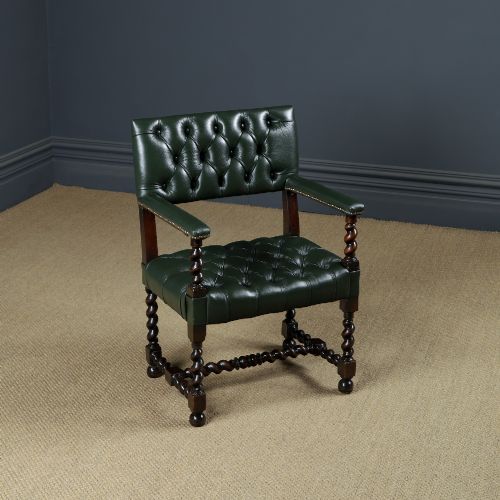
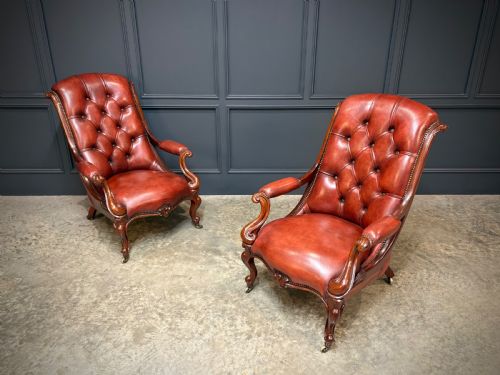
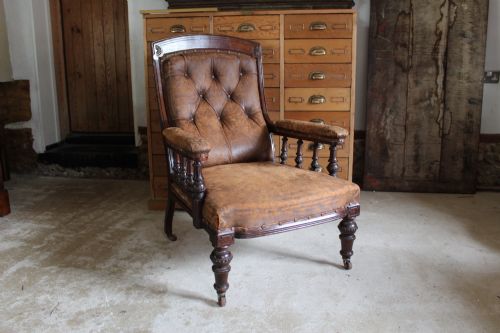
Button back leather seating brings deep tufted comfort and rich nineteenth century character to a room.
Button Back Leather Seating
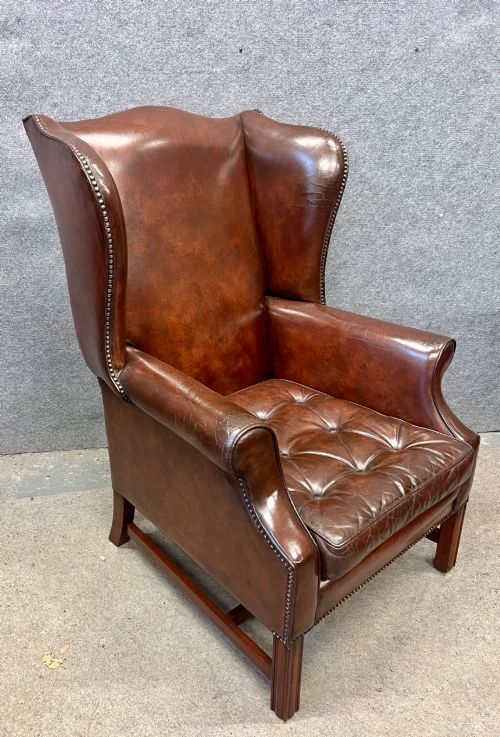
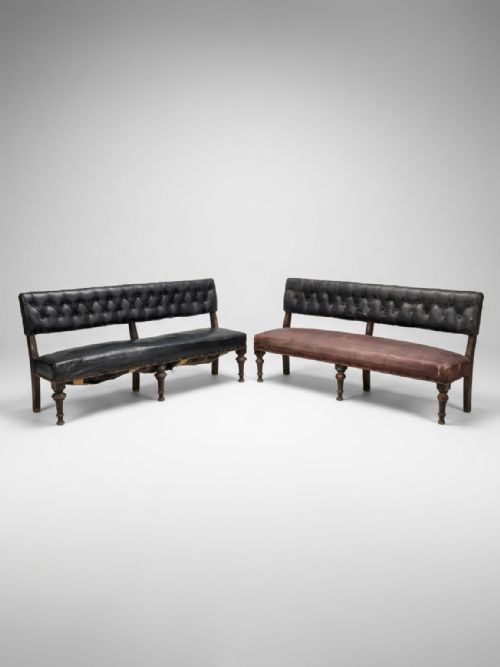
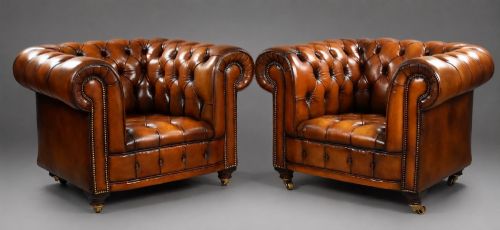
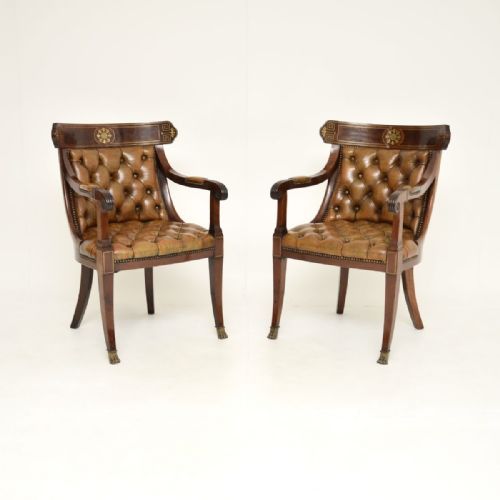
The most common forms on this page are Victorian and Regency library armchairs, alongside sturdy oak club chairs and paired Chesterfields. Makers built these forms to withstand daily domestic and institutional use while offering substantial lower back support.
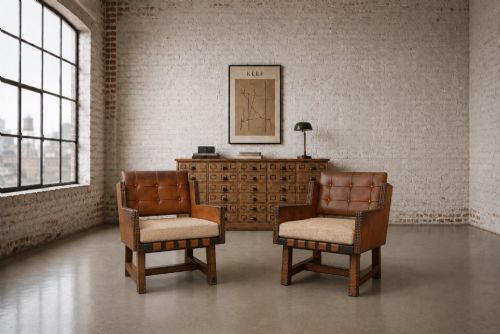
Origins stretch from traditional English workshops to French and Swedish studios, incorporating mahogany, rosewood, and oak alongside polished brown or green leather. Buyers find both single armchairs and matched pairs designed for firesides and offices.
Materials and Construction
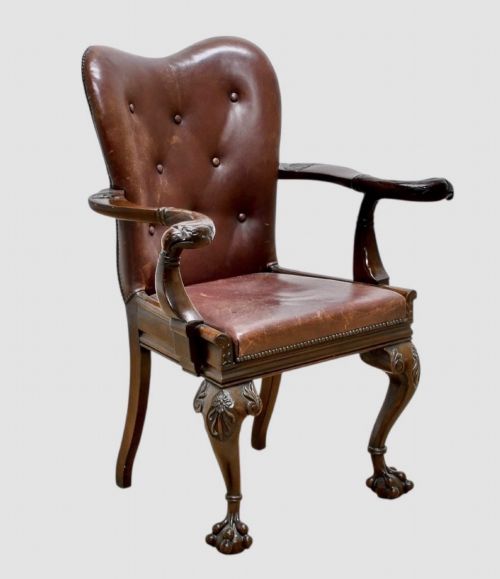
Frames rely on dense hardwoods such as mahogany, oak, and walnut, often shaped with hand carving, brass inlay, or ebonised finishes. These timbers provide the structural integrity needed to support deep upholstery and heavy spring systems.
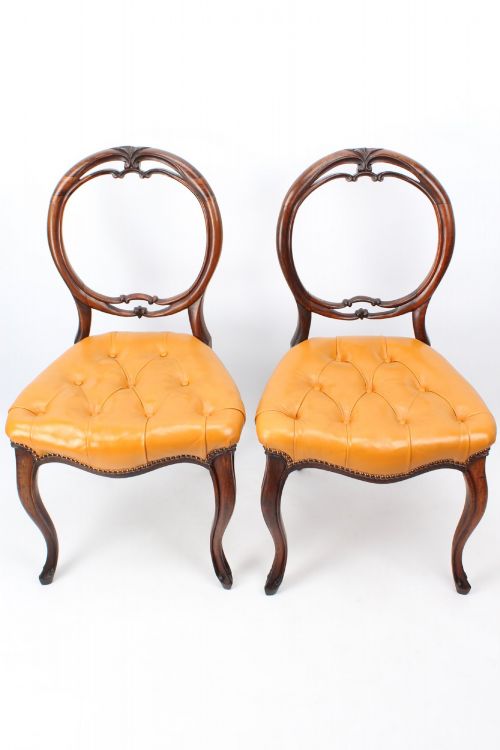
Upholstery involves durable leather hides stretched over stuffing and secured with tight rows of buttons that create the characteristic diamond tufting pattern. Brass tack detailing frequently edges the leather borders to anchor the material firmly to the wooden chassis.
Button Back Leather Seating Retail Price Guide 2026
Typical asking prices for button back leather seating among the pieces listed under this phrase on Sellingantiques today, from the lower quarter to the upper quarter. They describe what is for sale here now, not the wider market.
Several heavy oak frames served alternative seating needs, including specialised cockpit designs and ships chairs built to weather rolling seas.
Assessing Quality and Build
Superior examples exhibit tightly fitted timber joinery and substantial timber weight, particularly in the rosewood and mahogany library chairs from the Regency and Victorian eras. Inferior pieces may show structural looseness or replacement frame components that compromise stability.
The grade of the leather and the regularity of the button tufting distinguish fine workshop output from standard commercial seating. Uniform hide suppleness and precise pleating indicate skilled hands during the original upholstery process.
Howard and Sons·H. Samuel London
The Button Back Leather Seating Glossary
- Chesterfield
- A heavy upholstered sofa or armchair characterised by arms and back of the same height and deep button tufting. This style forms a staple of traditional British interior seating.
- Library Chair
- A sturdy armchair designed for reading rooms, typically featuring padded leather upholstery and a wide wooden frame. These chairs prioritise ergonomic support for long periods of study.
- Button Back
- An upholstery technique where buttons are pulled deep into the padding to create a quilted diamond pattern. This method secures the internal filling while adding texture to the leather surface.
- Bergere
- An enclosed armchair with a wooden frame and upholstered seat, often featuring woven cane panels. The style originated in France before influencing British cabinet makers.
- Cockfighting Chair
- A specialised low armchair featuring a straddling seat and a padded chest rest on the back. Originally built for spectators at sporting events during the Georgian and Victorian periods.
Button Back Leather Seating: Frequently Asked Questions
What is button back leather seating?
Button back leather seating encompasses nineteenth century armchairs, library seats, and Chesterfields defined by deep tufted upholstery. These pieces were built using timber frames and durable animal hides for domestic and institutional reading rooms.
Today, buyers acquire them to anchor living spaces, studies, and offices with traditional character and tactile comfort.
How do I identify a Victorian library chair?
Victorian library chairs typically feature heavy mahogany, walnut, or oak frames paired with dark leather upholstery. Look for hand carved wooden details, brass tack accents, and substantial proportions designed for heavy daily use.
Earlier Regency examples tend to feature refined brass inlay and lighter mahogany frames, while later Victorian versions embrace heavier carved silhouettes.
Where were these chairs used historically?
These seating forms populated private libraries, gentlemen's clubs, boardrooms, and grand domestic drawing rooms across Britain and Europe. They provided ergonomic comfort for reading, writing, and formal conversation.
Club chairs and Chesterfields also appeared in smoking rooms and commercial spaces like hotel lobbies and public houses.
How should I care for antique leather furniture?
Maintain antique leather by keeping it away from direct heat sources and strong sunlight, which can dry and crack the hide. Apply specialised leather balms periodically to preserve suppleness.
Dust wooden frames gently with a dry cloth and check the stability of structural joints rather than using harsh chemical cleaners.