




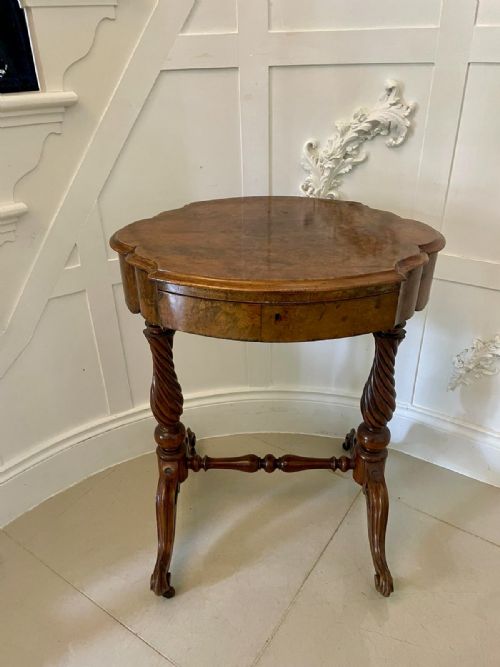


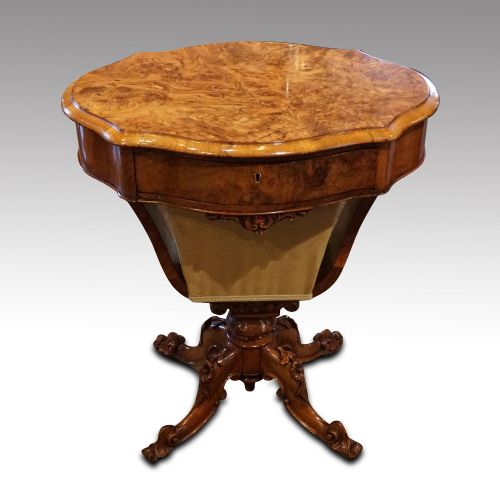
Burr Walnut Trumpet Table
These burr walnut trumpet tables are clever Victorian sewing and work boxes that bring rich timber grain to a sitting room.
Burr Walnut Trumpet Table
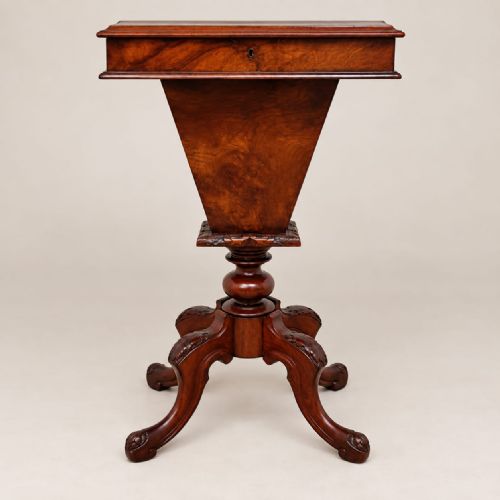
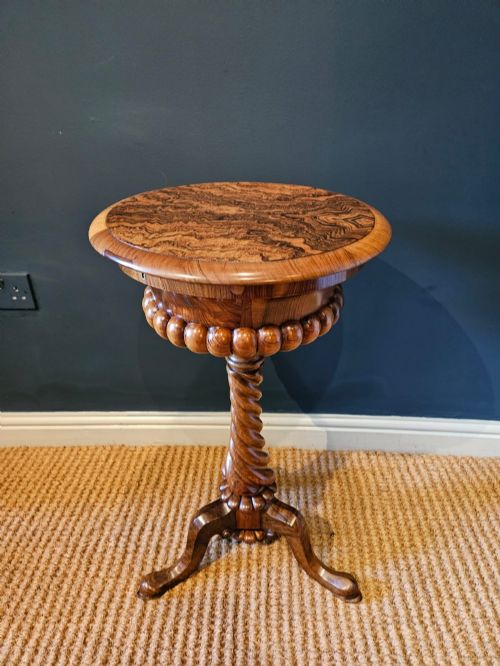
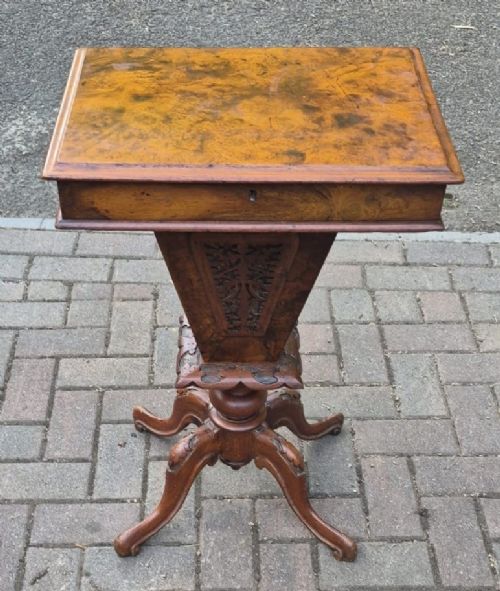
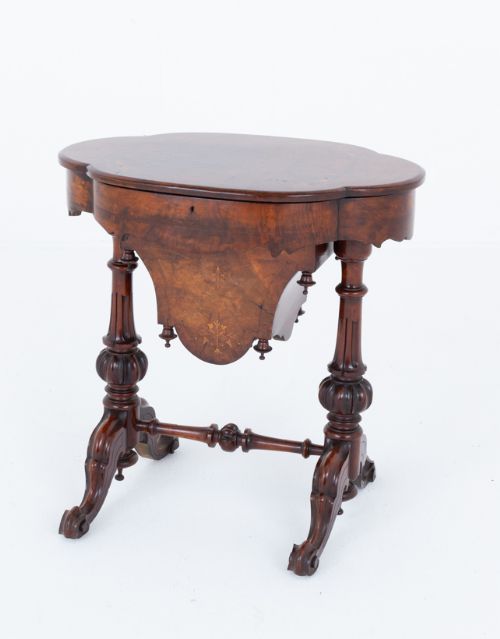
A burr walnut trumpet table is a form of nineteenth-century occasional furniture designed primarily for sewing, needlework and small domestic tasks. The pieces seen here span the Victorian era, specifically appearing across the mid and late nineteenth century, including dates such as 1850, 1860, 1870 and 1880. Most examples double as workboxes or sewing tables, featuring an octagonal or shaped top above a flared, trumpet-shaped body that conceals internal compartments.
Buyers seeking a burr walnut trumpet table will find pieces functioning as side tables, occasional tables and specialised sewing boxes. The form typically rests on a tripod base beneath the fluted or trumpet column, supporting a hinged lid that opens to reveal a fitted interior for threads and implements. The overarching style is steadfastly Victorian, utilising the distinct figured grain of walnut to create decorative presence in a room.
What separates examples
Quality in a burr walnut trumpet table rests largely on the selection and matching of the burr walnut veneer across the primary surfaces. Superior examples display dense, well-matched grain patterns that wrap symmetrically around the octagonal lids and flared bodies. Finer pieces also incorporate precise boxwood or marquetry inlay rather than relying solely on plain timber surfaces.
The intricacy of the fitted interior and the integrity of the cabinetmaking further distinguish better pieces. Tables featuring well-preserved compartmentalized trays, intact fabric linings, and solid carved tripod bases demonstrate a higher grade of original craftsmanship. The crispness of the joinery around the trumpet-shaped pedestal indicates the skill invested in the construction.
Listings feature Victorian pieces predominantly dated between 1850 and 1880, constructed from burr walnut with marquetry and boxwood inlay.
The Burr Walnut Trumpet Table Glossary
- Burr walnut
- A specialised wood veneer obtained from the wart-like growths on walnut trees, prized for its swirling, knotted grain patterns. It forms the primary decorative surface on Victorian work and sewing tables.
- Trumpet table
- An occasional table featuring a distinct flared, trumpet-shaped body and a central column supported by a tripod base. These pieces typically conceal a sewing box or storage well beneath a hinged lid.
- Marquetry inlay
- The art of applying pieces of veneer to a structure to form decorative patterns and pictures. In these tables, contrasting woods create geometric or floral motifs on the top.
- Boxwood inlay
- The insertion of pale boxwood strips into darker walnut surfaces to create sharp linear borders. This technique highlights the edges of octagonal lids and panels.
- Fitted interior
- A compartmented wooden tray or insert placed beneath the lid to organise sewing tools and threads. Better examples retain their original internal partitions.
Burr Walnut Trumpet Table: Frequently Asked Questions
What is inside a trumpet table?
These tables contain a deep storage well beneath the hinged lid, often housing a removable wooden tray divided into small compartments for sewing accessories. The interior was designed to keep threads, needles and unfinished needlework neatly contained.
Many surviving examples retain remnants of original fabric linings or fitted sections within these compartments, showing how Victorian makers prioritized utility alongside exterior decoration.
How do I date a Victorian trumpet table?
Dating relies on examining construction methods, secondary timbers and stylistic markers typical of the nineteenth century. Pieces bearing dates around 1850 to 1880 often show shifts in the complexity of the marquetry and the profile of the tripod base.
Comparing the grain selection and the type of inlay against documented Victorian pieces helps narrow down the decade of manufacture. The presence of specific hardware or boxwood detailing also assists in establishing an approximate period.
Can these be used as side tables?
They function effectively as compact occasional or side tables in modern living spaces due to their modest footprint and stable tripod base. The flat top provides adequate surface area for a small lamp or a book.
While originally built for sewing and handicrafts, their decorative burr walnut surfaces allow them to sit comfortably alongside other nineteenth-century furniture without looking out of place.
Why is it called a trumpet table?
The name derives from the distinctive flared shape of the pedestal body, which widens gradually from the base toward the underside of the table top like the bell of a musical instrument. This silhouette is mounted on a carved tripod base.
Cabinetmakers used this form throughout the Victorian period to combine a stable lower structure with a generous concealed storage cavity above.