







Burr Walnut Workbox
A burr walnut workbox brings rich figured grain and compact utility into a room, offering a tactile chest for needlework and small treasures.
Burr Walnut Workbox
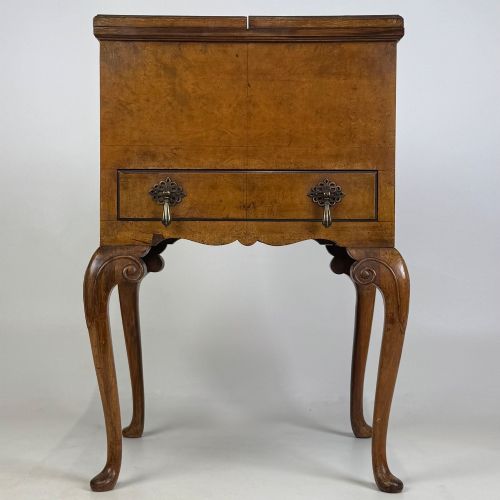
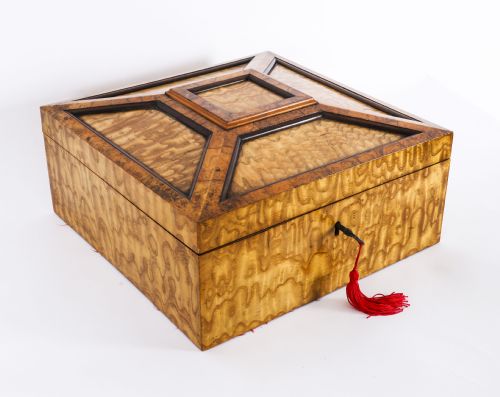
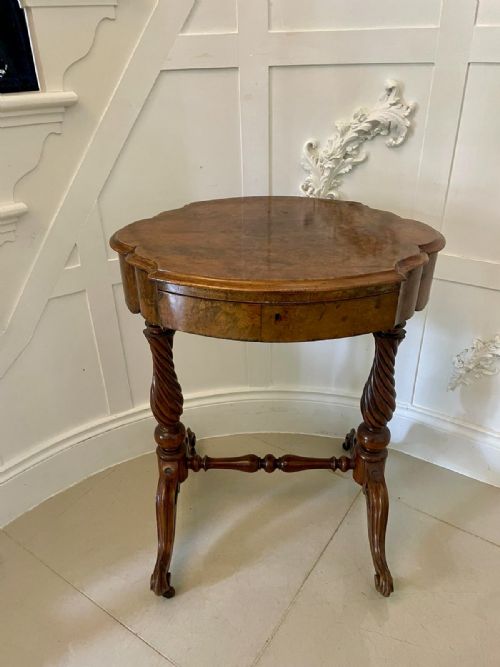
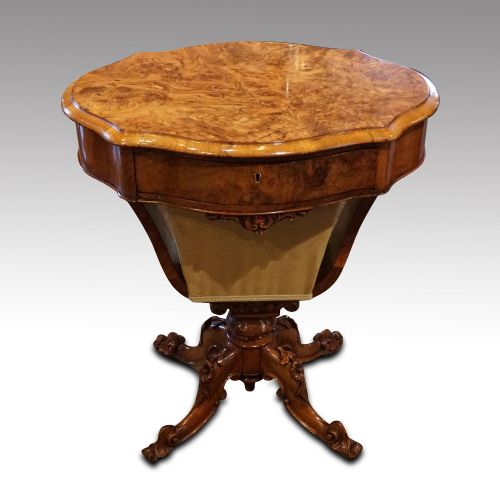
A burr walnut workbox is primarily encountered as a Victorian or Edwardian sewing table, occasional table, or lidded casket designed to hold threads, needles, and personal possessions. These objects range from freestanding trumpet-form tables with internal compartments to tabletop boxes featuring marquetry inlay and Tunbridge ware details.
The material identity rests firmly on walnut and burr walnut veneers, occasionally complemented by burr maple or mahogany, whilst forms extend to games tables and writing boxes. Buyers seeking this phrase will most frequently find mid-to-late nineteenth-century examples displaying rich timber figuring and fitted interiors.
How they were made
Cabinet makers applied thin slices of burr walnut veneer over solid timber carcases to create swirling, highly decorative grain patterns across lids and tabletops. These wooden structures were then combined with brass hardware, textile linings, and occasionally intricate marquetry inlay or geometric Tunbridge ware banding.
Freestanding forms such as trumpet workboxes utilised turned pedestals and tripod bases to support the flared octagonal or oval body of the box. Interior compartments were constructed from lighter secondary woods, fitted with small lidded trays and pin cushions to organise sewing equipment.
Many surviving workboxes still retain stray pins tucked safely into velvet cushions by Victorian hands over a century ago.
What varies in quality
Quality in a burr walnut workbox is defined by the density and visual impact of the veneer selection, where symmetrical figuring across the lid commands greater appreciation. The crispness of inlaid details and the retention of original internal fittings further separate standard examples from finer productions.
Structural integrity of the delicate turned pedestals and the smooth operation of internal compartments also distinguish superior pieces. A well-preserved lining and sound timber construction indicate careful historical ownership and superior original manufacture.
The Burr Walnut Workbox Glossary
- Burr walnut
- A figured wood grain obtained from walnut tree growths, prized for its swirling, organic patterns. It provides a decorative surface ideal for prominent box lids and tabletops.
- Trumpet workbox
- A sewing table featuring a flared, octagonal body resembling a musical instrument, supported by a central pillar and tripod feet. This form became popular during the Victorian period for storing needlework.
- Marquetry inlay
- The art of applying pieces of veneer to a structure to form decorative patterns and pictures. It frequently decorates the surfaces of nineteenth-century boxes and occasional tables.
- Tunbridge ware
- A specific type of woodwork characterised by mosaic designs formed from tiny tinted wood blocks. It appears on select Victorian pieces as geometric banding or pictorial motifs.
- Casket
- A small decorative box with a lid, intended for holding valuables or sewing implements. These objects often display high levels of cabinet making.
Burr Walnut Workbox: Frequently Asked Questions
What is inside a burr walnut workbox?
Most examples contain a fitted wooden tray divided into small compartments for holding cotton reels, needles, and thimbles. Beneath this lift-out tray lies a deeper well, often lined with fabric, designed for bulkier materials and unfinished stitching.
Some variations also include small lidded compartments and built-in pin cushions. These interior fittings remain characteristic of nineteenth-century sewing furniture.
How do I date a burr walnut workbox?
Dating relies on observing construction methods, timber choices, and stylistic markers such as pedestal turnings and inlay types. Victorian pieces often exhibit heavier proportions or specific architectural detailing, whilst Edwardian examples can display lighter framing.
Comparing the secondary woods inside the box and the style of the brass hardware provides further chronological clues. Most items span from the mid-nineteenth century into the early twentieth century.
Where should I place a workbox in my home?
These compact pieces function effectively as occasional tables beside a chair or sofa, where their flat tops can hold a lamp or small decorative items. Freestanding trumpet tables occupy minimal floor space whilst offering enclosed storage within living spaces. Casket versions sit comfortably on chests of drawers or sideboards. Their decorative burr grain allows them to blend easily into traditional or contemporary interiors.
What is the difference between a workbox and a sewing table?
A workbox generally refers to a portable tabletop chest designed to be carried or set down upon furniture, whereas a sewing table is a freestanding piece of furniture with permanent legs or a pedestal. Both terms frequently overlap in historical descriptions.
Both forms served the same domestic purpose of keeping needlework organised and accessible. The primary distinction lies in whether the container rests on its own structural base.