



Burr Walnut Table Clock
A burr walnut table clock combines rich, figured wood with precise mechanical timekeeping for any mantel or desk.
Burr Walnut Table Clock
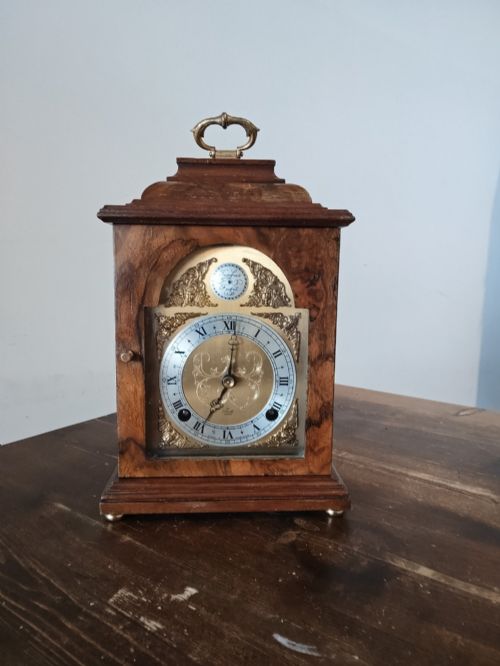
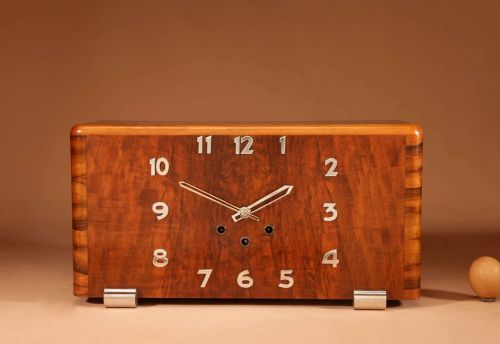
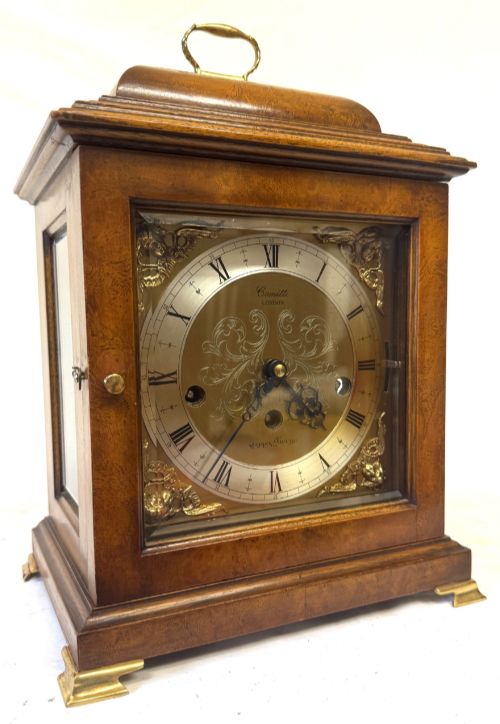
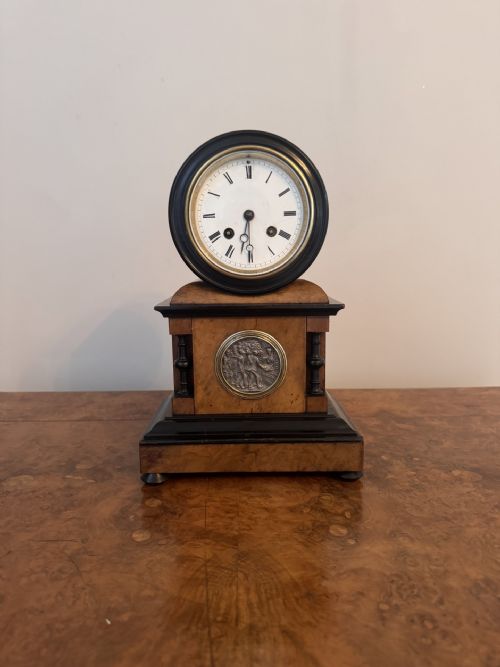
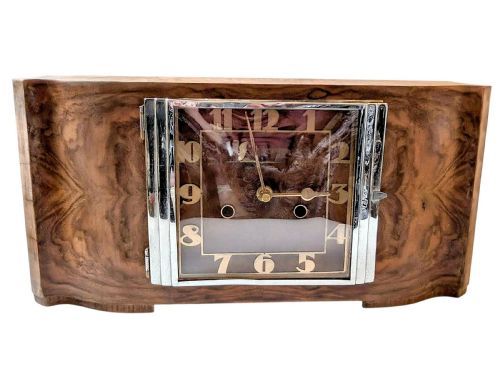
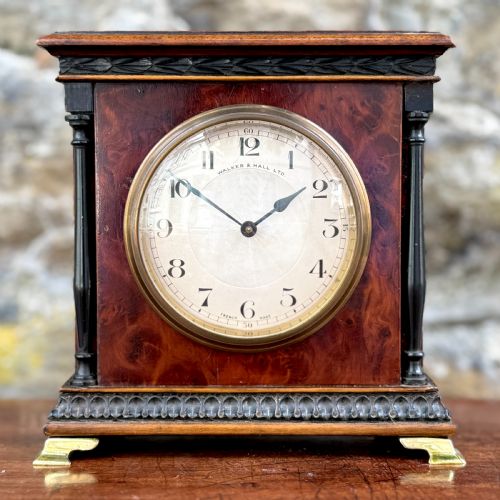
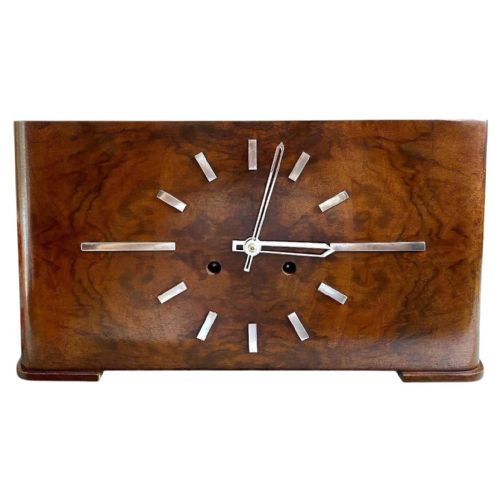
A burr walnut table clock is a timepiece housed in cabinetry displaying the distinctive, swirling grain patterns of walnut growth knots. These pieces appear in forms such as mantel clocks, bracket clocks, and desk clocks across the inventory.
The selection ranges from Victorian and Edwardian examples to Art Deco designs and revival styles. Buyers most frequently encounter mantel and desk formats produced during the nineteenth and twentieth centuries.
How they were made
Cabinetmakers select burr walnut veneers for the exterior case, applying them over solid wood carcases to highlight the natural patterns. Accents of ebonised wood, brass, and ormolu provide structural contrast and decorative framing.
Dials feature enamel or metal with detailed markings, protected behind glass panels. Mechanical movements inside drive the chiming or timekeeping functions, often created by notable clockmaking firms.
Burr Walnut Table Clock Retail Price Guide 2026
Typical asking prices for burr walnut table clock among the pieces listed under this phrase on Sellingantiques today, from the lower quarter to the upper quarter. They describe what is for sale here now, not the wider market.
Some models play up to three distinct musical tunes inside their compact walnut cases.
What varies in quality
Quality rests primarily in the symmetry and depth of the burr walnut veneer across the case, alongside the precision of the cabinet joints. Finer examples display carefully matched grain patterns that wrap seamlessly around the form.
The calibre of the internal movement and the crispness of brass or ormolu mounts further separate standard pieces from exceptional ones. Maker attribution and the complexity of chime mechanisms also elevate the standing of a clock.
Comitti Of London·Mappin & Webb·Walker and Hall·Haller·Lenzkirch·Elliott of London·Baldwin of Loughborough
The Burr Walnut Table Clock Glossary
- Burr walnut
- A veneer taken from the wart-like growths on walnut trees, prized for its swirling, intricate grain. This timber defines the primary aesthetic of the cabinetry.
- Bracket clock
- A portable spring-driven clock originally designed to sit upon a wall bracket. Later versions function as substantial table or mantel clocks.
- Ormolu
- Gilded bronze used for decorative mounts and feet on the clock cases. It adds metallic lustre and ornamental detail.
- Ebonised wood
- Timber treated to imitate ebony, providing dark contrast to the warm brown tones of walnut. Makers utilise this finish for mouldings and bases.
- Movement
- The mechanical inner workings of the clock that measure time and drive the hands or chimes. These range from simple timepieces to complex multi-tune mechanisms.
Burr Walnut Table Clock: Frequently Asked Questions
Where should I place a table clock?
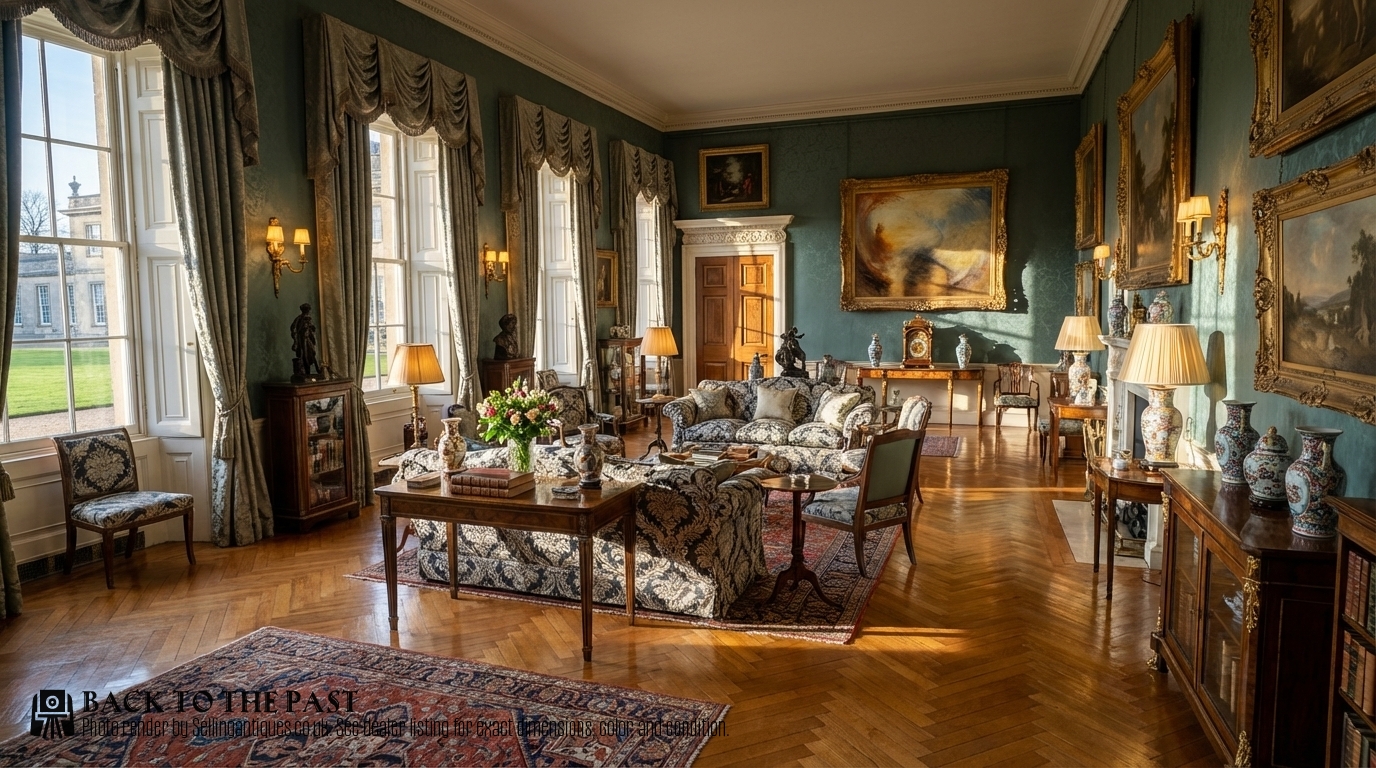
These clocks suit flat surfaces such as mantelpieces, sideboards, and large desks where their decorative cases remain visible. Their compact proportions allow them to sit comfortably in living rooms, studies, or hallways.
Keep them away from direct sunlight and damp environments to protect the wooden veneer and delicate internal movements from atmospheric changes.
How do I wind a mechanical clock?
Mechanical clocks require a specific key to tension the internal springs through holes on the dial or movement back plate. Care must be taken not to over-wind the mechanism, stopping as soon as resistance is felt.
Frequency of winding depends on the movement type, with eight-day movements needing attention weekly and timepieces varying according to their specific design.
How can I tell the period of a clock?
Dating relies on stylistic clues, such as the geometric lines of Art Deco pieces or the ornate mounts of Victorian and revival examples. Cabinet construction and dial typography also offer clear indicators of manufacture era.
Signatures or stamps from makers recorded on the dial or movement provide additional confirmation of the production period.
What maintenance do these clocks need?
Routine care involves dusting the burr walnut case with a soft cloth and avoiding chemical polishes that can damage the finish. Glass components need gentle cleaning with standard glass cleaner applied to a cloth rather than the wood.
Professional servicing of the mechanical movement every few years ensures the gears continue to run smoothly and accurately.