

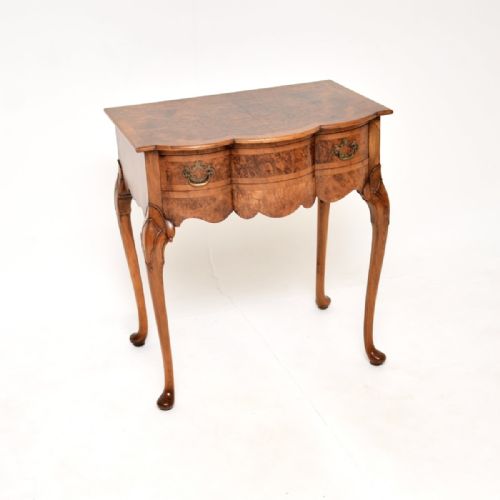


Burr Walnut Server Table
A burr walnut server table brings dramatic grain patterns and practical surface space to a dining room or hallway.
Burr Walnut Server Table
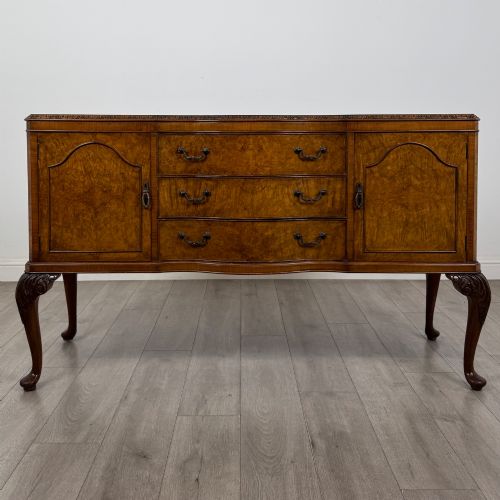
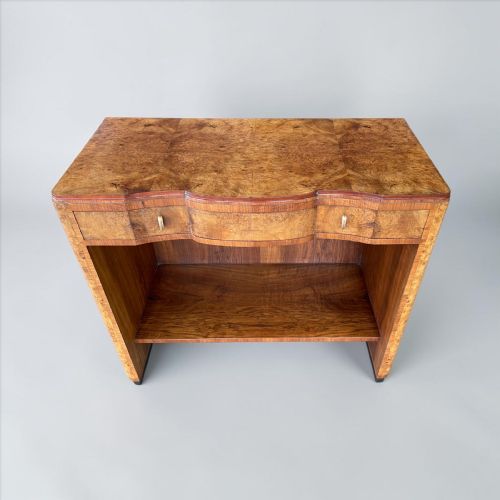
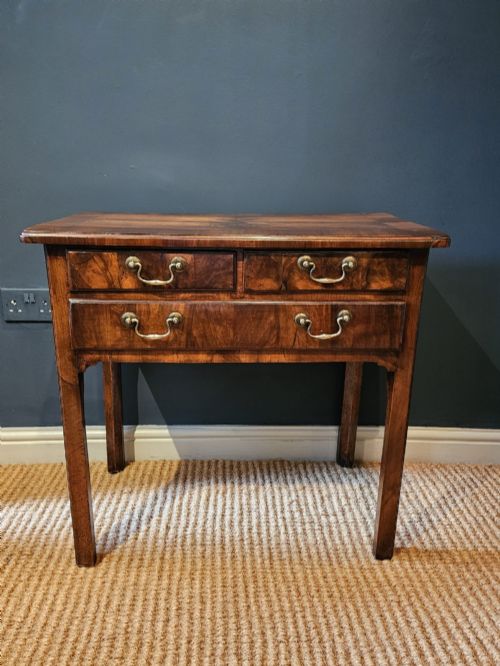
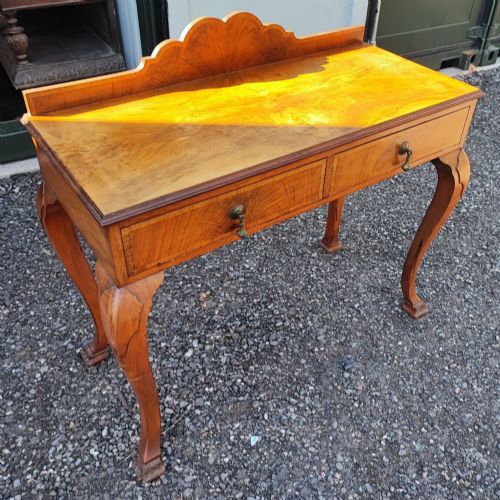
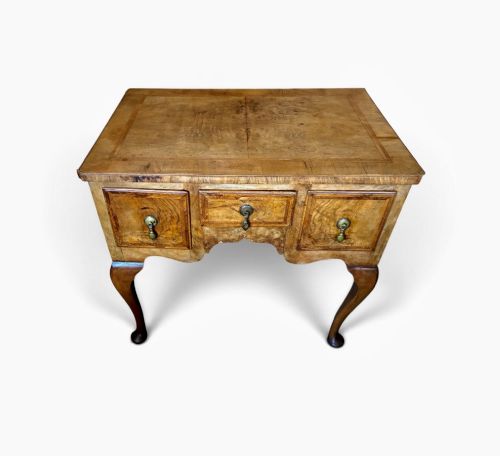
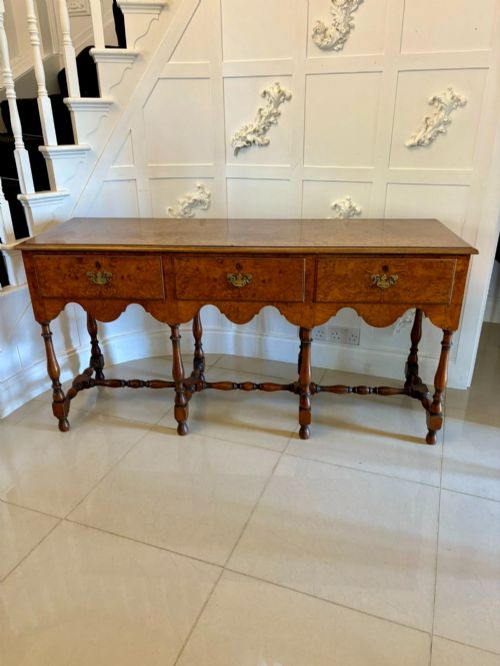
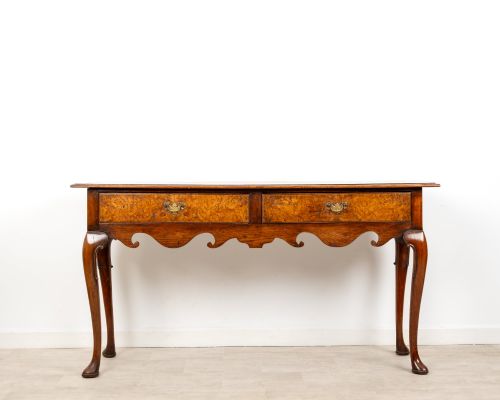
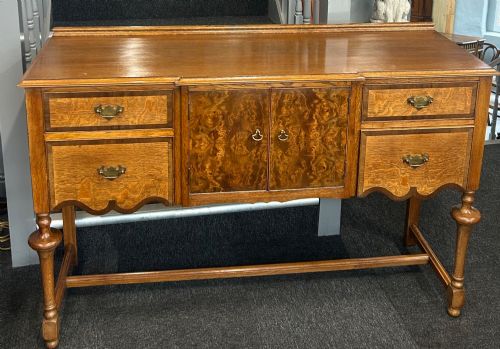
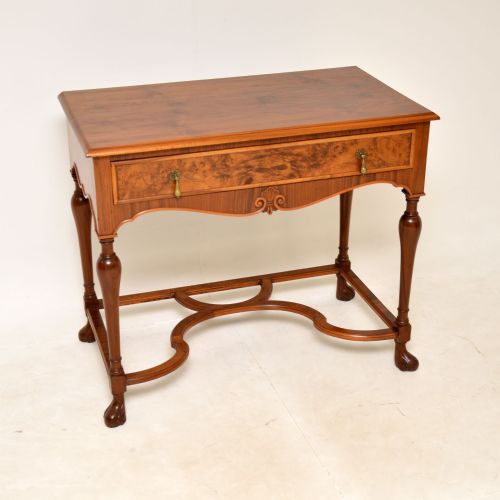
A burr walnut server table encompasses console tables, lowboys, sideboards, and side tables utilised for serving and display. The form bridges dining utility and decorative presence, appearing frequently in twentieth-century revivals as well as earlier periods.
The pieces on this page span from the eighteenth century to the 1930s, incorporating Edwardian, Victorian, and Georgian eras. Queen Anne Revival and Art Deco styles dominate the later material, whilst lowboys represent the earlier centuries.
Makers such as Hille and Epstein appear alongside individual designers like Maurice Adams, marking the higher tier of production. These pieces range from compact lowboys to substantial Art Deco server cabinets and console tables.
How They Were Made
Craftsmen applied burr walnut veneer and plain walnut veneer over solid carcases of oak and secondary timbers, creating rich patterns across table tops and drawer fronts. Brass fittings added structural and decorative contrast to the warm timber.
Makers utilised specialised cutting techniques to harvest the knotty growths of burr walnut, yielding swirling figures unique to each board. Cabinetmakers then laid these veneers meticulously onto flat surfaces to highlight the natural figuring.
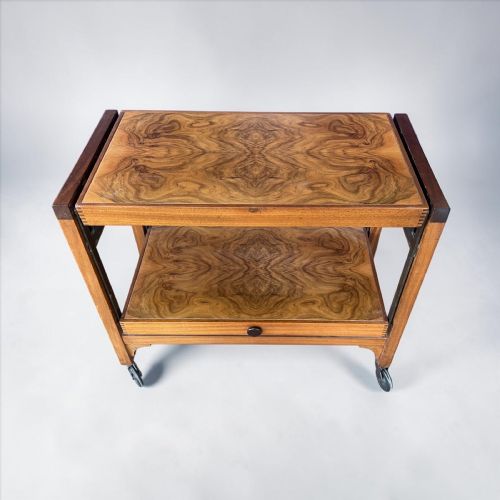
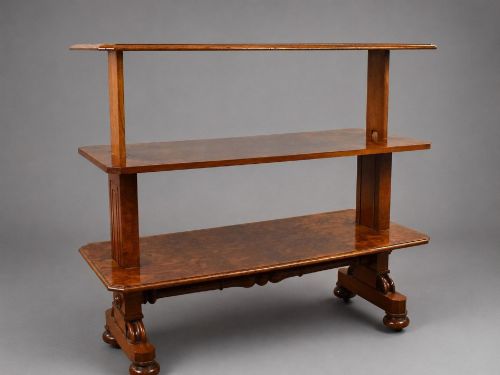
Some Victorian examples include telescopic mechanisms, raising and lowering tiers to suit the drama of the dining room.
What Varies in Quality
The selection of the veneer dictates much of the visual impact, with tightly clustered swirls commanding greater presence than sparse grain. Cabinetmaking precision, particularly in the matching of veneer across drawer fronts and table tops, separates standard workshop output from exceptional commissions.
Attribution to known makers like Hille or Epstein elevates a piece through documented craftsmanship and superior proportion. Structural integrity in the legs, whether cabriole in Queen Anne styles or geometric in Art Deco designs, underpins the lasting quality.
Maurice Adams·Hille·Epstein·Hille of London
The Burr Walnut Server Table Glossary
- Burr walnut
- A veneer sliced from the deformed growths or burrs of a walnut tree, prized for its complex, swirling grain patterns. It creates a highly decorative surface finish.
- Lowboy
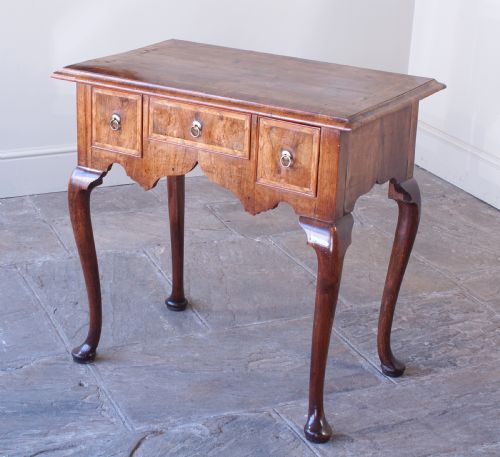
- A small table with drawers, typically standing on four legs, originating in the late seventeenth century. It serves as a compact side table or serving piece.
- Console table
- A table designed to be fixed against a wall, frequently supported by front legs with brackets securing the rear. They often feature elaborate walnut veneer work.
- Dumbwaiter
- A tiered serving piece or mobile trolley used for holding dishes and serving items during meals. Victorian examples often incorporate telescopic mechanisms.
- Queen Anne style
- A decorative style characterised by cabriole legs, pad feet, and graceful curved lines. It experienced significant revivals during the Edwardian period and the 1920s.
Burr Walnut Server Table: Frequently Asked Questions
What is a burr walnut server table?
A burr walnut server table is a utilitarian and decorative surface used for food service, drinks preparation, or display. These tables utilise figured walnut veneer to create striking patterns across the top and drawer fronts.
They appear in various forms, including console tables, lowboys, and sideboards, spanning periods from the eighteenth century through to Art Deco designs of the 1930s.
How do I date a burr walnut server table?
Dating relies on identifying stylistic markers, construction methods, and timber usage. Eighteenth-century pieces often take the form of lowboys in solid walnut, whilst Edwardian and 1920s examples favour Queen Anne revival curves or clean Art Deco lines.
Makers' marks or stamps from firms like Hille or Epstein also help pinpoint pieces from the early twentieth century. Examining the secondary timbers inside drawers provides further clues to the manufacturing era.
Where should I place a server table?
These tables suit dining rooms as functional sideboards for serving food and storing cutlery. They also function well in hallways as console tables for keys and decorative objects.
Placing them away from direct sunlight and heat sources protects the walnut veneer from drying out and fading over time.
How do I care for burr walnut?
Care involves dusting regularly with a soft, dry cloth to prevent dirt accumulation on the veneered surfaces. Avoiding synthetic polishes preserves the original polish and prevents build-up.
Maintaining a stable room temperature prevents the wood and veneer from shrinking, warping, or cracking. Applying an occasional coat of appropriate furniture wax nourishes the grain.