
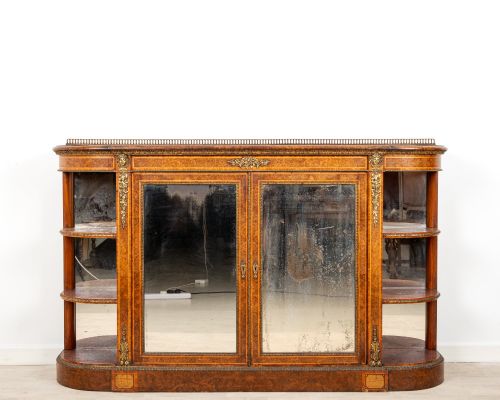
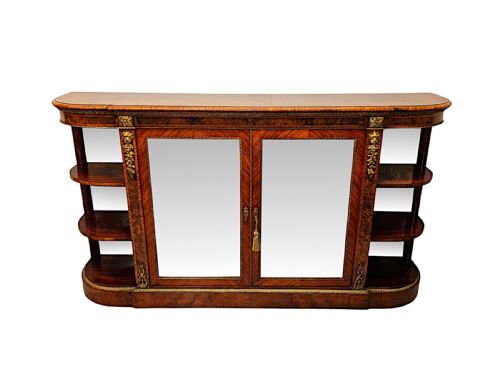
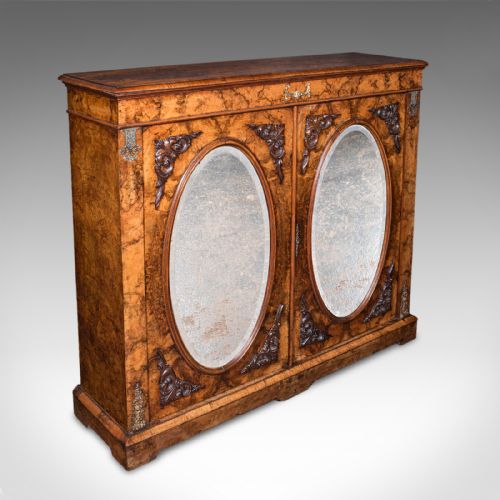

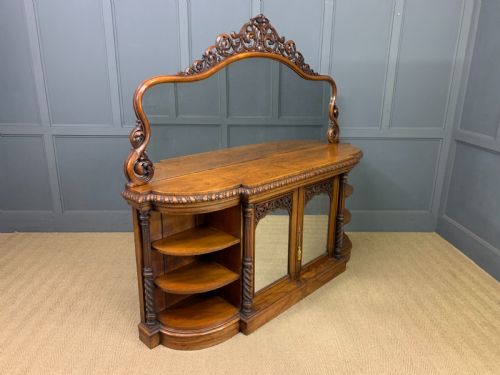


Burr Walnut Mirror Sideboard
A burr walnut mirror sideboard combines richly figured timber with mirrored glass, offering a substantial yet reflective surface suited to formal reception rooms.
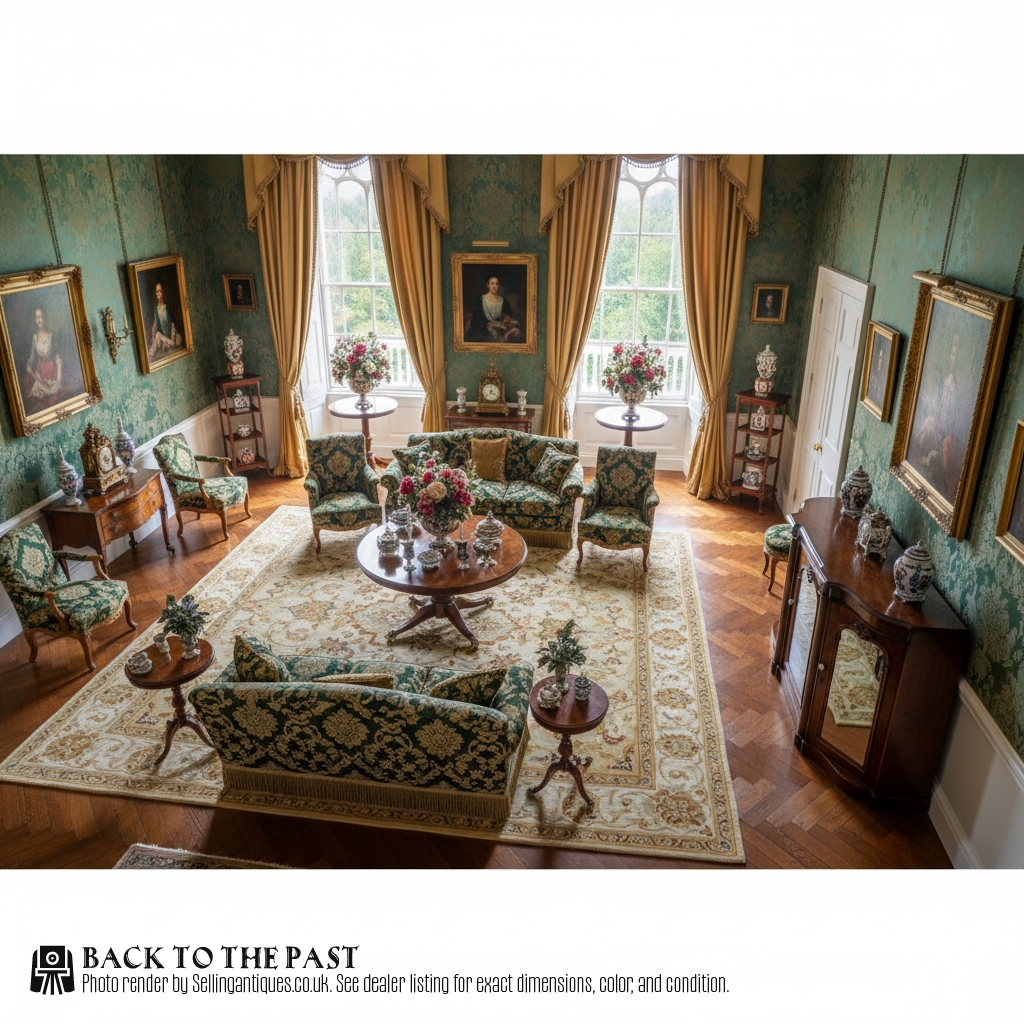
Burr Walnut Mirror Sideboard
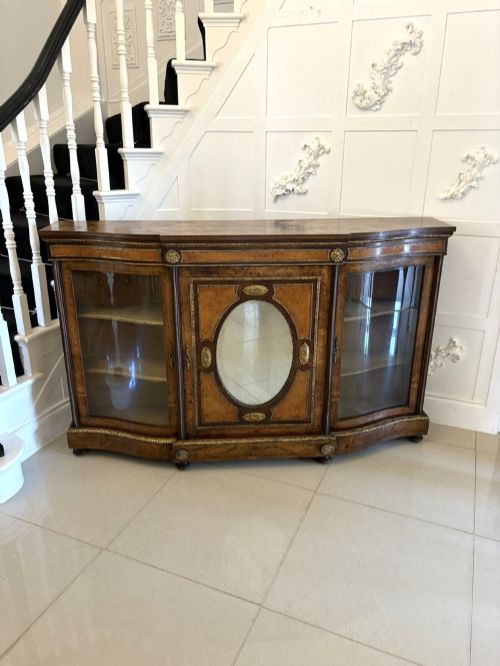
When you search for a burr walnut mirror sideboard, you encounter large credenzas, chiffoniers and side cabinets predominantly originating from the Victorian period, alongside occasional Regency and Art Deco examples.
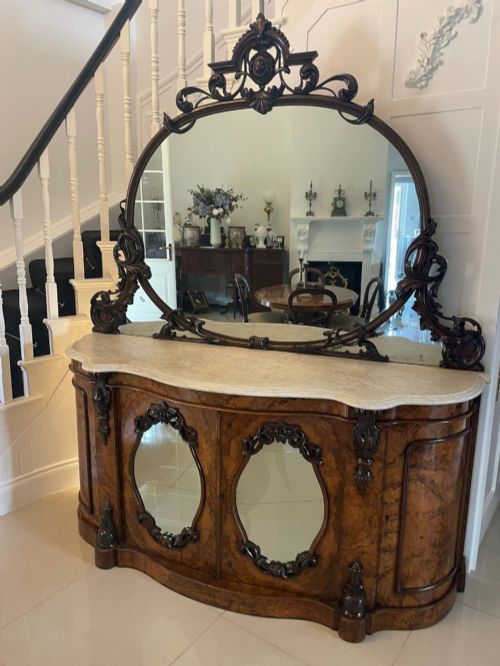
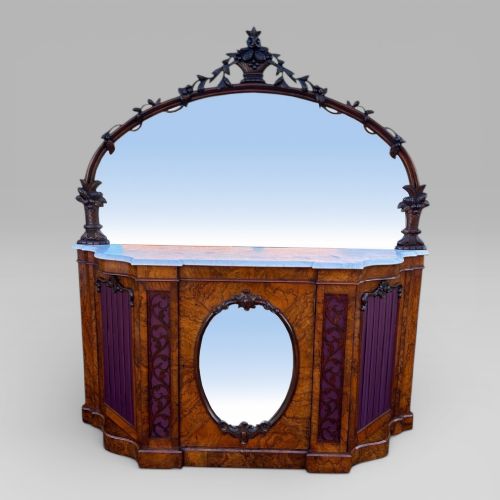
The form typically incorporates a low-built timber base fitted with cupboards or open shelving, surmounted by a carved wooden frame enclosing a mirror plate.
Nineteenth-century makers also designated these dual-purpose pieces as credenzas or sideboards, uniting display surfaces with enclosed storage.
Materials and construction
Cabinet makers utilised burr walnut veneers, prized for swirling knot formations, applied to solid timber carcases alongside secondary woods such as oak.
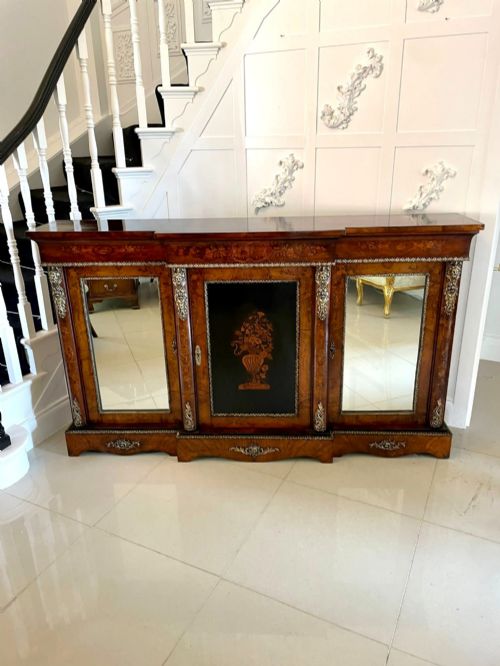
Gilt bronze or brass ormolu mounts, marquetry inlay in satinwood or amboyna, and inset marble tops frequently embellish the primary surfaces.
Mirrored glass plates are set into carved wooden backboards, often shaped with serpentine or arched contours characteristic of mid-nineteenth-century joinery.
Listings span the Victorian period, Regency era, and Art Deco twentieth century, utilising burr walnut, marble, ormolu, and mirror glass.
Assessing quality
The distinction between standard output and finer workshop production rests on the intricacy of the timber veneers and the precision of marquetry inlay.
Heavier ornamentation involving cast ormolu mounts, Sevres porcelain plaques, and deeply carved mirror frames separates workshop pieces of superior execution from plain utilitarian cabinets.
Gillows·Epstein
The Burr Walnut Mirror Sideboard Glossary
- Burr walnut
- Timber veneer sliced from the gnarled excrescences of walnut trees, displaying complex, swirling grain patterns. It forms the decorative exterior surface on nineteenth-century case furniture.
- Ormolu
- Gilt bronze mounts cast and chased to embellish furniture corners, friezes and door frames. This decorative technique adds metallic contrast to dark timber surfaces.
- Credenza
- A low cabinet or sideboard designed for dining rooms or reception spaces, frequently featuring mirrored doors or an attached mirror back. The form developed significantly during the Victorian era.
- Marquetry
- Inlay technique using thin veneers of contrasting timber, such as satinwood and amboyna, arranged to create geometric or floral patterns. Craftsmen apply these motifs directly onto the carcase.
Burr Walnut Mirror Sideboard: Frequently Asked Questions
What rooms suit a burr walnut mirror sideboard?
These large cabinets function effectively in dining rooms or spacious reception halls where their reflective mirror glass bounces light around the interior.
The deep timber tones and decorative mounts coordinate well with period interiors, providing both surface display space and concealed storage.
How do I distinguish Victorian pieces from later styles?
Victorian examples rely on heavy carved walnut frames, serpentine fronts, and ornate ormolu mounts, often incorporating mirror backs or marble tops.
Later Art Deco pieces by makers such as Epstein feature streamlined geometries and plain electric cabinetry without the nineteenth-century revival ornamentation.
Were these pieces used for dining?
Nineteenth-century households utilised these cabinets to serve food, store dining accessories, and display porcelain or glassware.
The combination of enclosed cupboards and upper mirror plates served both practical storage needs and decorative display functions in formal rooms.
How should I care for burr walnut veneer?
Polished walnut surfaces require protection from direct sunlight and excessive moisture to prevent the thin timber veneers from warping or fading.
Gentle dusting with a dry cloth preserves the polished finish without risking damage to the delicate marquetry or ormolu mounts.