


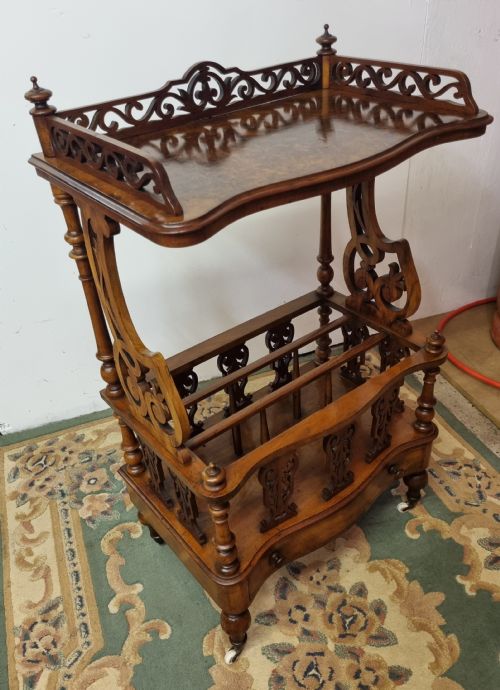
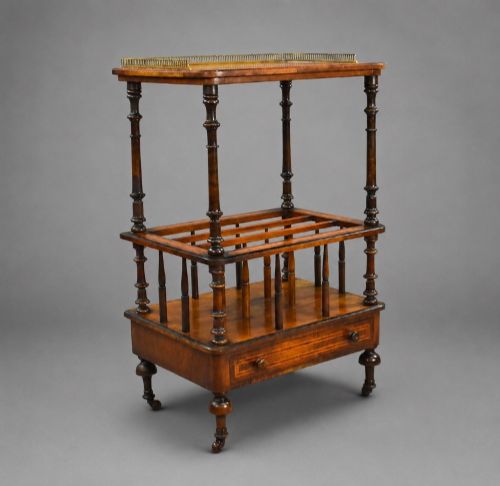



Burr Walnut Magazine Rack
A burr walnut magazine rack brings warmth and figured timber to a room, holding papers and folios with nineteenth-century grace.
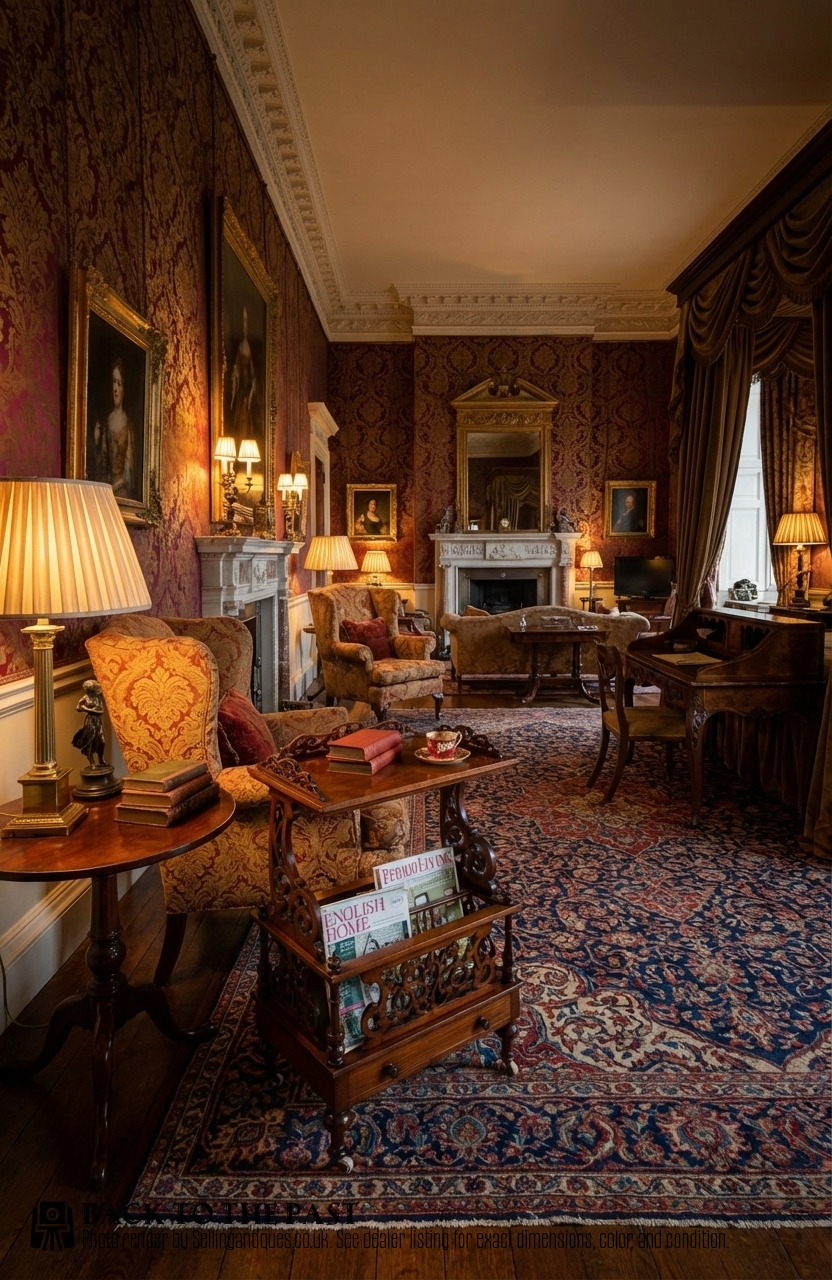
Burr Walnut Magazine Rack
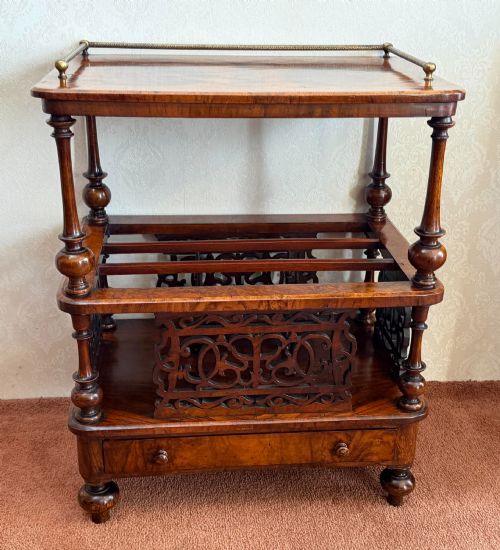
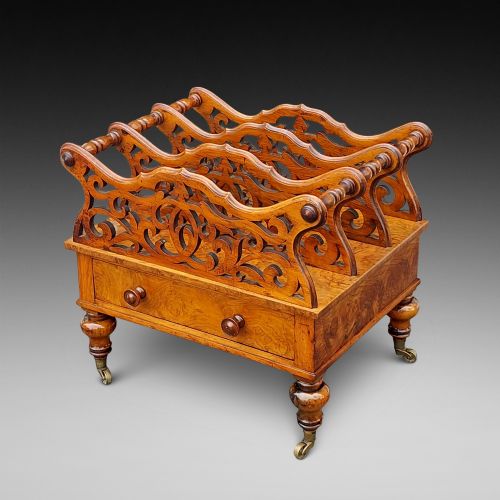
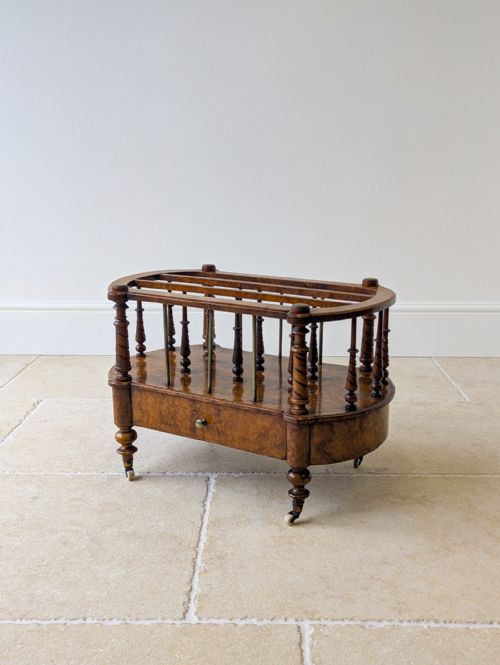
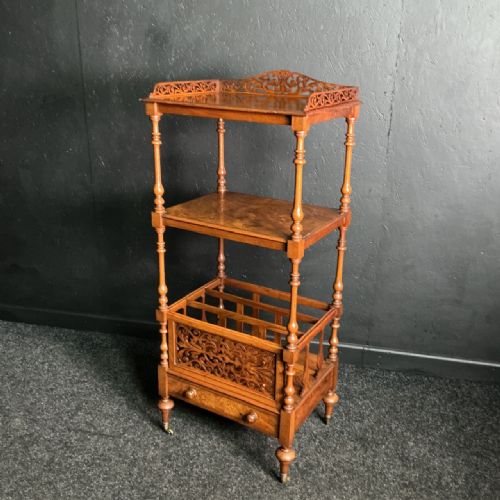
A burr walnut magazine rack appears most frequently as a Victorian Canterbury, blending partitioned storage for periodicals with occasional table or whatnot functions. These pieces often date from the mid-nineteenth century, spanning the eighteen-fifties to the eighteen-eighties.
Forms range from serpentine and oval shapes to freestanding stands incorporating drawers, brass castors, and lower tiers. Makers designed them for music sheets, newspapers, and magazines, placing them beside seating areas in the home.
The evidence shows English and French influences, with styles extending from Regency interpretations to high Victorian and French Chateau designs. Walnut and burr walnut dominate the selection, frequently enhanced by boxwood and marquetry inlay.
Materials and construction
Cabinet makers utilised figured walnut veneers over solid timber carcasses to achieve the swirling, knotty patterns characteristic of burr walnut. Boxwood stringing and marquetry details were inlaid into the surfaces to provide contrast against the rich brown tones of the wood.
Fretwork partitions and turned or carved supports give these stands their distinctive compartmentalised structure. Brass mounts, castors, and ceramic elements complete the hardware on freestanding examples.
Burr Walnut Magazine Rack Retail Price Guide 2026
Typical asking prices for burr walnut magazine rack among the pieces listed under this phrase on Sellingantiques today, from the lower quarter to the upper quarter. They describe what is for sale here now, not the wider market.
Some nineteenth-century makers evidently believed no music stand was complete without at least one hidden drawer for misplaced sheet music.
Judging quality in a burr walnut magazine rack
Quality rests in the intensity and placement of the burr walnut veneer, where symmetrical figuring across the panels demonstrates superior cabinet work. The crispness of inlaid fretwork and the delicacy of turned columns distinguish finer examples from simpler utilitarian racks.
Structural integrity matters significantly in pieces with multiple tiers, drawers, and vertical divisions. The integration of functional elements like smooth-running drawers and original brass castors elevates the status of a Canterbury.
Shoolbred
The Burr Walnut Magazine Rack Glossary
- Canterbury
- A low stand fitted with divisions for holding sheet music, books, or newspapers, often featuring legs with castors and sometimes an integrated drawer. This form serves as the primary structural archetype for these magazine racks.
- Burr walnut
- A veneer sliced from the growths or burls of walnut trees, prized for its complex, swirling grain patterns. Cabinet makers selected these figured sections for the principal display surfaces of high-status furniture.
- Whatnot
- A piece of open shelving standing on legs, used for displaying ornaments or holding books and papers. Examples in this category often combine the shelving of an etagere with the compartmentalised base of a Canterbury.
- Marquetry
- Decorative patterns formed by inserting pieces of contrasting wood, ivory, or metal into a veneered surface. This technique creates detailed floral or geometric motifs across the top and sides of the furniture.
- Fretwork
- Ornamental perforated woodwork created by cutting patterns through thin boards. It appears in the pierced partitions and sides of nineteenth-century stands to lighten their visual weight.
Burr Walnut Magazine Rack: Frequently Asked Questions
What is a Canterbury?
A Canterbury is a compartmentalised stand designed during the eighteenth and nineteenth centuries to hold sheet music, books, and periodicals. It typically sits on low legs with castors for easy movement around a reception room.
Over time, the form evolved to incorporate drawers, table tops, and whatnot shelving, serving multiple functions within domestic interiors.
How do I care for burr walnut?
Burr walnut benefits from being kept away from direct sunlight and sudden changes in temperature to prevent the veneer from drying or cracking. Regular dusting with a soft, dry cloth preserves the polished finish.
Application of traditional wax polish maintains the moisture and deep lustre of the timber without building up heavy residues.
Are these pieces stable enough for daily use?
These stands were constructed to hold papers, folios, and occasional objects, and sturdy examples remain functional for daily organisation. The internal partitions and lower tiers distribute weight evenly across the frame.
Care should be taken when moving them, particularly models fitted with original brass castors, to avoid straining the joints.
How can I date a Victorian Canterbury?
Dating relies on observing the secondary timbers, construction methods, and stylistic cues such as serpentine shaping, fretwork styles, and inlay materials. Mid-nineteenth-century pieces frequently display dense burr walnut veneers paired with boxwood stringing.
Comparative details from documented workshop pieces help narrow down the period of manufacture within the Victorian era.