

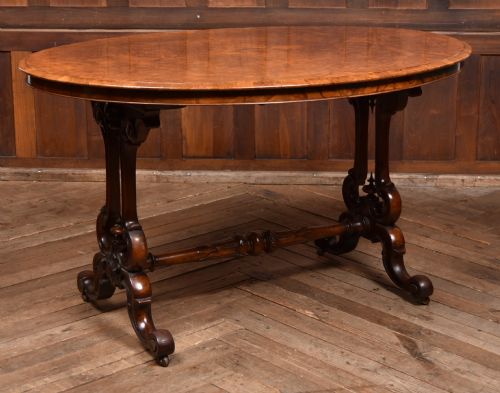
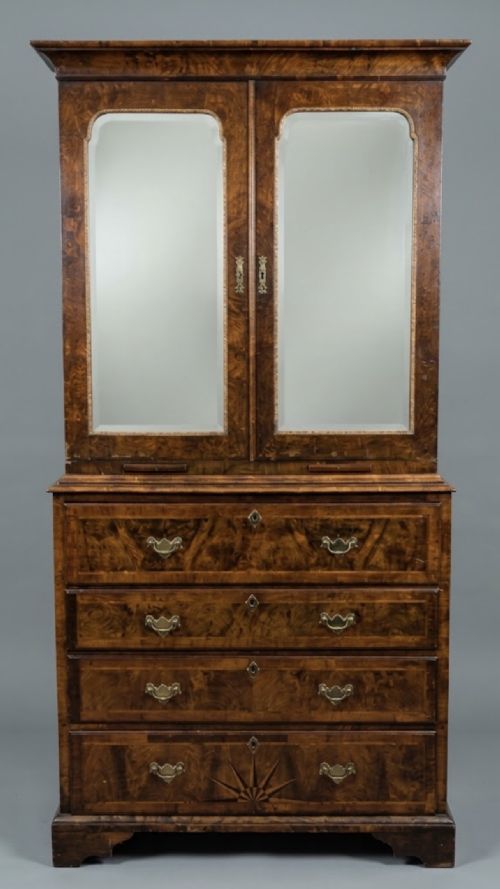
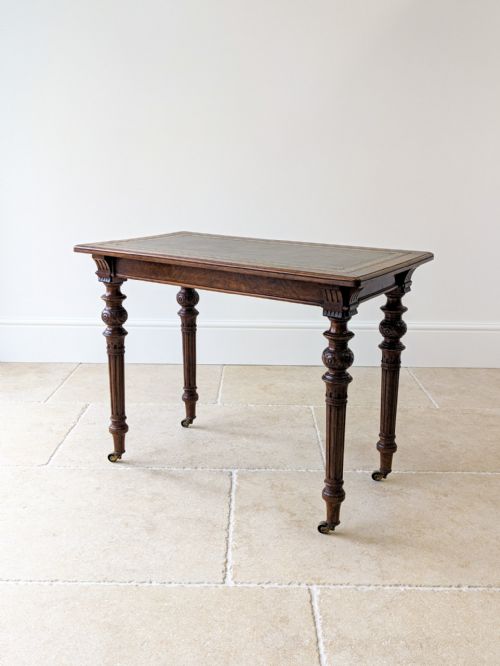
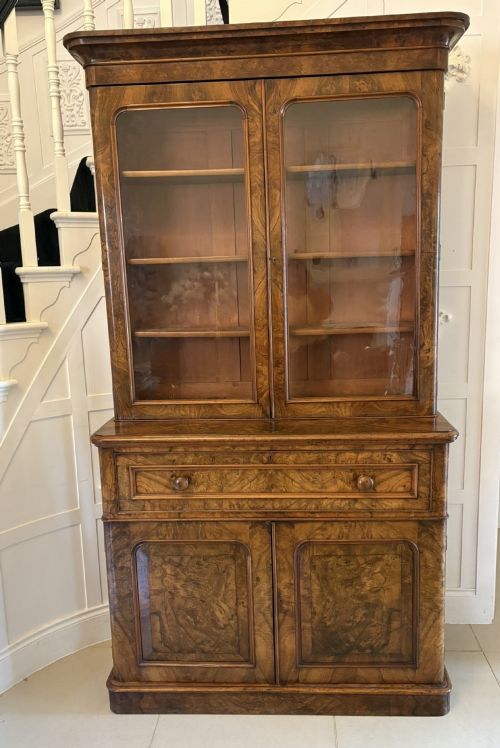
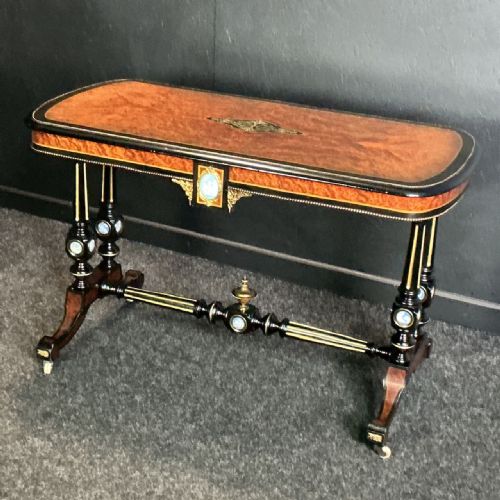
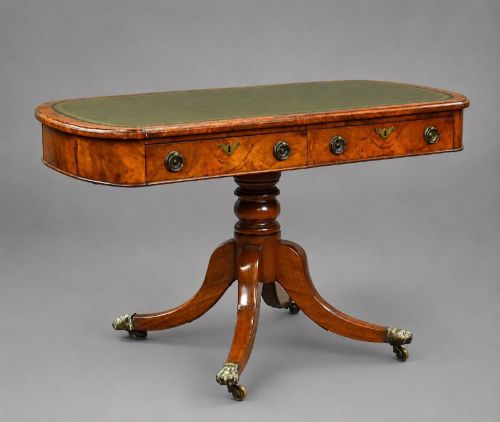

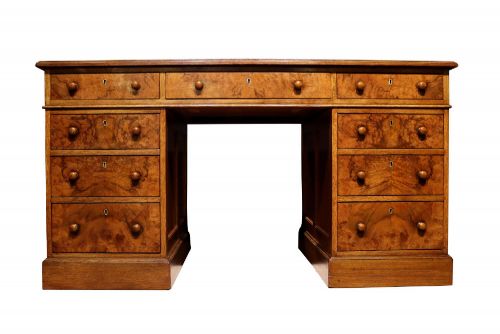
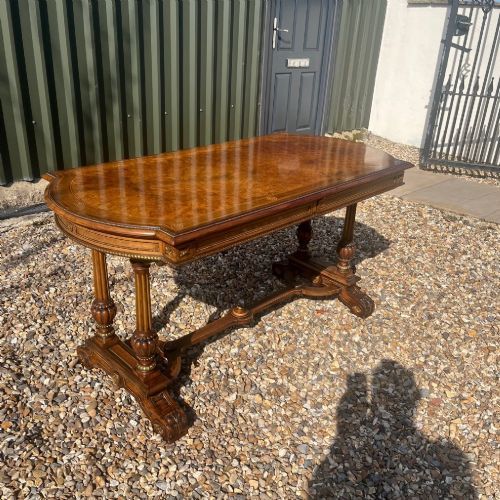


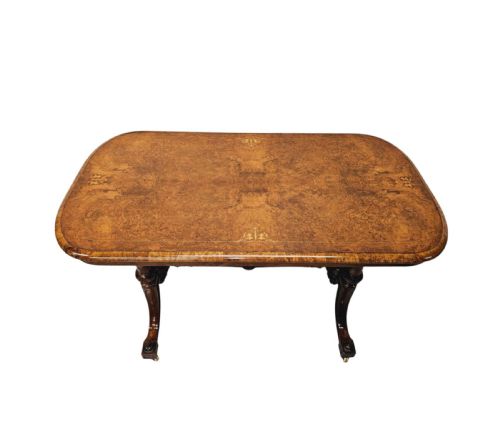
Burr Walnut Library Desk
A burr walnut library desk brings striking grain patterns and rich Victorian craftsmanship directly into a study.
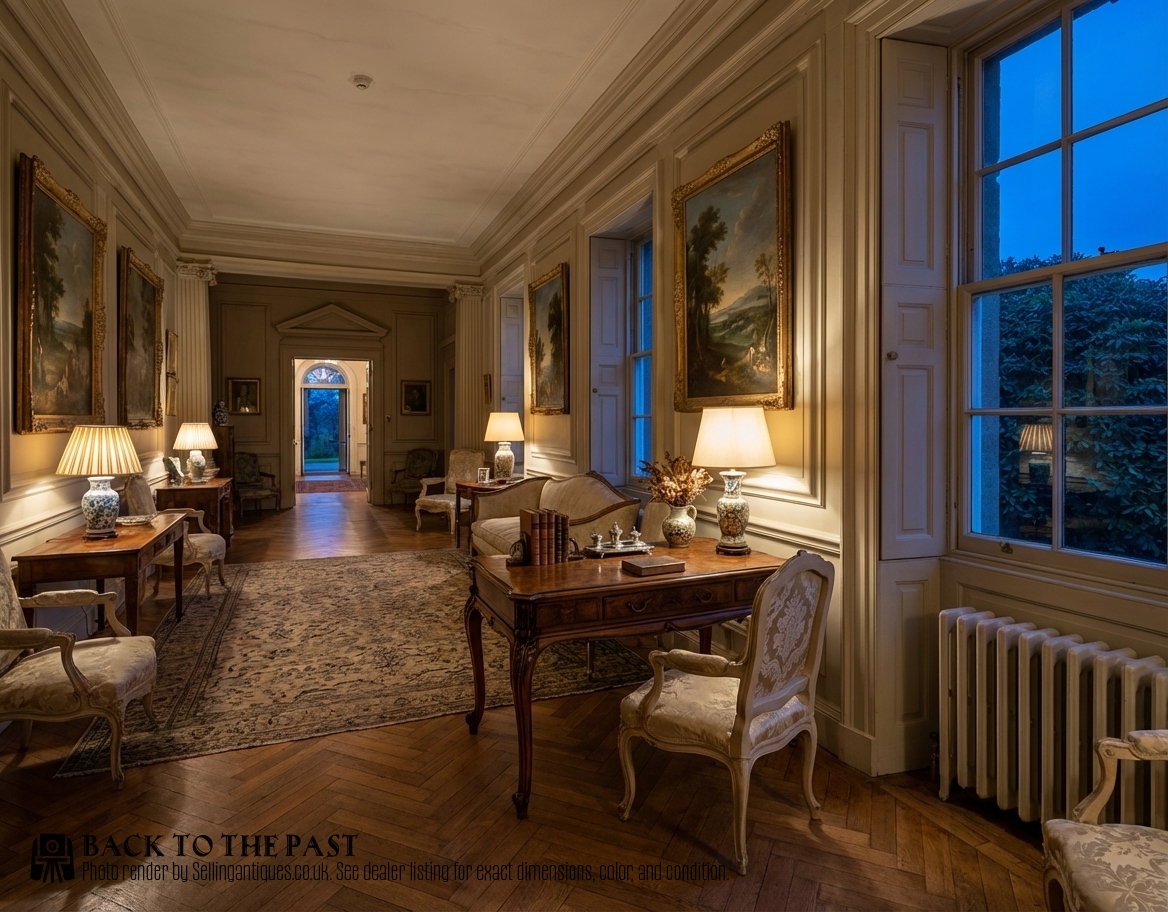
Burr Walnut Library Desk
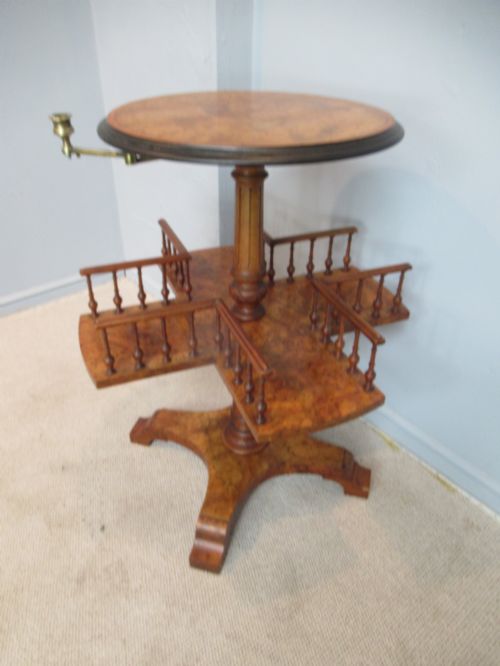
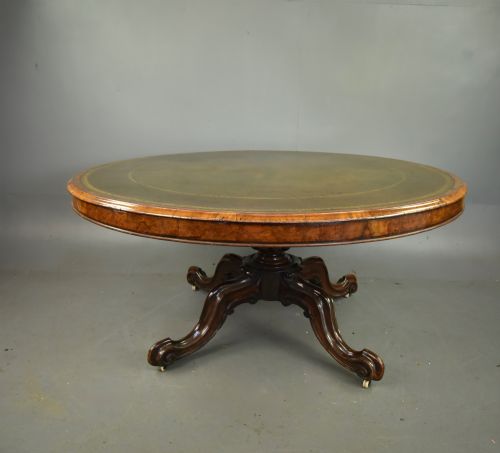
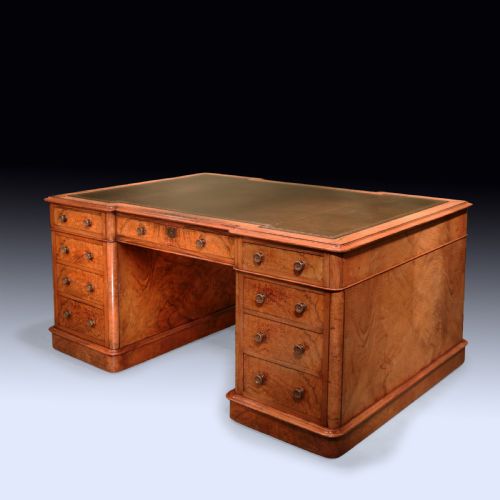
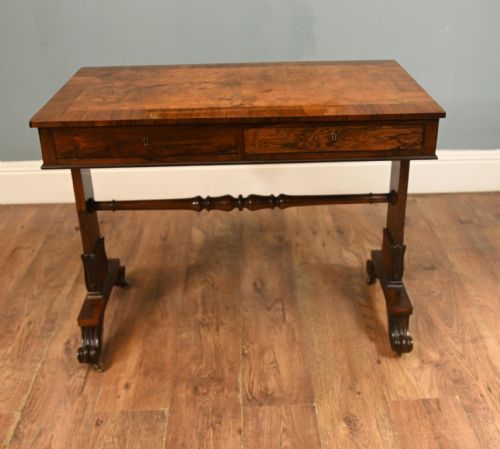
A burr walnut library desk unites functional workspace with the distinct, swirling patterns of burr walnut timber. These pieces span the nineteenth century and the twentieth century, appearing as twin pedestal desks, partners desks, writing tables, and freestanding centre tables.
Victorian examples dominate the selection, often featuring shaped tops, leather inserts, and meticulous marquetry inlay. Alongside standard desks, one encounters related library forms including revolving bookstands, side tables, and occasional writing desks originating from British and continental workshops.
The layout generally prioritises either a freestanding position in the middle of a room or a sturdy arrangement against a wall. Drawers are integrated into the frieze or pedestals, providing practical storage while maintaining the unbroken visual flow of the figured wood veneer.
Distinctions in Quality
The value and distinction of a burr walnut library desk rest primarily on the boldness and symmetry of the veneer selection. Master cabinetmakers aligned the swirls of the burr across multiple drawers and table tops to produce a cohesive, mirror-image effect.
Structural integrity and finishing touches separate standard workshop production from high-end cabinetmakers. Finely executed ormolu mounts, crisp hand-carving, original brass hardware, and secondary timbers of robust oak indicate superior workshop origin.
Burr Walnut Library Desk Retail Price Guide 2026
Typical asking prices for burr walnut library desk among the pieces listed under this phrase on Sellingantiques today, from the lower quarter to the upper quarter. They describe what is for sale here now, not the wider market.
Secondary materials recorded across the inventory include solid oak, brass mounts, tooled leather, ormolu, and ebonised wood details.
Maple and Co·GILLOWS Lancaster·W J Mansell·Whytock and Reid·Holland and Son·Druce and Co
The Burr Walnut Library Desk Glossary
- Burr Walnut
- A timber harvested from the gnarled growth on a walnut tree, prized for its dense, swirling grain patterns. It is sliced into thin veneers for decorative furniture surfaces.
- Partners Desk
- A large pedestal desk designed with matching drawer configurations on both sides, allowing two people to work opposite one another. These pieces often feature spacious leather-lined writing surfaces.
- Pedestal Desk
- A form comprising a top surface resting upon two separate banks of drawers or cupboards. This layout creates a central kneehole space for the chair.
- Ormolu
- Gilded bronze ornamentation applied to furniture, popular in revival styles during the nineteenth century. It adds metallic contrast to dark wood surfaces.
- Frieze
- The horizontal band situated directly beneath the top surface of a table or desk, frequently housing one or more drawers.
Burr Walnut Library Desk: Frequently Asked Questions
How do I care for burr walnut veneer?
Keep the wood away from direct sunlight and excessive heat sources to prevent the veneer from drying out or lifting from the base timber.
Apply a traditional beeswax polish occasionally and buff gently with a soft cloth to maintain the natural lustre of the grain.
Can a partners desk be placed in the middle of a room?
Partners desks are finished on all sides specifically to stand freestanding in the centre of a library or study.
Both sides feature identical drawer layouts and polished backs, making them suitable for viewing from any angle.
What is the difference between a library table and a writing desk?
Library tables generally feature open frames or four legs with fewer integrated drawers, designed originally for holding books and reading materials in large rooms.
Writing desks incorporate banks of drawers beneath the top or within pedestals, offering dedicated storage for stationery and correspondence.
How do I identify Victorian pieces from later revival styles?
Examine the construction methods within the drawer linings and the secondary timbers used beneath the veneer, which often show hand-cut dovetails on nineteenth-century examples.
Stylistic cues such as heavy rococo revival carving or specific cabinetmaker stamps help narrow down the exact decade of manufacture.