





Burr Walnut Dressing Box
A burr walnut dressing box is a fitted repository of personal vanity, prized for the swirling grain and practical luxury of its interior compartments.
Burr Walnut Dressing Box
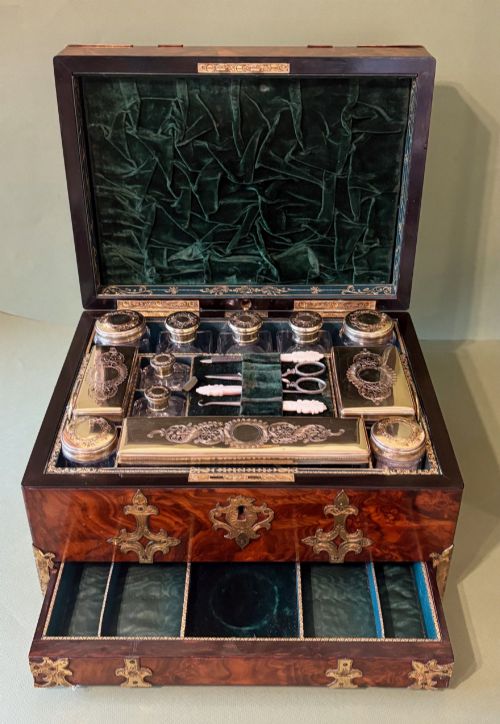
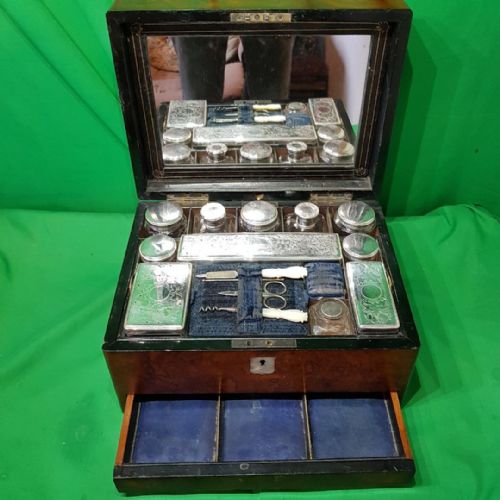
A burr walnut dressing box brings together the rich, figured grain of walnut veneers with practical compartments designed for a lady or gentleman's daily toilette. You will find these pieces spanning the Victorian and Georgian periods, alongside examples from the 19th century and the early 20th century.
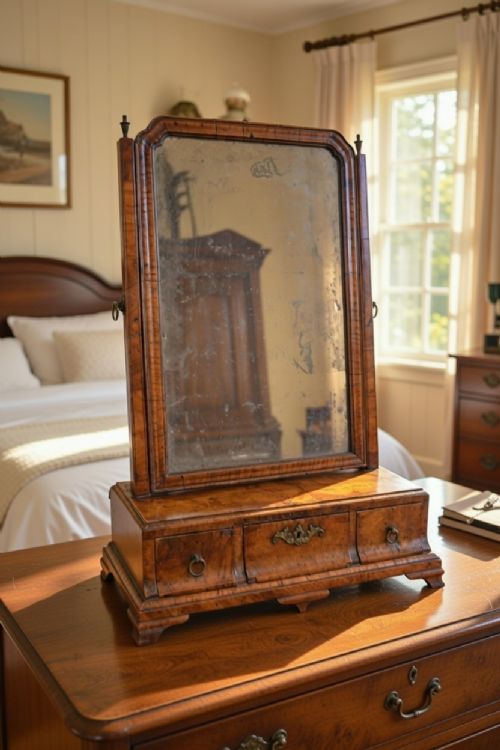
The form encompasses travelling sets, vanity cases, and jewellery boxes equipped with fitted interiors, mirrors, and sometimes silver or glass fittings. Alongside standard dressing boxes, related forms such as glove boxes, scent caskets, and dressing table mirrors appear frequently in this category.
How they were made
Cabinet makers selected thin slices of burr walnut veneer, prized for its intricate knot formations, and laid them over a solid secondary wood foundation. This decorative timber was then paired with brass banding, lock escutcheons, and occasionally ormolu mounts to protect the corners and edges.
Interiors were lined with velvet and fitted with compartments, lift-out trays, and compartments designed to hold glass bottles with silver lids or razors. Fine attention to detail is evident in the secret drawers and sprung mechanisms concealed within the woodwork.
Burr Walnut Dressing Box Retail Price Guide 2026
Typical asking prices for burr walnut dressing box among the pieces listed under this phrase on Sellingantiques today, from the lower quarter to the upper quarter. They describe what is for sale here now, not the wider market.
Some Victorian gentlemen's travelling cases included secret spring-loaded compartments that popped open only when the correct hidden panel was pressed.
What varies in quality
The quality of a burr walnut dressing box rests largely on the depth and symmetry of the figured veneer chosen by the maker. Superior pieces display continuous, well-matched grain patterns across the lid and sides rather than disjointed patches of timber.
Internal appointments also dictate the grade of the piece, with high-end examples retaining their original matched sets of cut glass bottles, hallmarked silver fittings, and intact velvet linings. The precision of the brass binding and the smoothness of any concealed locking mechanism further separate standard production boxes from exceptional commissions.
Parkins & Gotto·JH Browne
The Burr Walnut Dressing Box Glossary
- Burr walnut
- A veneer taken from the wart-like growths on walnut trees, yielding complex, swirling grain patterns. It was favoured by cabinet makers for high-status boxes and furniture.
- Ormolu
- Gilt bronze mounts applied to furniture and boxes for decoration and reinforcement. This technique was often utilised on Victorian luxury pieces.
- Dressing box
- A portable container fitted with compartments, mirrors, and receptacles for cosmetics, jewellery, and grooming tools. These boxes were essential accessories for travel and domestic use.
- Cut glass
- Glassware shaped by abrasive wheels to produce faceted patterns that catch the light. It is commonly found in the interior bottles and jars of Victorian dressing cases.
- Escutcheon
- A protective plate surrounding a keyhole, usually made of brass. On quality boxes, it is flush-fitted into the wood.
Burr Walnut Dressing Box: Frequently Asked Questions
What goes inside a dressing box?
These boxes were designed to hold the requisites of personal grooming, including glass scent bottles, small jars, brushes, and jewellery. Many also incorporate velvet-lined trays and hidden compartments for letters or coins.
Later variations, such as razor sets, catered specifically to men's shaving requirements while maintaining the same portable format.
How do I date a burr walnut box?
Dating relies on construction methods, hardware, and accompanying interior fittings. Victorian examples often feature heavy brass banding and fitted velvet trays, whereas Georgian pieces tend to be simpler in outline.
Maker signatures on locks or paper labels inside the lid can also provide a precise decade of manufacture.
Are these boxes meant for travel?
Originally, many of these cases were built as travelling vanity boxes for use on trains or carriages. They feature sturdy locks and robust brass mounts to withstand the rigours of movement.
Today, they are best suited as static decorative objects on dressing tables or sideboards to store modern jewellery and keepsakes.