




Burr Walnut Display Vitrine
A burr walnut display vitrine brings rich timber grain and fine glazing together to showcase treasured possessions in any room.
Burr Walnut Display Vitrine
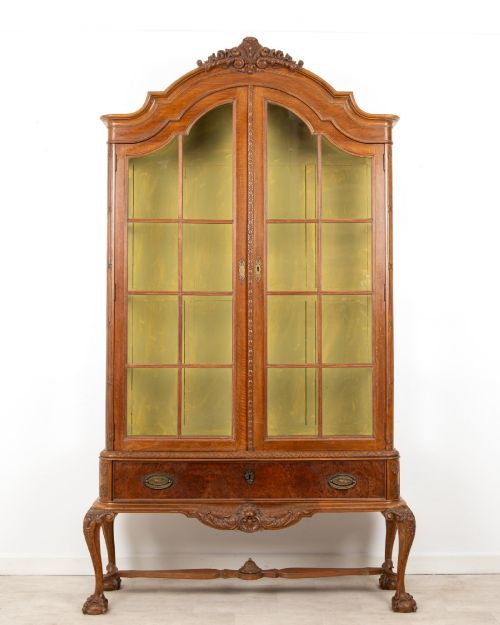
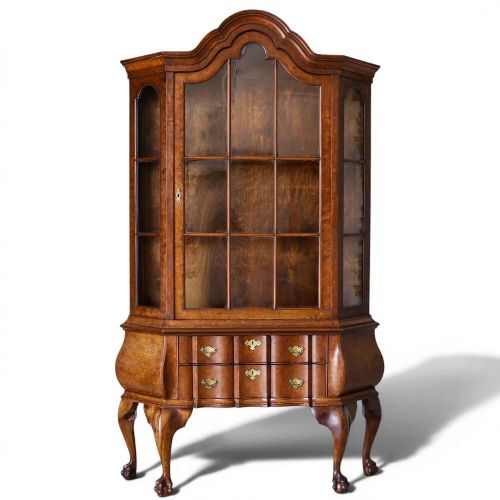
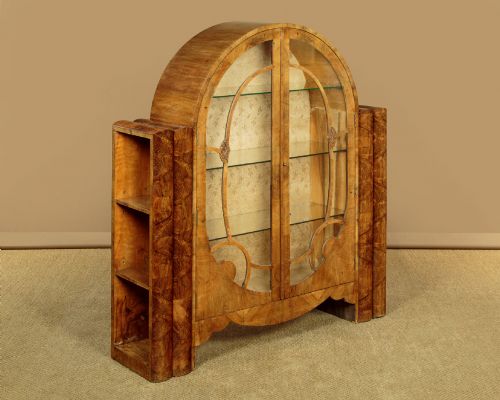
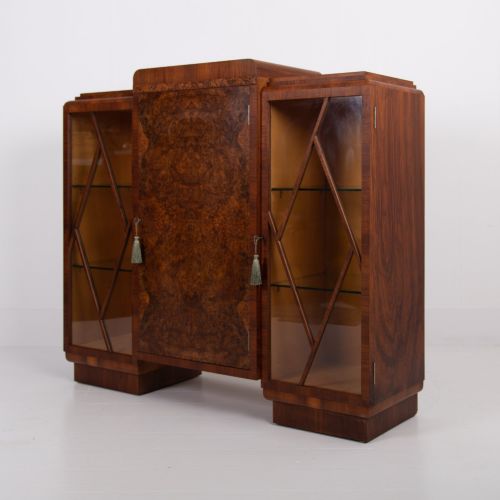
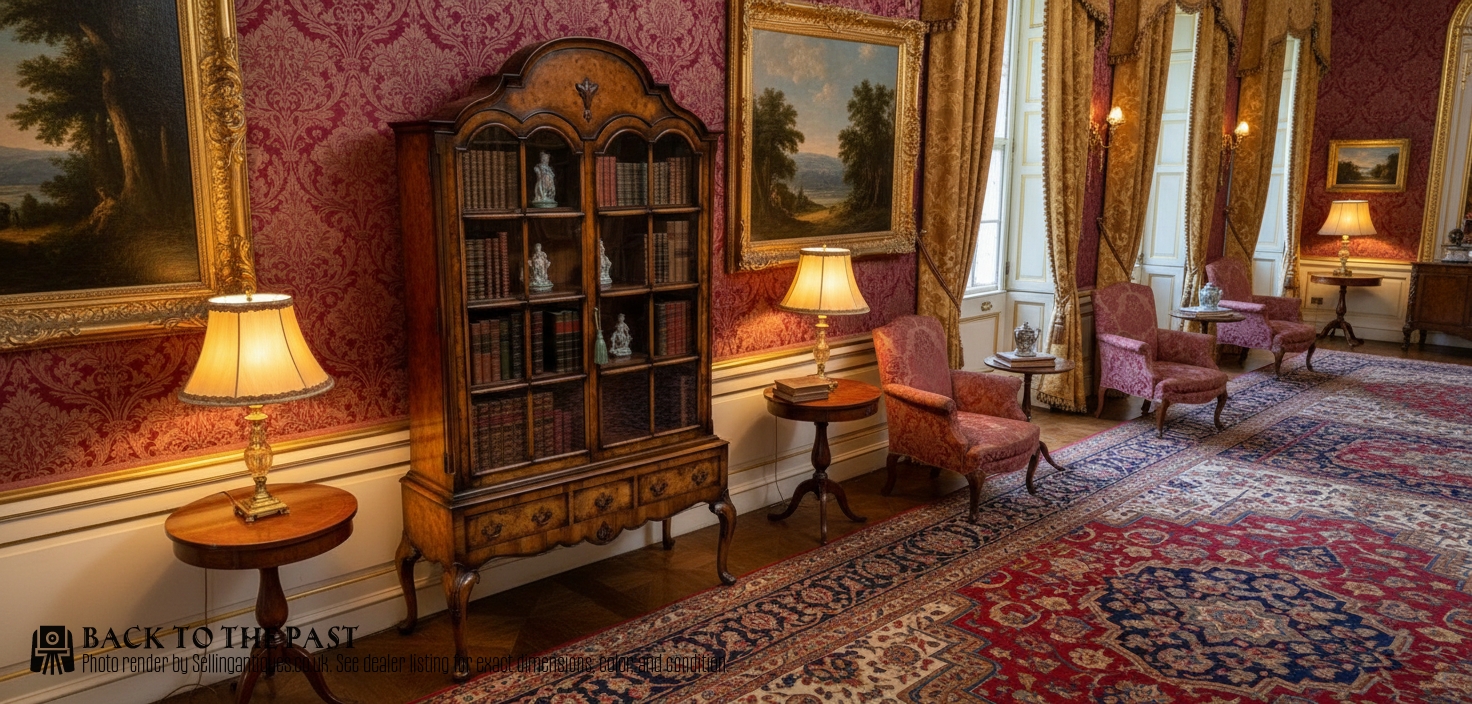
A burr walnut display vitrine is a cabinet designed for showing porcelain, glassware or books behind glass doors, using the distinctive swirling patterns of walnut burr veneer. These pieces range from compact Victorian pier cabinets to substantial Art Deco glazed units and tall Dutch revival bookcases.
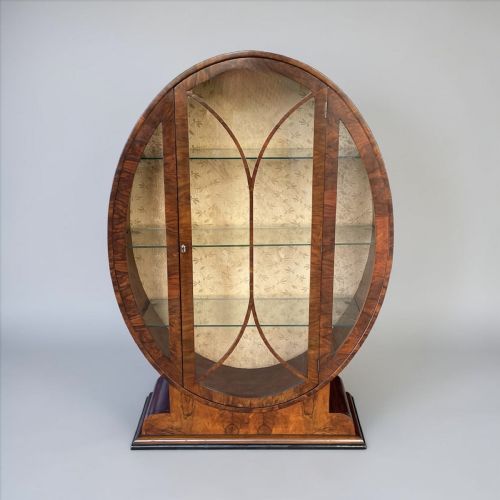
The most common examples encountered on this page date from the nineteenth century and the Art Deco period of the nineteen-thirties. Formats vary from oval, circular and octagonal freestanding cabinets to corner cupboards, sideboards and tall bookcases with glazed upper sections.
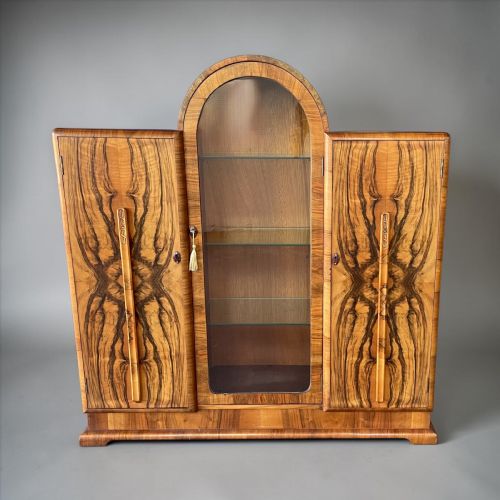
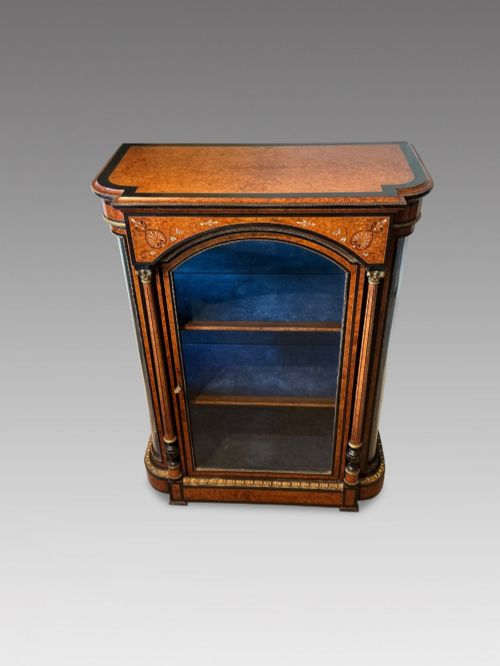
Origin and style often dictate the silhouette, moving from the straight lines and geometric veneers of nineteen-thirties pieces to the curved glass, floral marquetry and ormolu mounts of Victorian and Dutch models.
Materials and construction
Cabinet makers constructed these pieces by applying thin slices of highly figured burr walnut veneer over solid carcase timbers such as mahogany or pine. This technique allowed craftsmen to create symmetrical grain patterns across large doors and panels.
Glass panels were secured within wooden frames, occasionally complemented by brass or ormolu mounts, ebonised wood details and marquetry inlays. Interiors were frequently lined with velvet or fabric to provide a contrasting backdrop for displayed objects.
Materials appearing across the inventory include burr walnut, ebonised wood, glass, brass, ormolu, and velvet fabric.
Assessing craftsmanship and finish
The distinction between standard examples and exhibition pieces lies in the selection and matching of the burr walnut veneer. Superior items display harmonious, book-matched grain patterns that flow evenly across the entire front of the cabinet.
Refinement of detail also separates the tiers of quality, seen in the precision of the marquetry inlay, the weight of the ormolu mounts and the smoothness of the glazing bars. Cabinet makers who invested extra labour in these secondary elements produced pieces with enduring structural integrity and visual depth.
Maurice Adams·Epstein
The Burr Walnut Display Vitrine Glossary
- Burr walnut
- A veneer sliced from the deformed growth or root of a walnut tree, prized for its intricate, swirling grain patterns. It creates a highly decorative surface on cabinet doors.
- Vitrine
- A glass-sided cabinet or display case traditionally used for exhibiting fine porcelain and curiosities. The term originates from the French word for glass.
- Pier cabinet
- A low freestanding cabinet designed to fit against the narrow section of wall between two windows. These Victorian pieces often feature a single glazed door and ormolu mounts.
- Ormolu
- Gilded bronze mounts applied to furniture for decorative effect. They are commonly found on nineteenth-century cabinets framing corners or door panels.
- Marquetry
- Decorative patterns formed by fitting together small pieces of different coloured veneers. Dutch examples often display elaborate floral and bird motifs.
Burr Walnut Display Vitrine: Frequently Asked Questions
How do I date a burr walnut display vitrine?
Dating relies on combining the overall style, construction methods and secondary timbers visible inside the cabinet. Nineteenth-century pieces typically show traditional dovetailing and heavier ormolu mounts, whereas nineteen-thirties examples adopt streamlined Art Deco geometries and circular or octagonal shapes.
Hardware, lock mechanisms and interior linings also offer clues to the period. Examining the carcass construction behind the burr walnut veneer helps confirm whether a piece belongs to the Victorian era or the later revival periods.
Where should I place a display vitrine at home?
These cabinets suit dining rooms, drawing rooms or libraries where they can safely house collections behind glass doors. Placing them away from direct sunlight protects both the delicate walnut veneer and any fabric interior linings from fading over time.
Freestanding circular and oval cabinets work well as focal points in open spaces, while corner cabinets and pier units utilise awkward angles or narrow wall spaces efficiently without dominating a room.
What is the difference between a vitrine and a bookcase?
A vitrine is primarily built for display, featuring glass panels on the sides as well as the doors to let light illuminate objects from multiple angles. Bookcases usually focus on front-facing shelves intended for books, though many period examples combine both functions with glazed upper doors.
On this page, pieces described as display cabinets or vitrines tend to emphasise decorative frames and fabric-lined interiors, whereas bookcases often provide deeper shelving and simpler internal arrangements.
How do I care for burr walnut veneer?
Maintenance involves dusting with a soft, dry cloth and avoiding silicone-based polishes that can build up on the polished surface. Keeping the cabinet away from direct heat sources and radical humidity changes prevents the veneer from drying out or lifting.
Treating the wood with traditional beeswax occasionally helps nourish the finish and maintain the natural lustre of the burr walnut grain over the years.