


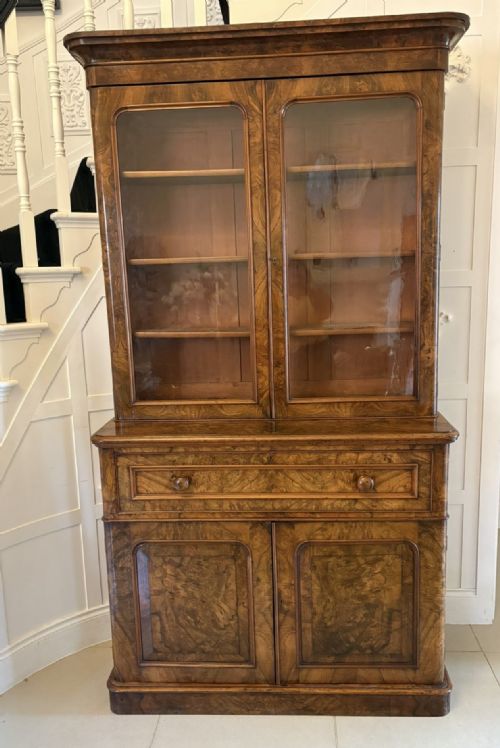
Burr Walnut Desk Bookcase
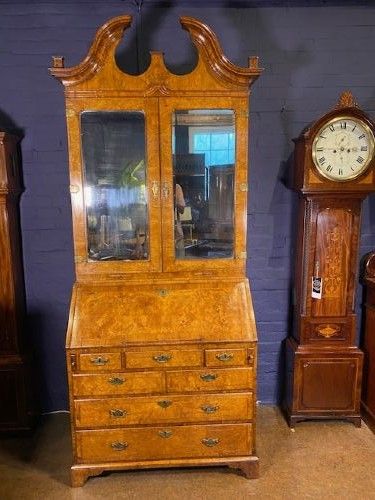
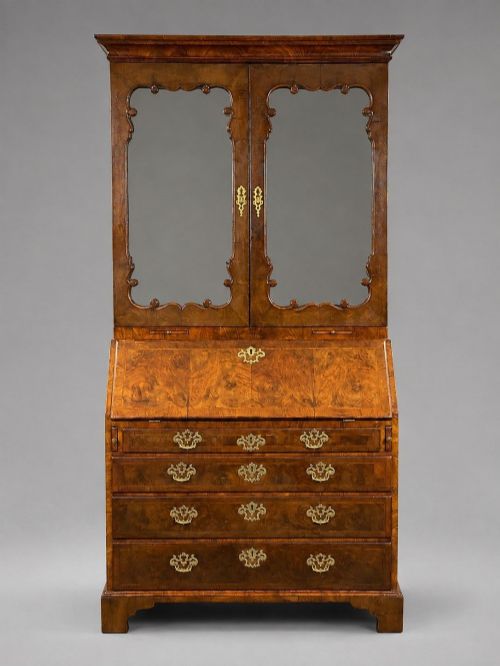
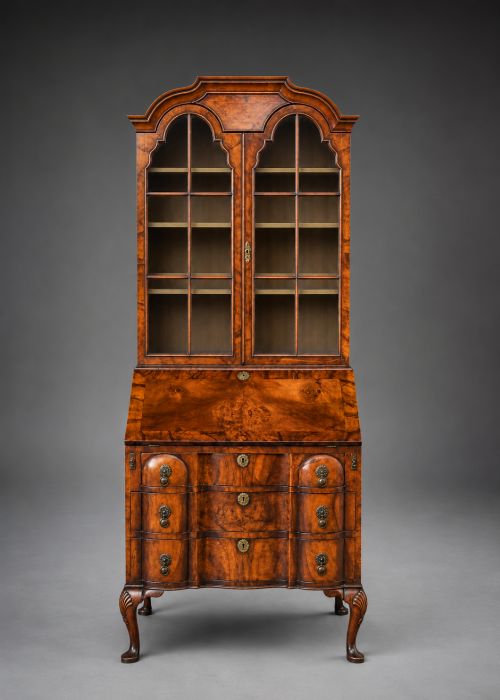
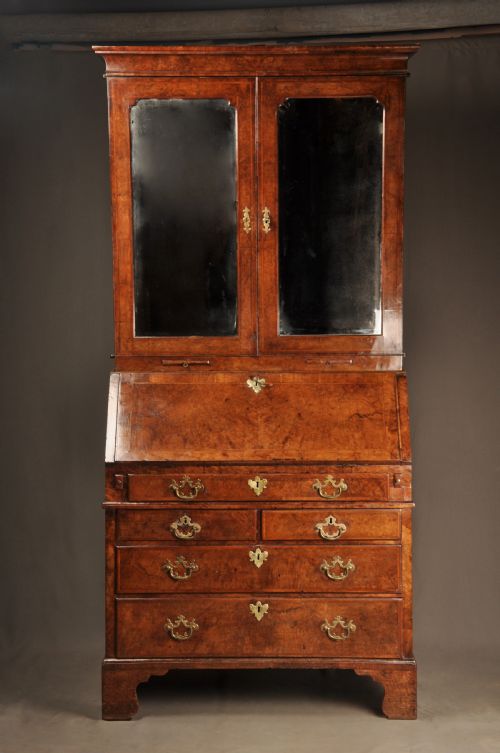
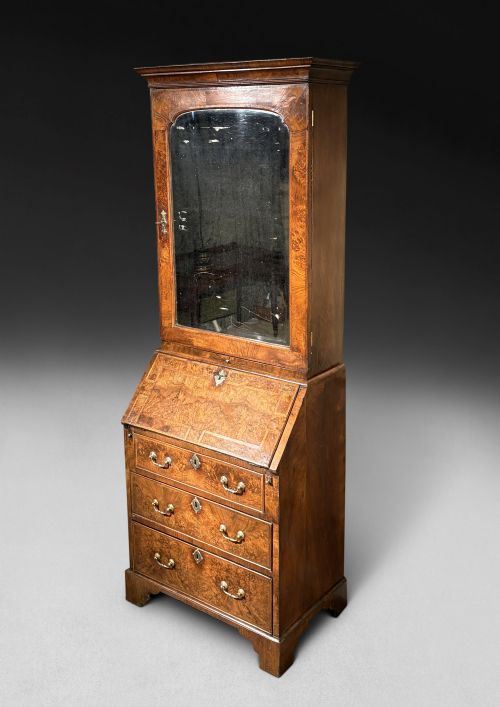
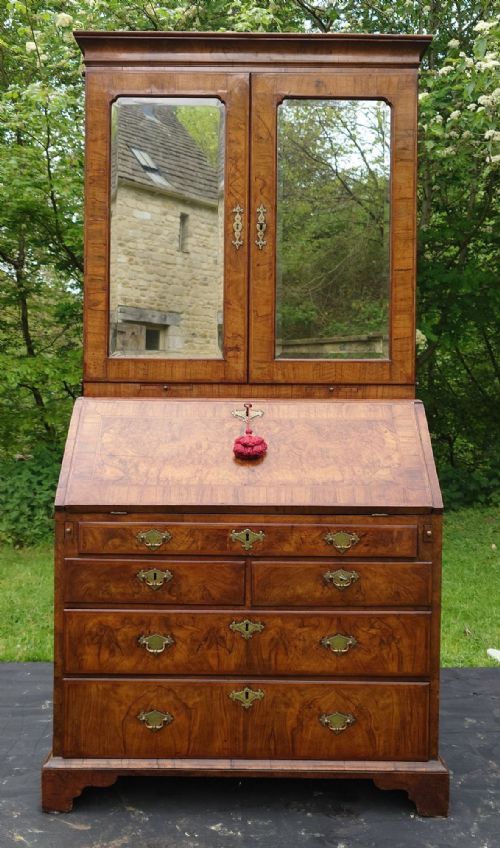
A burr walnut desk bookcase combines a writing surface and enclosed shelving into a monumental furniture form desired for its rich timber grain.
Burr Walnut Desk Bookcase
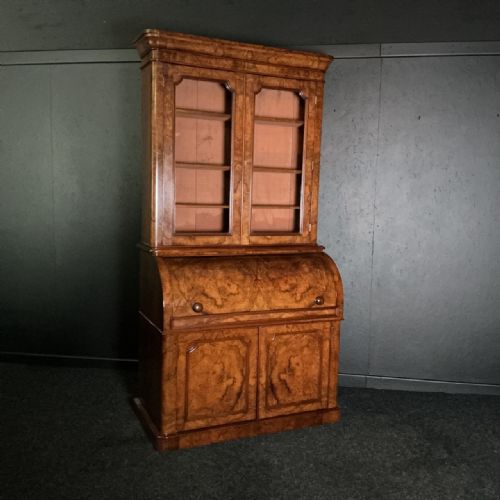
A burr walnut desk bookcase is a sophisticated dual-purpose furniture item uniting a shelved upper cabinet with a lower writing bureau. These pieces emerge predominantly from the seventeenth century, the eighteenth century, and the Georgian period, alongside later nineteenth century interpretations.
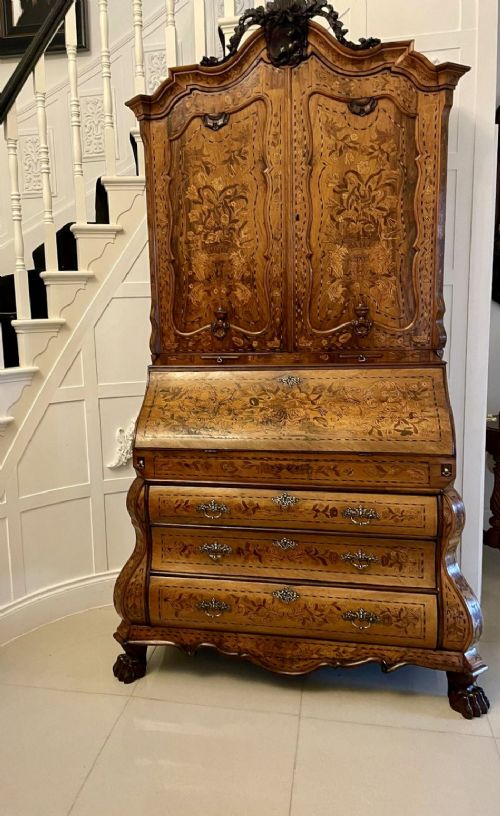
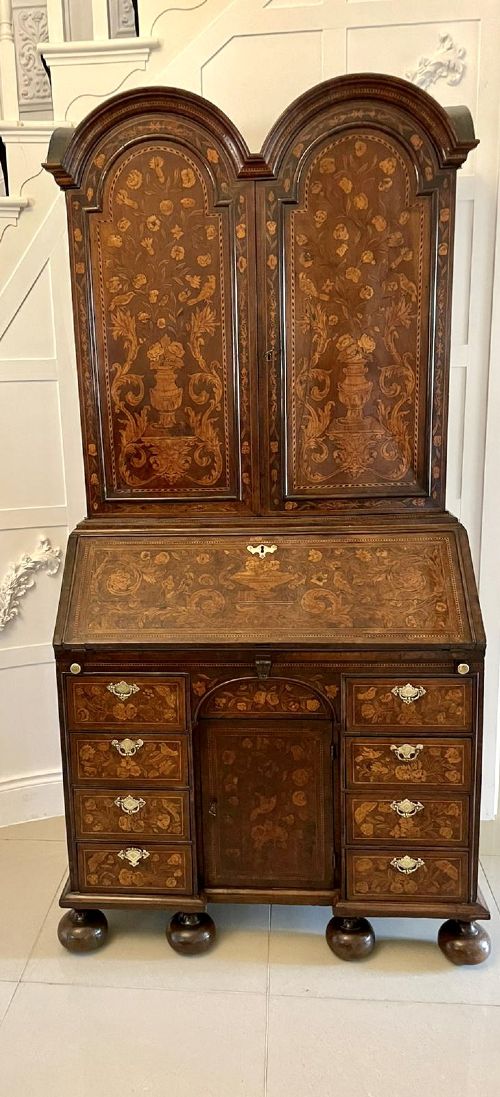
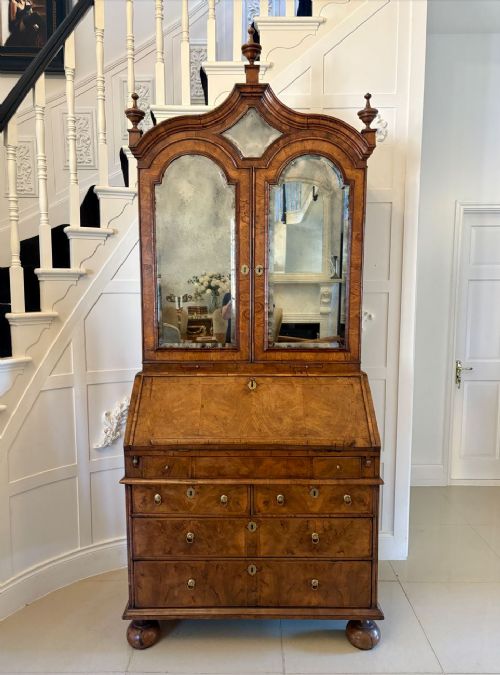
The dominant forms present on this page include bureau bookcases, bureau cabinets, and secretaire cabinets spanning English, Dutch, Italian, and German origins. Buyers encounter early examples with double dome tops alongside tall upright formats fitted with glazed upper doors and candle slides.
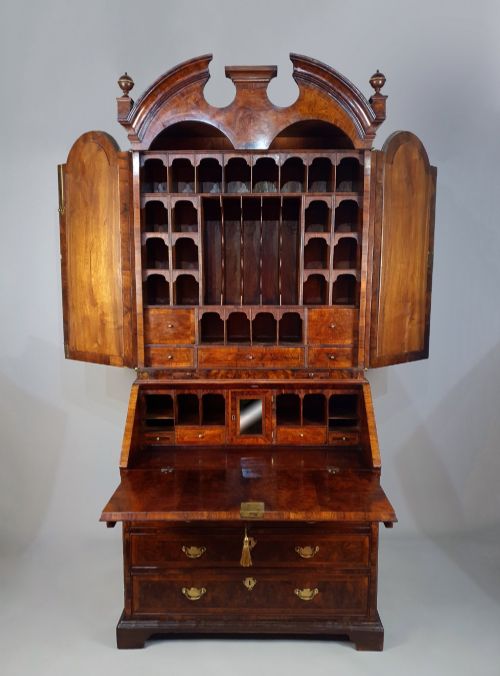
Makers constructed these large case pieces in multiple sections to facilitate movement between rooms in historic houses. Lower sections provide fitted writing interiors containing small drawers and pigeonholes behind a sloping fall-front or fall-flap.
Materials and construction methods
Cabinet makers utilised dense oak and soft pine as foundational carcase timbers, applying finely figured burr walnut and plain walnut veneers across the visible exterior surfaces. Featherbanding and marquetry inlay ornament the primary facades, contrasting the swirling grain patterns of the burr timber.
Glazed upper doors utilise hand-blown crown glass panes held within slender timber bars, whilst brass hardware secures the doors and drawers. Leather inserts line the writing surfaces of select bureau interiors, and mirror glass appears within specialised cabinet doors.
The documented regional styles span English Queen Anne and Georgian designs alongside Dutch marquetry, Venetian rococo, and South German cabinet-making traditions.
Distinctions in craftsmanship and preservation
The visual impact of a burr walnut desk bookcase depends upon the symmetry and match of the veneer selection across the drawer fronts and fall-front. Superior examples display continuous grain wrapping symmetrically from a central point, whereas lesser versions employ mismatched or patched timber.
Original surface patination, intact brass pull handles, and untouched internal drawer configurations distinguish premier survivals from pieces that have undergone extensive timber replacement or later alterations to the glazing bars and feet.
The Burr Walnut Desk Bookcase Glossary
- Burr walnut
- A figured timber derived from the abnormal growth excrescence of a walnut tree, yielding intricate swirling patterns highly prized for cabinet veneers.
- Bureau bookcase
- A tall furniture combination featuring a sloping writing desk compartment positioned beneath a shelved upper cabinet enclosed by doors.
- Double dome
- A top architectural profile characterised by two adjacent rounded arches, frequent on upper cabinet sections of the seventeenth and eighteenth centuries.
- Candle slide
- A pull-out wooden board positioned beneath the upper cabinet doors designed to hold lighting sources above the writing surface.
- Featherbanding
- A decorative border inlay formed by cutting thin wood veneers diagonally and laying them in a herringbone V-shape pattern around drawer edges.
Burr Walnut Desk Bookcase: Frequently Asked Questions
How are burr walnut desk bookcases structured?
These pieces typically separate into two or three distinct modular sections to aid transport and placement within a room. The upper cabinet holds adjustable shelves behind glazed or solid doors, resting upon a lower bureau base containing a writing slope and internal drawers.
Beneath the writing section, additional wide drawers provide storage for household papers and textiles. Taller examples often incorporate architectural cornices, double domes, or removable plinths.
What periods do these pieces originate from?
The listings span from the late seventeenth century through the Georgian era, encompassing George I, George II, and Queen Anne styles. Later interpretations from the Victorian, Edwardian, and Art Deco periods also appear.
Early eighteenth-century pieces represent the height of this cabinet-making tradition, distinguished by walnut timbers and featherbanded borders.
How should I care for walnut veneer?
Protect the timber surfaces by maintaining stable room humidity and avoiding direct placement near heat sources or strong sunlight. Dust gently with a dry, soft cloth and apply traditional beeswax sparingly to nourish the grain.
Avoid liquid polishes or silicone sprays, which can penetrate historic finishes and degrade the natural patina of the wood over time.
Where were these pieces made?
British workshops produced a significant proportion of these items, particularly during the reigns of Queen Anne and the early Georges. Continental makers in Holland, Italy, and Germany also produced distinctive variants featuring elaborate marquetry and regional architectural details.
Dutch and Venetian pieces frequently incorporate floral marquetry inlay across the entire carcase exterior.