
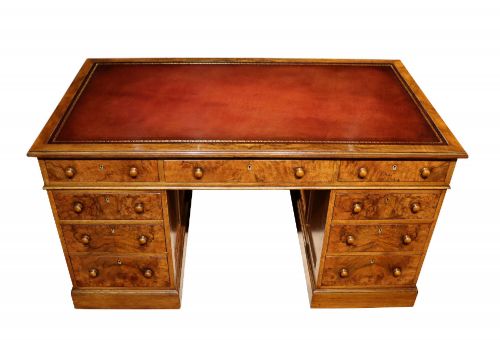
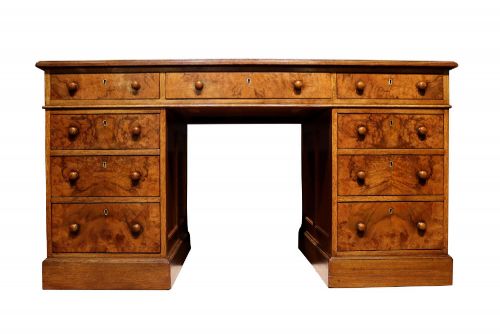


Burr Oak Desk
A burr oak desk brings intense, swirling natural timber patterns to a study, built by cabinetmakers who prized dramatic grain.
Burr Oak Desk
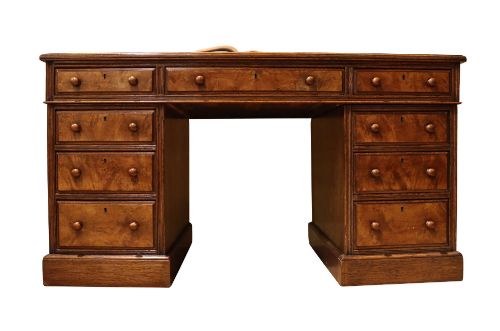
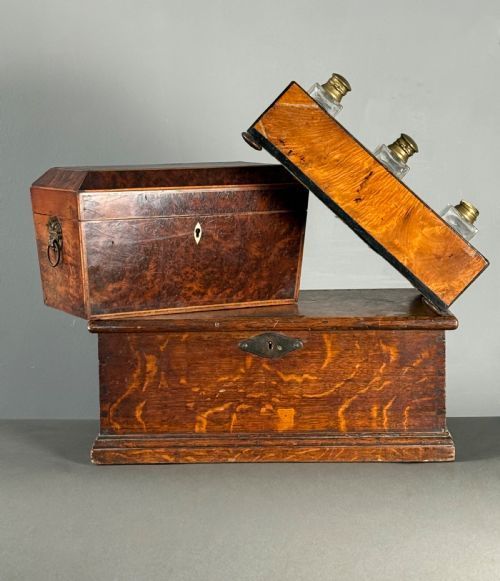
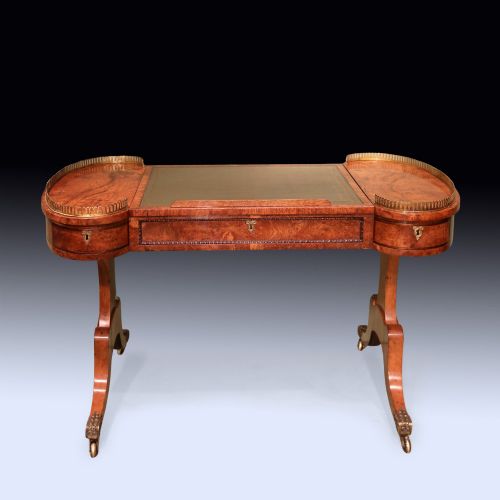
When you search for a burr oak desk, you enter a territory defined by irregular, knotty growths that produce wild, circular timber patterns. The pieces appearing here span from compact kneehole writing tables to large partners desks used in 18th and 19th century libraries.
You are most likely to encounter Victorian pedestal desks and mid 19th century library tables utilising this figured wood. Cabinetmakers frequently combined the burr timber veneers with solid oak frames and brass hardware to create durable, imposing workspaces.
Materials and Construction
These items rely on timber sliced from tree burls or excrescences, yielding intricate swirling grain figures that are carefully veneered onto stable oak carcasing. Workshops paired these figured surfaces with contrasting secondary woods, leather writing inserts, and brass handles.
Structural integrity depended on traditional joinery methods, such as dovetailed drawers and panelled pedestal construction, ensuring the decorative veneers remained supported across large writing surfaces and partners desks.
Some Victorian davenports hide stationery compartments inside maple-lined interiors that pop open like a mechanical puzzle.
Markers of Superior Workmanship
The distinction between standard commercial output and exceptional furniture rests upon the selection and matching of the timber figure across the drawer fronts and top. Superior examples display symmetrical grain patterns that flow seamlessly over the proportions of the pedestal or kneehole structure.
Execution of secondary details, including finely cut brass hardware, carefully tooled leather inserts, and robust internal oak framing, elevates a piece from a utilitarian office item to a distinguished example of period cabinet work.
James Winter and Sons·Williams and Gibton·Holland and Sons·Shapland and Petter·J.S. Ford Johnson and Company
The Burr Oak Desk Glossary
- Burr oak
- Wood taken from a tree growth or burl, yielding a chaotic and highly decorative pattern of knots and swirls. It is typically sliced into thin veneers for application onto furniture surfaces.
- Partners desk
- A large double-sided writing table designed for two people to sit opposite each other, featuring drawers and cupboards on both sides. These frequently include pedestals and leather-lined tops.
- Kneehole desk
- A compact writing table featuring a central recess for the legs, flanked by pedestals of small drawers. Early examples often date to the 18th century and rest on bracket feet.
- Pollard oak
- Timber derived from a tree that has been pruned at a height above livestock reach, producing a dense, knotty grain structure similar to burr. It appears frequently on 19th century library tables.
- Lowboy
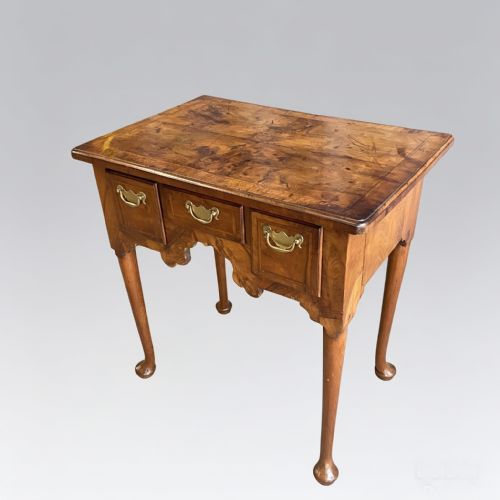
- A small oak or walnut side table with drawers, originating in the 18th century. They serve as diminutive writing surfaces or dressing tables.
Burr Oak Desk: Frequently Asked Questions
What is a burr oak desk?
A burr oak desk is a writing table or pedestal desk surfaced with highly figured wood taken from tree burls. This material creates a dense, swirling pattern across the drawers and top.
Cabinetmakers utilised this striking timber for formal rooms, pairing the decorative veneers with sturdy oak frames and traditional brass hardware.
How do I care for the leather top?
The leather writing surface benefits from occasional cleaning with a damp cloth and mild soap, avoiding harsh chemicals. Treating the hide with appropriate leather balsam preserves suppleness.
Keep these desks away from direct sunlight and strong heat sources to prevent the leather and underlying timber veneers from drying out or cracking.
Are partners desks double sided?
Partners desks are built to be functional from both sides, featuring matching banks of drawers or cupboards facing each other. They were designed for use by two people in shared offices or libraries.
This configuration makes them freestanding pieces that look finished from any angle within a room.
How do I identify a 19th century piece?
Nineteenth century examples often incorporate machine-sawn secondary timbers alongside hand-cut dovetails, reflecting the industrial methods of the period. The use of Davenport forms and pedestal configurations became widespread during the Victorian era.
Examining the construction of the drawer linings and the style of the brass handles helps confirm the production era.