



Burmese Buddha Figure
These burmese buddha figure pieces are sacred devotional sculptures cast in bronze or carved from wood, marble, and lacquer, offering a tangible connection to Southeast Asian traditions.
How they were made
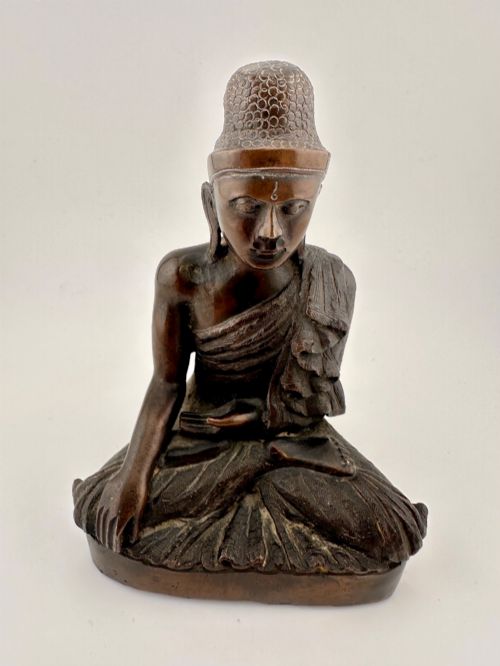
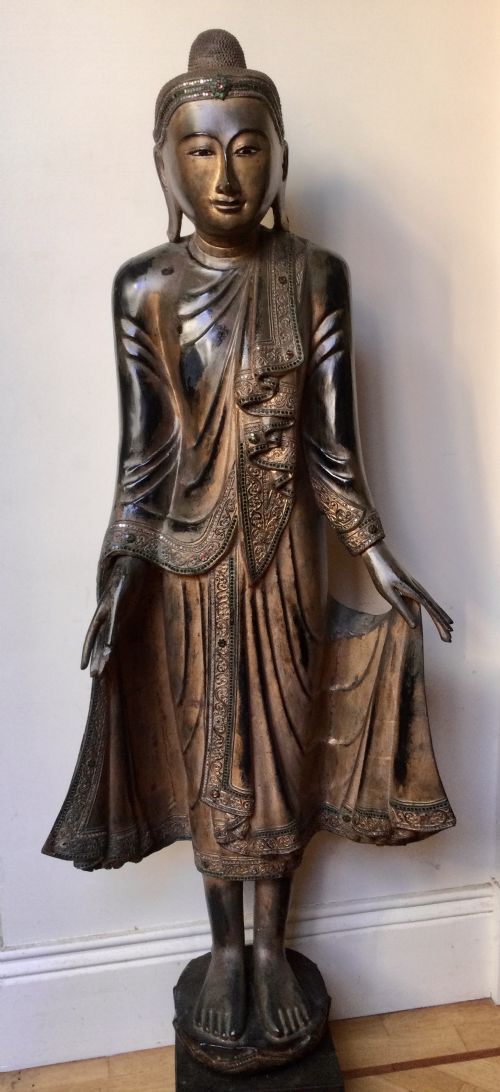
Metal sculptures are cast using the lost-wax technique in bronze, yielding substantial figures that often retain traces of original gilding. Artisans applied gold leaf over surfaces to denote sacred purity, frequently pairing this with intricate glass inlay work along the robes and ornamentation.
What varies in quality
The preservation of original surface treatments such as gold leaf and glass inlay significantly influences the character and integrity of a piece. Artisanal skill in handling materials like marble and bronze dictates the depth and presence of the final sculpture.
Materials recorded across the inventory include bronze, lacquer, wood, gold leaf, glass inlay, gilt wood, and white marble.
The Burmese Buddha Figure Glossary
- Mandalay Period
- A distinct regional style dating from the nineteenth century onwards, known for its serene Buddha depictions with oval faces and ornate robes. This aesthetic is frequently identified by prominent ushnisha protuberances.
- Bhumisparsha Mudra
- The earth-touching gesture where the right hand reaches down to touch the ground, calling the earth to witness the Buddha's enlightenment. It is a common posture seen in seated bronze sculptures.
- Ushnisha
- A three-dimensional oval mound situated on top of the Buddha's head, symbolising spiritual wisdom and enlightenment. In Burmese works, this feature is often stylised with high definition.
- Gilt Wood
- Timber that has been coated with a thin layer of gold leaf or powder, enhancing the devotional appearance of carved figures. This material was widely utilised in temple furnishings.
- Shakyamuni
- The historical Gautama Buddha depicted in human form, serving as the central subject for the majority of these devotional sculptures. Representations follow specific iconographic rules.
Burmese Buddha Figure: Frequently Asked Questions
How were these figures used?
These sculptures served as focal points for meditation, prayer, and offerings within monastic temple complexes and household shrines. Devotees used them to aid spiritual practice and honour Buddhist teachings.
Over time, many of these statues transitioned from active religious contexts into private collections and decorative arts. Their primary function, however, remained rooted in sacred devotion and contemplation.
How do I identify a Mandalay style piece?
Mandalay style pieces typically feature a serene, oval face with downcast eyes, an ornate robe with layered folds, and a prominent ushnisha on the crown. These characteristics developed distinctly during the nineteenth century in Burma.
Artisans often enhanced these sculptures with gold leaf and glass inlay to signify divine light and royal status. The overall impression is one of profound calm and formal symmetry.
What materials are most common?
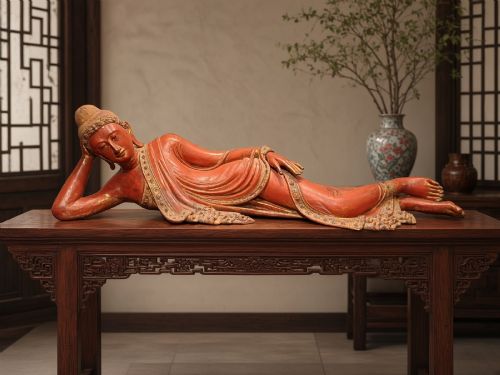
Bronze and carved wood are the most frequently encountered materials among these sculptural pieces, often enhanced with gold leaf applications. White marble is also utilised, particularly for larger reclining figures originating from temple settings.
Secondary materials include glass inlay and lacquer, which artisans used to decorate garments and surface details. These diverse mediums reflect the rich material culture of historic Burmese workshops.