


Burgundy Leather Chairs
Burgundy leather chairs bring deep red hides and rich timber frames together, offering substantial seating for libraries, studies, and dining rooms.
Burgundy Leather Chairs
Burgundy leather chairs span several centuries of design, with Victorian and Georgian pieces appearing alongside revival styles from the early twentieth century. These seats serve practical functions as library armchairs, desk chairs, dining sets, and lounging elbow chairs.
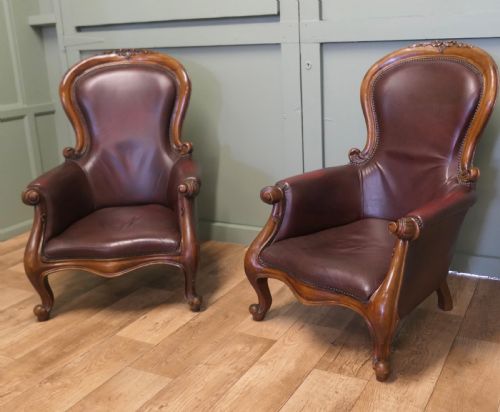
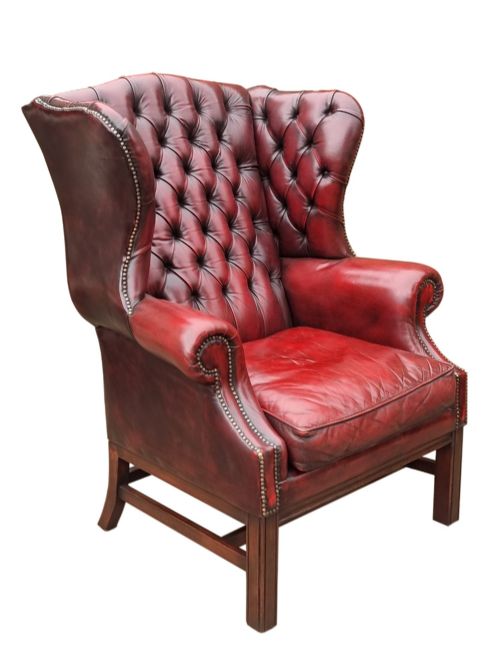
The selections on this page rely heavily on nineteenth-century craftsmanship, particularly Victorian mahogany and oak frames paired with button-backed or plain red upholstery. Buyers frequently encounter library chairs, wingback armchairs, and matching dining sets within this group.
How they were made
Frames rely on sturdy timbers such as mahogany, oak, walnut, and rosewood, shaped into styles ranging from Chippendale revival to Regency and Queen Anne. Joinery incorporates traditional techniques to support heavy daily use.
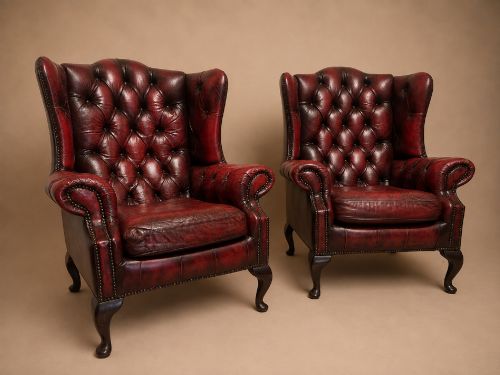
Upholstery uses durable leather secured with brass nailheads, often featuring deep buttoning on salon and club chairs. Metal elements appear in structural brackets, reclining mechanisms, and adjustable piano stool screws.
Cockfighting chairs feature low saddle-shaped seats designed to let gentlemen straddle the timber backwards.
What varies in quality
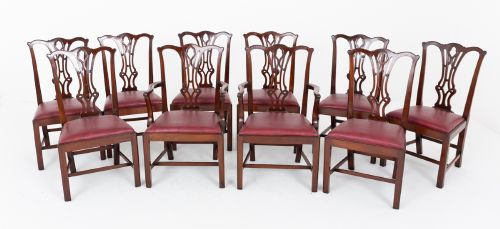
The integrity of the timber frame and the depth of the carving separate standard utilitarian seating from finer boardroom and library armchairs. Shell carvings, reeded legs, and substantial mahogany proportions indicate higher workshop ambition.
Leather condition and the preservation of original buttoning dictate the visual impact of each piece. Frames retaining their original polish hold more integrity than heavily refinished examples.
The Burgundy Leather Chairs Glossary
- Gainsborough chair
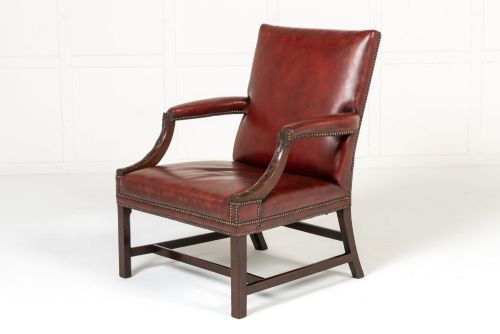
- A wide, open-armed armchair with a padded seat and back, typically standing on short legs and associated with the eighteenth century. This form offers generous proportions for desk or library use.
- Wingback armchair
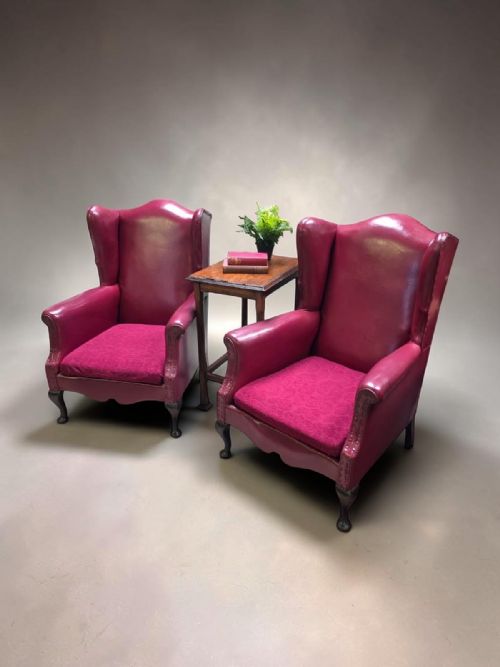
- A high-backed chair with projecting side panels designed to shield the occupant from drafts. These pieces often feature deep leather upholstery and brass nail trim.
- Carver
- An armchair designed to match a set of dining chairs, usually placed at the head of the table. These incorporate armrests while maintaining the stylistic profile of the side chairs.
- Spoon back
- A padded chair back shaped with a concave oval contour resembling the bowl of a spoon. This Victorian upholstery style supports the sitter's spine closely.
- Bergere
- An enclosed upholstered armchair with wooden frames and woven cane sides or backs. The style originates in France and appears in various revival forms.
Burgundy Leather Chairs: Frequently Asked Questions
How do I care for antique leather?
Apply specialist leather balms periodically to maintain suppleness and prevent cracking on nineteenth-century hides. Avoid placing these chairs near direct heat sources or strong sunlight.
Dust wooden frames with a dry cloth and keep humidity levels stable to protect the underlying timber and glue joints.
What is a library armchair?
A library armchair is a heavily padded seating option designed for prolonged reading and study, often upholstered in deep red leather. These chairs prioritize comfort with substantial armrests and supportive back heights.
They appear frequently in nineteenth-century walnut, mahogany, and oak configurations.
How do I date a leather chair?
Dating relies on timber choice, carving styles, and construction methods visible in the frame. Victorian pieces often use mahogany or oak with buttoned upholstery, while Georgian models show distinct proportion and joinery.
Revival pieces from the early twentieth century mimic earlier eighteenth-century aesthetics but reveal different tool marks and wood maturity.
Are these chairs suitable for daily desk work?
Many Victorian and later models function effectively as desk chairs, particularly variants with adjustable heights or swivel mechanisms. Their sturdy timber frames withstand regular office use.
Ensure seat heights and arm clearances align with your desk before daily integration.