

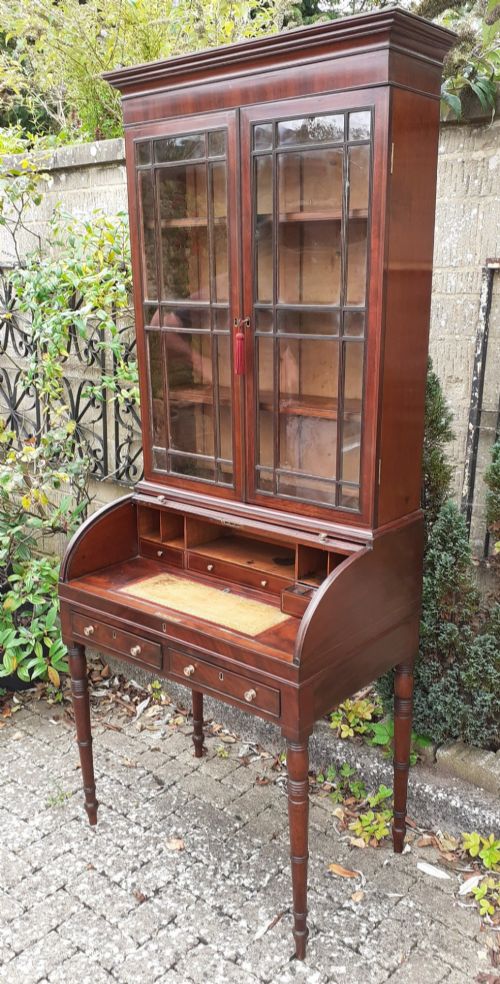


Bureau with Bookcase Top
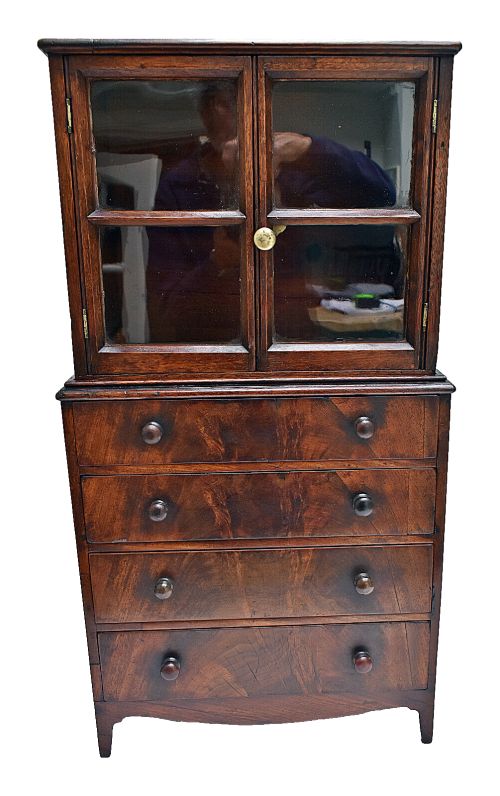
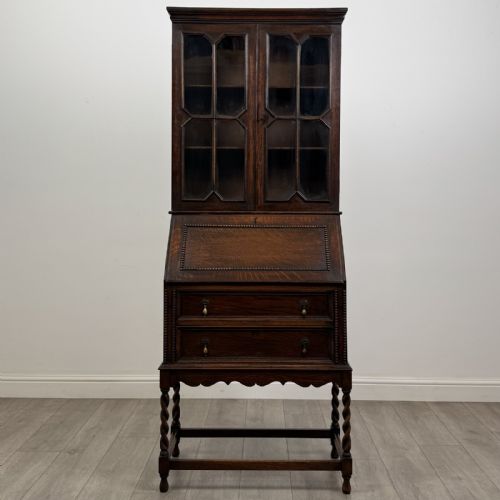
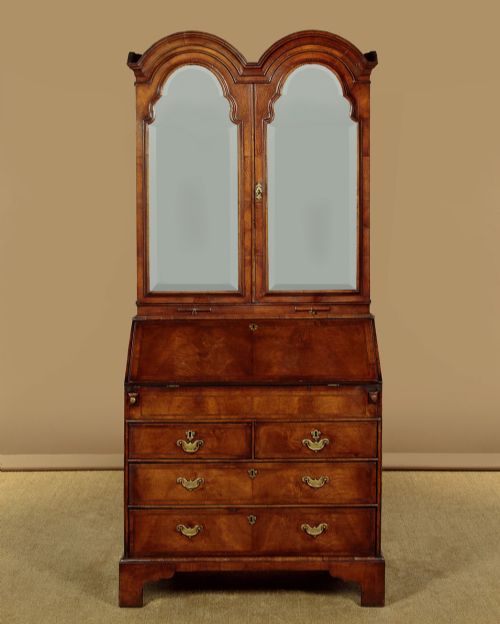
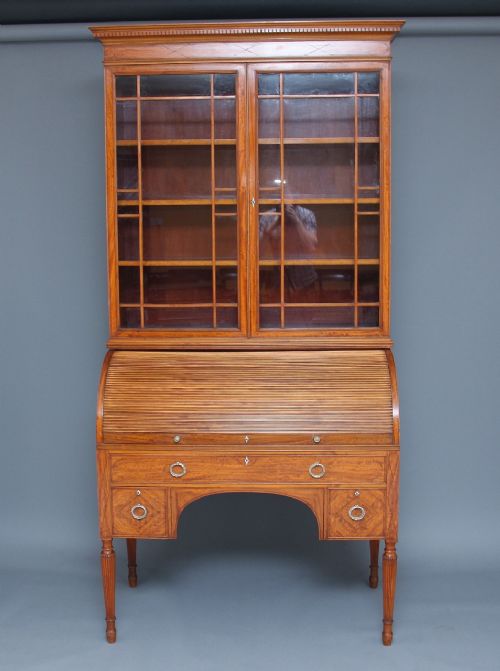
A bureau with bookcase top combines a fitted writing desk and upper shelving, offering practical workspace and storage in one substantial piece of furniture.
Bureau with Bookcase Top
When searching for a bureau with bookcase top, buyers encounter dual-purpose furniture designed for writing and storing volumes. These pieces range from early eighteenth-century examples to later Edwardian and 1920s interpretations.
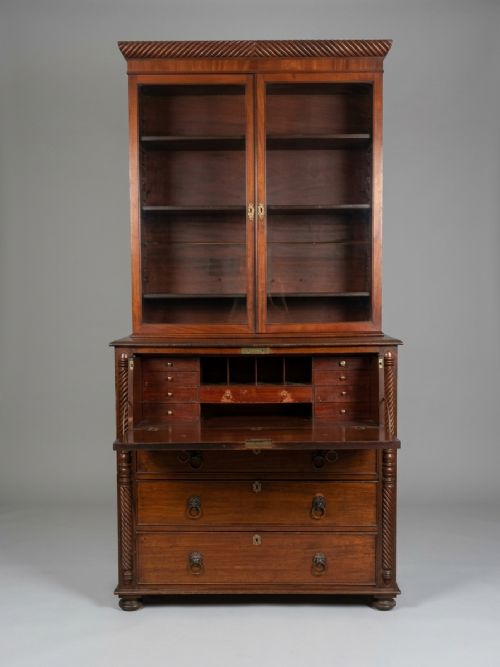
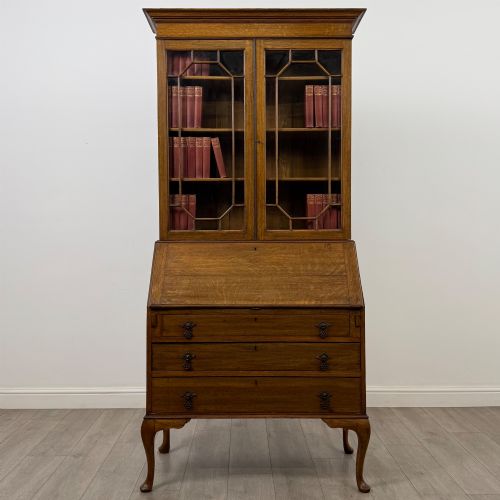
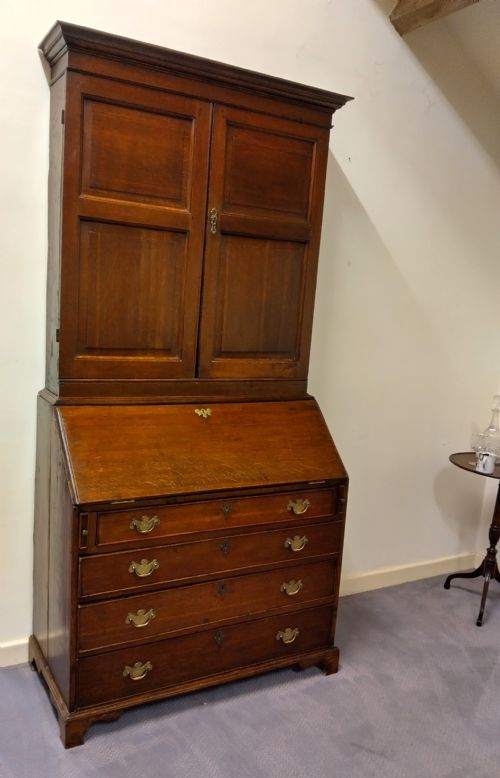
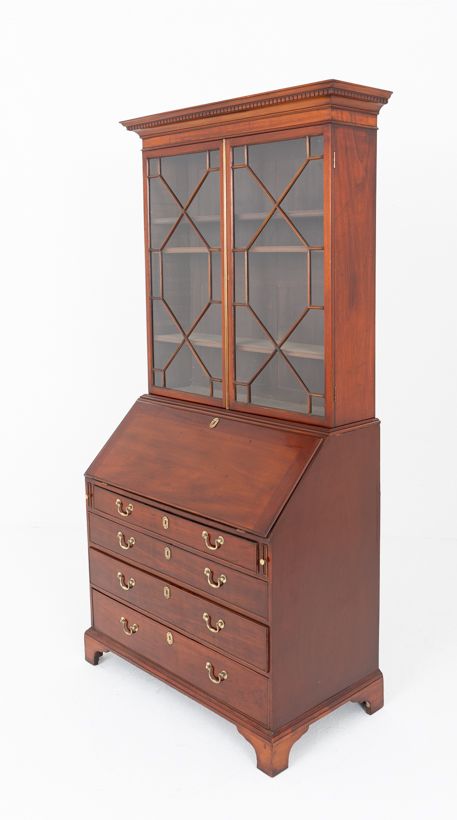
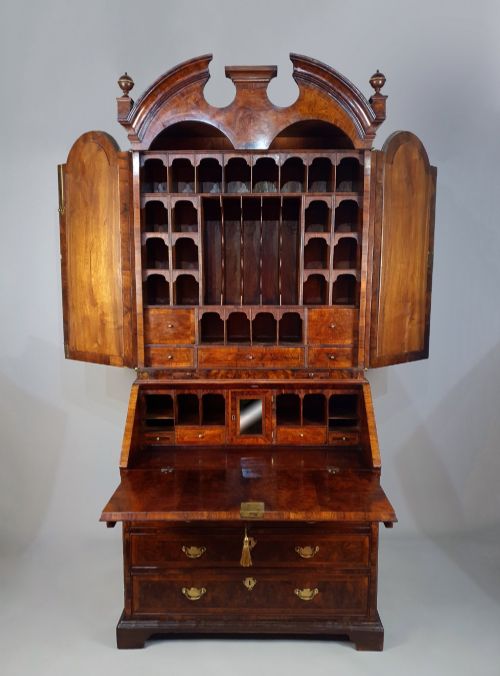
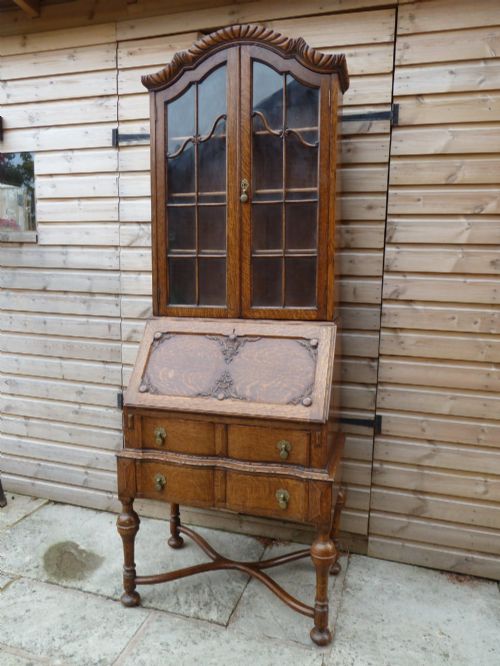
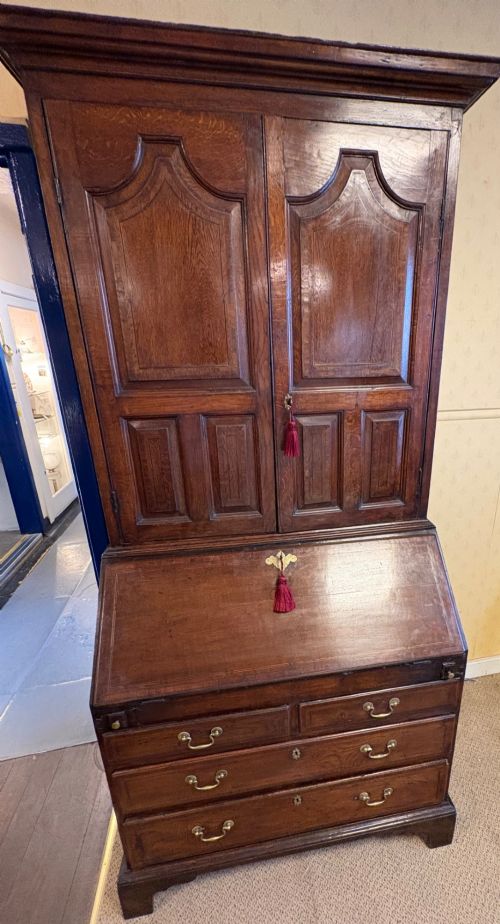
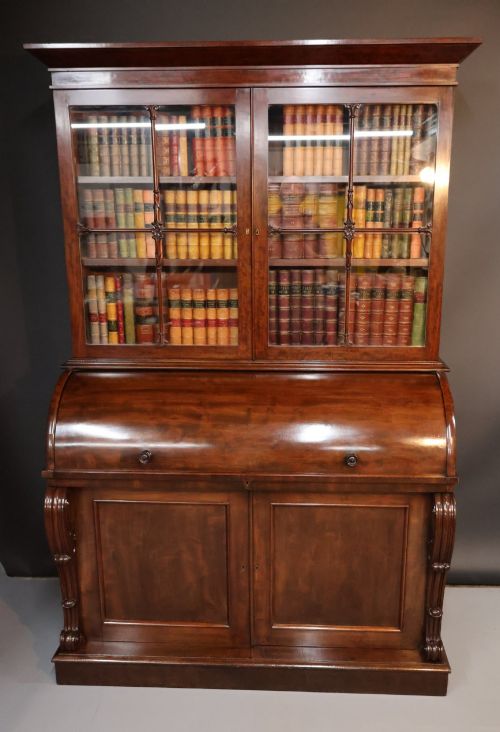
The form typically pairs a lower bureau base containing a sloping writing flap or cylinder desk with an upper glazed or panelled cabinet. Oak and mahogany dominate the examples seen on this page, alongside walnut, satinwood, and rosewood.
Period styles span Georgian, Regency, and Victorian eras, with occasional Jacobean Revival and Chinoiserie treatments appearing among the listings.
Materials and construction
Cabinet makers built these pieces using solid timbers such as oak, mahogany, and walnut, often applying finely figured veneers of satinwood or mahogany to prominent surfaces. Brass fittings secure doors and interior compartments, while glass panels protect the upper bookcase sections.
Construction techniques include dovetailed drawer boxes and panelled doors, alongside sophisticated mechanisms for cylinder desks and stepped interior fittings.
One early oak bureau bookcase has been thoughtfully adapted to house a television.
What separates the finest examples
Quality rests in the selection of timber, the precision of the cabinetwork, and the integrity of the original surfaces. Finer pieces display carefully matched veneers, well-executed inlay work, and intricate stepped interior compartments.
The proportions of the pediment and the clarity of the glass in the upper doors also distinguish superior pieces from standard workshop output.
Tudor and Burrey Shrewsbury·Edwards and Roberts
The Bureau with Bookcase Top Glossary
- Bureau
- A desk featuring a sloping lid that drops down to form a writing surface, concealing small drawers and pigeonholes inside. This lower section underpins the upper bookcase.
- Secretaire
- A cabinet or desk incorporating a pull-out writing drawer or fitted drop-front writing compartment. These often replace the traditional sloping bureau flap in cabinet furniture.
- Pediment
- The decorative architectural structure surmounting the top of the bookcase section. Examples include swan neck, flat, and dome top designs.
- Cylinder top
- A rounded, quarter-circle wooden shutter that rolls back into the body of the desk to reveal the writing surface. This mechanism appears on several nineteenth-century pieces.
- Glazed
- Fitted with glass panels in the upper doors to display books while protecting them from dust.
Bureau with Bookcase Top: Frequently Asked Questions
How do I use a bureau with bookcase top today?
The upper shelves accommodate books and display items, while the drop-front or cylinder desk provides a dedicated writing space with integrated storage compartments for stationery and small objects.
Closing the desk flap conceals paperwork immediately, keeping rooms tidy when the writing surface is not in use.
How can I tell an 18th-century piece from a 19th-century one?
Eighteenth-century examples frequently utilise solid oak or early mahogany with hand-cut dovetails and understated proportions. Nineteenth-century pieces often introduce cylinder mechanisms, satinwood veneers, and more elaborate carved or inlaid decoration.
Timber choice and construction methods within the drawer linings offer further clues to date of manufacture.
Where should I place a large bureau bookcase in a room?
These tall pieces require a solid wall with sufficient vertical clearance, particularly designs featuring pediment or dome tops. Position them away from direct sunlight and heat sources to protect timber veneers and prevent wood movement.
Allow enough floor space in front of the piece for the writing flap or cylinder desk to open fully.