




Brown Wool Nomadic Bag
A brown wool nomadic bag brings the rich textile traditions of Central Asian and Persian tribes straight into a modern interior.
Brown Wool Nomadic Bag
The versions most likely to be met on this page date from the late nineteenth century to the early twentieth century. They encompass specific tribal groups such as the Yomut, Saryk, and Chodor Turkmen, alongside Baluch and Bakhtiari-Lor weavers.
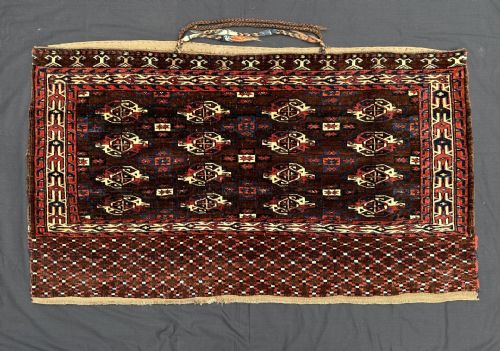
Makers shaped these textiles into functional forms like the torba, chuval, and mafrash. Each container served a precise purpose within nomadic encampments before entering the antique market.
How they were made
Weavers utilised hand-spun wool and natural dyes to create dense flatweaves and pile fabrics that could withstand rigorous handling. Goat hair, cotton, and leather often reinforced the structure of storage bags and saddle bags.
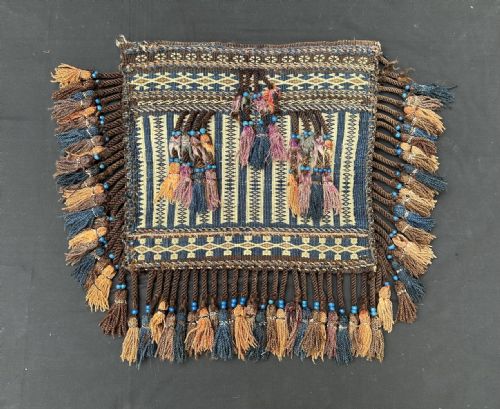
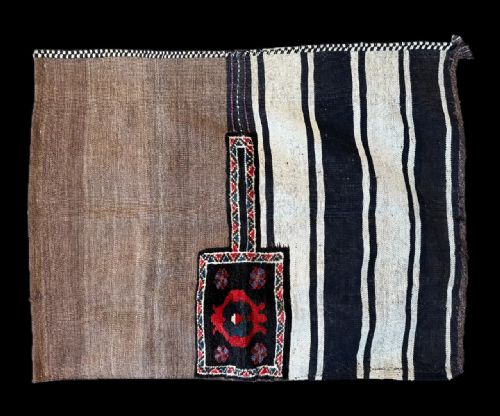
Dyed yarn and glass beads provided decorative accents within traditional tribal patterns such as the kepse gul, aishk gul, and banded flatweave designs. The construction combined durable structural weaves with functional backs made of plain weave or original material.
Current listings feature pieces dated between 1870 and 1910, spanning Turkmen, Baluch, and Bakhtiari-Lor tribal origins.
What varies in quality
The standard of a piece depends heavily on the crispness of the tribal motifs, such as the ertmen gul or herati design, and the integrity of the natural dyes. Finely executed hand-spun wool structures display a tighter knotting and a more balanced proportion.
Completeness dictates much of the standing within this category, as examples retaining their original backs, spindle bag components, or paired formats command greater historical interest. The finesse of the weft work and the preservation of subsidiary materials like leather and goat hair further distinguish finer examples.
The Brown Wool Nomadic Bag Glossary
- Torba
- A small storage bag traditionally used by Turkmen tribes for domestic possessions. These face panels or complete bags often feature characteristic guls.
- Chuval
- A large tent storage bag produced by Turkmen nomads. They were utilised for bedding and household goods inside the yurt.
- Mafrash
- A rectangular storage bag or livestock chest panel. They frequently display banded flatweave designs.
- Tacheh
- A tribal wheat-sack or storage container originating from Western Persia. Bakhtiari and Luri weavers utilised these for agricultural storage.
- Gul
- A medallion motif repeated across tribal rugs and bag faces. Different Turkmen tribes developed distinct versions to signify lineage.
Brown Wool Nomadic Bag: Frequently Asked Questions
What were these bags used for?
Nomadic tribes utilised these containers for storing wheat, bedding, clothing, and household goods during seasonal migrations.
Saddle bags and tent-pole bags also served practical transport functions on pack animals and inside portable dwellings.
How do I live with one?
These textiles adapt well to wall hanging or display on flat surfaces where the pile and flatweave structures remain protected from heavy foot traffic.
Placing them away from direct sunlight preserves the natural dyes used by nineteenth-century weavers.
How do I tell tribal groups apart?
Tribal attributions rely on specific design motifs like guls, structural weaves, and colour palettes associated with regions from Western Persia to the Trans-Caspian steppes.
Turkmen groups often employed geometric medallions, whereas Persian tribes such as the Bakhtiari utilised distinct flatweave and storage formats.
Are original backs important?
Retaining the original back increases the completeness and historical integrity of a nomadic bag.
Many surviving pieces exist only as bag faces, making complete examples with intact plain weave backs notable finds.