

Brown Wooden Writing Desk
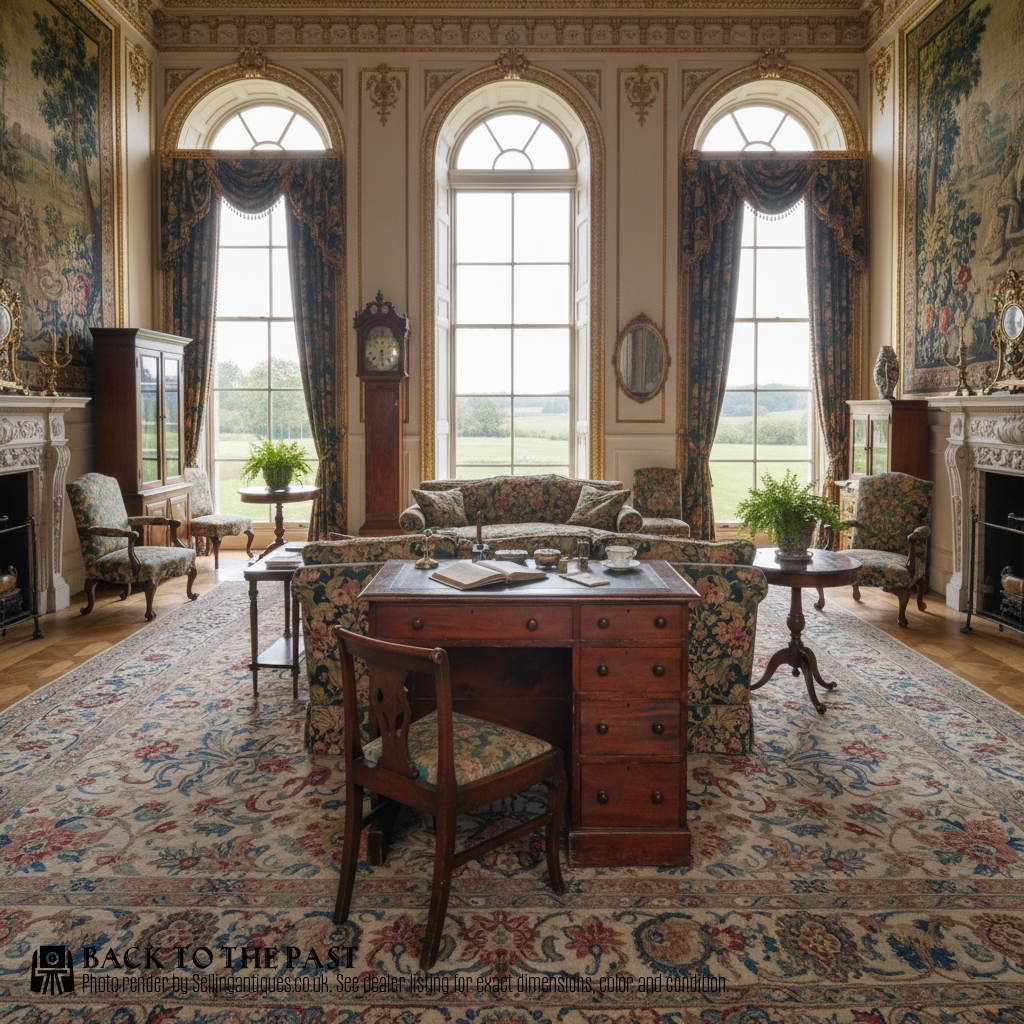
A brown wooden writing desk is a durable surface for correspondence that brings rich mahogany and solid teak into a room.
Identifying a brown wooden writing desk
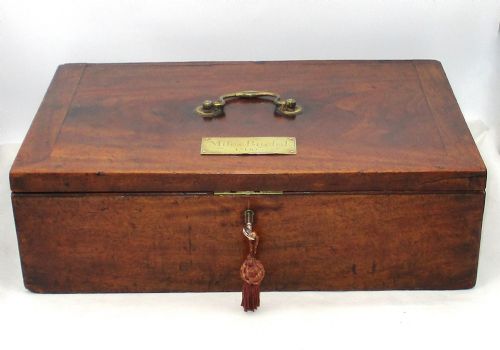
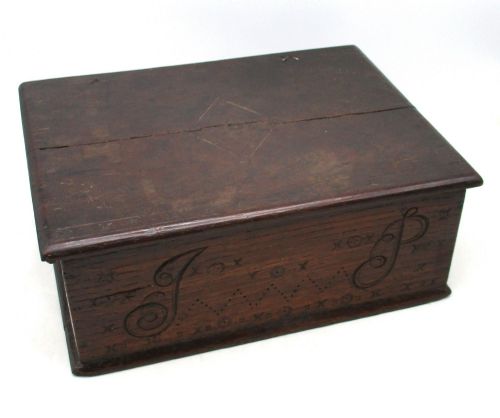
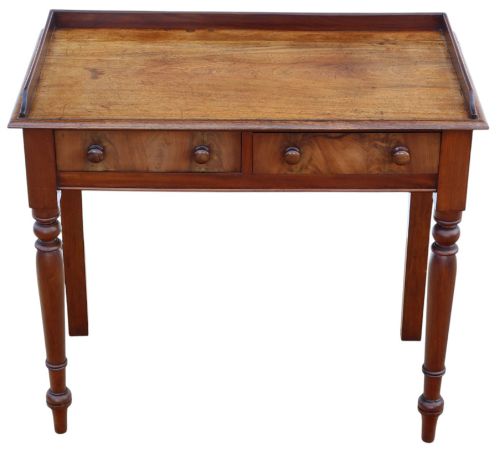
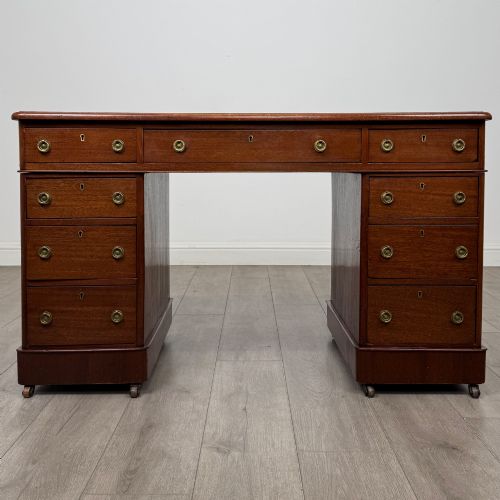
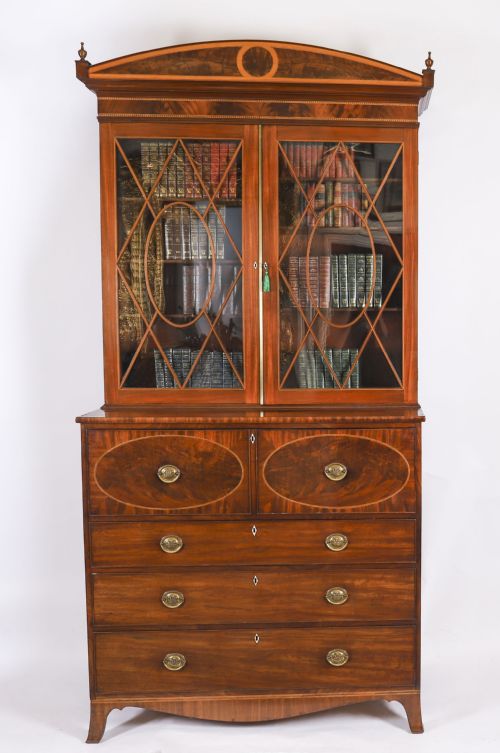
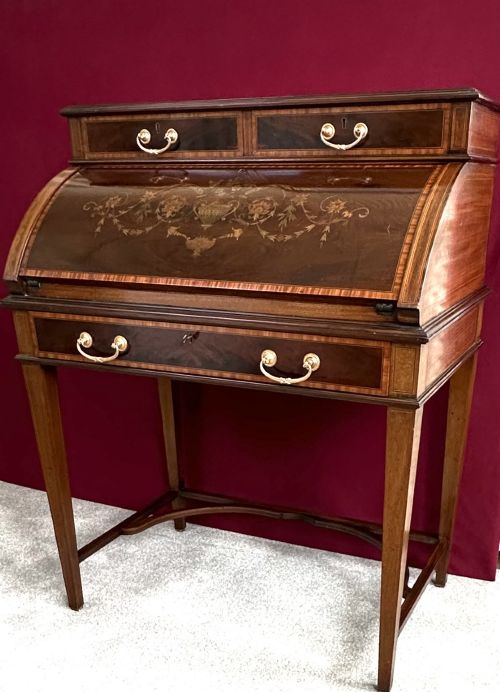
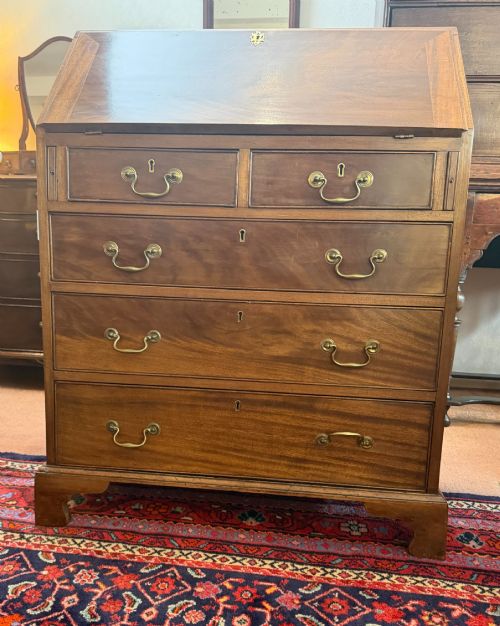
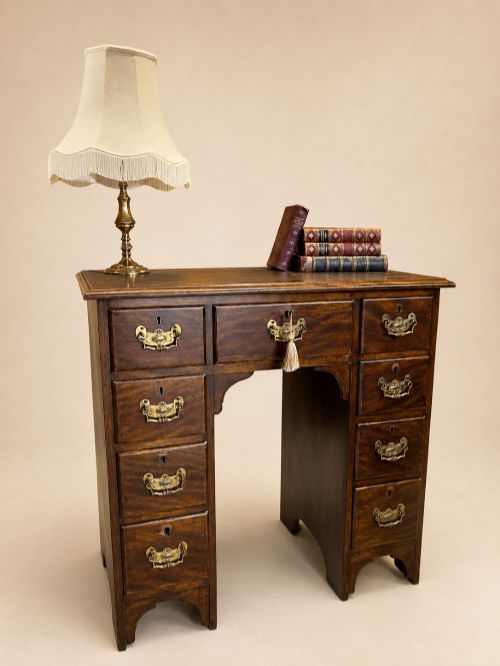
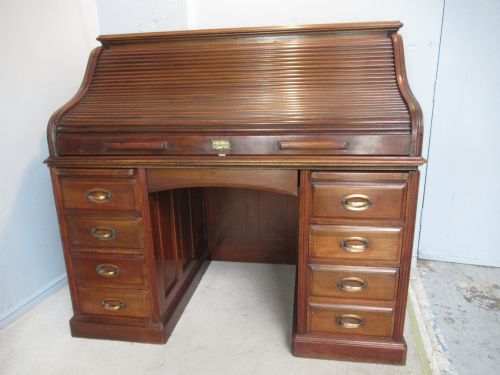
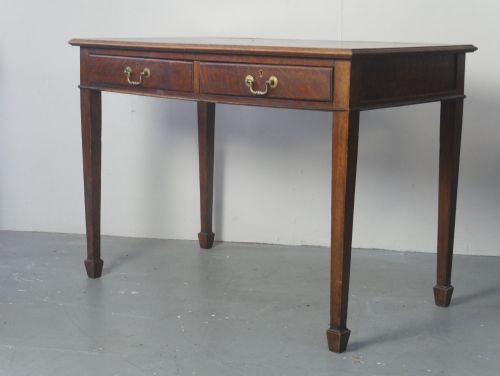
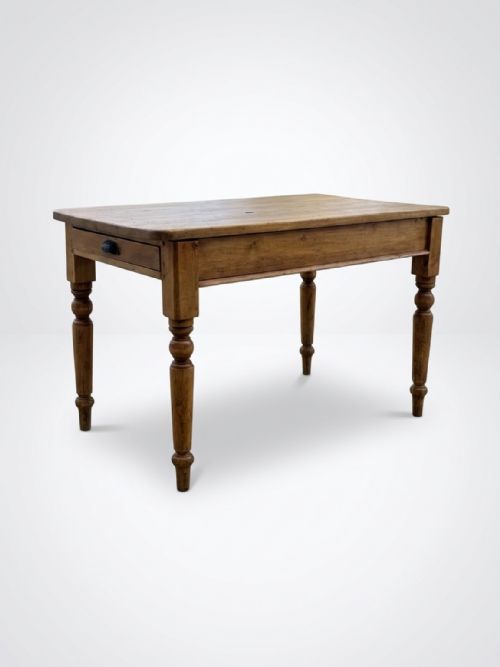
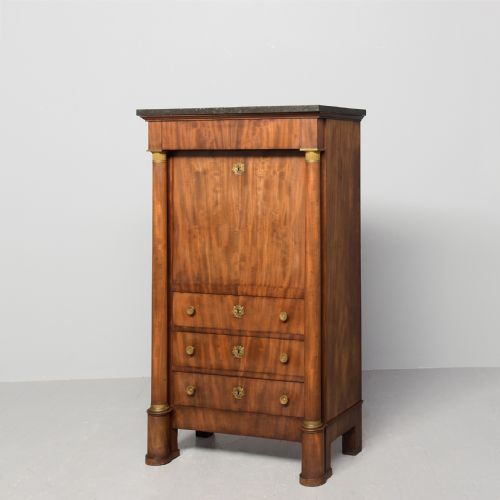
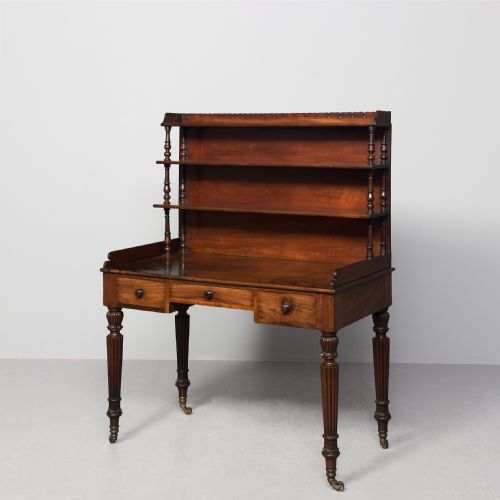
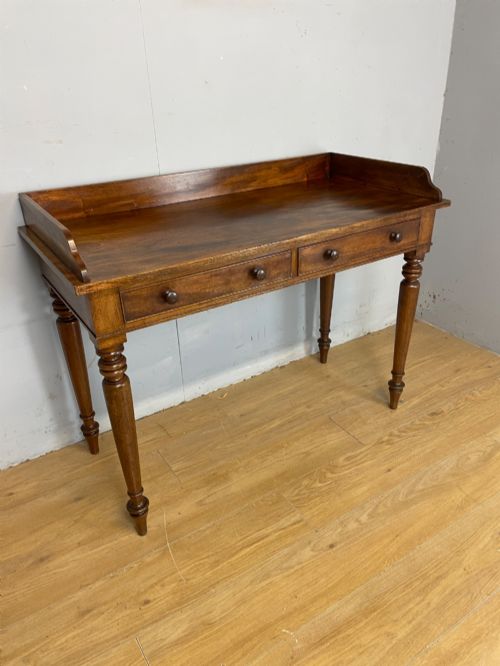
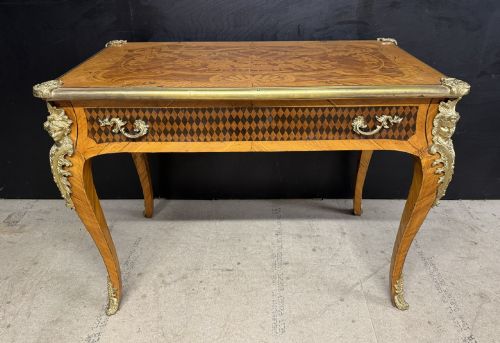
A brown wooden writing desk encompasses forms ranging from compact writing tables and kneehole side tables to larger bureau bookcases. These pieces span periods from the eighteenth century through the Georgian, Victorian, and Edwardian eras, reflecting changing domestic requirements for storage and writing surfaces.
The version most commonly met on this page is the Victorian or Edwardian mahogany writing desk, often featuring multiple drawers or inlaid details. Alongside these standard writing tables appear specialised forms such as child's desks, bureau bookcases, and ship's campaign tables.
Makers and origins vary across the selections, with specific pieces attributed to notable firms alongside standard English workshop pieces. Dating evidence points to periods including around seventeen ninety, eighteen hundred, eighteen fifty, eighteen sixty, eighteen eighty, and nineteen hundred.
Materials and construction
Construction relies primarily on mahogany, solid teak, and satinwood, frequently paired with contrasting secondary timbers. Wood selection dictates the weight and grain pattern of each piece, ranging from deep reddish-brown mahogany to pale satinwood inlay.
Fittings and functional elements incorporate brass, iron, and glass, whilst writing surfaces frequently utilise inset leather. Inlaid decorative motifs and dovetail joints demonstrate period cabinet-making techniques utilised across desks and bureau bookcases.
Retail Price Guide 2026
Typical UK retail prices for brown wooden writing desk, calculated from the Sellingantiques database of over a million retail prices indexed since 2003. This retail price guide relies exclusively on Sellingantiques data; no external sources or auction records are used, so the figures do not describe the wider market.
An English child's desk offers miniature workspace proportions for the smallest historians.
Assessing quality
Quality reveals itself in the harmony of proportions, the selection of timber veneers, and the precision of the inlay work. Pieces featuring documented maker attributions demonstrate superior cabinet-making standards compared to unmarked workshop furniture.
The integrity of original brass hardware, leather writing inserts, and secondary woods dictates the standing of a desk within its period. Structural stability in functional elements such as drawers and folding campaign table mechanisms further separates standard utilitarian items from finer examples.
Johnstone and Jeanes
The Brown Wooden Writing Desk Glossary
- Kneehole desk
- A writing table featuring a central recess for the legs, flanked by pedestals of drawers. This form provides substantial storage whilst maintaining a compact footprint.
- Bureau bookcase
- A dual-purpose piece combining a sloping writing flap that conceals pigeonholes with upper shelving enclosed by doors. These units are typically constructed in mahogany or inlaid variants.
- Campaign table
- A portable folding table designed for transport, often fitted with brass corners and carrying handles. Solid teak examples from the eighteenth century reflect military utility.
- Satinwood
- A lustrous, durable timber used primarily for decorative veneers and stringing lines on late eighteenth and nineteenth-century furniture. Its pale yellow-brown colour contrasts effectively with darker mahogany.
- Inlay
- A decorative technique where contrasting woods or materials are set into the surface of a primary timber to form patterns. Edwardian and Georgian pieces frequently utilise this method on drawer fronts and writing surfaces.
Frequently Asked Questions
What is a kneehole desk?
A kneehole desk is a form of writing table featuring a central recessed space for the user, flanked by banks of drawers. These pieces provide organised storage while keeping the seated person comfortable.
Examples on this page date to the Victorian and Georgian periods, showcasing traditional mahogany construction and occasional maker attributions.
How do I date an Edwardian desk?
Edwardian desks are typically identified by lighter proportions, refined satinwood inlay, and characteristics typical of the early twentieth century. They reflect the furniture styles popular between eighteen ninety and nineteen ten.
Comparing the secondary timbers, brass hardware, and decorative motifs helps distinguish them from heavier Victorian and Georgian predecessors.
What is a campaign table?
A campaign table is a portable piece of furniture designed to be easily packed and transported for travel or military use. These items often feature sturdy timbers like solid teak and durable brass fittings.
Eighteenth-century examples demonstrate clever folding mechanisms built to withstand rigorous journeys.
Are bureau bookcases practical?
Bureau bookcases combine a fold-down writing flap with upper shelving, offering both workspace and enclosed storage. They suit rooms requiring vertical storage alongside a dedicated surface for correspondence.
Mahogany versions from the Georgian and Edwardian eras provide robust construction for daily use.