
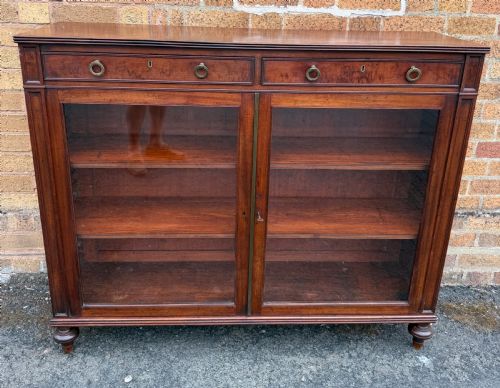
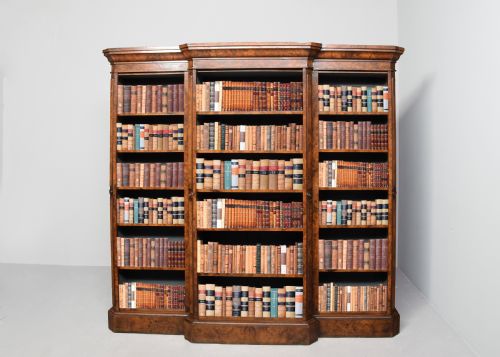
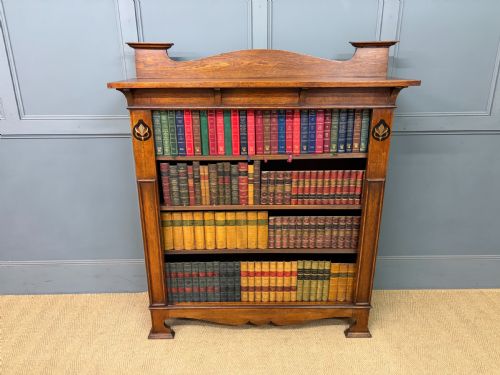
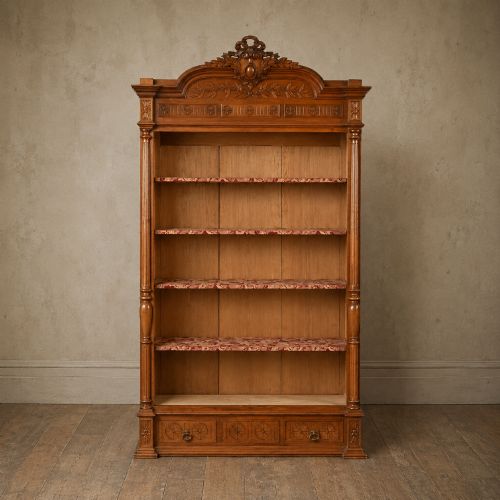
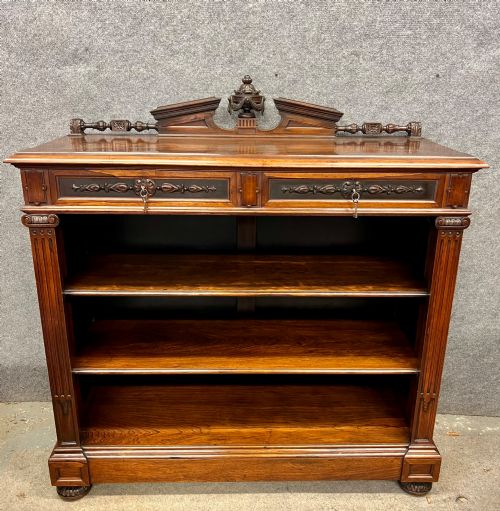
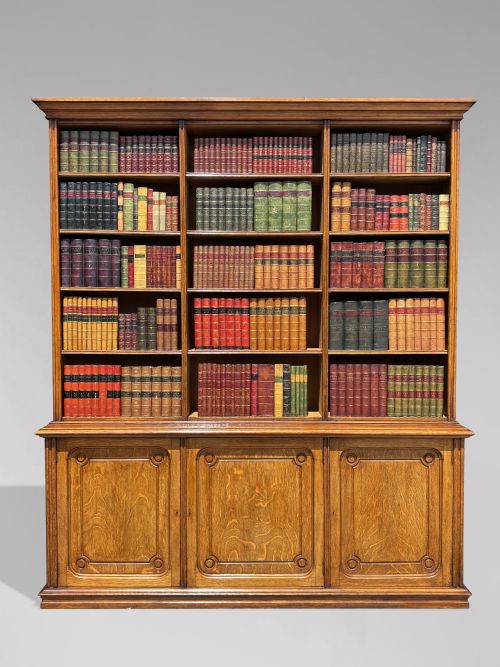

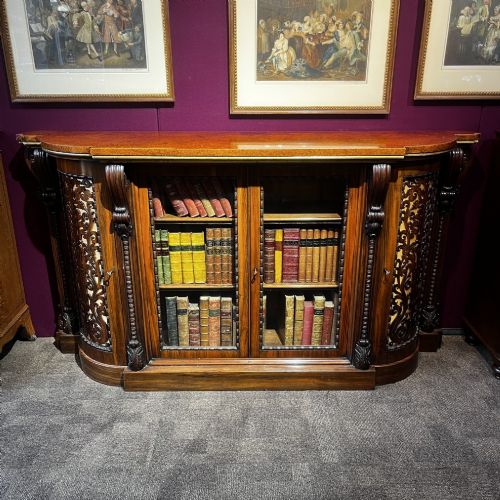
Brown Wooden Library Cabinet
A brown wooden library cabinet brings warmth and ordered utility to a room, housing volumes and papers in sturdy style.
Brown Wooden Library Cabinet
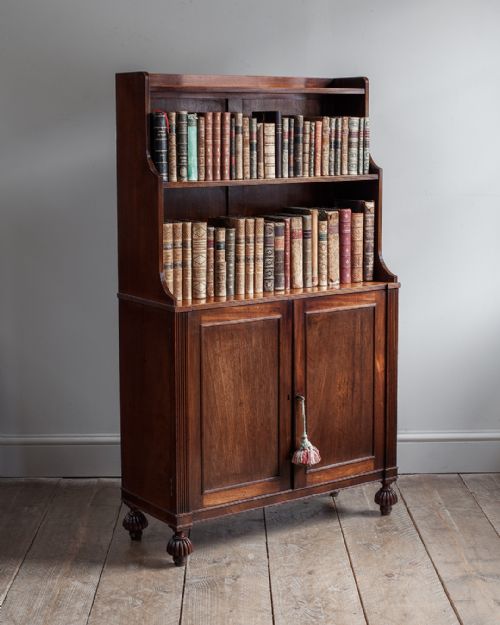
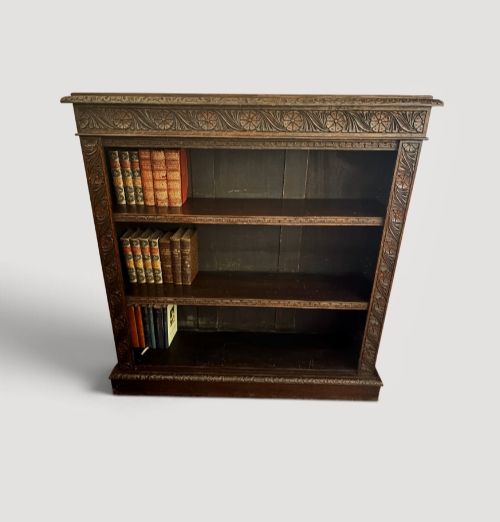
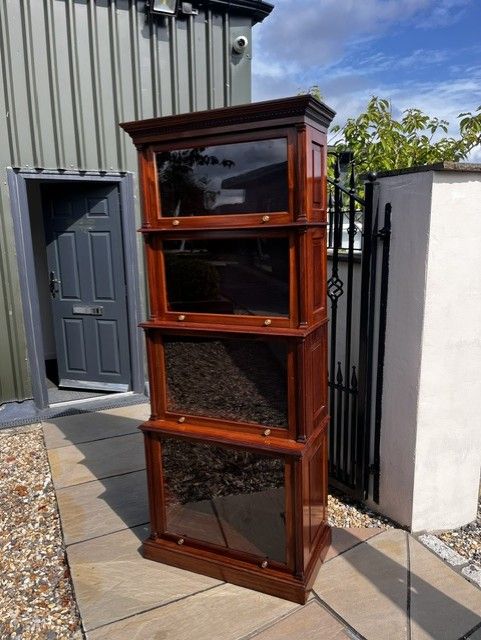
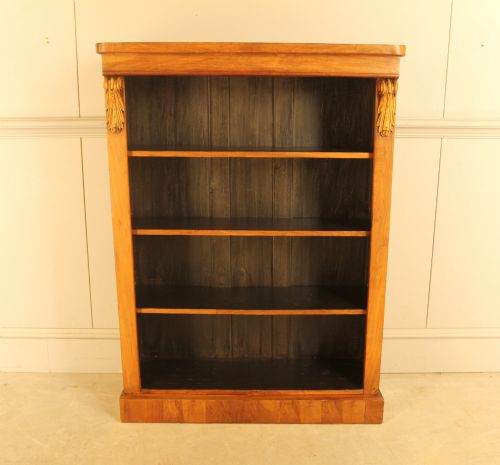
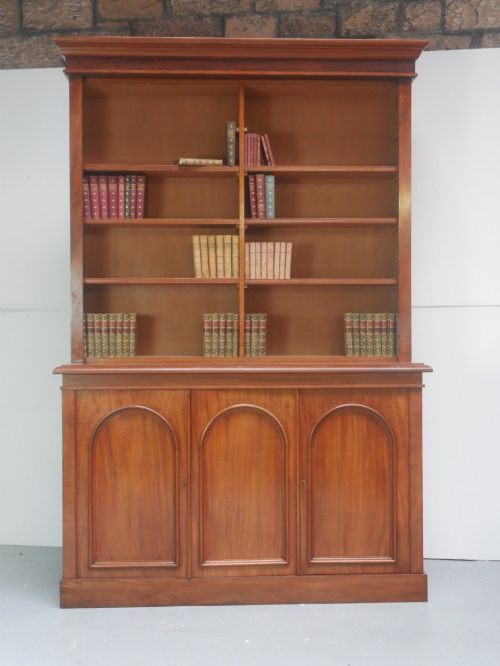
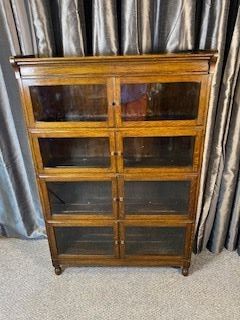
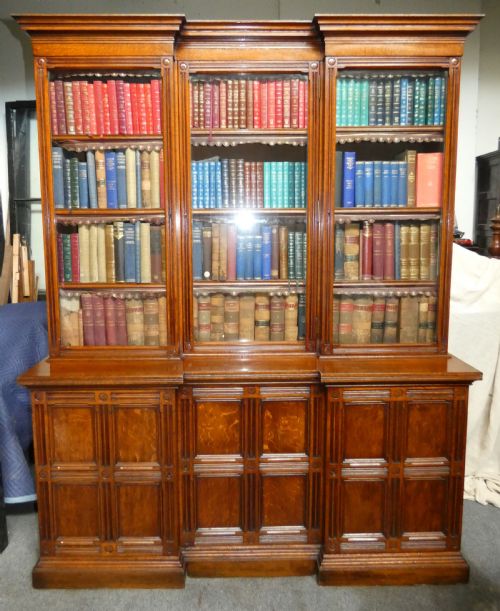
A brown wooden library cabinet is a practical piece designed for storing books, documents, and collections, taking forms such as open bookcases, stacking Barrister units, and fitted cabinets with shelves. These items emerge predominantly from the nineteenth and early twentieth centuries, spanning periods from George III through to the Edwardian era and the nineteen-thirties.
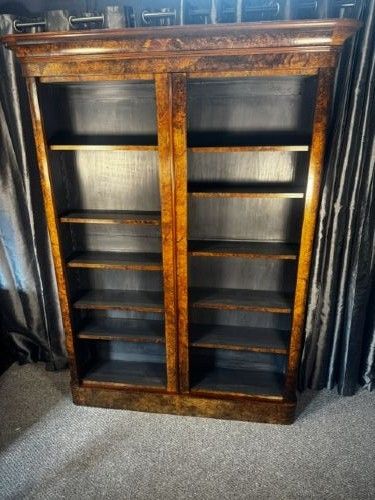
The versions most commonly met on this page are Victorian and later nineteenth-century open bookcases and cabinets made from dense hardwoods. Buyers encounter everything from tall breakfront designs with adjustable shelves to compact stacking sections intended for working spaces.
Originating largely from British and continental workshops, these pieces reflect the changing storage needs of private studies, school libraries, and professional offices over successive decades.
How they were made
Makers utilised rich hardwoods such as mahogany, oak, and walnut, frequently selecting burr veneers and amboyna to create striking grain patterns on the main facades. Solid construction methods ensure these carcases endure, relying on tightly fitted joints and durable timber frames.
Detailing often incorporates carved ornamentation, brass hardware, and glass panels, alongside functional additions like adjustable shelving tracks and secure locking mechanisms for specialist storage.
Listings feature oak, mahogany, and walnut across Victorian, Edwardian, and 1930s periods.
What varies in quality
Excellence in these cabinets rests upon the selection of timber figures, where richly patterned burr walnut or figured mahogany elevates the visual weight of the piece. The choice of solid construction over thin secondary veneers marks out superior workshop output.
Refinement appears in the proportion of the breakfront, the clean movement of adjustable shelving systems, and the integration of quality brass mounts or fitted interior drawers that remain true to the original design.
The Brown Wooden Library Cabinet Glossary
- Breakfront
- A cabinet design where the central section projects forward from the flanking outer sections.
- Barrister bookcase
- A modular bookcase featuring glass-fronted stacking sections that lift and slide inward.
- Adjustable shelf
- A wooden shelf resting on movable supports inside a cabinet, allowing variable vertical spacing.
- Specimen desk
- A specialised writing table or cabinet fitted with numerous small drawers for organising samples or papers.
Brown Wooden Library Cabinet: Frequently Asked Questions
How do I adjust the shelves?
Most period library cabinets utilise vertical wooden ratchets, brass studs, or shelf slips fixed to the interior sides. You simply lift the wooden shelf clear of its supports and reposition it into the alternative slots provided.
Take care when moving shelves in older walnut or mahogany cabinets to avoid catching the polished veneer on the interior carcase walls.
Are stacking bookcases stable?
Stacking barrister bookcases rely on modular wooden sections that interlock or rest securely upon a distinct base plinth with a cornice top. When placed on a level floor, their own substantial weight keeps the vertical units stable.
Wall securing is sometimes advised for taller stacking units, particularly in homes with children or uneven flooring.
How do I identify a Victorian cabinet?
Victorian cabinets often display deep mahogany or walnut timber grains, heavy carved mouldings, and functional interiors designed for extensive book collections. Date clues appear in construction traits like hand-cut dovetails on internal drawers and traditional backboards.
Later Victorian pieces from the eighteen-eighties onward may show simpler Arts and Crafts influences or lighter oak constructions.