

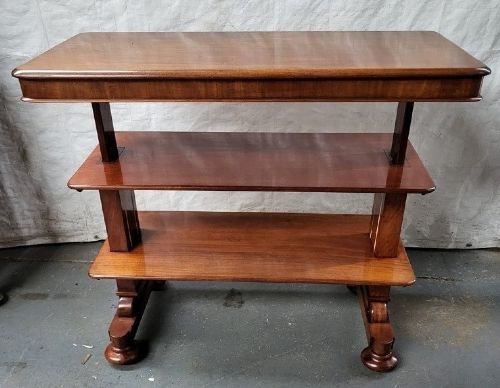


Brown Wooden Dumbwaiter
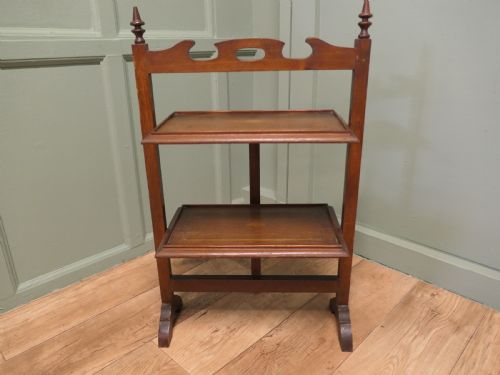
These brown wooden dumbwaiter pieces are tiered serving furniture and revolving stands designed for dining rooms, offering practical tiered surfaces.
Brown Wooden Dumbwaiter
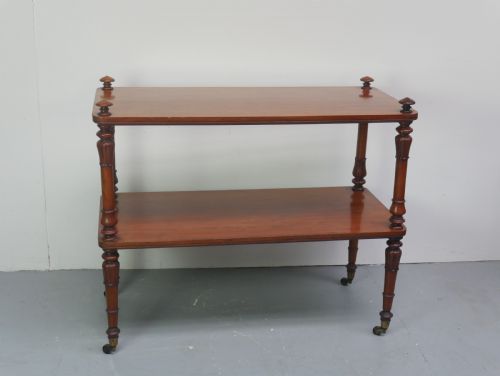
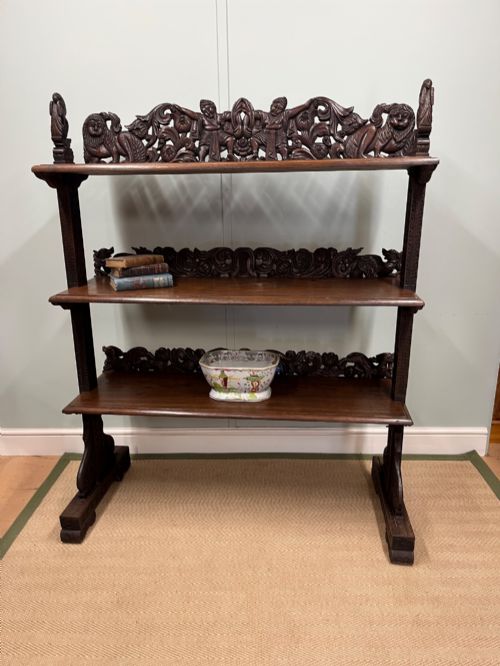
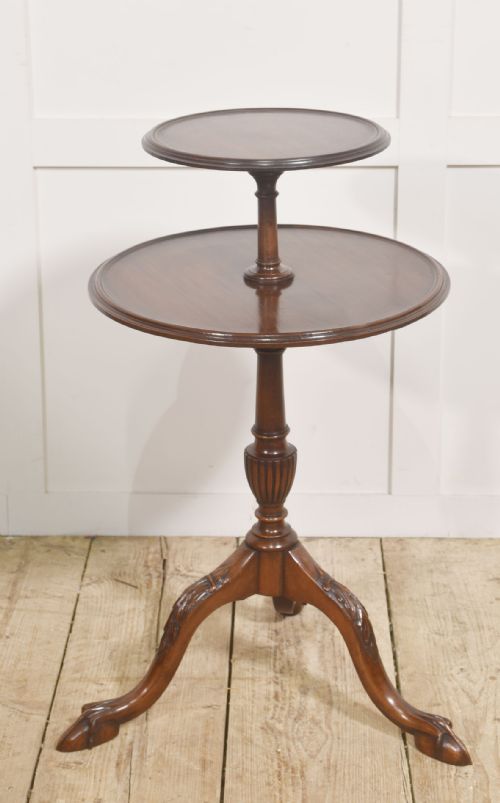
When you search for a brown wooden dumbwaiter, you encounter multi-tiered servers, buffets, and revolving table tops spanning the Georgian and Victorian periods.
The versions most commonly met on this page are mahogany three-tier buffets and folding or rise-and-fall dumb waiters from the nineteenth century.
These pieces function as serving tables and occasional stands, providing graduated shelves for food, books, or tableware.
How they were made
Constructed primarily from mahogany, oak, walnut, and teak, these pieces utilise dense timbers capable of supporting multiple heavy tiers.
Joinery methods include brass fittings, adjustable mechanisms, and folding hinges that permit metamorphic or tiered movement.
Surfaces receive polished finishes that highlight the grain of satinwood, mahogany, and walnut timbers.
Some Victorian examples include fully adjustable tiers that rise and fall on demand.
What varies in quality
The standard of timber selection and the precision of adjustable or folding mechanisms dictate the tier of craftsmanship.
Examples incorporating brass castors, fine turning, and fully operational rise-and-fall actions distinguish themselves from simpler static stands.
The Brown Wooden Dumbwaiter Glossary
- Dumb waiter
- A piece of tiered dining furniture or a revolving stand designed to hold food or tableware without servants present.
- Buffet
- A multi-tiered serving table used for holding dishes and serving food in dining spaces.
- Lazy Susan
- A revolving round table top stand placed on furniture to allow easy access to items.
- Metamorphic
- Furniture designed to transform or adjust its form and function through mechanical elements.
- Tier
- A single level or shelf within a multi-layered structure of a serving stand.
Brown Wooden Dumbwaiter: Frequently Asked Questions
What is a brown wooden dumbwaiter used for?
These pieces serve as multi-level tables and serving accessories designed to hold plates, dishes, and books in dining rooms or living spaces.
They provide accessible tiers for serving food or displaying household items without needing extra surface space.
How do I identify a Georgian dumbwaiter?
Georgian examples often feature folding designs, round table tops, or tiered revolving structures made from solid mahogany.
They display the classical proportions and timber characteristics typical of eighteenth-century cabinet making.
Where should I place a tiered buffet?
A tiered buffet fits well in a dining room against a wall or in a corner as a serving surface.
It also functions as an occasional table or bookcase stand in a study or living area.
What materials are common in these pieces?
Mahogany is the dominant timber, accompanied by oak, walnut, teak, and satinwood.
Metal and brass details appear in the mechanisms, castors, and adjustable fittings of the pieces.