
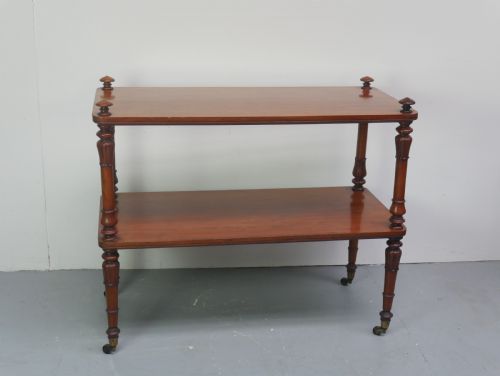


Edwardian Buffet Trolley
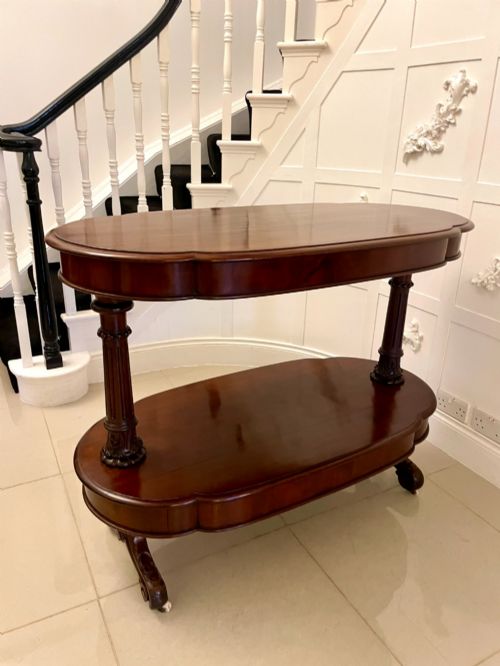
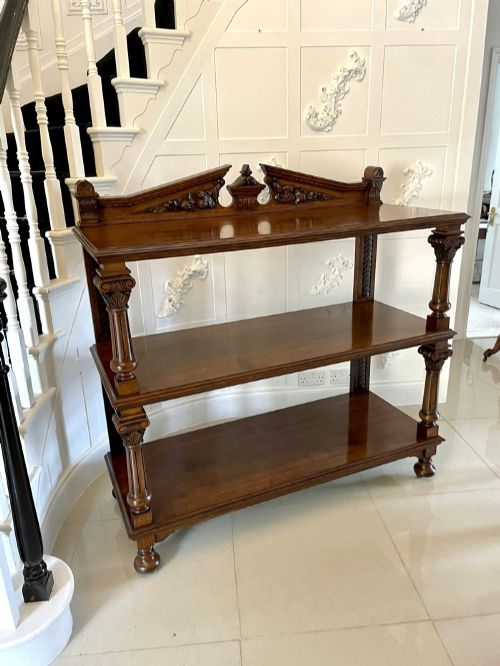
An edwardian buffet trolley serves as a versatile piece for dining and serving, combining practical tiers with period charm.
Edwardian Buffet Trolley
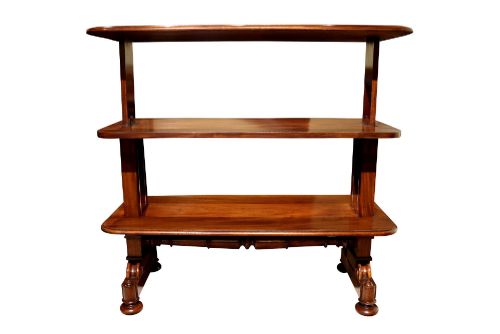
When searching for an edwardian buffet trolley, buyers encounter multi-tiered wooden furniture designed for serving food, drinks, and holding books or tableware. The selection includes serving trolleys from the early twentieth century alongside earlier Victorian and Georgian prototypes and later variations.
These pieces function as mobile sideboards or dumb waiters, often featuring shelves, folding mechanisms, or adjustable tiers. Oak and walnut dominate the construction, reflecting the practical domestic needs of the period.
How they were made
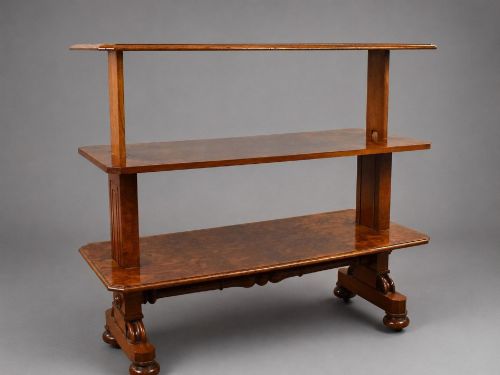
Makers utilised solid timbers such as mahogany, oak, and walnut, frequently enhancing the surfaces with burr walnut veneers or detailed carving. Structural integrity relied on traditional joinery methods suited to furniture intended for movement and heavy loads.
Hardware components typically involved brass fittings, castors for mobility, and sometimes rise-and-fall or telescopic mechanisms. These functional elements allowed shelves to adjust or fold according to the needs of the household.
Listings span from the mid-nineteenth century through the Edwardian era, featuring oak, mahogany, walnut, and teak.
What varies in quality
Quality differences lie in the selection of timber, the crispness of any carved ornamentation, and the sophistication of mechanical parts like telescopic columns or folding hinges. Superior examples display carefully matched wood grains and robust, stable framing.
The refinement of the brass castors and the smoothness of adjustable tiers distinguish standard utilitarian items from finer, more ambitious pieces commissioned for prominent dining spaces.
The Edwardian Buffet Trolley Glossary
- Dumb waiter
- A tiered serving piece designed to hold food, drinks, or books near a dining table without requiring servant attendance.
- Rise and fall
- A mechanical mechanism allowing tiers of a buffet or dumb waiter to adjust in height.
- Burr walnut
- A highly figured timber veneer prized for its swirling grain patterns used on decorative furniture surfaces.
- Bow front
- A convex curved cabinet or buffet shape popular in Georgian and later furniture design.
Edwardian Buffet Trolley: Frequently Asked Questions
What is an edwardian buffet trolley used for?
These trolleys served dining rooms as mobile stations for holding dishes, tea sets, or bottles during meals.
Today, they function well as drinks cabinets, side tables, or display shelving in living spaces.
Are all buffet trolleys foldable?
Not all pieces feature folding mechanisms; many comprise rigid multi-tiered shelving or fixed cabinets.
Foldable variants appear alongside telescopic and rise-and-fall designs in the available selection.
What woods were commonly used?
Makers predominantly worked with mahogany, oak, and walnut, occasionally incorporating burr walnut veneers.
Brass hardware and ceramic elements also appear on specific tiered serving models.