

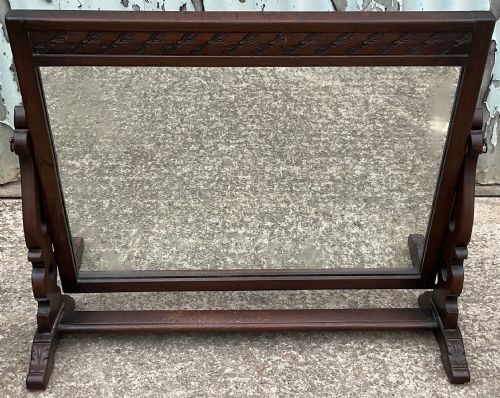
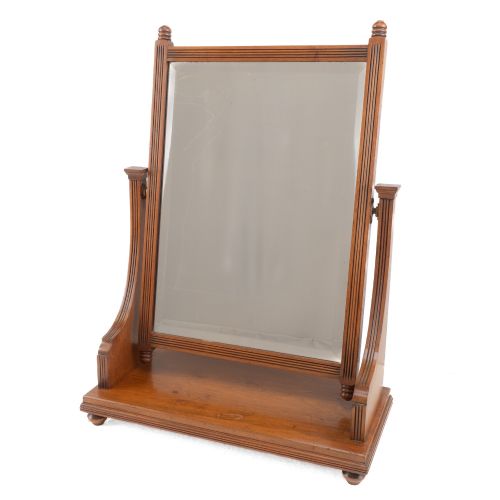


Brown Wooden Dressing Table Mirror
A brown wooden dressing table mirror sits on a chest or dressing table to reflect the face during grooming, offering a practical antique with period charm.
Brown Wooden Dressing Table Mirror
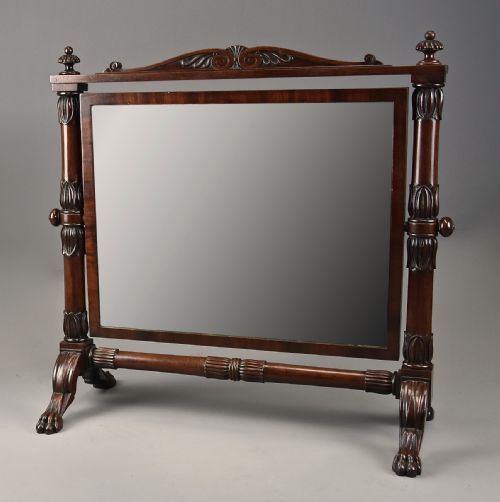
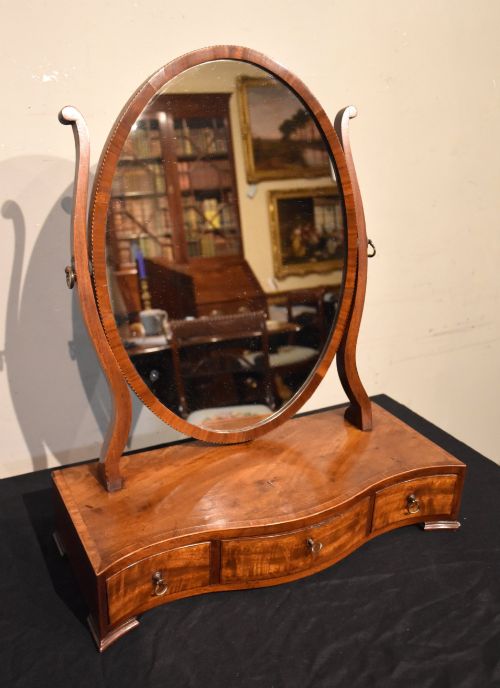
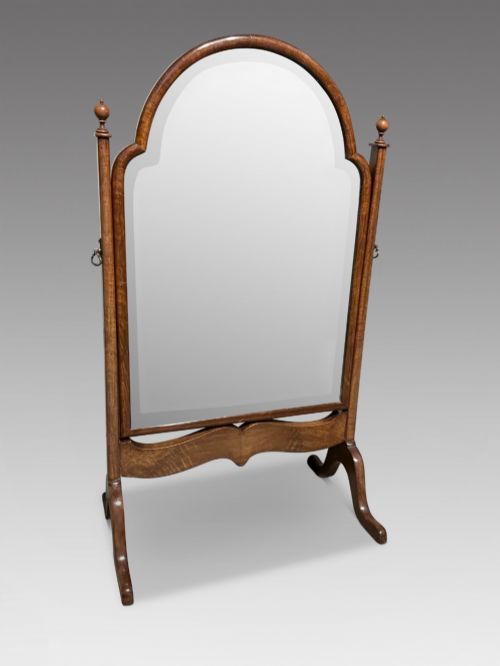
A brown wooden dressing table mirror is a small, portable or freestanding glass plate framed in timber and mounted on uprights above a small base or box. These pieces range from compact 18th-century walnut toilet mirrors to larger 19th-century mahogany cheval glasses and shaving stands.
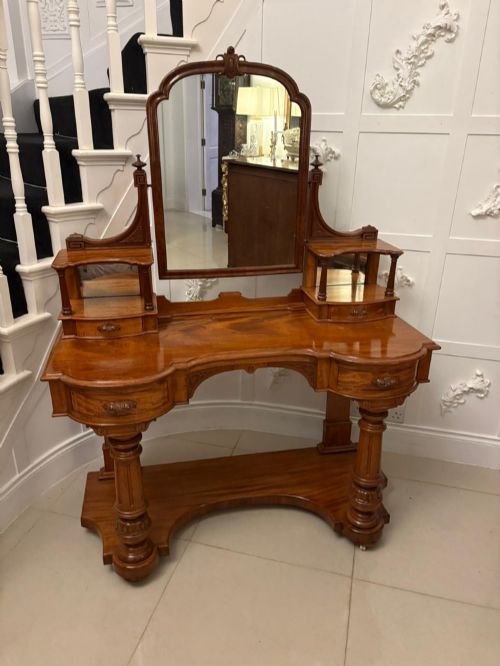
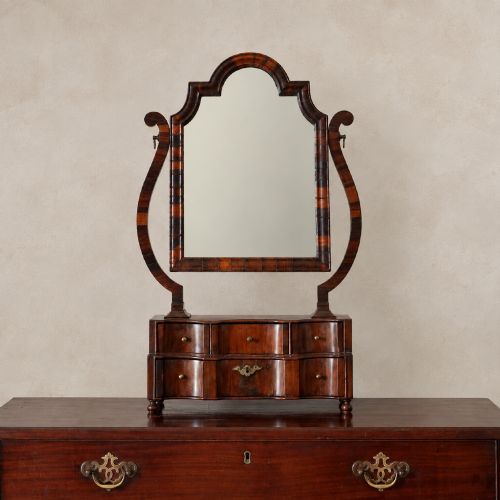
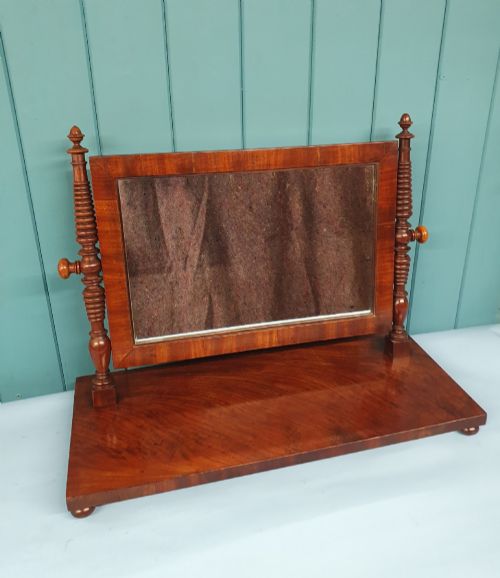
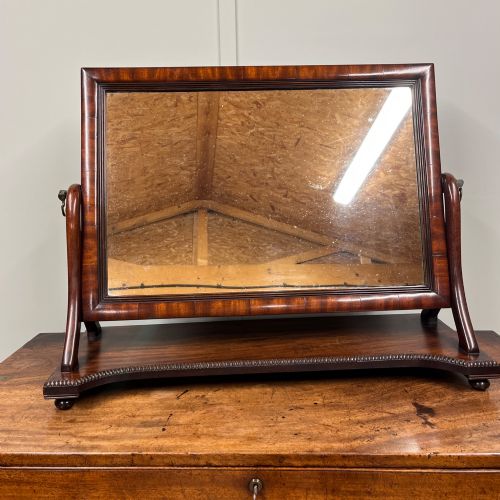
The versions most commonly met on this page date from the Georgian, Victorian and Edwardian periods, constructed in standard timber varieties like mahogany and walnut. They appear as simple swing mirrors on box bases, serpentine fronted toilet mirrors with small drawers, and adjustable table top frames.
Buyers look for these items to add period character to a bedroom or hallway while serving the practical function of a personal mirror. Their varied forms include simple dressing mirrors and complex shaving stands with integrated storage compartments.
Materials and construction methods
Makers built these frames using dense hardwoods, predominantly mahogany and walnut, alongside occasional oak, yew, and olive wood. Timber veneers frequently covered secondary woods on box bases, whilst solid sections formed the upright standards and surrounding mouldings.
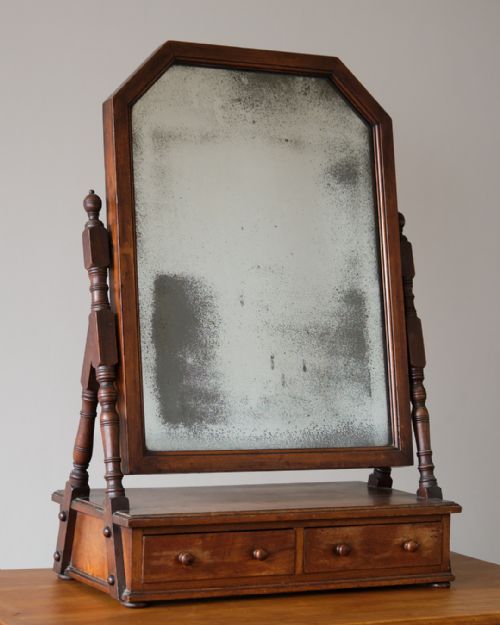
Glass plates sat within rebated wooden frames, often supported by brass pivots, pins, or screws that allowed the mirror angle to be adjusted. Feet, finials, and small drawer pulls incorporated turned brass, bone, or matching timber.
Joinery on the underlying drawer boxes utilised traditional dovetailed construction, ensuring stability for the pivoting frame mounted on top.
Form variations include simple table top swing mirrors, cheval frames, shaving stands, and Dutch marquetry designs.
Distinctions in quality and execution
Quality shows in the choice of timber figure, such as well-matched mahogany grain or intricate walnut marquetry, compared to plain, unfigured boards. Superior examples exhibit fine proportions, subtle mouldings, and careful attention to the carpentry of the small drawers contained within the base.
The sophistication of the hardware marks the grade of the piece, with heavy cast brass pivots and original fittings outranking simple later replacements. Finer mirrors display hand-cut dovetails on the internal drawers and retained original glass plates showing age appropriate characteristics.
P & MA Nicholson·Heal & Sons·James Shoolbred
The Brown Wooden Dressing Table Mirror Glossary
- Toilet mirror
- A small mirror designed to sit on top of a table, washstand, or chest of drawers, usually featuring a small box base with drawers.
- Cheval mirror
- A full length dressing glass mounted in a standing wooden frame that allows the entire frame to tilt.
- Serpentine
- A curved shape curving outward at the centre and inward at the sides, often seen on the front of Georgian dressing mirror boxes.
- Shaving stand
- A specialised piece of furniture incorporating an adjustable mirror and storage designed for personal grooming.
- Swing mirror
- A glass plate hung on side pivots between two upright standards, allowing the user to alter the angle of reflection.
Brown Wooden Dressing Table Mirror: Frequently Asked Questions
How do I date a brown wooden dressing table mirror?
Dating relies on observing timber choices, construction methods, and the style of the mirror frame and base. Georgian pieces often display fine mahogany or walnut with slender uprights, whilst Victorian versions tend to be heavier with carved ornamentation.
Hardware provides further clues, as hand-cut screws, brass pivots, and secondary woods change in manufacture across the 18th, 19th and early 20th centuries.
Where should I place a dressing table mirror?
These mirrors suit placement on top of dressing tables, chests of drawers, or sturdy sideboards where they sit securely. Because many feature adjustable swing frames, positioning them at a comfortable height allows for practical daily use.
Their compact footprints also permit use on washstands or dedicated vanity surfaces within bedrooms and dressing rooms.
Are the mirror plates original?
Many older pieces retain their original glass plates, which frequently exhibit minor foxing, speckling, or light surface blemishes from age. Replacement glass does occur on pieces from the 18th and 19th centuries to restore clarity.
Examining the edge of the glass and how it sits within the rebated wooden frame helps determine if the plate dates from the same period as the woodwork.
What is the difference between a toilet mirror and a dressing mirror?
A toilet mirror traditionally denotes a smaller glass mounted on a box base containing tiny drawers, designed to sit upon a table for personal grooming. A dressing mirror can encompass this form as well as larger cheval mirrors and table top variants.
Both terms describe movable timber frames used to reflect the upper body during dressing routines.