

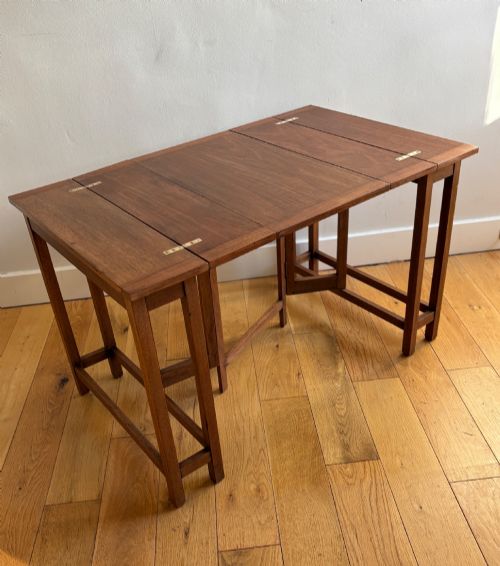
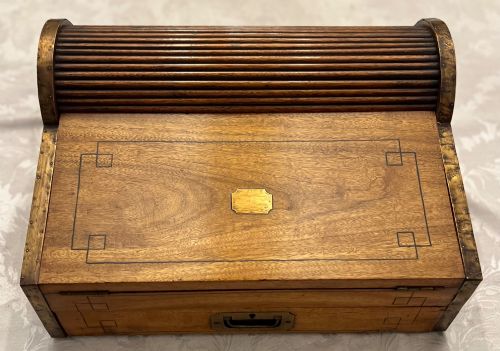
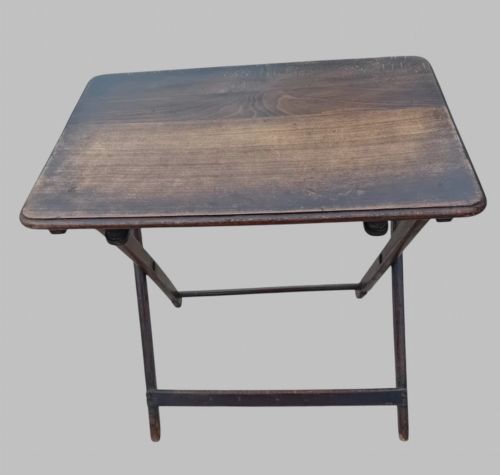
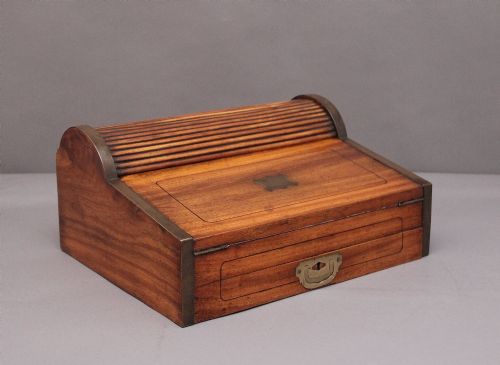


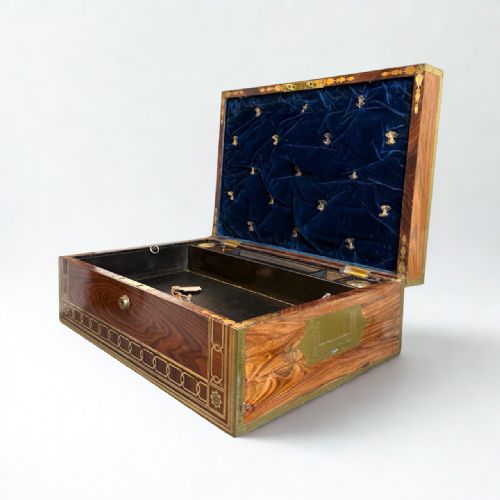


Brown Wooden Campaign Desk
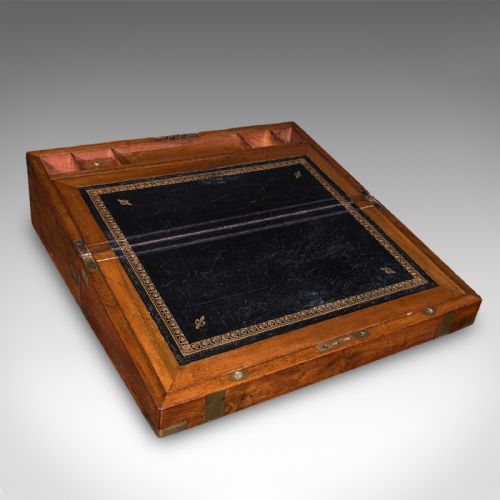
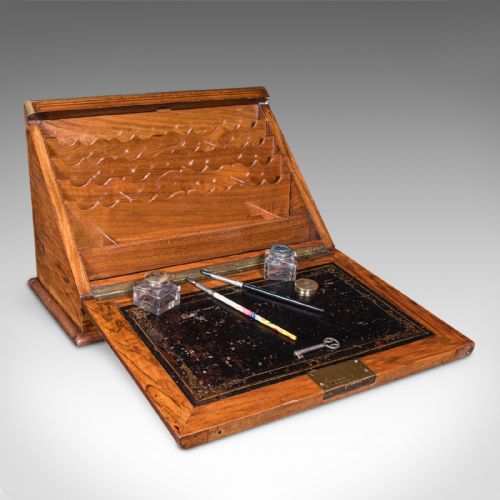
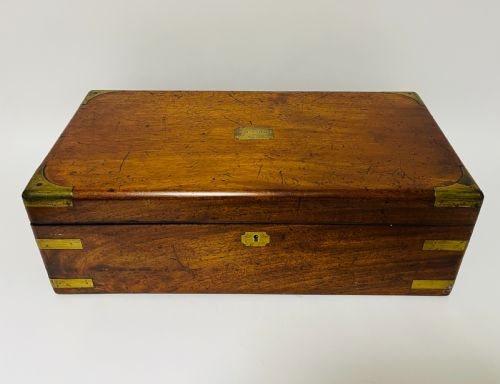
A brown wooden campaign desk offers portable functionality defined by brass corners and fold-away design.

Brown Wooden Campaign Desk
The inventory spans Georgian, Regency, and Victorian periods, alongside Anglo-Indian and Chinese colonial examples. Forms range from compact desktop correspondence boxes to full pedestal desks and folding occasional tables.
Materials and construction
Cabinetmakers utilised robust timbers such as mahogany, walnut, teak, camphor wood, and padauk to withstand arduous travel. These woods were chosen for their density and resistance to warping in shifting climates.
Brass corners, strapwork, and flush-fitting handles reinforced the structural joints while protecting vulnerable edges from impact. Leather inserts frequently provided a durable writing surface inside slope lids and desktop compartments.
Brown Wooden Campaign Desk Retail Price Guide 2026
Typical asking prices for brown wooden campaign desk among the pieces listed under this phrase on Sellingantiques today, from the lower quarter to the upper quarter. They describe what is for sale here now, not the wider market.
Listings feature woods including mahogany, walnut, camphor wood, teak, padauk, oak, and beech across 18th-century to early 20th-century periods.
Evaluating craftsmanship
Quality rests upon the precision of the brass hardware integration and the stability of folding mechanisms. Superior pieces display seamless joints that maintain alignment whether folded for transit or opened for daily use.
Finer examples feature secondary timbers of equal grade, thoughtful internal organisation with secret compartments, and maker signatures such as Fisher or Austin. The selection of burr veneers or finely figured grain also distinguishes higher status pieces.
William Austin·Fisher
The Brown Wooden Campaign Desk Glossary
- Writing slope
- A portable desk featuring a sloping lid that opens to reveal compartments for stationery, inkwells, and correspondence.
- Brass bound
- Furniture edges and corners protected with flush-fitted brass strapping to absorb the knocks of military transit.
- Campaign style
- Portable furnishings engineered to fold, dismantle, or pack into modular sections for officers and travellers.
- Pedestal desk
- A sturdy writing desk supported by two banks of drawers, occasionally built in modular sections for colonial transport.
- Secretaire
- A cabinet or chest incorporating a drop-front writing drawer fitted with pigeonholes and small drawers.
Brown Wooden Campaign Desk: Frequently Asked Questions
What is a brown wooden campaign desk?
A brown wooden campaign desk is a piece of portable furniture originally built for military officers on the move. These items include folding tables, lap desks, and modular pedestal units designed to pack down easily.
They combine sturdy hardwoods like mahogany or teak with protective brass mounts to endure long journeys. Today, they serve as functional writing surfaces with a distinct military heritage.
How were campaign desks used?
These desks provided a stable writing space and secure storage for dispatches, maps, and correspondence during military campaigns. Officers used them in field tents, aboard ships, and in temporary colonial quarters.
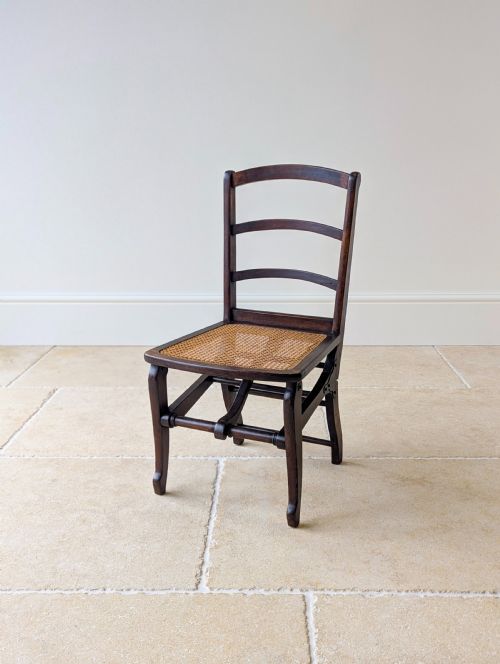
Many incorporate clever internal compartments, secret drawers, and fold-away legs or handles. This allowed the owner to pack up quickly when orders arrived to move camp.
How do I live with a campaign desk?
Integrating a campaign desk into a modern interior is straightforward due to its compact and adaptable proportions. Smaller writing slopes sit neatly on tables or sideboards, while folding tables work well as occasional surfaces.
Keep them away from direct heat sources to protect the timber and leather writing surfaces. Regular polishing with traditional beeswax maintains the finish of the hardwood and brass hardware.
How do I date a campaign desk?
Dating relies on examining the timber species, construction methods, and hardware style. Georgian and Regency pieces often feature subtle hand-cut dovetails and understated brass inlays.
Victorian and later 19th-century examples frequently show heavier brass binding, camphor wood construction, or maker stamps. Comparing the internal layout to documented military supply patterns also helps narrow down the period.