

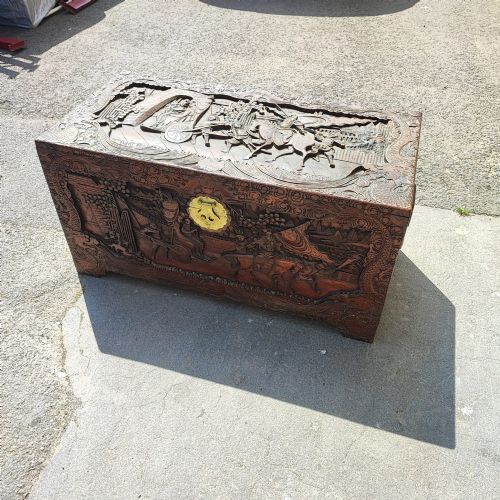


Carved Camphorwood Chest
A carved camphorwood chest brings distinctive aroma and intricate relief work into a room, offering both practical storage and deep historical character.

Carved Camphorwood Chest
A carved camphorwood chest serves primarily as a sturdy storage trunk or blanket box, prized historically for protecting textiles from insects. When exploring a carved camphorwood chest, buyers encounter items produced across the nineteenth and early twentieth centuries, reflecting diverse regional aesthetics.
The dominant forms on this page include Chinese export trunks alongside Ceylonese and Anglo-Indian variants. These pieces range from simple lidded blanket boxes to more complex military campaign pieces featuring internal fittings.
Originating largely from maritime trade centres and colonial outposts, these items combine utilitarian function with elaborate surface decoration. Their enduring appeal lies in the aromatic timber combined with deeply carved exterior panels.
Materials and Construction
The primary material is solid camphorwood, known for its natural insect-repellent properties and distinct scent. Artisans selected timber with stable grain to support heavy relief carving across the lid and sides.
Brass fittings, including corner braces, carrying handles and lock plates, appear frequently on campaign-style and export trunks. These metal elements provided structural reinforcement for long-distance transport.
Surface ornamentation relies on deep chisel work, depicting traditional motifs, figures and foliage. Joinery techniques varied from simple box construction to robust multi-part frames designed for military use.
Carved Camphorwood Chest Retail Price Guide 2026
Typical asking prices for carved camphorwood chest among the pieces listed under this phrase on Sellingantiques today, from the lower quarter to the upper quarter. They describe what is for sale here now, not the wider market.
Materials recorded across the inventory include solid camphorwood, ebony accents and protective brass bindings.
Factors of Quality
The depth and crispness of the carving distinguish finer examples from standard commercial production. Superior pieces exhibit intricate detailing with undercut relief rather than shallow, mechanical scoring.
Structural integrity and the retention of original brass hardware significantly influence worth. Items retaining their fitted interiors, original hinges and functioning locks command greater interest from collectors.
Timber selection and grain consistency also dictate overall standard. Well-chosen camphorwood displays an even tone and a strong, enduring aroma that indicates proper seasoning and maintenance.
The Carved Camphorwood Chest Glossary
- Camphorwood
- A durable, aromatic timber native to Asia, utilised for cabinetry and storage trunks due to its natural pest-resistant qualities. Its distinct scent remains active for generations.
- Campaign chest
- A portable piece of furniture made in sections with recessed brass handles and corner brackets, designed for military officers on the move during the colonial era.
- Chinese export
- Goods manufactured in China specifically for Western markets, often blending traditional local craftsmanship with European design preferences.
- Secretaire
- A desk fitted with a pull-down writing flap and internal small drawers, sometimes incorporated into the upper section of a military chest.
- Coffer
- A large box or chest traditionally used for holding valuables, textiles or documents, typically featuring a hinged lid.
Carved Camphorwood Chest: Frequently Asked Questions
What are carved camphorwood chests used for?
These chests serve as practical storage solutions for blankets, linens and winter garments. The natural properties of the wood help keep textiles safe from moths and other insects.
Many people also utilise them as coffee tables or statement accent pieces in living rooms and bedrooms. Their flat lids and decorative presence make them functional furniture items beyond simple storage.
How do I care for a camphorwood chest?
Keep the timber away from direct heat sources and strong sunlight to prevent the wood from drying out or splitting. Occasional dusting with a soft, dry cloth is usually sufficient for maintenance.
Avoid using harsh chemical polishes that might damage the natural finish or interfere with the wood's aroma. If the scent fades slightly over decades, light sanding of the interior can sometimes refresh it.
How can I tell the age of these chests?
Dating relies on examining construction methods, hardware styles and the nature of the carving. Nineteenth-century examples often feature hand-cut dovetails and heavy, patinated brass fittings.
Early twentieth-century pieces may display more standardised machine assistance or different stylistic influences. Comparing the specific motifs and regional export characteristics helps narrow down the production period.
Why do these chests smell so strong?
The distinct aroma comes from natural oils present within the camphor tree. This scent is responsible for the wood's historic reputation for protecting stored clothing from pests.
Over time, the intensity of the fragrance can mellow, but a properly sealed antique chest will often retain a noticeable aroma. Opening the trunk in a well-ventilated space helps dissipate excess accumulation of the scent.