





Colonial Brass Chest Drawers
Colonial brass chest drawers bring utilitarian transport and enduring craftsmanship into domestic spaces through robust timbers and functional metalwork.

Colonial Brass Chest Drawers
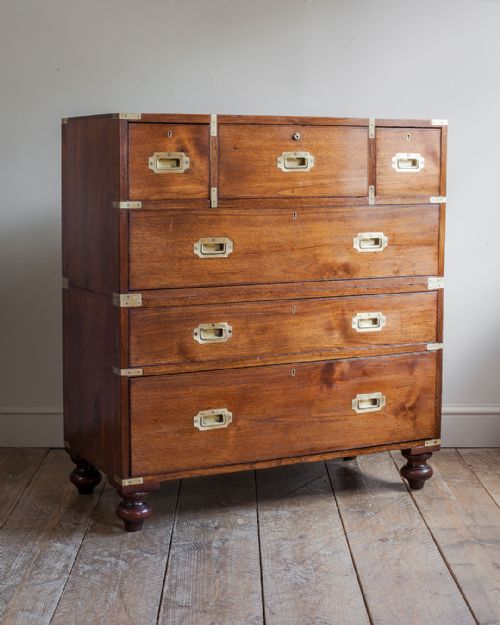
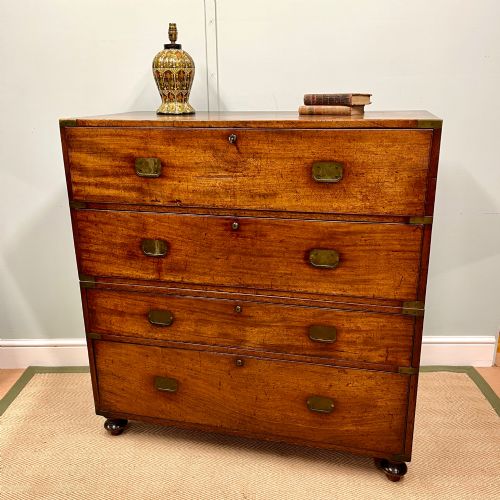
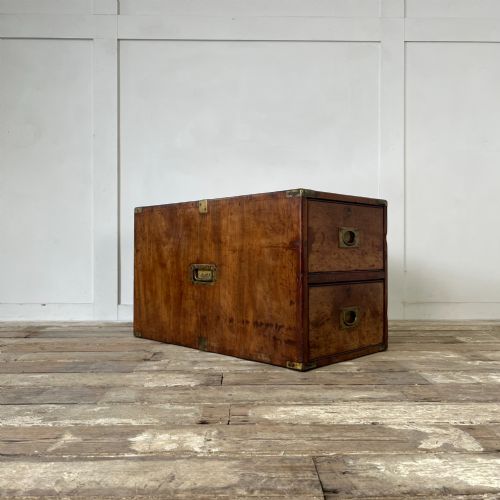
Colonial brass chest drawers combine robust construction with practical portability for officers and travellers across the British Empire. These items frequently appear as two-part modular units designed to separate easily during transit.
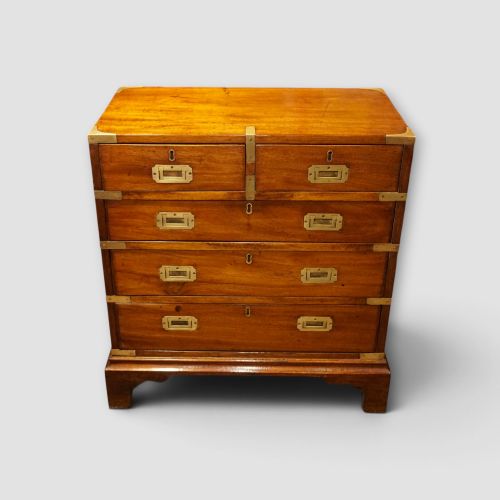
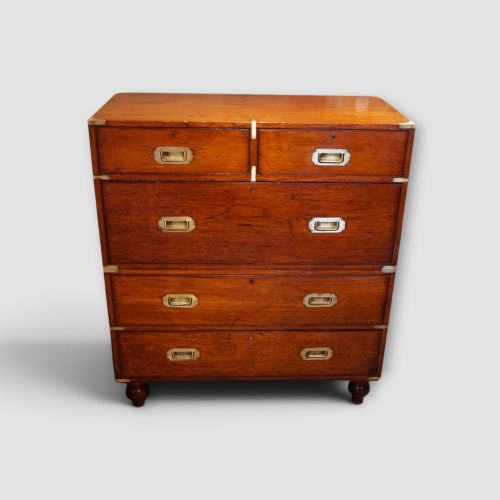
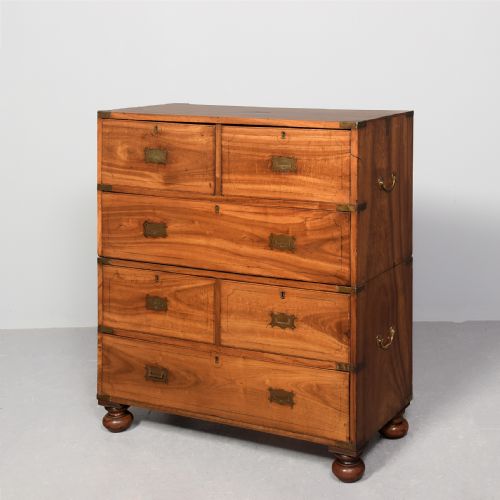
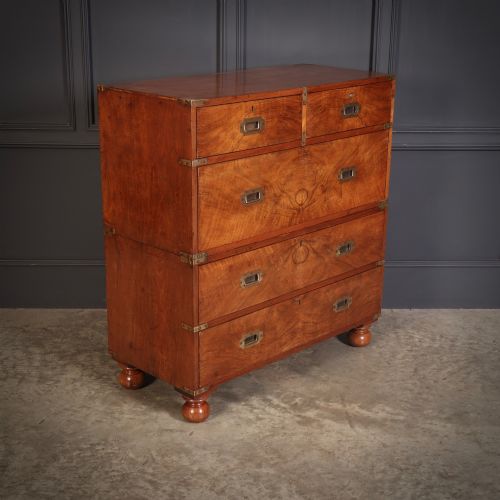
Makers utilised dense tropical timbers such as teak, camphor wood, and padouk to withstand harsh climates and heavy handling. Buyers will predominantly encounter pieces from the nineteenth century featuring recessed brass handles and reinforced corner brackets.
Form follows function closely in these designs, yielding clean lines and flush hardware that prevent snagging during travel. Variations range from simple drawer configurations to elaborate secretaire chests fitted with writing desks and pigeonholes.
How they were made
Cabinetmakers constructed these chests using durable exotic hardwoods like teak, mahogany, and camphor wood framed with structural iron and brass. These dense materials resisted humidity and warping while protecting the contents during long sea voyages.
Brass strapping and flush-mounted hardware were screwed into the timber to reinforce joints against constant movement. Recessed pull handles sat flush with the drawer faces to maintain a smooth exterior profile for packing.
Colonial Brass Chest Drawers Retail Price Guide 2026
Typical asking prices for colonial brass chest drawers among the pieces listed under this phrase on Sellingantiques today, from the lower quarter to the upper quarter. They describe what is for sale here now, not the wider market.
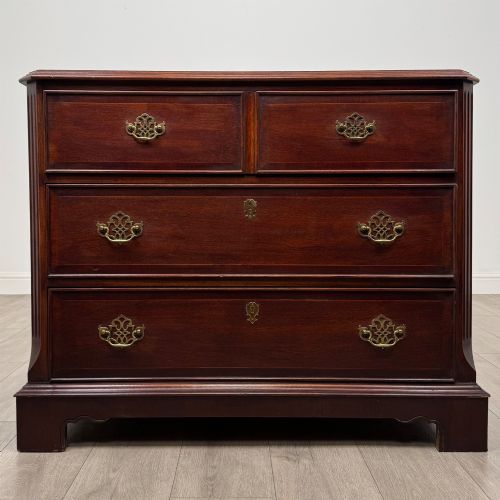
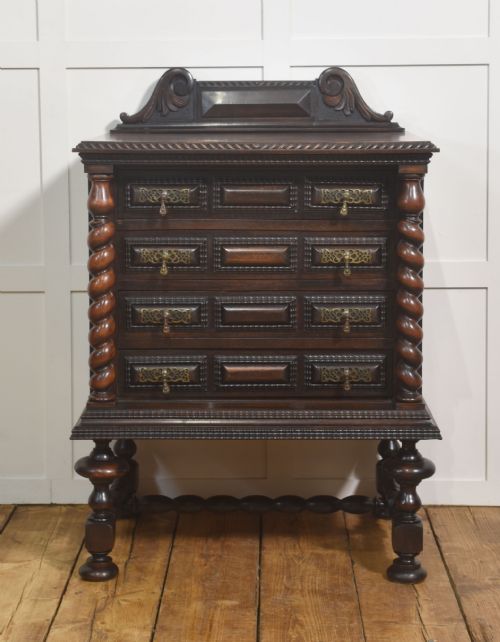
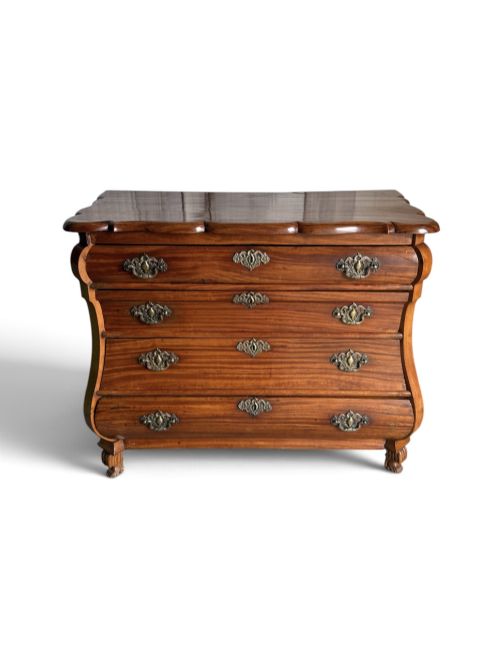
Observed object formats include desktop storage, bombe chests, miniatures, and modular secretaire campaign chests.
What varies in quality
The choice of primary timber and the density of the grain dictate much of the structural integrity and visual depth of each chest. Superior examples display carefully selected solid hardwoods matched across two-part modular sections.
The precision of the brass-work and the quality of the flush mountings separate standard military utility pieces from finer officer commissions. Integrated secretaire drawers with fitted writing compartments also elevate the internal complexity.
Army And Navy·Graves And Sons·Arthur Foley And Son
The Colonial Brass Chest Drawers Glossary
- Campaign chest
- A modular chest of drawers built in two or more sections with recessed brass hardware for easy transport.
- Secretaire
- A cabinet or chest featuring a pull-out drawer with a hinged writing surface and internal pigeonholes.
- Two-part
- A cabinet construction style where the upper and lower carcases separate completely for transit.
- Camphorwood
- An aromatic tropical timber valued for insect-resistant properties and dense grain patterns.
- Padouk
- A heavy, durable reddish-brown timber utilised in fine colonial cabinetmaking.
Colonial Brass Chest Drawers: Frequently Asked Questions
What is a colonial brass chest drawers?
These pieces are portable modular storage units built in sections for military officers and travellers moving across distant territories. Their robust construction allowed them to endure frequent loading onto ships and carriages.
Heavy brass binding and recessed handles protected the corners and surfaces from impact during transit. They remain sought after today for their functional design and rich tropical hardwoods.
How were campaign chests used?
Owners used these chests to transport uniforms, documents, and personal belongings during extended military campaigns or colonial postings. The modular design enabled servants to stack and secure the units quickly.
Many examples included secretaire drawers that doubled as impromptu desks for paperwork in the field. This dual functionality made them essential furniture for officers on active service.
How do you care for tropical hardwood?
Maintain these timbers by keeping them away from direct heat sources and sudden temperature fluctuations that cause splitting. Regular dusting with a soft cloth preserves the natural finish of the wood.
Avoid excessive polishing and allow the historic patina to develop naturally over time. Camphor wood varieties often retain their distinct aroma when kept in stable conditions.