

Brown Wooden Caddy Box
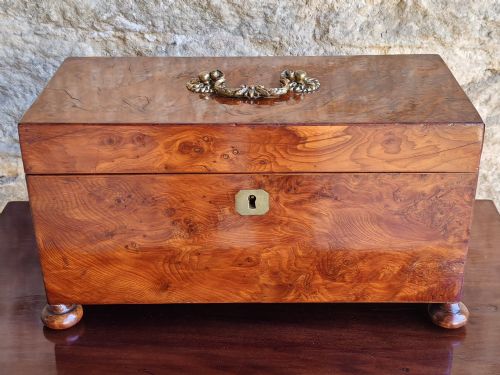
A brown wooden caddy box is a small timber chest designed to secure dry tea leaves, holding a firm place in Georgian and Regency interiors.
Brown Wooden Caddy Box
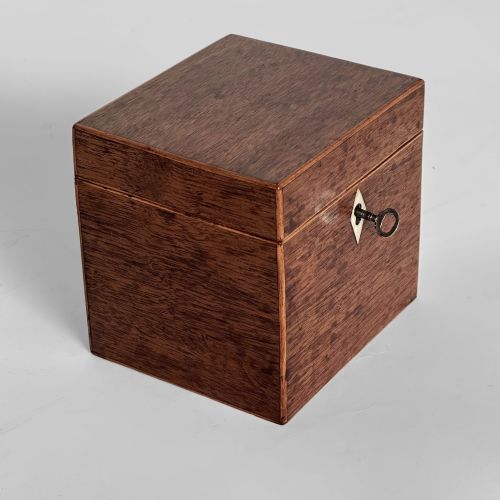
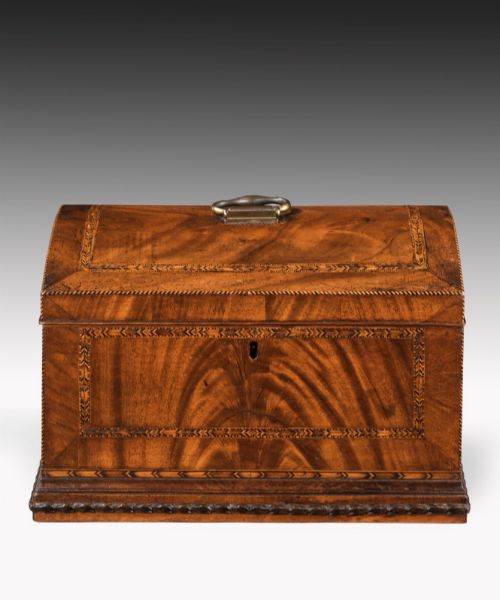
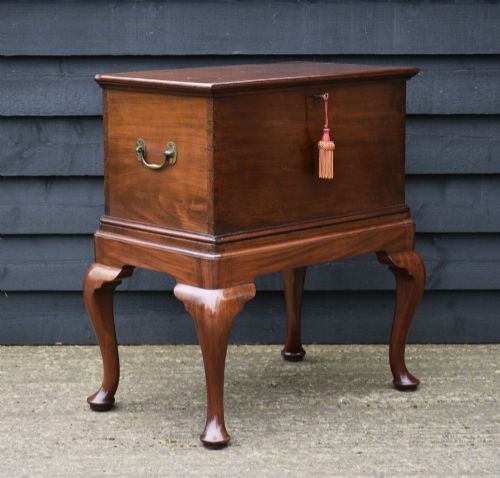
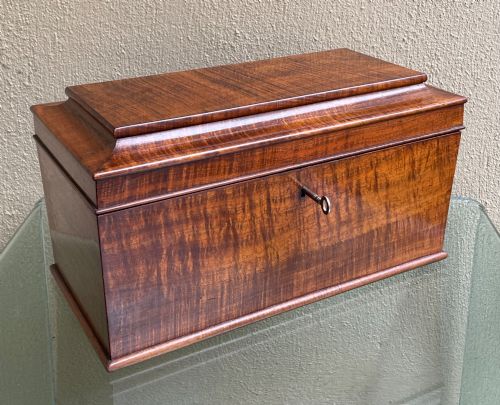
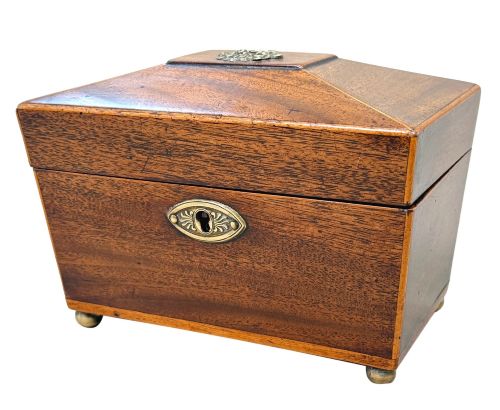
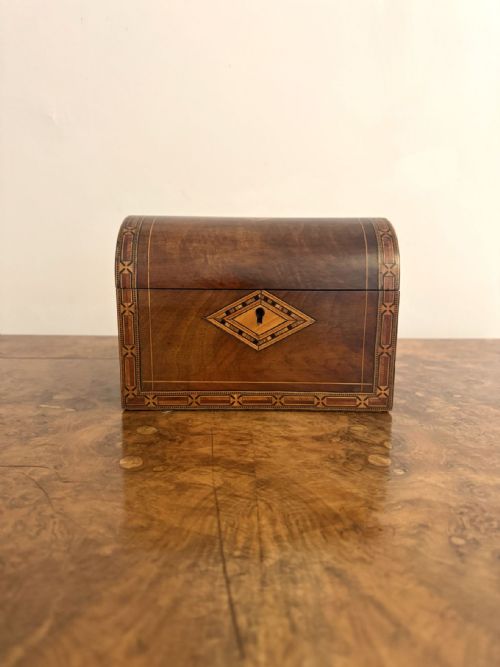
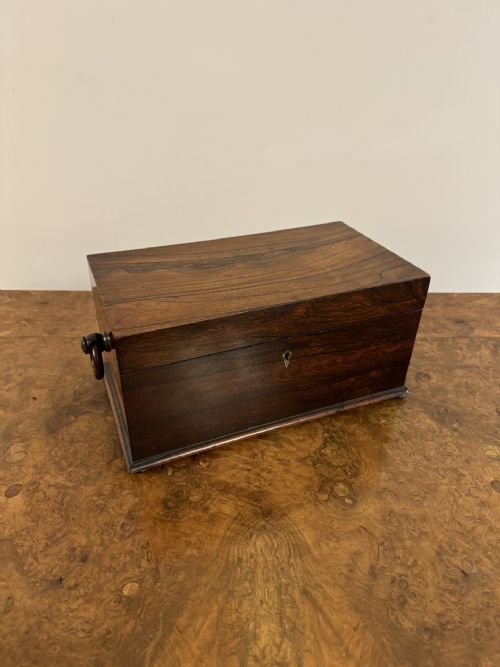
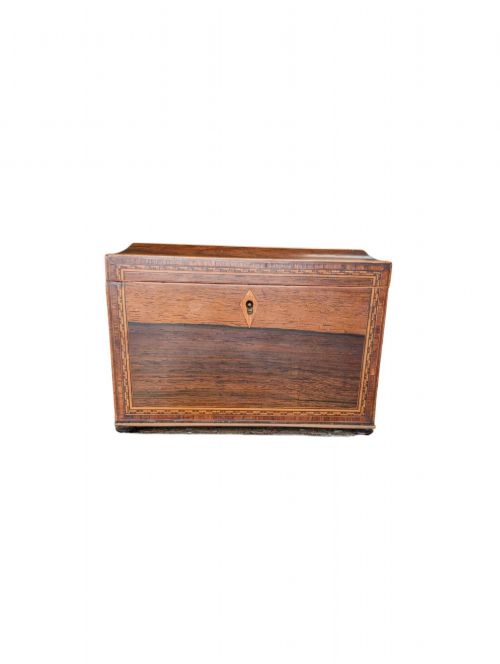
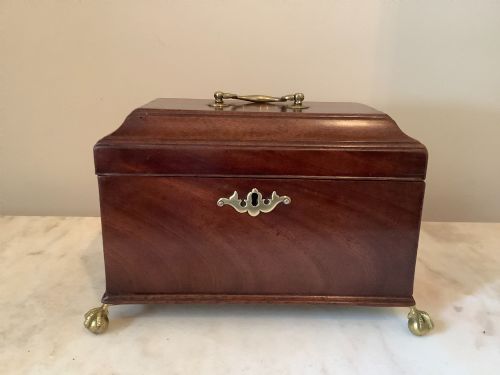
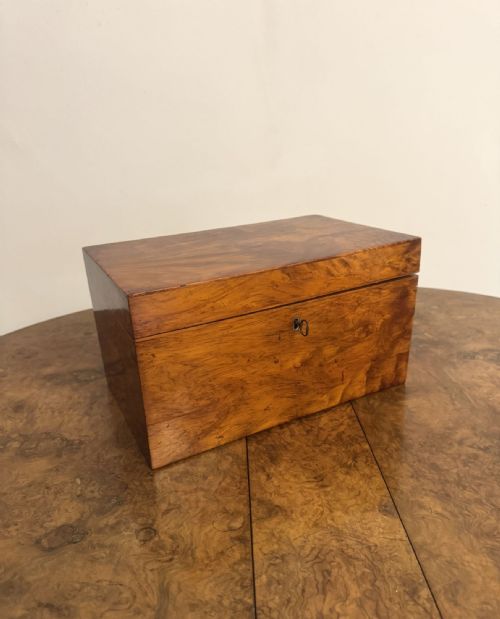
A brown wooden caddy box is primarily encountered as a tea caddy from the Georgian, Regency, or Victorian periods, fashioned from timber such as mahogany, walnut, and yew. These containers take shapes ranging from simple rectangular and square blocks to sarcophagus forms, domes, and navette silhouettes.
The objects listed on this page span the eighteenth and nineteenth centuries, including items with specialised internal compartments, fitted interiors, and occasionally secret drawers. Examples stretch across various regional styles, from British Tunbridge Ware to Chinese bamboo and Scandinavian hand-painted boxes.
Materials and construction
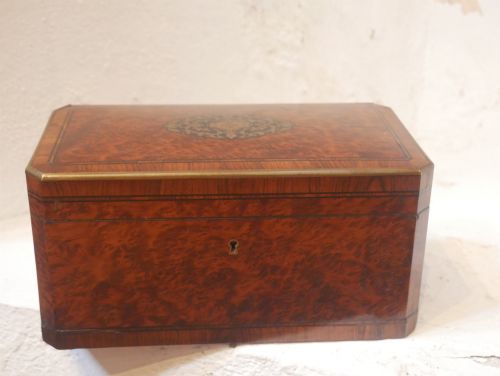
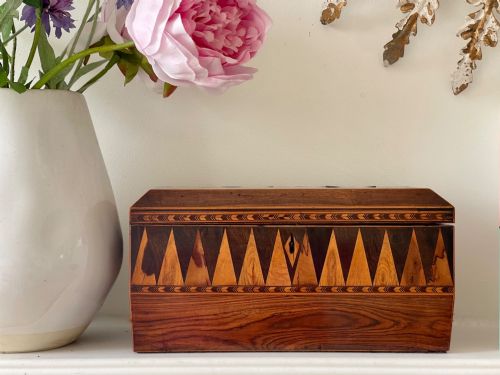
Construction relies heavily on dense hardwoods like mahogany, walnut, and rosewood, often enhanced by decorative veneers such as burr yew, satinwood, and harewood. Cabinetmakers utilised boxwood, ebony, and bone for stringing and intricate geometric patterns, particularly seen in Tunbridge Ware examples.
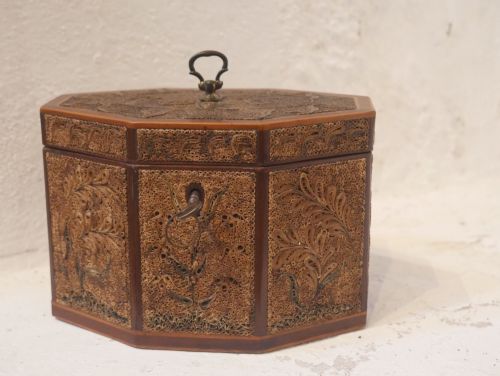
Surface ornamentation extends beyond plain timber to include intricate wood inlay, paper filigree, shell marquetry, and painted details. Interiors frequently incorporated metal foil linings or fitted wooden canisters with lids to preserve the aroma of the contents.
Listings feature woods including mahogany, walnut, rosewood, yew, satinwood, and boxwood, spanning the Georgian, Regency, and Victorian periods.
Assessing quality in construction and detail
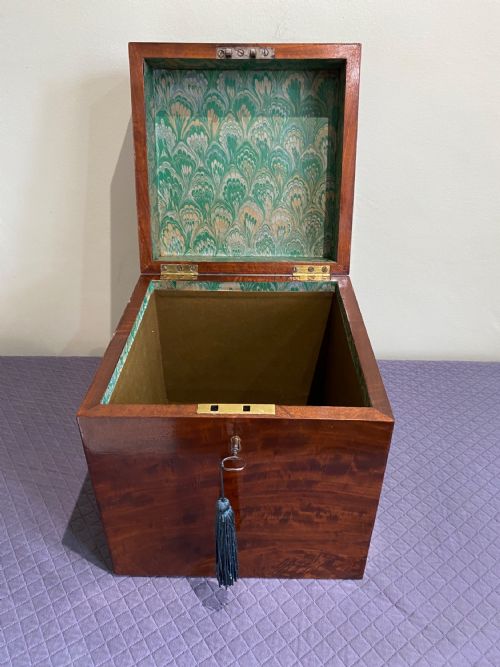
Quality rests upon the selection of timber figures, such as burr yew or highly figured mahogany, and the precision of the cabinetwork in joining corners and lids. Superior pieces display meticulous attention to internal fittings, such as operating locks with original keys and intact secondary compartments.
The complexity of decoration distinguishes finer examples, noting the precision of wood inlay, micro-mosaic Tunbridge banding, or the integration of materials like tortoiseshell and brass. The crispness of carved details and the preservation of original internal liners elevate an object above standard utilitarian boxes.
Tahan Paris·Henry Hollamby
The Brown Wooden Caddy Box Glossary
- Tea caddy
- A small lidded box originally designed for storing loose tea leaves securely under lock and key. The term derives from catty, a Chinese weight measurement for tea.
- Sarcophagus
- A box shape featuring a domed or sloping lid resting on a rectangular base, resembling a stone coffin. This form became popular during the Regency period for larger tea caddies and cellarettes.
- Tunbridge Ware
- A type of decorative woodwork characterised by tiny mosaic tiles formed from different coloured woods to create pictorial or geometric designs. It was principally produced in Kent during the nineteenth century.
- Stringing
- Thin inlaid lines of contrasting wood or bone used to outline the edges and panels of furniture and boxes. It provides a subtle decorative border to the primary timber.
- Navette
- A pointed, boat-shaped outline with curved sides tapering to two ends. This symmetric form appears on specific Georgian boxes and tea caddies.
Brown Wooden Caddy Box: Frequently Asked Questions
What were brown wooden caddy boxes used for?
These boxes served to store expensive loose tea leaves safely under lock and key in period households. Tea was a precious commodity, so the container protected the contents from moisture, theft, and loss of aroma.
Inside, many containers featured divided compartments to separate different varieties of black and green tea. Some also included a central glass or metal mixing bowl for blending leaves before brewing.
How do I date a wooden tea caddy?
Dating relies on examining the timber species, the box shape, and the construction methods used on the interior and exterior. Georgian pieces often favour plain or star-inlaid mahogany, while Regency versions introduce sarcophagus shapes and rosewood veneers.
Hardware such as hinges, escutcheons, and locks further assists in establishing a period. Hand-cut dovetails and older fastening techniques point towards eighteenth-century origins.
How should I clean a antique wooden box?
Maintenance requires gentle dusting with a dry, soft cloth to prevent accumulation in carved details and fine inlay. Avoid harsh modern cleaning liquids, chemical sprays, or excessive water on timber surfaces.
Applying a traditional microcrystalline wax occasionally helps nourish dry wood and maintain a soft sheen. Keeping the box away from direct sunlight and radiators prevents the timber and veneer from splitting.
What is Tunbridge Ware inlay?
Tunbridge Ware inlay consists of thousands of microscopic wooden blocks assembled into geometric or pictorial mosaics. Craftsmen glued natural timbers of various colours together and sliced them across the grain to create repeating patterns.
This meticulous technique decorated the lids and sides of nineteenth-century boxes. The resulting surfaces often depicted local castles, flowers, or intricate tessellated borders.