



Brown Wood Wellington Chest
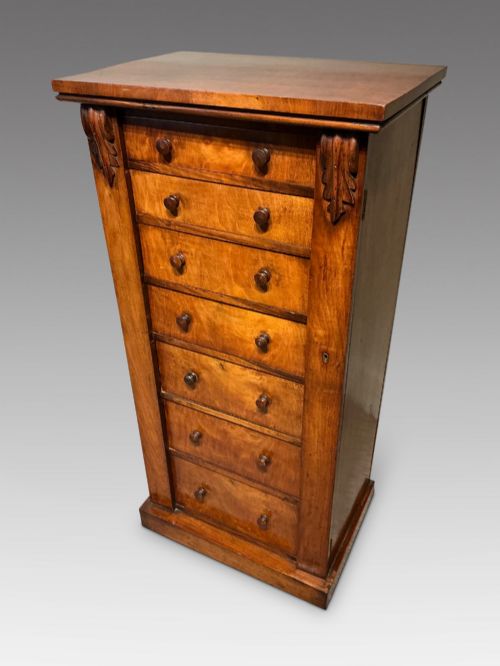
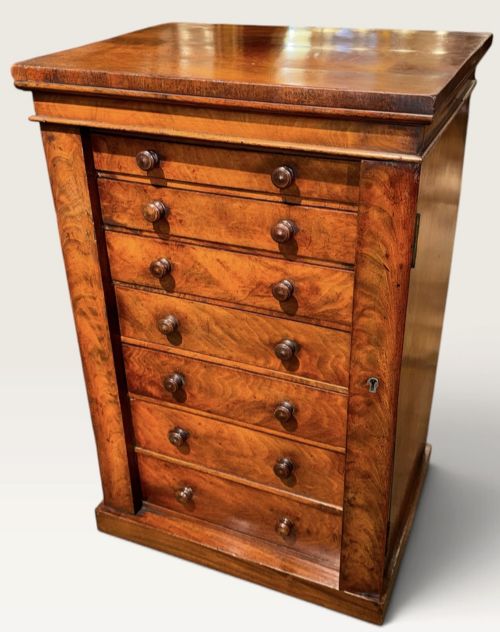
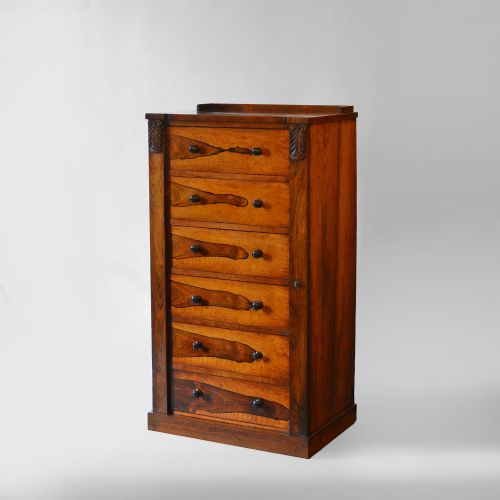
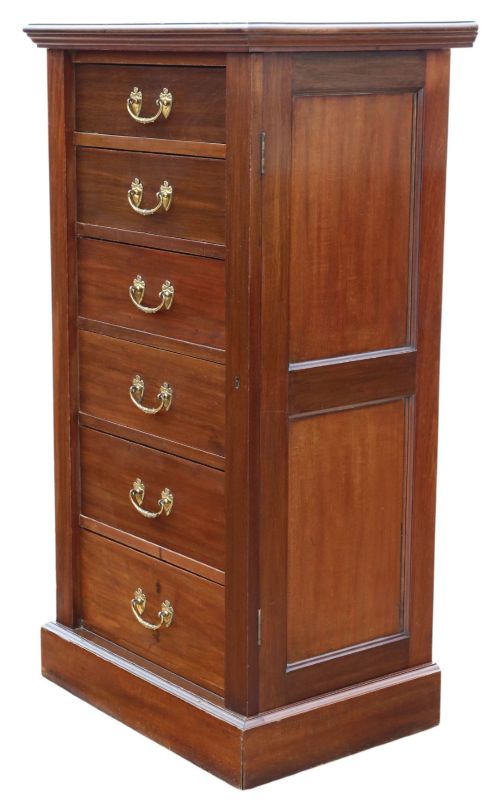
A brown wood wellington chest is a tall, narrow drawer unit secured by a hinged locking stile, built for serious storage.
Brown Wood Wellington Chest
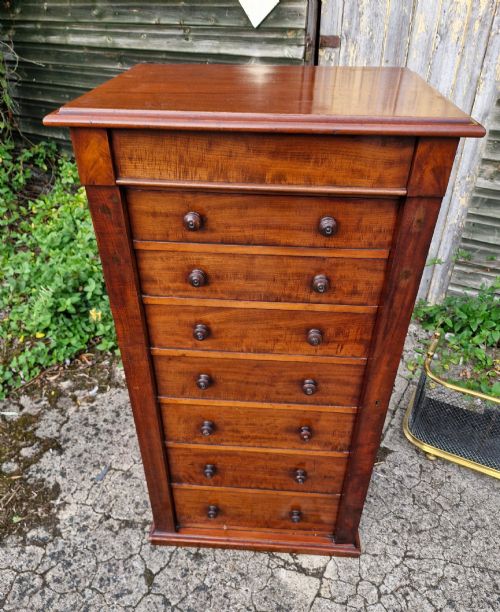
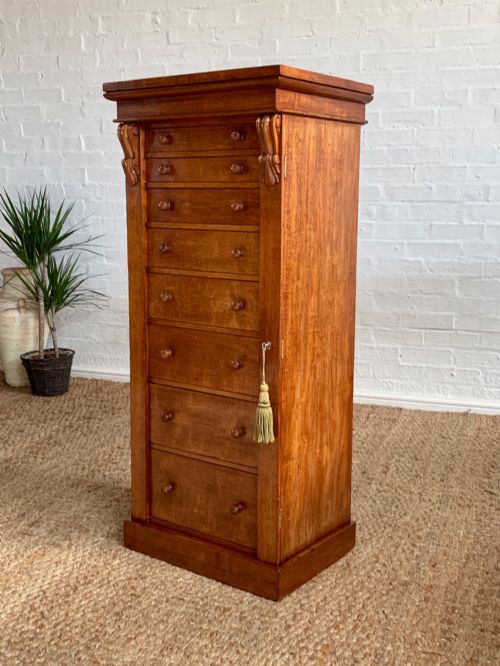
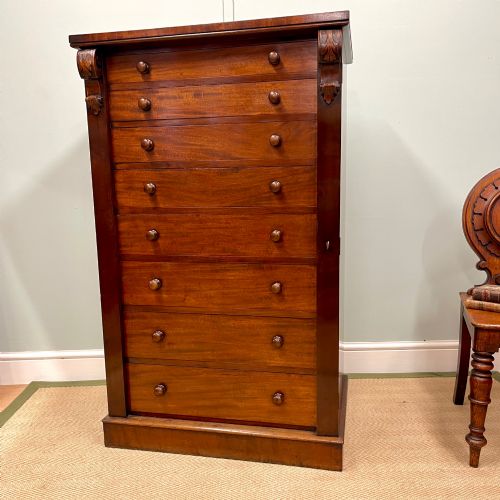
A brown wood wellington chest provides a tall, slender chest of drawers typically featuring seven graduated drawers held secure by a locking side flap. The pieces seen here span Victorian and Edwardian periods, stretching from mid-nineteenth century examples up to nineteen-thirties pieces.
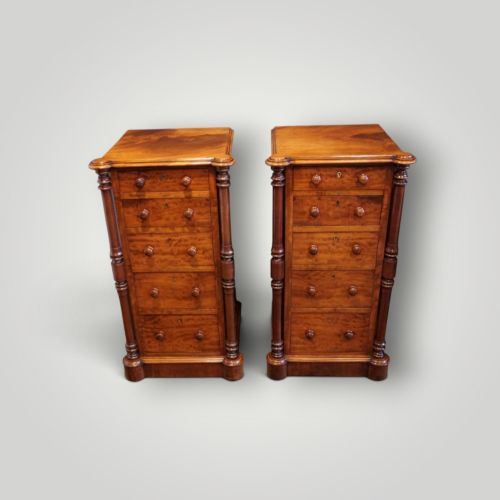
Most examples you encounter take the form of traditional tall chests, though variations include pairs of bedside chests, nightstands, and even a bookcase combination. Woods span mahogany, flame mahogany veneer, walnut, and figured mahogany, often accompanied by brass hardware.
Origins stretch across standard English cabinet work and Anglo-Indian carving traditions, with specific workshops such as Warings Liverpool and S. Mordan & Co appearing in the records. These pieces suit compact spaces where vertical storage matters more than floor area.
Materials and construction methods
Cabinet makers built these chests primarily using solid timber carcasses faced with carefully selected mahogany, flame mahogany veneer, or walnut. Timber preparation relied on traditional joining techniques to maintain stability across the tall, narrow frame.
The signature locking mechanism employs a hinged side stile that fastens over the drawer fronts and secures with a key, concealing the contents entirely. Drawers themselves feature turned wooden knobs, sometimes accompanied by leather inserts or brass fittings depending on the maker.
Brown Wood Wellington Chest Retail Price Guide 2026
Typical asking prices for brown wood wellington chest among the pieces listed under this phrase on Sellingantiques today, from the lower quarter to the upper quarter. They describe what is for sale here now, not the wider market.
Materials recorded across current stock include solid mahogany, flame mahogany veneer, walnut, brass, leather, and glass.
Distinguishing quality across examples
Quality shows in the selection of timber veneers, particularly how figured mahogany or flame mahogany grain is matched across the drawer fronts. Superior pieces maintain crisp carving details and retain their original functioning locking stiles and keys.
Internal construction standards differentiate standard production items from workshop pieces bearing attribution to makers like Warings Liverpool or S. Mordan & Co. The integrity of the locking mechanism and the smooth operation of the graduated drawers indicate the level of initial craftsmanship.
Warings Liverpool·S. Mordan & Co
The Brown Wood Wellington Chest Glossary
- Wellington Chest
- A tall, narrow chest of drawers featuring a hinged locking flap or stile down one side that secures all drawers simultaneously. This form emerged in the nineteenth century for efficient storage.
- Flame Mahogany Veneer
- A thin layer of mahogany sliced from wood showing a distinctive flame-like grain pattern, applied to drawer fronts for visual impact. Cabinet makers selected these decorative veneers to catch the light.
- Locking Stile
- The vertical wooden bar hinged to the side of the chest that swings over the drawer edges to lock them in place. A functioning lock within this piece secures the entire stack.
- Graduated Drawers
- A set of drawers arranged vertically from deepest at the bottom to shallowest at the top. This proportioning creates a balanced appearance on tall furniture forms.
Brown Wood Wellington Chest: Frequently Asked Questions
How do I lock a wellington chest?
To lock the chest, push all drawers completely closed so their front edges sit flush within the frame. Swing the hinged vertical side stile over the drawer edges and turn the key in the built-in lock.
This action throws bolts or engages catches behind the stile, preventing any drawer from opening independently. Ensure the drawers are fully shut before turning the key to avoid damaging the locking mechanism.
What is the typical drawer count?
Most traditional examples contain seven graduated drawers stacked vertically within the narrow wooden carcass. Some variations listed include six drawers or specialised configurations with integrated bookcases.
The height of the piece accommodates this generous vertical stack without demanding excessive floor space. Drawer depths typically decrease from the bottom upwards.
Are these chests suitable as bedside tables?
Shorter variants and designated pairs function effectively as bedside chests or nightstands alongside larger bed frames. Their narrow footprint preserves space while offering substantial vertical drawer storage.
Consider the height of your mattress relative to the surface of the chest before placing one beside a bed. Many nineteenth-century examples were built specifically for bedroom use.
How do I identify a Victorian piece?
Victorian examples display characteristic nineteenth-century timber choices such as figured mahogany, flame mahogany veneer, and walnut. Construction details often include hand-cut dovetails and original turned wooden knobs.
Look for honest patination on the timber surfaces and check the construction methods inside the drawers. Hallmarks, maker stamps, or signatures from firms like S. Mordan & Co or Warings Liverpool confirm specific periods and origins.