
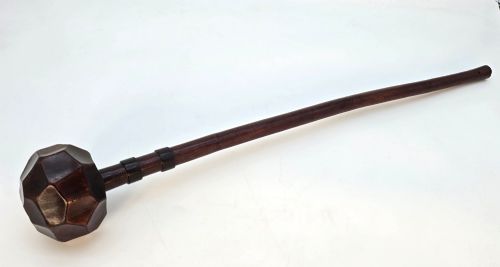
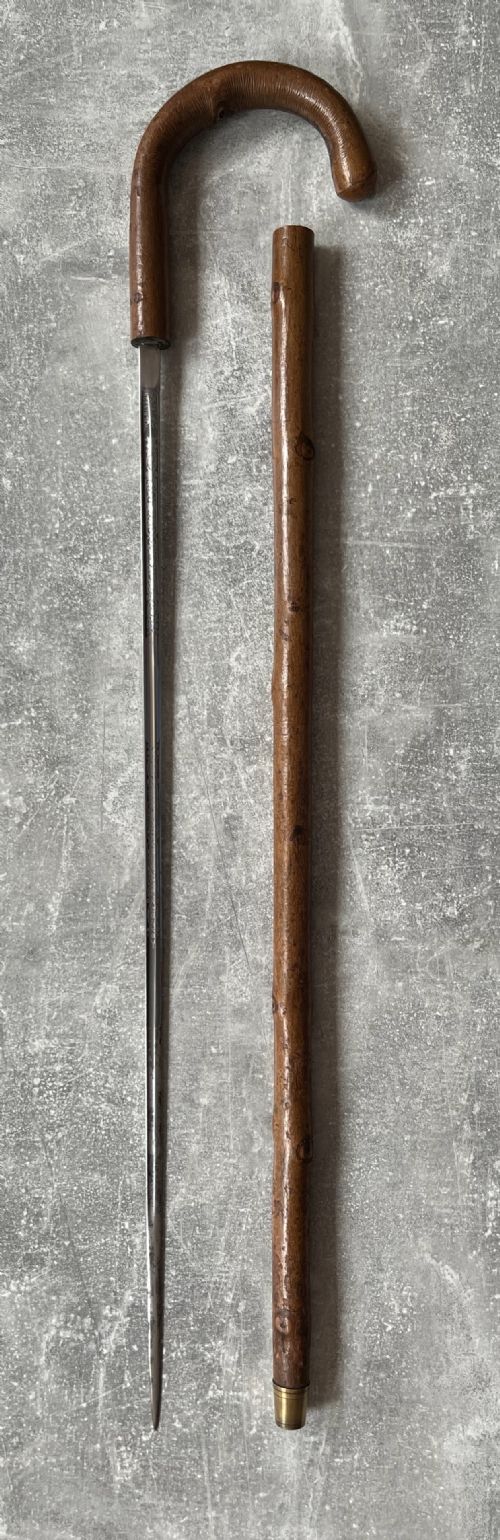
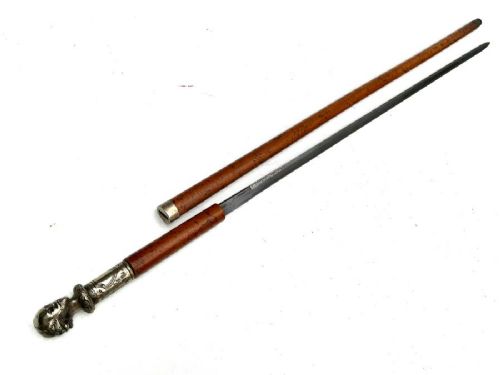
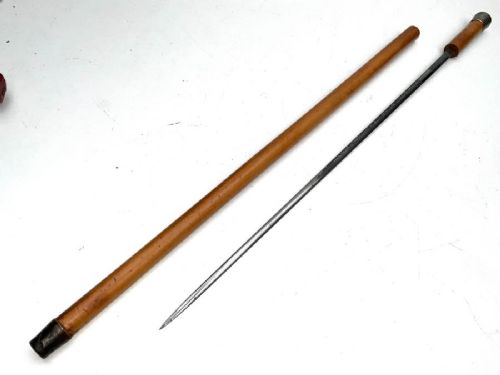


Brown Wood Walking Stick
These brown wood walking stick examples are practical and stylish everyday supports shaped from natural timber, offering reliable utility and period character.
What these brown wood walking sticks are
A brown wood walking stick is a traditional personal support and accessory spanning the Victorian and Edwardian eras. These pieces combine utilitarian function with refined craftsmanship, utilising sturdy natural timbers and polished finishes.
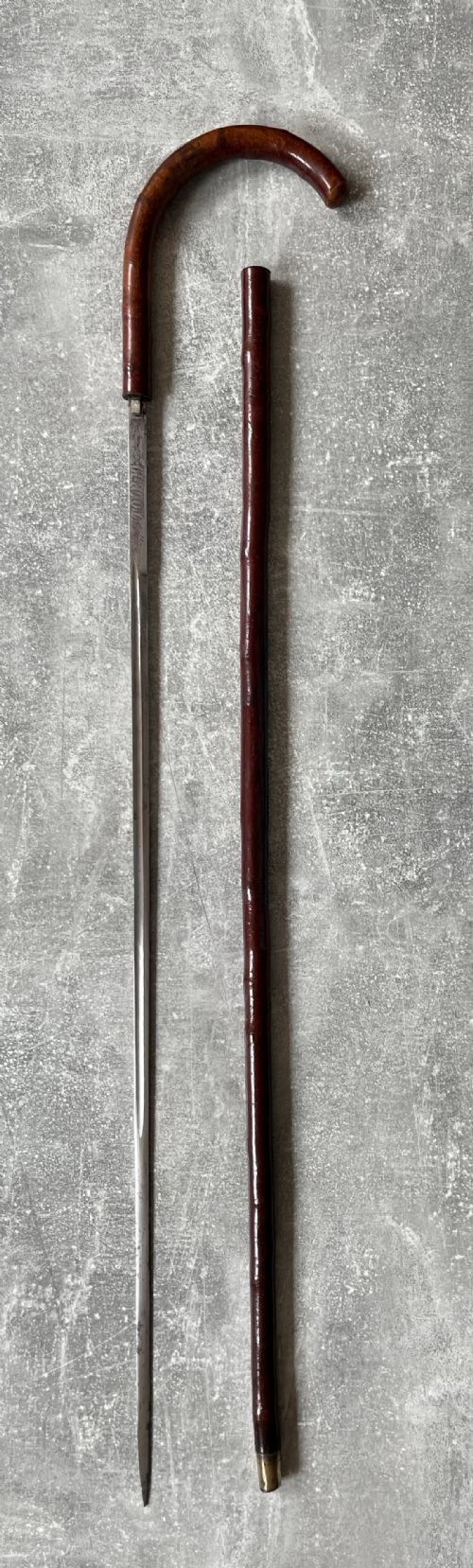
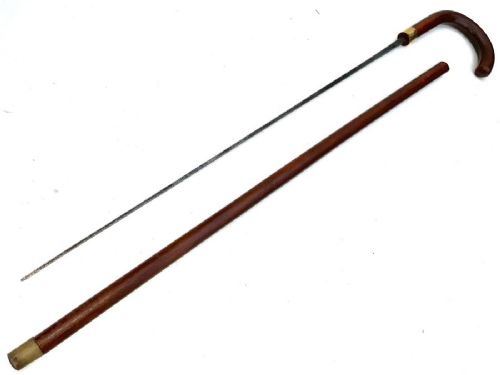
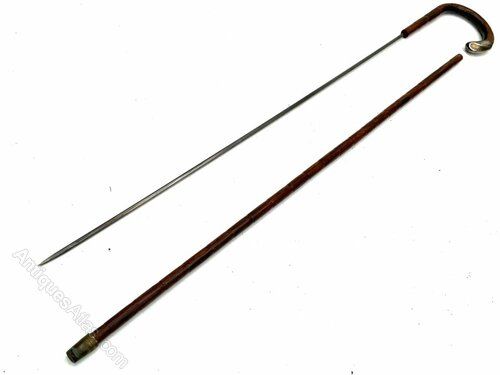
You will encounter various forms on this page, ranging from natural root shapes to smooth cherrywood and malacca shafts. Some examples incorporate concealed blades or decorative carved terminals, while others maintain a straightforward rustic appearance.
How they were made
Makers shaped these brown wood walking sticks from dense timbers including cherrywood and fruitwood, often mounting them with metal ferrules at the base for durability. Handles and collars frequently feature contrasting materials such as silver, brass, horn, and steel.
Advanced variants incorporate intricate carving directly into the timber to form detailed motifs like clenched fists. Concealed elements such as Toledo steel blades are fitted securely within hollowed shafts.
Retail Price Guide 2026
Typical UK retail prices for brown wood walking stick, calculated from the Sellingantiques database of over a million retail prices indexed since 2003. This retail price guide relies exclusively on Sellingantiques data; no external sources or auction records are used, so the figures do not describe the wider market.
What varies in quality
Quality rests upon the selection of timber and the precision of the joinery between shaft and handle. Fine specimens display harmonious proportions, secure silver or brass mounts, and crisply detailed hand-carved elements rather than simple turned shapes.
The sophistication of integrated mechanics also distinguishes better examples, particularly in sword sticks where the blade seats flush and locks firmly. Plain natural forms rely entirely upon the organic character and soundness of the wood.
The Brown Wood Walking Stick Glossary
- Cherrywood
- A dense, reddish-brown timber utilised for strong and smooth walking stick shafts. It polishes to a warm lustre.
- Malacca
- A sturdy rattan cane imported from Southeast Asia, prized for its mottled brown surface and resilience. It forms the classic lightweight sword stick body.
- Ferrule
- The metal cap fitted to the bottom of a walking stick to protect the wood from wear on stone paths. Brass and steel are common materials.
- Toledo blade
- A steel sword blade produced in Toledo, Spain, known for flexibility and strength, fitted inside concealed cane compartments.
Frequently Asked Questions
How are sword sticks used safely?
Sword sticks combine a walking support with a concealed blade locked securely inside the shaft. The mechanism requires proper alignment to ensure the blade stays fixed during transit.
Owners typically store them unlatched or display them carefully to preserve the internal wooden channel.
What woods were used for these sticks?
Makers selected dense hardwoods such as cherrywood and fruitwood for their durability and attractive grain patterns. Malacca cane and natural root forms also appear frequently across nineteenth century examples.
Each material provides a distinct weight and balance suited to daily carriage.
How do I care for antique wood?
Antique timber benefits from occasional gentle polishing with traditional wax to maintain the finish. Keeping sticks away from extreme temperature shifts prevents the wood from splitting.
Metal mounts and silver collars require soft cloth cleaning to avoid scratching the surface.
How do I date an antique stick?
Dating relies on stylistic clues, metal hallmarks, and the specific materials popular during periods like the Victorian or Edwardian eras. Carved motifs and handle designs often reflect the prevailing tastes of those decades.
Comparing construction techniques with dated examples clarifies the timeline of manufacture.