

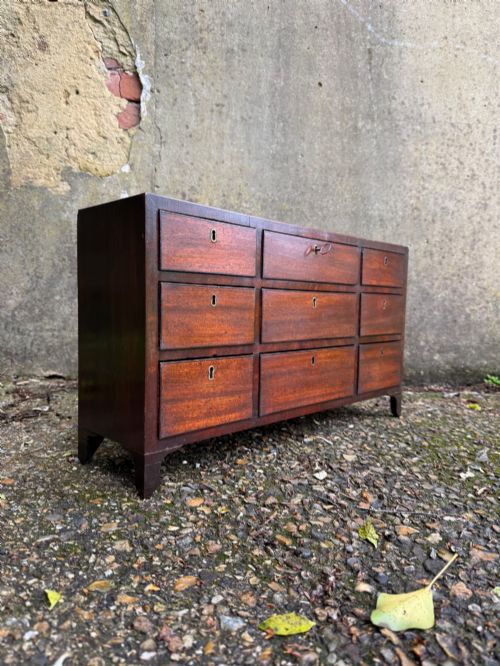


Brown Wood Trinket Chest
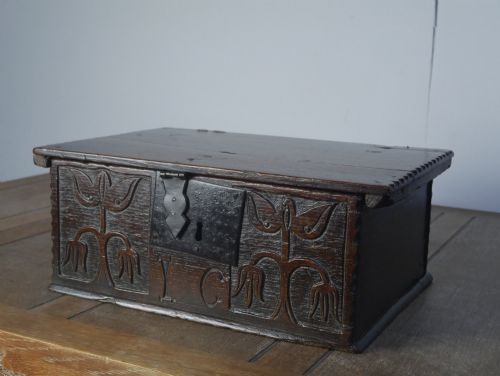
A brown wood trinket chest is a compact wooden container for small valuables, bringing tactile warmth and period joinery to a room.
Brown Wood Trinket Chest
Buyers will encounter various utilitarian and ornamental forms on this page, including tea caddies, apprentice pieces, and inlaid collectors boxes. These items served different domestic purposes, from holding dried leaves and currency to storing personal keepsakes.
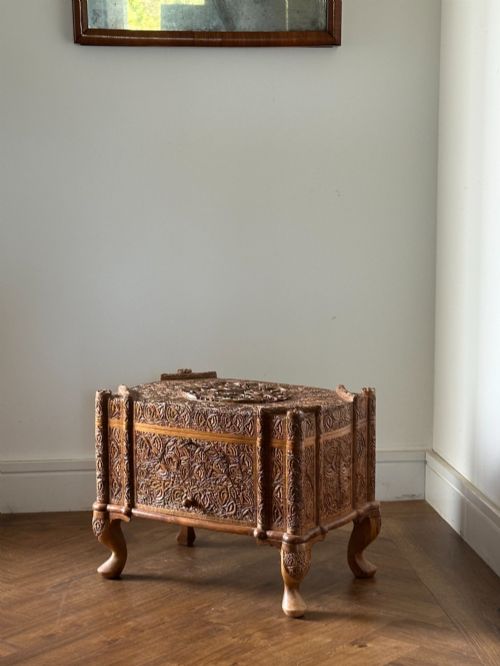
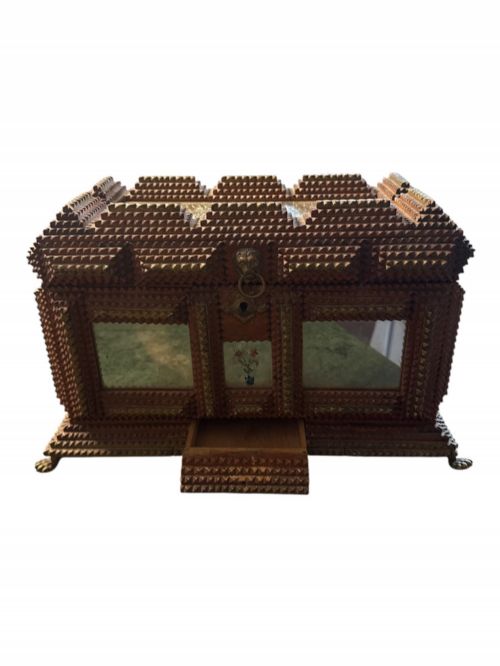
Origins range across British, European, and wider international workshops, showing diverse regional styles such as Tunbridge Ware, Sorrento Ware, and Anglo-Indian carving. Each piece reflects the specific joinery traditions and material preferences of its period of manufacture.
How they were made
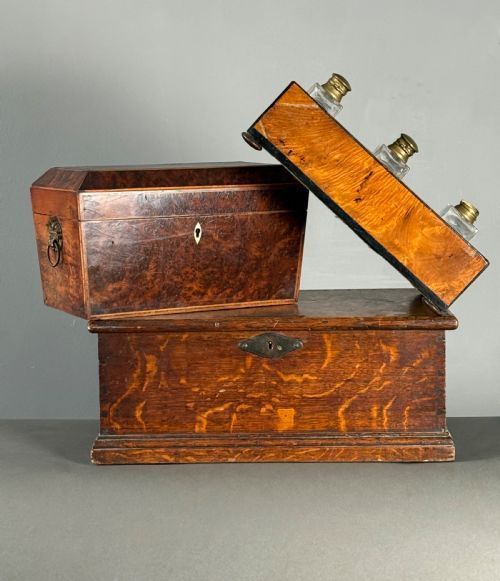
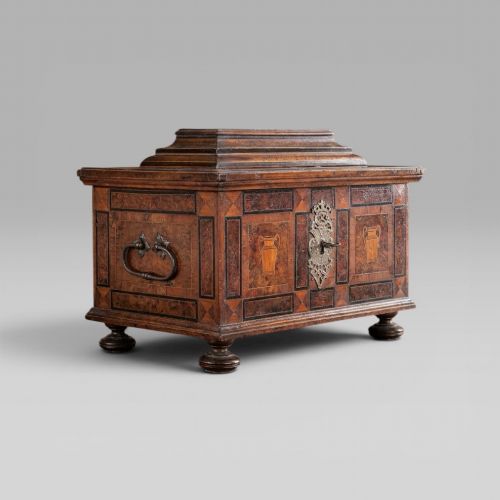
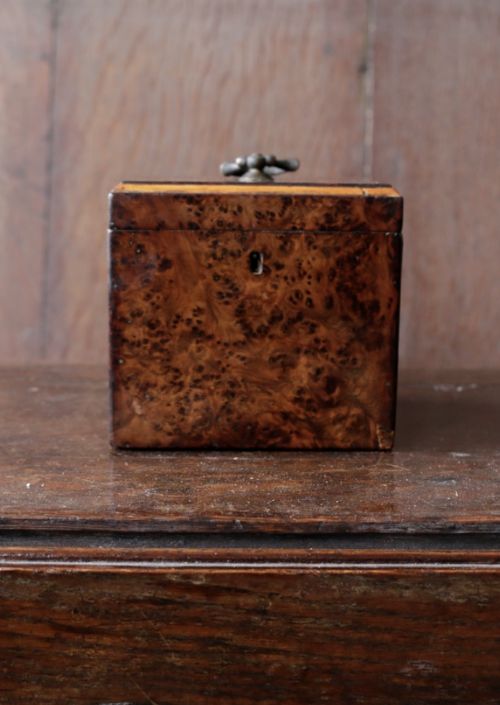
Cabinet makers utilised a rich palette of timber species, pairing solid structural woods like oak, mahogany, and walnut with decorative veneers including amboyna, burr yew, and thuya wood. Surface embellishment often involved intricate inlays of mother of pearl, boxwood, and floral marquetry.
Construction techniques combine traditional joinery with specialised decorative methods such as chip carving, mosaic assembly, and surface painting. Brass mounts, corner braces, and hinges provide structural reinforcement and closure to these small chests.
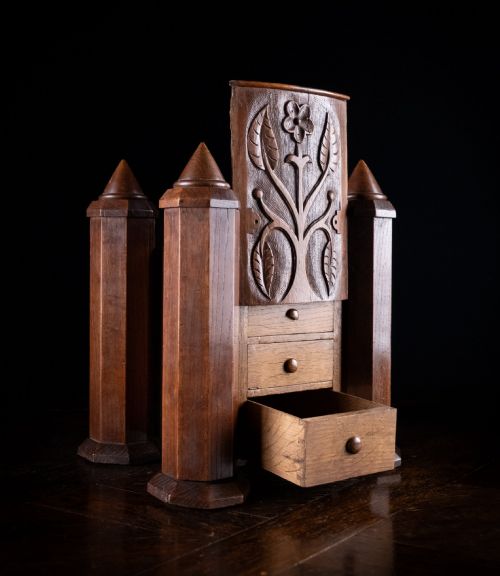
Object forms include tea caddies, miniature chests of drawers, and decorative caskets from British and European workshops.
What varies in quality
The standard of execution depends heavily on the ambition of the timber selection and the precision of the surface decoration. Grain matching in burr timbers and the complexity of geometric mosaic work distinguish finer examples from standard workshop production.
Structural integrity and the survival of original surface finishes determine the standing of individual pieces. Well-executed dovetailing, intact interior compartments, and the preservation of secondary woods maintain the integrity of these chests.
Henry Hollamby·Gnome Et Le Rhone Engine Company
The Brown Wood Trinket Chest Glossary
- Tea caddy
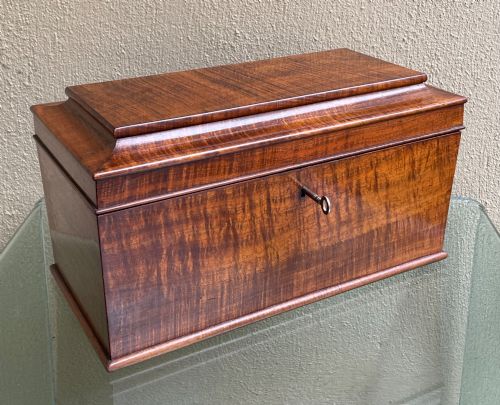
- A small lidded chest originally designed to store loose tea leaves securely under lock and key. These containers often featured interior foil lining or separate wooden canisters.
- Apprentice piece
- A miniature furniture form created by a woodworker to demonstrate mastery of a craft before admission to a guild. These small chests replicate full-sized drawer configurations.
- Marquetry
- The art of applying pieces of veneer to a wooden structure to form decorative patterns and pictures. Makers utilised contrasting timber tones to create floral or geometric designs.
- Tunbridge Ware
- A type of decorative woodwork characterised by mosaic patterns assembled from thousands of tiny tinted wood blocks. This technique originated in the Kent town of Tunbridge Wells.
- Casket
- A decorated box, typically with a hinged lid, used for safekeeping valuables or jewellery. These vessels frequently incorporate locking mechanisms and fabric-lined interiors.
Brown Wood Trinket Chest: Frequently Asked Questions
What were small wooden chests used for?
These containers served various domestic storage needs for valuable items, documents, and consumable goods like tea. Their compact dimensions kept personal possessions organised and secure within the home.
Many designs adapted to specific contents, featuring divided interiors for tea leaves or shallow proportions for jewellery and letters.
How do I date a wooden trinket chest?
Dating relies on observing timber choices, construction methods, and decorative styles characteristic of specific eras. Seventeenth-century examples often feature heavy oak and chip carving, while nineteenth-century pieces display exotic veneers and brass mounts.
Interior linings, lock mechanisms, and secondary woods also provide reliable indicators of the period of manufacture.
Are miniature chests actual furniture?
Miniature chests represent either demonstration pieces made by craftsmen or specialised containers created for domestic desk use. Their scaled proportions mimic full-sized drawer units of the period.
While some functioned as apprentice pieces, others served as decorative jewellery chests or desktop storage.
How should I care for antique wood boxes?
Maintain these pieces in stable environmental conditions away from direct sunlight and extreme temperature fluctuations. Consistent humidity prevents timber from drying out and cracking.
Occasional application of appropriate microcrystalline wax helps preserve the original polished finish without harming the wood.